











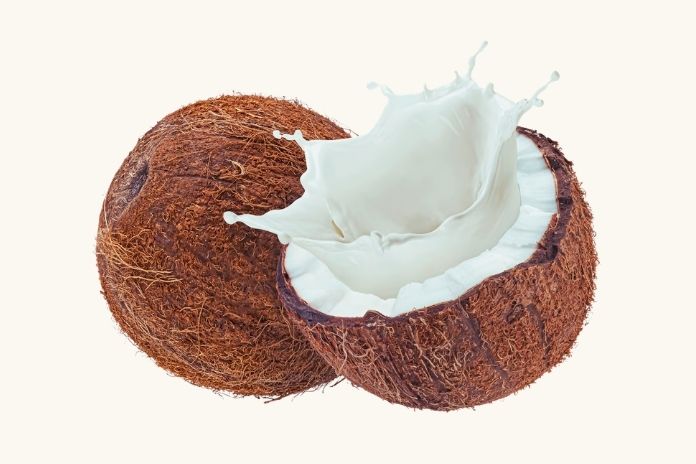
Many people ask about the benefits of coconut milk. Some wellness articles call it a superfood. Others avoid it completely because it contains saturated fat. Reality is somewhere in between.
Coconut milk has nutritional value. It has MCTs, minerals, and compounds that may actually support inflammation control. At the same time, full-fat coconut milk is one of the highest saturated-fat plant foods we have, with roughly 20–24g of saturated fat in just a single typical serving.
So, the more relevant questions are: How much coconut milk is appropriate? Which type is best? And how often should it be consumed?
- Coconut milk contains MCTs, minerals, and plant compounds with potential health benefits.
- Coconut milk is naturally lactose-free and works well as a dairy alternative.
- It is best viewed as a nutritious food, not a miracle health product.
What Is Coconut Milk and Its Two Types

Before starting any discussion about coconut milk benefits, it actually helps to know which coconut milk is being discussed.
The thick canned version, used in curries, soups, and desserts, is made by blending grated coconut flesh with water to extract rich cream. This is what most research studies refer to when examining the nutritional value of coconut milk.
“Canned coconut milk usually has a thick, cream-like consistency, while coconut beverages tend to be thin and have a consistency closer to cow milk,” says Danielle Gaffen, a registered dietitian nutritionist and nutrition consultant based in San Diego, California. Then there is a carton of coconut milk. This is the thinner version sold beside almond milk, soy milk, and oat milk. With water, it is heavily diluted, and with vitamins and minerals, it is often fortified.
The nutritional difference is huge. A 240ml serving of canned full-fat coconut milk can provide roughly 400–450 calories and around 40–45g of fat. A typical serving of carton coconut milk contains only about 45–50 calories and approximately 4–5 grams of fat.
Many people read research about coconut milk and assume it applies directly to the carton version they add to coffee every morning. Not always. The product being studied often matters as much as the result itself.
Coconut Milk Nutrition: The Full Picture
It is really important to know what coconut milk actually provides.
Full-Fat Canned Coconut Milk (240ml)
- Calories: 400–450
- Total fat: 40–45g
- Saturated fat: 36–40g
- Carbohydrates: 6g
- Protein: 4g
- Fibre: 0g
- Manganese: 110% DV
- Copper: 32% DV
- Phosphorus: 28% DV
- Magnesium: 22% DV
- Iron: 22% DV
- Potassium: 18% DV
Carton Coconut Milk (240ml)
- Calories: 45–50
- Total fat: 4–5g
- Saturated fat: 3.5–4g
One reason coconut milk gets so much attention is that its fat profile is unusual. Most of the fat comes from medium-chain triglycerides, often called MCTs. The main ones include lauric acid, capric acid, and caprylic acid.
These fats are processed differently from many long-chain saturated fats that are there in meat and dairy. They are absorbed really quickly and transported to the liver directly, where they can be used as energy.
This never automatically makes coconut milk a miracle food. But it actually does explain why researchers often discuss coconut milk separately from other high-saturated-fat foods.
Evidence-Based Coconut Milk Benefits: What Research Actually Shows
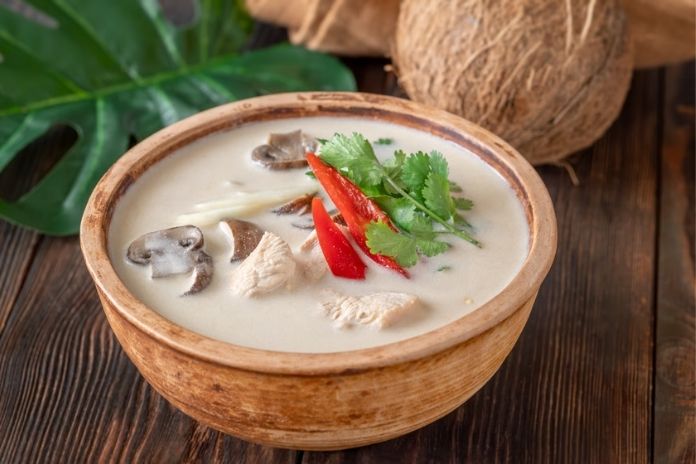
A lot of articles list 20 or 30 benefits of coconut milk. Most are either based on animal studies or simply repeated from older blogs. The stronger evidence points toward a smaller number of realistic benefits.
1. May Support Healthy Cholesterol Balance
A small study found coconut milk porridge was associated with lower LDL cholesterol and higher HDL cholesterol. Interesting finding. But not a reason to start drinking large amounts daily. The study was relatively small. The improvements were modest. And coconut milk still contains substantial saturated fat.
The fair conclusion is that coconut milk may affect cholesterol differently than expected, but current evidence does not justify unlimited consumption.
2. Contains Anti-Inflammatory Compounds
Lauric acid is the dominant fatty acid in coconut milk. When digested, part of it can be converted into a compound called monolaurin. Researchers have studied monolaurin for potential antimicrobial activity against certain bacteria, viruses, and fungi. Coconut milk is not an infection treatment. Still, the antimicrobial properties of lauric acid are one reason coconut products continue attracting scientific interest beyond simple nutrition.
3. May Support Gut Health
Many people associate gut health only with probiotics. Gut health is broader than that. Certain compounds in foods can influence the gut environment by affecting microbial growth patterns. Lauric acid’s antimicrobial activity may help limit the growth of some undesirable organisms. The evidence is still developing, and direct human studies using coconut milk are limited.
But the biological mechanism makes sense. This is one of those benefits that looks promising but still needs stronger human research.
4. Provides Meaningful Mineral Support
This is probably the most overlooked benefit.
People spend a lot of time debating fats and forget the mineral content entirely. Full-fat coconut milk contains significant amounts of manganese, magnesium, copper, phosphorus, iron, and potassium.
Magnesium supports muscle function and nerve signaling. Potassium helps regulate fluid balance and blood pressure. Copper plays a role in energy production and connective tissue formation. Manganese supports metabolism and antioxidant systems.
None of this is exciting marketing material. But from a nutrition perspective, these are real and measurable contributions.
5. Naturally Lactose-Free
This benefit sounds boring. For people with lactose intolerance, it is not boring at all. Coconut milk makes creamy soups, curries, smoothies, and desserts enjoyable without the digestive discomfort associated with dairy. Many dairy alternatives focus on nutrition comparisons.
6. Can Add Calories During Poor Appetite
This isn’t usually mentioned. People always discuss weight loss. Rarely weight maintenance. Full-fat coconut milk is calorie-dense. For someone struggling with poor appetite, recovering from illness, or unintentionally losing weight, adding coconut milk to soups, curries, or smoothies can increase calorie intake without requiring huge food volumes. Sometimes that is genuinely useful.
7. Provides Long-Lasting Satiety
Fat slows gastric emptying. Because full-fat coconut milk contains substantial fat, meals made with it often feel more filling than low-fat alternatives. This doesn’t automatically lead to weight loss. But it may help some people feel satisfied for longer after meals.
8. Supports Skin Hydration from Within
Many articles claim coconut milk directly transforms skin. Evidence does not support dramatic claims. However, adequate dietary fat is important for skin barrier function and hydration. Coconut milk contributes fat and minerals that participate in normal skin health. Its role is supportive rather than magical.
9. Used Traditionally for Hair Care
Hair masks containing coconut milk remain popular for a reason. The fat content helps coat hair strands, reducing dryness and improving softness temporarily. This is largely a cosmetic effect rather than a biological growth effect. Many articles confuse those two things. Making hair look healthier and actually stimulating new hair growth are completely different outcomes.
10. Useful in Plant-Based Cooking
Coconut milk adds texture. Many plant-based dishes become thin or watery without some source of richness. Coconut milk creates creaminess without requiring dairy. For people avoiding dairy products, that culinary role is genuinely valuable.
11. May Be Easier to Digest Than Some Dairy Products
This does not apply to everyone. But some people who experience bloating with dairy find coconut milk easier on digestion because it contains no lactose and no dairy proteins.
That does not make it universally easier to digest. Just a useful option for certain individuals.
12. Adds Variety to the Diet
This benefit sounds simple. Because it is. Many people rotate between the same foods every week. Same milk. Same snacks. Same ingredients. Nutritional variety has value. Using coconut milk occasionally introduces different minerals, fatty acids, and flavors into the diet. Not because coconut milk is superior to every other option. Because diversity generally makes diets stronger over time.
The Saturated Fat Question: What You Need to Know
This is the part many articles avoid. Full-fat coconut milk contains roughly 36–40 g of saturated fat per cup. That is extremely high. Higher than most people realize. Current dietary guidelines generally recommend keeping saturated fat below about 13 g daily for many adults.
One cup of full-fat coconut milk exceeds that recommendation several times over. The interesting complication is that much of coconut milk’s saturated fat comes from lauric acid. Lauric acid behaves somewhat differently from many animal-derived saturated fats. Research suggests it raises HDL cholesterol alongside LDL cholesterol.
That creates debate. The honest answer is that researchers still disagree about the overall cardiovascular effect. For practical purposes, full-fat coconut milk works best as an ingredient rather than a beverage. A few tablespoons in cooking is very different from drinking two large glasses every day.
Read More: 12 Coconut Milk Benefits For Overall Health, Skin And Hair
Coconut Milk vs Other Plant Milks: A Practical Comparison
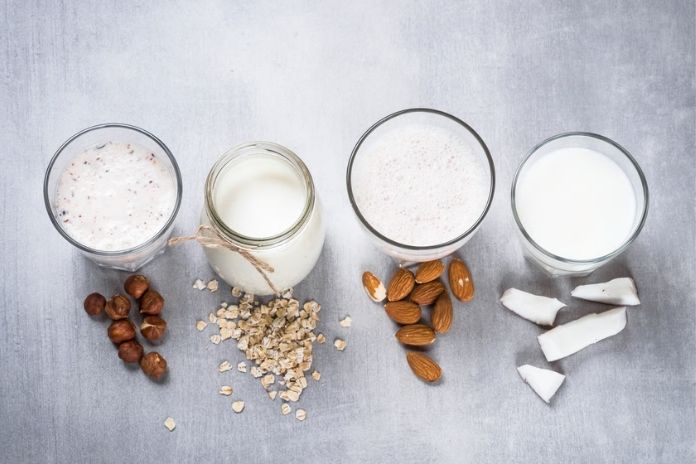
“When it comes to rating different kinds of milks on their nutritional quality, it is actually tough because each has unique and distinctive properties,” says Dr. Taz Bhatia, a paediatrician.
Coconut Milk (Carton)
- 45–50 calories
- 4g fat
- 0–1g protein
Best for people wanting a dairy alternative with mild flavour and low calories.
Oat Milk
- 120–130 calories
- 5g fat
- 3g protein
Best for coffee and baking. Contains more carbohydrates than most plant milks.
Almond Milk
- 30–40 calories
- 3g fat
- 1g protein
Often chosen by people looking for the lowest-calorie option.
Soy Milk
- 80–100 calories
- 4g fat
- 7–8g protein
Closest to dairy milk nutritionally. Best choice if protein intake matters. One thing many people don’t realize: carton coconut milk is not a high-protein food. If protein is the goal, soy milk wins quite comfortably. If creamy curries, soups, and sauces are the goal, full-fat coconut milk does something the others cannot really match.
Read More: The Truth About Coconut Oil for Eyelash Growth: Does It Work?
Who Benefits Most and Who Should Be Cautious

Coconut milk can fit very well into certain diets.
- People with lactose intolerance often find it useful
- People who cook traditional coconut-based dishes probably already use it regularly
- Those wanting variety among plant milks may also enjoy it
Some people should pay more attention, though.
- Individuals with elevated LDL cholesterol
- People already managing cardiovascular disease
- Those monitoring calorie intake closely
Full-fat coconut milk is calorie-dense. Much more than most realize. Also, anyone with a coconut allergy should avoid it completely. One thing worth mentioning. Claims that coconut milk prevents diabetes or Alzheimer’s disease are never supported enough by current human evidence.
Read More: Say Goodbye to Wrinkles: How Coconut Oil Can Reverse the Signs of Aging
Conclusion
Coconut milk has genuine nutritional value. But understanding the difference between full-fat canned coconut milk and diluted carton coconut milk changes the entire conversation. Full-fat coconut milk works best as an ingredient used in sensible portions rather than a daily drink. Like many foods, coconut milk is neither a miracle nor a problem.
- Food form matters. Full-fat canned coconut milk and carton coconut milk are nutritionally very different products.
- Coconut milk’s biggest nutritional strengths may actually be its mineral content instead of its fat content.
- Protein is often overlooked when choosing plant milks.
- Current research still has unanswered questions about lauric acid and long-term cardiovascular outcomes. The evidence remains mixed.
- Looking only at calories or only at saturated fat misses part of the picture. Food choice works best when nutrition is viewed as a whole package.
FAQs
1. Is coconut milk good for you?
Yes, coconut milk can be healthy when used in appropriate amounts. It provides MCTs, manganese, magnesium, and copper, with potential anti-inflammatory effects. However, its high saturated fat and calorie density mean it is better used in cooking than consumed in large daily quantities.
2. Is coconut milk high in saturated fat?
Yes, coconut milk is high in saturated fat, especially full-fat versions. Canned coconut milk contains about 36–40 grams per cup, while carton versions have significantly less. Most of this fat is lauric acid, which behaves differently from typical animal-derived saturated fats.
3. Is coconut milk better than dairy milk?
No, coconut milk is not automatically better than dairy milk. Coconut milk suits lactose intolerance and dairy-free diets, while dairy milk provides around 8 grams of protein per cup. Each serves different nutritional purposes rather than being direct substitutes.
References
- Darsana, K., Bashir, O., Morya, S., Pawase, P. A., Mondal, I. H., Amin, T., & Mugabi, R. (2026). Coconut milk as a plant-based dairy alternative: developmental trends and assessing carbon footprint impact. Discover Food, 6(1).
- Denke, M. A., & Grundy, S. M. (1992). Comparison of effects of lauric acid and palmitic acid on plasma lipids and lipoproteins. The American Journal of Clinical Nutrition, 56(5), 895–898.
- Ekanayaka, R. A. I., Ekanayaka, N. K., Perera, B., & De Silva, P. G. S. M. (2013). Impact of a Traditional Dietary Supplement with Coconut Milk and Soya Milk on the Lipid Profile in Normal Free Living Subjects. Journal of Nutrition and Metabolism, 2013.
- Laowansiri, M., Suwanchote, S., Wannigama, D. L., Badavath, V. N., Hongsing, P., Edwards, S. W., Suratannon, N., Chatchatee, P., Lertpichitkul, P., Rerknimitr, P., Chantawarangul, K., Chatproedprai, S., Wananukul, S., Thammahong, A., Plongla, R., Chanachaithong, P., Chavasiri, W., Chatsuwan, T., & Chiewchengchol, D. (2025). Monolaurin inhibits antibiotic-resistant Staphylococcus aureus in patients with atopic dermatitis. Scientific Reports, 15(1).
In this Article