




















Many fitness enthusiasts and everyday health seekers wonder about the best time to take protein powder. Should you mix a shake first thing in the morning or sip one before bed? The short answer: total daily protein intake trumps timing every time.
Research shows that hitting 1.6 to 2.2 grams of protein per kilogram of body weight daily supports muscle growth and repair far more than the clock. That said, smart timing can amplify benefits like appetite control, overnight recovery, or steady energy.
This article breaks it down by your goals, backed by science, and will help you decide what’s the best time for you.
Does Protein Timing Really Matter?
Protein timing gets hyped in gyms and online forums, but science paints a nuanced picture. Studies, including a 2018 review in the Journal of the International Society of Sports Nutrition, emphasize that total protein intake drives muscle protein synthesis (MPS), the process where your body builds and repairs muscle fibers. Timing plays a supporting role, contributing just 10-20% to outcomes in most cases.
Why does timing matter less than total protein? Your body pools amino acids from meals over 24 hours, using them as needed. A landmark 2013 study from McMaster University found no muscle gain edge from precise post-workout shakes if daily totals matched.
Timing shines when your routine has gaps, like skipping breakfast or training late. For active adults, it becomes relevant during calorie deficits or aging, where muscle preservation demands a steady supply.
Read More: Shake Up Your Protein Game: 7 Delicious Protein Shakes Available on Amazon
“Commercially prepared protein drinks typically cost $2 to $4 per serving, while protein powders range from $1 to $2. Powders offer better value as you control mix-ins, but always prioritize protein content (20-25g per serving) over added sugars or fillers,” says Dr. Donald Hensrud, MD, MS, Associate Professor of Nutrition and Preventive Medicine, Mayo Clinic College of Medicine.
Taking Protein Powder in the Morning

Starting your day with a protein shake in the morning kickstarts metabolism and curbs hunger. A 2020 study in Obesity showed that 30 grams of protein at breakfast boosted satiety hormones like peptide YY, reducing mid-morning snacking by 20% compared to carb-heavy meals. This approach proves ideal for intermittent fasters or busy parents who skip traditional breakfasts.
Morning protein also stabilizes blood sugar. Whey-based shakes raise insulin mildly, preventing energy crashes. If your breakfast lacks 20-30 grams of protein from eggs or yogurt, a shake can fill the void, supporting focus through lunch.
Key Morning Benefits
- Enhanced Satiety:Extends fullness, cutting cravings by triggering hormones that signal the brain, “I’m full.”
- Blood Sugar Stability: Prevents spikes and dips, maintaining steady energy for work or workouts.
- Quick Nutrition Fix: Bridges low-protein starts, delivering 25+ grams in seconds for mental clarity.
Ideal Scenarios for Morning Shakes
- Skipping breakfast due to fasting or rushing.
- High-carb habits like cereal need protein balance.
- Pre-exercise fueling for runners or gym sessions.
Taking Protein Powder at Night

Nighttime shakes excel for overnight muscle repair. During sleep, muscle protein synthesis (MPS) peaks in the first few hours, and fasting until breakfast creates a 10-12 hour gap. A 2015 study in Medicine & Science in Sports & Exercise found that 40 grams of protein before bed increased MPS by 22% overnight, especially after evening workouts.
This matters most for older adults. Age-related muscle loss (sarcopenia) slows protein turnover. Research from the American Journal of Clinical Nutrition (2019) showed bedtime casein reduced muscle breakdown in seniors by providing slow-release amino acids aligned with the circadian rhythm.
Key Night-time Benefits
- Boosted Muscle Repair: Fills fasting gaps, elevating MPS during peak sleep recovery hours.
- Muscle Preservation: Counters sarcopenia with a steady amino acid supply for aging bodies.
- Post-Workout Recovery: Maximizes gains from evening training sessions.
Ideal Scenarios for Night Shakes
- Long gaps between dinner and breakfast (over 12 hours).
- Evening resistance workouts need extended fueling.
- Adults over 50 who prioritize lean mass maintenance.
Protein Powder Before Sleep: Fast vs. Slow Digestion
- Whey:Digests in 1-2 hours. Best if you eat dinner late, but pair it with fats for sustained release.
- Casein:Clots in the stomach, releasing amino acids over 7 hours. Perfect for true overnight fueling.
Read More: 15 Homemade Protein Shakes For Weight Loss You Should Try
Morning vs Night: Key Differences That Matter
Digestion and absorption vary by time. Morning whey hits fast, aiding quick uptake during active hours. Nighttime casein mimics slow food digestion, matching sleep’s low-energy state.
Hunger control flips as well. Morning protein tamps down appetite control all day, per a Nutrients review (2021). Night shakes prevent pre-bed cravings but may disrupt light sleepers if digestion feels heavy.
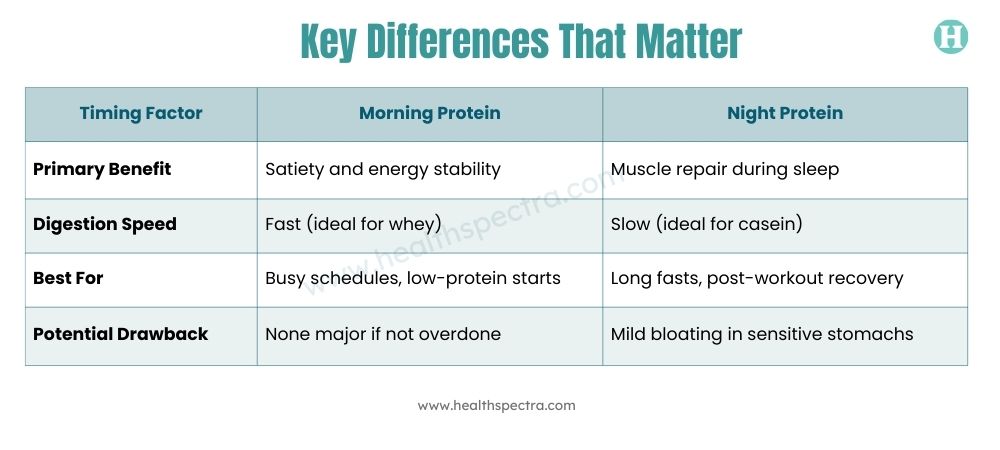 You may test both to see what your body prefers. However, the following are the key differences that may help you choose the right path for your body:
Best Time to Take Protein Powder Based on Your Goal
Timing optimizes results when paired with consistent totals.
For Muscle Gain or Maintenance
Even distribution beats boluses. Aim for 0.4 grams per kilogram per meal. Protein timing for muscle growth favors morning if you train early, topping off stores. Night helps if evenings include resistance work, bridging to breakfast.
For Weight Loss or Appetite Control
Protein shake in the morning reigns here. It extends fullness, cutting 400 daily calories in one study. Skip late shakes to avoid calorie creep.
For Recovery or Aging Muscles
Bedtime wins for muscle protein synthesis. Consistency trumps perfection: daily hits matter over one-off shakes.
Read More: High-Protein, Low-Calorie Foods: Science-Backed Benefits & Best Sources
Does the Type of Protein Change the Best Time?
Protein type dictates timing more than an hour. Casein vs. whey hinges on speed.
Whey protein absorbs in 20-40 minutes, spiking MPS briefly. Use it post-workout or mornings for rapid recovery. Its leucine content triggers muscle building fast.
Casein protein digests over hours, ideal for nights. It sustains amino acids, preventing breakdown.
Plant-based proteins vary: peas at a medium speed and rice slower. Blend for balance, adding fiber for digestive aid.
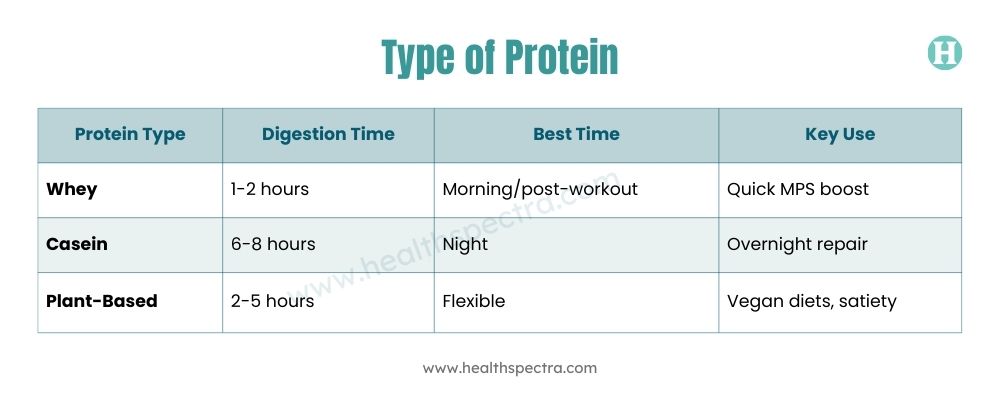 Use this table to pick based on your powder and routine.
When Morning Protein May Be the Better Choice
Opt for mornings if you skip or skimp on breakfast. North Americans often start with cereal (under 10 grams of protein), leading to crashes. A shake can stabilize this.
It’s prime for blood sugar needs, like prediabetes management. Busy schedules may benefit too. You can prep overnight oats with powder for grab-and-go fuel.
Quick Morning Scenarios
- Low-energy mornings from night shifts.
- High-carb breakfast habits need balance.
- Pre-run fueling for beginners.
Read More: High Protein Diets Can Clog Your Arteries, New Study Suggests
When Nighttime Protein May Be the Better Choice
Choose nights with long dinner-to-breakfast gaps (over 12 hours). It prevents catabolism during sleep.
Post-resistance training earlier? A shake refuels. Older adults over the age of 40 can gain the most with 30% less muscle loss with bedtime dosing.
Ideal Night Scenarios
- Evening workouts end by 7 PM.
- Fasting windows over 14 hours.
- Age 50+ with strength training.
How to Decide What’s Best for You

Start by tracking daily protein distribution. Apps like MyFitnessPal reveal gaps. Aim for even spacing.
Tune into cues. If mornings leave you full and focused, stick there. Night bloat? You may switch to mornings.
Experiment for 2 weeks per timing, noting energy, hunger, and gains. Consult a doctor for any digestive issues or kidney concerns.
Read More: Turn Your French Toast Into a Protein Powerhouse
Final Takeaway
There’s no one-size-fits-all best time to take protein powder—whether you take protein powder in the morning or at night depends on your goals. Prioritize consuming 1.6-2.2 grams per kilogram of body weight daily to fuel muscle protein synthesis and recovery.
Furthermore, fine-tune when to take protein powder:
- Morning: Boosts satiety and steady energy, perfect for appetite control and busy starts.
- Night: Supports overnight muscle repair, especially with casein for slow release.
Align with goals like protein timing, muscle growth, or weight loss. Add proteins like whey for fast hits and casein for sustenance and routine. Consistency trumps perfection every time. Track your intake today and experiment to find the best choice for you.
References
- Schoenfeld, B. J., Aragon, A. A., & Krieger, J. W. (2013). The effect of protein timing on muscle strength and hypertrophy: A meta-analysis. Journal of the International Society of Sports Nutrition, 10, Article 53
- Areta, J. L., Burke, L. M., Ross, M. L., Camera, D. M., West, D. W., Broad, E. M., Jeacocke, N. A., Moore, D. R., Stellingwerff, T., Phillips, S. M., Hawley, J. A., & Coffey, V. G. (2013). Timing and distribution of protein ingestion during prolonged recovery from resistance exercise alters myofibrillar protein synthesis. The Journal of Physiology, 591(9), 2319–2331
- Trommelen, J., van Loon, L. J. C., & Senden, J. M. G. (2024). Timing matters? The effects of two different timing of high protein intake on muscle adaptations in resistance-trained males. Frontiers in Nutrition, 11
- Pasiakos, S. M., McClung, J. P., Lieberman, H. R., & McLellan, T. M. (2009). The effects of protein supplements on muscle strength and hypertrophy: A systematic review. Nutrition Reviews, 67(12), 689–699.
- Trommelen, J., Holwerda, A. M., Snijders, T., & van Loon, L. J. C. (2019). Ingestion of a pre-bedtime protein containing beverage improves sleep quality and muscle recovery in resistance-trained males. Frontiers in Nutrition, 6, Article 181.
- Snijders, T., Res, P. T., Smeets, J. S., van Vliet, S., van Kranenburg, J., Maase, K., Kies, A. K., Kuipers, H., & van Loon, L. J. (2015). Protein ingestion before sleep increases overnight muscle protein synthesis rates in healthy older men: A randomized controlled trial. Journal of Nutrition, 145(3), 1178–1184.
- Morton, R. W., McGlory, C., & Phillips, S. M. (2018). Nutritional interventions to augment resistance training-induced skeletal muscle hypertrophy. Frontiers in Physiology, 9, Article 245.
- Joy, J. M., & Vogelgesang, D. (2021). Morning versus evening short-term whey protein supplementation intake on muscle damage and performance in trained athletes. Journal of Exercise and Nutrition, 4(3).
- Naito, Y., Uchiyama, S., & Shimizu, H. (2021). Supplementation of protein at breakfast rather than at dinner and lunch is effective on skeletal muscle mass in older adults. Frontiers in Nutrition, 8.
- Hulmi, J. J., Laakso, M., Mero, A. A., Parol, A., Ahtiainen, J. P., & Peltoniemi, J. (2020). Do not neglect the role of circadian rhythm in muscle atrophy. Ageing Research Reviews, 62, Article 101134.
- James, E. L., & Green, D. J. (2025). Circadian control of protein synthesis. BioEssays, 47(2).
- Zhang, Y., Li, X., & Wang, J. (2019). Circadian regulation of muscle growth independent of locomotor activity. bioRxiv.
- Jäger, R., Kerksick, C. M., Campbell, B. I., Cribb, P. J., Wells, S. D., Skwiat, T. M., Purpura, M., Ziegenfuss, T. N., Ferrando, A. A., Arent, S. M., Smith-Ryan, A. E., Stout, J. R., Arciero, P. J., Ormsbee, M. J., Taylor, L. W., Wilborn, C. D., Kalman, D. S., Kreider, R. B., Willoughby, D. S., Arnauld, J. A., & Antonio, J. (2017). International society of sports nutrition position stand: Protein and exercise. Journal of the International Society of Sports Nutrition, 14, Article 20.
- Roberts, B. M., Helms, E. R., & Aragon, A. A. (2017). The effect of protein timing on muscle strength and hypertrophy: A meta-analysis. Sports Medicine, 47(12), 2437–2451.
- Hackney, K. J., & Kackley, M. L. (2018). Protein timing and its effects on muscular hypertrophy and strength in individuals engaged in weight-training. European Journal of Sport Science, 18(7), 937–945.
- Snijders, T., Trommelen, J., & van Loon, L. J. C. (2015). Pre-sleep protein supplementation affects skeletal muscle protein synthesis during overnight recovery in young men. International Journal of Sport Nutrition and Exercise Metabolism, 25(6), 521–529.
- Trommelen, J., Holwerda, A. M., Kouw, I. W. K., Snijders, T., Halson, S. L., & van Loon, L. J. C. (2020). Resistance exercise timing influences acute anabolic response to protein ingestion. Nutrients, 12(9), 2704.
- Snijders, T., Res, P. T., van Vliet, S., Tramer, R., Trommelen, J., Groen, B. B. L., & van Loon, L. J. C. (2020). Protein ingestion before sleep increases muscle protein synthesis rates during overnight recovery from endurance-type exercise. American Journal of Clinical Nutrition, 112(6), 1472–1481.
In this Article