

















One of the best strategies for organizing workouts and enhancing cardiovascular fitness is understanding heart rate training zones. These zones enable you to train more intelligently, whether your objective is performance, endurance, or fat loss, by estimating exercise intensity by heart rate.
This article will explain heart rate zones in detail, including how to calculate them, how to use them for various objectives, and which variables can alter your readings. Additionally, you will learn how to safely and efficiently incorporate cardio heart rate zones into your practice.
- Heart rate zones use percentages of your maximum heart rate to guide workout intensity for better results.
- Most people benefit from the 80/20 rule, focusing on low-intensity zones while limiting high-intensity training.
- Different zones target specific goals, such as fat loss, endurance, performance, and recovery.
Read More: How to Use Heart Rate Zones to Optimize Your Workouts
What Are Heart Rate Zones?
Heart rate zones are defined as particular percentages of your maximum heart rate. Every individual has a minimum heart rate, a maximum heart rate, and a resting heart rate. Different heart rate zones, which correlate to varying exercise intensities and benefits, are created by dividing the range between these values.
Think about this example: Your heart must operate at roughly 60–70% of its maximal capacity (i.e., your maximum heart rate) when engaging in moderate-intensity exercise, such as brisk strolling. This range of heart rates represents heart rate zone 2. As a result, you know that the activity shouldn’t be more difficult than brisk walking when your personal trainer or instructor instructs you to reach zone 2.
Heart rate is quite individualized and differs from person to person. Factors such as age can also influence heart rate. Heart rate zone 2 will be between 108 and 126 bpm for some people and between 120 and 140 bpm for others.
But the exercise’s intensity will be the same in both situations. Because of this, the best way to gauge the level of physical activity is to use percentages of maximal heart rate rather than precise beats per minute.
The 5 Common Heart Rate Zones Explained

To get the most out of your workouts, you must comprehend heart rate zones and how they improve your fitness. We examine the five heart rate zones in further detail below.
Heart Rate Zone 1, also known as the Gray Zone (50–60% MaxHR), is the zone with the least amount of activity. During warm-ups, cool-downs, and active recovery times, try to stay here.
Heart Rate Zone 2, often known as the Blue Zone (61–70% MaxHR), is the “slowly start jogging, power walking, or rowing zone.” Your breathing will start to quicken, and speaking will become slightly more difficult.
Heart Rate Zone 3, also known as the Green Zone (71-83% MaxHR), allows active recovery between intervals and serves as “Base Pace,” offering a difficult but manageable intensity.
Heart Rate Zone 4, often known as the Orange Zone (84-91% MaxHR), this zone creates an uncomfortable intensity that you can reach through All Outs and Push Pace. You won’t be here for very long.
During an all-out effort, you may reach Heart Rate Zone 5, also known as the Red Zone (92-100% MaxHR). If you do arrive, it should only be for a very brief time before you head back to the Orange or Green zones.
How to Calculate Your Target Heart Rate Zones
You can easily calculate heart rate zones by first finding your maximum heart rate and expressing the zones as percentages of it.
Everybody has a different heart rate. Heart rate training is an appropriate and scalable training technique for everyone. You will always know which heart rate zone to aim for, regardless of your age. Before determining your heart rate and engaging in physical activity, speak with your healthcare professional if you take medication or have a cardiac issue.
Read More: Can You Walk Your Way to a Healthier Heart? Why Cardiovascular “Strain” Isn’t Always the Goal
Which Heart Rate Zone Is Best for Cardiovascular Fitness?
Athletes frequently use a VO₂ max test to determine their personal heart rate zones in sports cardiology. This test determines the maximum amount of oxygen your body can consume during exercise. Instead of using generic formulas, VO₂ max testing enables clinicians to tailor heart rate zones to your body.
Which heart rate zones, thus, best enhance cardiovascular fitness? Research indicates that regular exercise increases your fitness and reduces your risk of cardiovascular disease. The schedule that you can maintain is the finest one. The so-called pyramidal method makes sense for the majority of people, particularly those who are at risk of cardiovascular disease:
- Aiming for zones 1-2, 80% of your weekly workouts should be at lower intensity.
- Higher-intensity sessions should make up 20% of your weekly workouts.
This exercise reduces recovery time and improves cardiovascular health while still providing substantial advantages. Long-term adherence is also simpler.
“High-intensity interval training (HIIT) can raise VO₂ max and is a great form of exercise,” explains Dr. J. Sawalla Guseh, MD, a Mass General Brigham sports cardiologist and director of the Cardiovascular Performance Program at Massachusetts General Hospital. He adds, “But recovery can be challenging. If you do too much, you may end up exercising less overall, which limits long-term benefit.”
Heart Rate Zones and Different Fitness Goals

Various heart rate training zones support goals related to fat loss, endurance, performance, and recuperation.
Weight Loss Programs: Because Zone 2 can burn fat, trainers often emphasize it. They also incorporate longer, steady-state cardio sessions to urge the body to use stored fat.
Endurance Training: Zone 3 is essential for customers preparing for endurance competitions. To increase aerobic capacity and stamina, trainers will create exercises that require continuous effort in this zone.
Interval Training: Interval training often includes Zones 4 and 5 to improve fitness and burn calories quickly. To provide customers with an intensive yet doable workout, trainers can switch between these zones and Zones 1 and 2 to generate recovery intervals.
Recovery Days: Clients may spend the majority of these days in Zone 1, with brief intervals in Zone 2. It promotes circulation and reduces muscle pain while allowing the body to recuperate at a low level of activity.
Signs You May Be Training Too Hard
Keep an eye out for these warning indicators:
- Enduring exhaustion
- Elevated resting heart rate
- Decreased efficiency
- Dyspnea or vertigo
These could be signs of insufficient recuperation or overtraining.
Read More: 9 Daily Habits That People in Blue Zones Swear By for a Longer Life
How Beginners Can Start Using Heart Rate Zones

Beginners can use cardio heart rate zones to build safe, structured, and effective workouts.
Determine Your Maximum Heart Rate: 220-age is the simplest, albeit least accurate, formula.
Determine Your Zones: To determine your desired beats per minute (BPM) for each zone, multiply your MHR by the aforementioned percentages.
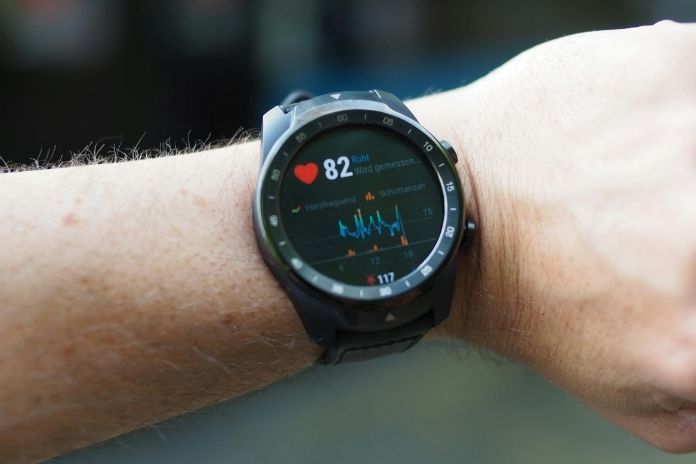
Use the “Talk Test” or a Monitor: Real-time data is provided by wearable heart rate monitors, such as watches or chest straps. Use the Talk Test if you don’t have one. You’re probably in Zone 2 if you can speak in whole sentences. You’ve reached Zone 3 or 4 if you can only handle brief sentences.
Balance Your Routine: The 80/20 rule is a popular tactic: dedicate 80% of your training time to low-intensity zones (1 and 2) and just 20% to high-intensity zones (4 and 5). Using cardio heart rate zones can make workouts more structured and effective.
Factors That Can Affect Heart Rate During Exercise
Numerous things affect heart rate:
- Humidity and heat
- Sleep and stress
- Hydration
- Caffeine
- Illness
This is why you should always interpret exercise intensity by heart rate in context.
When Heart Rate Training May Not Be Appropriate Alone
While heart rate zones explained provide useful guidance, they are not the only measure of fitness. Additional indications consist of:
- Perceived exertion
- Levels of energy
- Performance
Some circumstances call for caution:
- Heart condition
- Arrhythmias
- Being pregnant
- Recovery following surgery
When to Seek Medical Advice Before Starting Intense Cardio Training

Speak with an expert if you encounter:
- Chest discomfort
- Lightheadedness or passing out
- Breathlessness without apparent cause
- Recognized cardiovascular diseases
Read More: Monitoring Heart Health at Home: 7 Essential Devices You Need
Conclusion
By making your workouts more purposeful and efficient, an understanding of heart rate training zones can change the way you approach fitness. You can use structured zones to direct intensity, enhance endurance, and promote long-term health, rather than relying on effort estimation.
These zones provide a useful foundation for advancement, regardless of your objective: increasing endurance, improving performance, or just remaining active.
However, it’s crucial to keep in mind that heart rate is only one aspect of fitness. Achieving outcomes depends equally on factors such as recovery, diet, and perseverance. You can gradually increase your cardiovascular fitness training by combining intelligent exercise with a well-rounded regimen.
References
- Polar. Heart rate zones.
- Corliss, J. (2026, February 25). Understanding exercise heart rate zones.
- Jen Ator. Understanding Heart Rate Zones and How They Help Boost Your Fitness.
- Julianne DeAngelis. (January 18, 2024). Target Heart Rate Zones: Safely Maximize Your Workouts.
- UPMC Health beat. (January 29, 2026). Heart Rate Zones Explained: How to Train Smarter for Your Fitness Goals.
- Best Version Media. (2026, April). A beginner’s guide to heart rate zone training.
In this Article