



















Dinacharya, from dina (day) and acharya (activity), is Ayurveda’s framework for how a day should be lived. It is described in classical texts like Charaka Samhita and Ashtanga Hridaya not as optional lifestyle advice, but as the base of preventive medicine. At first glance, it looks like too many practices: oil pulling, tongue scraping, nasal oil, massage, meditation. But the real point is not the practices themselves. It is the timing.
Ayurveda is saying something actually simple but easily missed: the changes keep happening in the body across the day, and if you are doing just the same thing at different times, it never produces the same effect. That idea, which sounds philosophical, is now really very biological.
- Dinacharya is not just a list of rituals. It is a timing system.
- Wake time, meal timing, and sleep timing are more important than perfection.
- Start with these three anchors: fixed wake time, warm water, and tongue scraping in Ayurveda. Then build slowly.
What Dinacharya Actually Is, And the Logic Behind the Sequence
Most explanations of dinacharya fall short here. They outline the steps but not the underlying logic. Without that logic, it becomes a checklist; with it, a system. “A daily routine is absolutely necessary to bring radical change in body, mind, and consciousness,” says renowned Ayurvedic physician Dr. Vasant Lad.
The structure of Dinacharya is built on Dosha Kala, the time cycles of Kapha, Pitta, and Vata, which repeat twice in 24 hours.
- Kapha (6–10 am, 6–10 pm): This phase is heavy, slow, stable
- Pitta (10 am–2 pm, 10 pm–2 am): This phase is sharp, hot, and transformative
- Vata (2–6 am, 2–6 pm): This phase is light, mobile, subtle
This is not symbolic language. It describes observable shifts in physiology and mental state. So the sequence is not random:
- Wake in Vata time (2–6 am) → mind is clearer, less inertia
- Exercise in Kapha morning (6–10 am) → counters heaviness
- Eat the main meal in the pitta (10 am–2 pm) → strongest digestion
- Sleep before Pitta night (10 pm–2 am) → supports internal metabolic work
Once you see this, Dinacharya stops being “do these 10 things” and becomes “match your actions to the state your body is already in”.
Dinacharya and Circadian Biology: The Modern Science That Explains the Ancient System
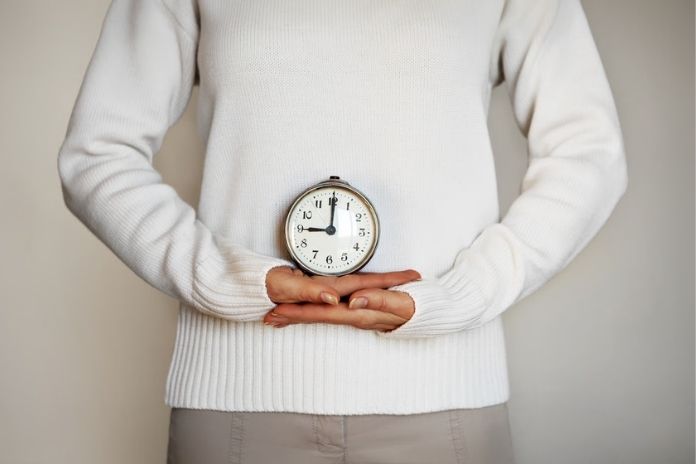
Modern biology uses a different language but describes almost the same thing. Circadian rhythms are 24-hour cycles controlled by the suprachiasmatic nucleus (SCN) in the brain. But the important part is this: these rhythms are not only in the brain. They exist in the liver, gut, heart, and immune cells; almost every tissue has its own clock. And these clocks are controlled by timing cues:
- Light exposure
- Food timing
- Sleep timing
- Physical activity
When these signals are irregular, the system becomes desynchronized. That is when problems begin, not suddenly, but gradually: weight gain, insulin resistance, poor sleep, and inflammation. Ayurveda framed this differently, but the core idea is the same: Health is not only what you do, but when you do it.
The Nobel Prize in 2017 for circadian rhythm mechanisms confirmed this at the molecular level. Dinacharya reached the same conclusion by observation, not lab experiments.
Ayurvedic Morning Practices: What They Are, and Why Each One Works

Brahma Muhurta: The pre-dawn window
Brahma Muhurta in Ayurveda is roughly 1.5 hours before sunrise. Traditionally considered ideal for meditation, study, and quiet work. But you do not need to be strict about the exact time. The deeper principle is
- Waking before the day becomes noisy
- Exposing yourself to early natural light
- Starting the day before the mental load begins
Morning light has a very strong effect on the circadian system. It sets the timing of cortisol release, which then influences energy, mood, and even sleep later. So even if you wake at 6 instead of 4:30, the principle still holds: Wake consistently and get light early.
The morning sequence: From waking to movement
Warm water (Ushna Jala)
This looks too simple to matter, but it is one of the highest-impact steps. After overnight fasting, drinking warm water activates the gastrocolic reflex, the signal that initiates bowel movement. It also stimulates digestive secretions. No preparation, no cost, but a strong physiological effect. Ayurvedic practitioner Dr. Dixa Bhavsar suggests starting one’s day with a glass of warm water, “unless you suffer from hyperacidity, ulcers, excessive heat issues, and emaciation.”
Tongue scraping (Jihva Nirlekhana)
The coating on the tongue in the morning is mostly bacteria and metabolic residue. Scraping removes volatile sulfur compounds (bad breath) more effectively than brushing alone. But the more interesting part: it stimulates saliva production, and saliva contains enzymes like amylase, which begin digestion. So it is not just cleaning; it is activating digestion.
Oil pulling (Kavala/Gandusha)
Swishing oil sounds strange until you understand the mechanism. Oil binds to bacterial cell membranes and helps mechanically remove them. Studies have shown reductions in Streptococcus mutans similar to those seen with some mouthwashes. But more importantly, it slows you down. It forces a pause before the day rush begins.
Abhyanga (oil massage)
This step is usually skipped because it takes time. But even 5–10 minutes has an effect. Warm oil on skin stimulates nerve endings connected to the vagus nerve. That shifts the body toward a parasympathetic state, rest, and repair. In modern life, most people wake up already in a mild state of stress. This practice reverses that.
You do not need a full-body massage daily. Even feet and scalp are enough to start with.
Vyayama (exercise)
Ayurveda says, “Exercise to ardha bala, half of your capacity.” This is interesting because modern fitness culture pushes the opposite: maximum effort. Morning exercise works well because of the following:
- Body is still in Kapha state → means stable, grounded
- Helps reduce sluggishness
- Improves metabolic activity early
But here in Vyayama, Ayurveda is flexible; the key is not extreme effort but consistency and avoiding exhaustion.
Read More: Say Goodbye to Baldness: 9 Best Ayurvedic Treatments for Hair Growth
Nasya: The Ayurvedic Practice Most Articles Skip, and Why It Matters

Nasya Ayurveda is the practice of applying oil into the nostrils. It sounds minor, but conceptually it is quite advanced. The nose is not just for breathing. It is the first point of contact for air, microbes, and particles. The nasal lining acts as a filter and immune barrier. Applying a small amount of oil:
- Keeps mucosa moist
- May support barrier function
- Reduces dryness (common with AC environments, pollution)
Evidence is still limited, but biologically, it makes sense. And it is low-risk if done gently.
Read More: 15 Best Ayurvedic Treatment For Glowing Skin – Get The Glow On!
Chrononutrition: Eating at the Right Time Is Half of Ayurvedic Nutrition

Diet advice usually focuses on what to eat. Chrononutrition Ayurveda focuses equally on when. The rule is simple: a light breakfast, a main meal at midday, and a light early dinner. Why? During midday (Pitta time), digestion is at its peak. In modern terms:
- Insulin sensitivity is higher
- Glucose handling is better
- Metabolic enzymes are more active
Eating a heavy dinner when the body is preparing for rest leads to a higher blood sugar response, poorer digestion, and disturbed sleep. Recent studies show that late eating increases cardiometabolic risk, even when calorie intake is the same. So Dinacharya is not a restrictive diet. It is time-optimized eating.
Read More: Tongue Scraping: An Ayurvedic Practice for Detox & Oral Health
Ratricharya: The Ayurvedic Evening Routine That Most Articles Ignore

The evening sequence and why sleeping before 10 pm matters
Evening is where most Ayurveda daily regimens collapse. But it is actually where the next day is decided. Basic Ayurvedic sleep routine Ratricharya recommendations:
- Light dinner, 2–3 hours before sleep
- Reduce stimulation (screens, heavy thinking)
- Gentle breathing or stretching
- Oil on feet (Padabhyanga)
- Sleep before 10 pm
The 10 pm idea is very interesting. In Ayurveda, Pitta time begins again at 10 pm → it is the internal “processing” phase. If you are awake, this energy becomes mental activity → it is the second wind. In modern biology:
- Melatonin rises around 9–10 pm
- Staying awake suppresses it
- Sleep becomes fragmented
So sleeping before 10 pm is not discipline for its own sake. It is entering sleep at the correct biological phase.
Read More: Applying Pure Ghee on the Navel Before Bed: Ayurvedic Benefits and Modern Perspective
How to Actually Build a Dinacharya: The Prioritization Most Guides Miss

Trying to do full Dinacharya from day one usually fails. Not because it is wrong, but because it is too much. So instead of “doing everything,” think in layers.
Start with three anchors:
- Fixed wake time: This is the strongest regulator of the circadian rhythm. Even if everything else is messy, this stabilizes the system.
- Warm water: Immediate physiological benefit. No effort.
- Tongue scraping: Fast, visible result. Builds habit momentum.
Do only these for 2–3 weeks. Then add oil pulling, an early dinner, and light morning movement. Then: abhyanga self-massage (start with feet) and pranayama/meditation. Final layer: full routine if lifestyle allows. Dinacharya is not about perfection. It is about consistency over complexity.
Read More: Is Warm Water First Thing in the Morning Actually Healthy? What Science Says
Final Thoughts
Dinacharya is not an outdated tradition. It is a time-based model of health. What is surprising is not that Ayurveda had these ideas, but how closely modern science is now confirming them, using different tools and a different language.
The deeper message is simple but not easy: The body runs on rhythm. You can ignore it for some time. But not indefinitely.
You do not need to follow every practice. But you cannot avoid the principle. Living out of sync with time has a cost. Living in rhythm has a benefit that builds slowly but steadily.
- Dinacharya is primarily a timing system, not a ritual checklist.
- The alignment between Dosha Kala and circadian biology suggests convergence.
- Small dincharya practices (warm water, tongue scraping) work partly because they create behavioral anchors.
- The evening routine (Ratricharya) may have equal or greater impact than the ayurvedic morning routine.
- There is a research gap in understanding how individual chronotype (early vs late sleeper) interacts with fixed Ayurvedic timing recommendations.
References
- Clodoré, M., Foret, J., Benoit, O., Touitou, Y., Aguirre, A., Bouard, G., & Touitou, C. (1990). Psychophysiological effects of early morning bright light exposure in young adults. Psychoneuroendocrinology, 15(3), 193–205.
- Dashti, H. S., Gómez-Abellán, P., Qian, J., Esteban, A., Morales, E., Scheer, F. A. J. L., & Garaulet, M. (2020). Late eating is associated with cardiometabolic risk traits, obesogenic behaviors, and impaired weight loss. The American Journal of Clinical Nutrition, 113(1), 154–161.
- LNU, R., Kaushik, M., Reddy, P., Udameshi, P., Mehra, N., & Marwaha, A. (2016). The Effect of Coconut Oil pulling on Streptococcus mutans Count in Saliva in Comparison with Chlorhexidine Mouthwash. The Journal of Contemporary Dental Practice, 17(1), 38–41.
In this Article