



















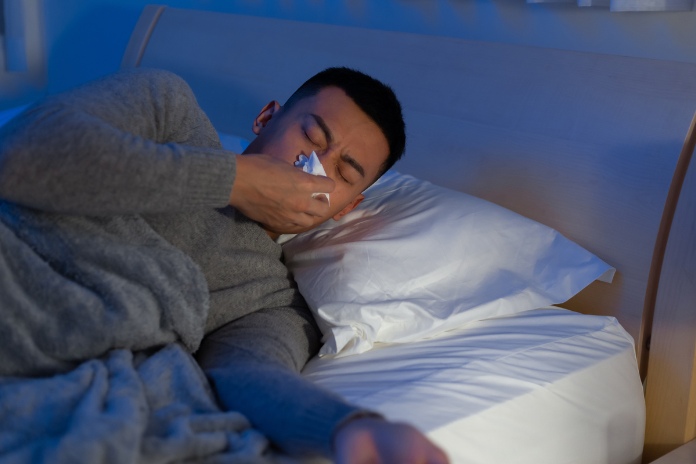
You make it through the day reasonably well. Maybe a little sneezing, some irritated eyes, the occasional sniffle. But by the time you get into bed and turn off the light, something shifts. Your nose is suddenly completely blocked, your throat is scratchy, and what felt manageable at noon now feels impossible at midnight. If this sounds familiar, you’re not imagining it.
Hay fever at night is a recognized and well-documented pattern, and there are specific physiological and environmental reasons why allergic rhinitis tends to peak after dark. Understanding what’s actually driving nighttime allergy symptoms, from pollen tracked indoors to the body’s own hormonal rhythms, is the first step toward doing something about it.
This article covers exactly that, along with practical strategies that can meaningfully improve sleep during allergy season.
- Allergies often feel worse at night because pollen collected on your clothes, hair, skin, pets, and bedding throughout the day continues to trigger symptoms while you sleep.
- Lying down makes it harder for mucus to drain properly, which can increase nasal congestion, sinus pressure, postnasal drip, and nighttime coughing.
- The body’s natural anti-inflammatory hormone, cortisol, reaches its lowest levels at night, making allergic inflammation and symptoms more noticeable.
- Nighttime allergy symptoms can disrupt sleep quality, and poor sleep may further increase inflammation, creating a cycle that makes symptoms feel worse.
Why Hay Fever Symptoms Often Feel Worse at Night

Pollen and Allergens Carried Indoors During the Day
One of the most underappreciated drivers of nighttime hay fever is something that happens before you even get home. Throughout the day, pollen settles on clothing, hair, skin, and any bags or gear you’ve brought outside. Pets that spend time outdoors carry pollen on their fur. By the time you’re winding down for the evening, you’ve potentially introduced a significant allergen load into your home, and a significant portion of it ends up exactly where you sleep.
Bedding is particularly problematic. If you sit on your bed before showering after being outdoors, or if your pet sleeps with you, the pillow and sheets you spend 8 hours a night on can accumulate pollen over multiple days. Pollen grains are small enough to remain airborne for extended periods once disturbed, which means every time you move in your sleep, you may be re-exposing yourself to the allergens that settled into your sheets during the day.
Lying Down Can Worsen Nasal Congestion
The transition from upright to horizontal isn’t neutral for someone dealing with allergic rhinitis. When you lie down, gravitational forces that normally assist mucus drainage change. Mucus that drains more freely when you’re standing can pool in the nasal passages and sinuses when you’re flat, contributing to the blocked nose at night that allergy sufferers know well.
This positional change increases nasal airway resistance, making it harder to breathe through the nose and more likely that congestion will become disruptive enough to wake you or prevent you from falling asleep in the first place. Sinus pressure often intensifies in this position as well, particularly if inflammation is already present from daytime allergen exposure.
Natural Nighttime Changes in the Body
The body’s internal rhythms contribute to the worsening of allergies at night in ways unrelated to external allergen levels. Cortisol, the hormone that plays an anti-inflammatory role, follows a diurnal pattern. Levels are highest in the early morning and decline steadily through the day, reaching their lowest point during the nighttime hours.
When cortisol is low, the body’s natural suppression of inflammatory responses weakens. This creates a window during which immune cells may respond more vigorously to allergens, amplifying the classic symptoms of sneezing, congestion, and itching. The quiet of the nighttime environment also removes the distracting stimuli that occupy attention during the day, making symptoms that were present but tolerable during waking hours feel dramatically worse in bed.
A study published in the Journal of Allergy and Clinical Immunology documented this circadian pattern in allergic rhinitis, finding that peak nasal airway resistance consistently occurred during sleep hours, independent of the timing of allergen exposure. This biological rhythm is a clinically meaningful contributor to nighttime hay fever symptoms.
Indoor Allergy Triggers That May Add to Symptoms
Pollen is only one part of the nighttime allergy picture. Bedrooms are frequently home to dust mites, which thrive in mattresses, pillows, and upholstered furniture at household temperatures and humidity levels. Dust mite allergens are among the most common triggers of year-round allergic rhinitis.
Pet dander, another significant indoor allergen, can remain suspended in the air for hours and accumulate in soft furnishings, even if a pet does not enter the bedroom. Mold exposure is also relevant in homes with humidity issues, particularly in basements or bathrooms adjacent to bedrooms. For many people with hay fever at night, pollen-triggered symptoms are compounded by one or more of these indoor triggers operating simultaneously.
Read More: Can Hay Fever Make You Dizzy? Surprising Symptoms of Seasonal Allergies
Common Nighttime Hay Fever Symptoms
Nighttime hay fever symptoms can affect far more than comfort. Congestion, coughing, itching, and breathing difficulties often become more noticeable after dark, making it harder to fall asleep and stay asleep through the night.
- Nasal congestion is the most common nighttime symptom. A blocked nose often forces mouth breathing, which can dry the throat, increase snoring, and contribute to fragmented sleep.
- Postnasal drip tends to worsen when lying down, allowing mucus to collect at the back of the throat. This can trigger coughing and frequent throat clearing that disrupts sleep.
- Itchy eyes, nose, and throat may feel more intense at night due to allergen buildup on bedding and the body’s natural nighttime drop in anti-inflammatory hormones.
- Poorly controlled symptoms can lead to repeated awakenings, difficulty returning to sleep, and reduced overall sleep quality.
Over time, disrupted sleep can take a toll on daily life, contributing to fatigue, reduced concentration, mood changes, and lower performance at work or school. For many people, the impact of hay fever extends well beyond the allergy symptoms themselves.
How Poor Sleep Can Affect Allergy Symptoms
Sleep Deprivation and Immune System Stress
The relationship between allergies and sleep is bidirectional. Poor sleep doesn’t just result from allergy symptoms; it also worsens the immune dysregulation that drives them. Sleep deprivation activates inflammatory pathways and elevates pro-inflammatory cytokines, potentially amplifying allergic responses.
A study in the journal Sleep demonstrated that sleep-restricted individuals exhibited heightened inflammatory responses and greater subjective symptom severity than those with adequate sleep, a finding with direct implications for allergy management.
Effects on Concentration, Mood, and Energy Levels
Beyond immune function, the cognitive and emotional costs of chronic sleep disruption from hay fever and sleep problems are substantial. Reaction time, memory consolidation, decision-making, and emotional regulation all degrade meaningfully with cumulative sleep loss.
People managing seasonal allergies often describe a reduced quality of life during peak pollen seasons, with the sleep impact often more significant than the allergic symptoms themselves. This perspective is clinically significant because it argues for treating nighttime allergy control as a priority rather than an afterthought.
The Cycle of Allergies and Poor Sleep
The self-reinforcing nature of this relationship deserves explicit recognition. Allergen exposure at night disrupts sleep. Poor sleep heightens immune reactivity. Heightened immune reactivity intensifies allergic responses. Those intensified responses further disrupt sleep. Without intentional interruption, this cycle can persist and worsen throughout allergy season.
Breaking the cycle requires addressing both the allergen burden in the sleep environment and the quality of the sleep itself, approaches that work together rather than independently.
Read More: Hay Fever vs. Common Cold: How to Tell the Difference
How to Reduce Hay Fever Symptoms Before Bed
Showering before bed is one of the most consistently recommended strategies for reducing pollen allergies at night, and it works by physically removing allergens from the skin and hair before they can transfer to bedding. Changing into indoor-only clothing when you arrive home limits the spread of pollen collected during the day to the areas where you spend most of your time, particularly the bedroom.
Dr. Clifford Bassett, MD, founder and medical director of Allergy and Asthma Care of New York and clinical assistant professor at New York University School of Medicine, has recommended in published allergy guidance that people with seasonal allergies “think of pollen as something that needs to be washed off, not just avoided,” emphasizing that post-exposure hygiene is as important as allergen avoidance during high-pollen days.
Washing bedding weekly in hot water eliminates dust mite populations and removes accumulated pollen. Keeping bedroom windows closed during high pollen periods, particularly in the morning when outdoor pollen counts tend to peak, prevents direct pollen entry. Using a high-efficiency particulate air (HEPA) filter in the bedroom can reduce airborne allergen concentrations, including pollen, pet dander, and mold spores.
Keeping pets out of the bedroom is a meaningful step for those with pet dander sensitivity, even if the pet doesn’t appear to trigger obvious daytime symptoms. Allergen concentrations in a room occupied by a pet overnight are consistently higher than in rooms where pets are excluded.
Nasal irrigation with a saline solution, using a neti pot or squeeze bottle, physically clears pollen and other allergens from the nasal passages before bed. This mechanical removal complements medication by reducing the allergen burden that triggers the inflammatory response in the first place.
Saline nasal sprays offer a less intensive version of the same benefit and are appropriate for people who find full nasal irrigation uncomfortable. Neither approach replaces medication, but both are useful adjuncts that can reduce symptom intensity at night.
Antihistamine timing matters more than many patients realize. Second-generation antihistamines like cetirizine, loratadine, and fexofenadine have extended durations of action, but taking them at a consistent time each day, and specifically in the evening for those whose symptoms are primarily nocturnal, may offer better overnight coverage.
Intranasal corticosteroid sprays are generally considered the most effective first-line treatment for allergic rhinitis at night and during the day. These medications require consistent daily use to reach full effectiveness rather than on-demand dosing. Patients who use them only on symptomatic nights often don’t achieve the full benefit. A clinician should guide medication selection and timing based on individual symptom patterns.
Sleep Strategies That May Help During Allergy Season
Sleeping with the head elevated can help reduce nasal congestion by improving mucus drainage and keeping the airways more open. Wedge pillows are often a more stable and comfortable option than stacking multiple pillows.
A cool, clean sleep environment can also make a difference. Maintaining indoor humidity between 30% and 50%, minimizing dust-trapping furnishings, and reducing exposure to allergens in the bedroom may help ease nighttime symptoms.
Staying well hydrated can thin mucus and reduce postnasal drip, while honey in warm water or tea may soothe throat irritation. If using a humidifier, regular cleaning is essential to prevent mold growth.
Consistent sleep and wake times, combined with a simple pre-bed routine that includes allergen-reduction measures and properly timed medications, can support better sleep and improve nighttime allergy control.
Dr. Sundas Khan, MD, a sleep medicine specialist and clinical instructor at Yale School of Medicine, has noted in clinical commentary that “allergy patients who treat their sleep environment with the same attention they give their medications consistently report better sleep outcomes than those who rely on medication alone,” underscoring that behavioral and environmental interventions are not optional extras.
Read More: Natural Remedies for Hay Fever: What Science Actually Says About Symptom Relief
When Nighttime Allergy Symptoms May Need Medical Attention

Symptoms that remain uncontrolled despite over-the-counter treatments, occur year-round, or regularly interfere with sleep should be evaluated by a healthcare professional. Effective treatments are available, and persistent sleep disruption shouldn’t be considered a normal part of allergy season.
Ongoing nighttime congestion may indicate conditions such as chronic sinusitis, asthma, or sleep apnea, each of which requires a different management approach. Symptoms such as loud snoring, gasping during sleep, or excessive daytime fatigue warrant a separate medical assessment.
For people with persistent or severe allergies, allergen immunotherapy through injections or sublingual tablets may offer long-term symptom improvement and reduce reliance on medications.
Treatment Options for Moderate to Severe Hay Fever
When over-the-counter intranasal corticosteroids are insufficient, prescription-strength formulations or combination sprays may offer greater efficacy. Prescription antihistamine nasal sprays, including azelastine, act more rapidly than oral antihistamines and can be particularly useful for relief of acute nighttime congestion.
Leukotriene receptor antagonists like montelukast are another prescription option for patients with coexisting asthma and allergic rhinitis, though they carry important labeling regarding neuropsychiatric side effects that clinicians should discuss with patients before prescribing.
A Cochrane review of subcutaneous allergen immunotherapy found a significant reduction in both symptom severity and medication use in patients with allergic rhinitis, including those with sleep-disrupting nighttime symptoms. Sublingual immunotherapy tablets, approved for specific allergens including grass and dust mites, offer an at-home alternative to injections for appropriate candidates.
Both forms of immunotherapy require a multi-year commitment but offer the prospect of symptom reduction that persists beyond the active treatment period, a meaningful advantage over medications that must be taken indefinitely.
The concept of “one airway, one disease” reflects the clinical reality that allergic rhinitis and asthma frequently coexist and influence each other. Uncontrolled nasal inflammation can worsen lower airway reactivity, and poorly managed asthma can amplify upper airway symptom severity.
Coordinated treatment addressing both conditions simultaneously consistently produces better outcomes than treating each in isolation. Patients with both conditions benefit from care that explicitly considers their interaction.
Read More: Hay Fever in Children: Signs, Common Triggers, and What Parents Can Do
Key Takeaway: Better Allergy Control Can Lead to Better Sleep
Hay fever at night is more than a seasonal inconvenience. The convergence of pollen brought indoors, positional changes that worsen congestion, declining anti-inflammatory hormones, and indoor allergen exposure creates predictable and consistent conditions for symptom flares after dark.
Understanding these mechanisms clarifies the solution: reduce the allergen burden in the sleep environment, time medications appropriately, support the body’s sleep conditions, and seek clinical evaluation when symptoms aren’t adequately controlled.
Managing nighttime hay fever symptoms isn’t about suffering through allergy season any less tolerably. It’s about protecting the sleep quality that sustains immune function, cognitive performance, and overall health. For the large number of people whose allergies are worse at night, consistent and targeted management produces real improvements, and for many, effective treatment changes the entire quality of their allergy season.
References
- Bousquet, J., Khaltaev, N., Cruz, A. A., Denburg, J., Fokkens, W. J., Togias, A., & Zuberbier, T. (2008). Allergic rhinitis and its impact on asthma (ARIA) 2008 update. Allergy, 63(S86), 8-160.
- Calderon, M. A., Alves, B., Jacobson, M., Hurwitz, B., Sheikh, A., & Durham, S. (2007). Allergen injection immunotherapy for seasonal allergic rhinitis. Cochrane Database of Systematic Reviews, 1, CD001936.
- Irwin, M. R., Olmstead, R., & Carroll, J. E. (2016). Sleep disturbance, sleep duration, and inflammation: A systematic review and meta-analysis of cohort studies and experimental sleep deprivation. Biological Psychiatry, 80(1), 40-52.
- Krouse, H. J., Davis, J. E., & Krouse, J. H. (2002). Immune mediators in allergic rhinitis and sleep. Otolaryngology, Head and Neck Surgery, 126(6), 607-613.
- Li, J. T. (2023). Hay fever. Mayo Clinic.
- Martin, S. E., Marshall, I., & Douglas, N. J. (1997). The effect of posture on airway caliber with the sleep-apnea/hypopnea syndrome. American Journal of Respiratory and Critical Care Medicine, 155(1), 199-204.
- Naclerio, R. M., Bachert, C., & Baraniuk, J. N. (2010). Pathophysiology of nasal congestion. International Journal of General Medicine, 3, 47-57.
- Smolensky, M. H., Reinberg, A. E., & Labrecque, G. (1995). Twenty-four hour pattern in symptom intensity of viral and allergic rhinitis: Treatment implications. Journal of Allergy and Clinical Immunology, 95(5), 1084-1096.
In this Article