

















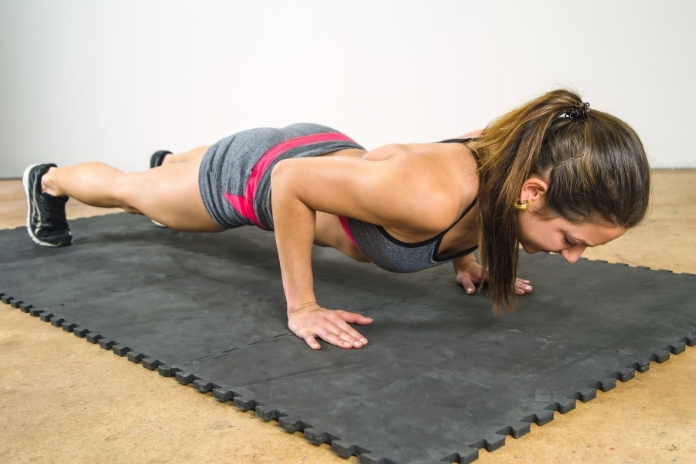
Discussions about exercise science and health have recently focused on straightforward fitness tests, like the push-up test. Research suggests that a person’s push-up capacity may be related to overall physical fitness and cardiovascular health.
It has prompted many people to look up phrases such as “pushup test,” “pushup test heart health”, and “pushups and cardiovascular health” to see whether this routine exercise correlates with more significant health markers.
This article will discuss the pushup test, its limitations, how it reflects general fitness, what a good pushup count looks like, and how it relates to heart health markers. We’ll also talk about myths, safe training techniques, and when to get medical help.
- Heart Health Marker: Higher push-up capacity strongly correlates with a lower risk of future cardiovascular events.
- Fitness Snapshot: It measures functional upper-body endurance, though it cannot replace clinical medical screenings.
- Daily Habit Wins: Consistency, progressive training, and overall lifestyle habits matter far more than a single high score.
Read More: The 11 Push-Up Challenge: Benefits, How It Works, and How to Do It Safely
What Is the Pushup Test?
One popular test of upper-body strength is the push-up test. It is an easy, fast way to evaluate someone’s strength and stamina. Doing as many push-ups as you can in a predetermined amount of time is the test.
You determine muscle strength by counting the number of pushups performed within the designated time frame. Fitness professionals frequently use this test to track progress and create training plans. Anyone who wishes to keep an eye on their upper body strength can also use it.
The Research Behind the Pushup Test and Heart Health

Recent research has underscored a strong connection between the ability to do push-ups and cardiovascular health. A remarkable study published in the Journal of the American Medical Association (JAMA) found that men who could do 40 or more push-ups had a heart disease risk that was 96% lower than that of men who could do only 10 or fewer.
The study assessed the push-up performance of a cohort of active adult men and followed them for ten years.
The results emphasize the importance of strength training and indicate that push-ups may provide a rapid, efficient assessment of a person’s cardiovascular fitness. The study shows that the ability to do push-ups can forecast future cardiovascular incidents, highlighting the importance of including this exercise in our workout regimens.
Risk Reduction: The heart disease risk for men who could do 40 or more push-ups was 96% lower than that of those who could do 10 or fewer.
Fitness as an Indicator: Researchers found that push-up performance was as precise an indicator of heart disease risk as conventional methods such as treadmill tests.
Incremental Benefits: Men who could manage only 11 push-ups still experienced a 64% reduction in risk.
Read More: At-Home Strength Exercises Without Equipment: That Actually Work
Why Pushup Performance May Reflect Overall Health
The push-up test assesses the endurance and strength of the upper body muscles. Muscular power, defined as the ability to generate force rapidly (Power = Force x Velocity), is commonly associated with athletic movements but is also essential in daily life.
Push-ups require coordinated strength and power from the chest, shoulder, tricep, and core, and high upper-body muscular power improves performance in sports that involve pushing, throwing, or quick upper-body movement.
But it’s not only for sportspeople. In everyday activities, practical tasks such as opening a heavy door, carrying groceries, lifting kids or animals, and breaking a fall require upper body strength. The difficulty of these tasks can increase with low upper-body power, and in some instances, the risk of injury can rise, particularly as we get older.
Thus, testing and improving one’s push-up performance can be a beneficial indicator of overall upper-body function, resilience, and health.
How Many Pushups Are Considered Good?
According to the American College of Sports Medicine, for men aged 18-25, doing more than 25 push-ups consecutively is deemed “excellent,” while 21-25 is regarded as “good.” Values below 21 are classified as “poor.”
Men in this age group typically perform an average of 15–19 push-ups, while women aged 18–25 achieve “excellent” with 10–14 consecutive push-ups and “good” with 7–9. Anything below this threshold is deemed “poor.”
Women in this age group can typically perform 4-7 push-ups. Although these are broad recommendations, it’s crucial to keep in mind that each individual is unique, and outcomes may vary depending on factors such as fitness level and overall health. If you’re worried about your results, consult your doctor or a certified personal trainer.
What the Pushup Test Can and Cannot Tell You

The push-up test fitness level can indicate:
- Overall fitness level
- Muscular stamina
- Preparedness for exercise
The push-up test is unable to identify or determine the presence of:
- Heart artery disease
- Cardiac arrhythmias
- Structural cardiac conditions
Clinical cardiovascular screening remains essential for assessing real exercise and cardiovascular risk. Blood pressure, cholesterol, ECG, and blood sugar testing provide accurate health insights that a push-up test heart health evaluation cannot.
Other Fitness Measures Linked to Heart Health
Physical activity significantly advances good heart health. It’s one of the most effective ways to strengthen the heart muscle, manage your weight, and prevent arterial damage from high cholesterol, high blood sugar, and high blood pressure, which can lead to heart attacks or strokes. Here’s how various kinds of exercise can benefit you.
Aerobic Exercise: Aerobic activity enhances blood circulation, leading to reductions in heart rate and blood pressure. Moreover, it boosts your overall aerobic fitness, as assessed by a treadmill test, and enhances your cardiac output. Aerobic exercise lowers the risk of developing type 2 diabetes and aids in blood glucose management for those already living with diabetes.
Resistance Training (Strength Work): Resistance training targets body composition more directly. For individuals with a high body fat percentage (especially those with a large abdomen, which poses a heart disease risk), it can assist with fat reduction and development of lean muscle mass.
Stretching, Flexibility, and Balance: Workouts aimed at flexibility, like stretching, do not have a direct impact on heart health. Their actions are advantageous for musculoskeletal health, allowing you to remain flexible and free from joint pain, cramps, and other muscular problems. That adaptability is essential for sustaining both aerobic exercise and resistance training.
Read More: Lunchtime Sweat: 15-Minute Workouts for Busy Professionals
How to Improve Your Pushup Performance Safely
Practice three to five times a week to improve your push-ups. Here are some adapted push-ups to help you build strength and muscular endurance.
Modified Push-Ups – Hands on an Object: Maintain a straight body position. Your hands should rest on a wall, desk, or steps of a staircase, while the balls of your feet remain grounded. To make the exercise more challenging step by step, start by putting your hands on the wall, then progress to a desk, and finally to a chair.
Modified Push-Ups – With Feet Elevated: Maintain a straight body position, with your hands on the ground and your feet on the chair, steps, or another object. To raise the intensity, elevate your feet to successively higher levels.
Heart-Healthy Habits Matter More Than Your Pushup Count

Paying attention to general lifestyle habits is more influential than your performance on the pushup test.
Regular Physical Activity: It is much more crucial to adhere to physical activity guidelines than to reach a specific target for how many push-ups you should be able to do. Experts recommend that individuals engage in at least 150 mins of moderate activity each week for health benefits.
Heart-Healthy Nutrition: Balanced, nutrient-rich diets available abundantly in fruits, vegetables, whole grains, and lean proteins promote physical fitness and heart health.
Management of Key Risk Factors: Controlling blood pressure, cholesterol, and blood sugar levels can significantly reduce cardiovascular risk and improve overall health.
Steering Clear of Tobacco and Excess Alcohol: Lifestyle choices have a stronger impact on cardiovascular outcomes than pushups and heart disease performance metrics.
When Exercise Symptoms Should Not Be Ignored
Never ignore symptoms during exercise, regardless of your push-up test fitness level:
- During exercise, chest pain or pressure
- Uncommon breathlessness
- Light-headedness or loss of consciousness
- Irregular heartbeats or palpitations
Common Myths About the Pushup Test

Push-ups, an effective and classic bodyweight exercise, are a staple in fitness routines around the globe. However, as with any widely favored physical activity, push-ups have their own set of myths and misunderstandings.
Myth 1: Push-Ups Target Only the Chest Muscles: While push-ups are great for targeting chest muscles (pectoralis major), they are not a one-dimensional exercise. Push-ups engage multiple muscle groups, including the shoulders (deltoids), triceps, and core.
Myth 2: Only Upper Body Strength Benefits from Push-Ups: Push-ups are actually a full-body exercise, contrary to what many believe. The core muscles are activated in plank position and during associated movement, enhancing core strength and stability.
Moreover, to keep the body straight during push-ups, it is necessary to engage the lower-body muscles, like the glute and quadricep.
Myth 3: Only Men Can Do Push-Ups: Push-ups are an exercise that benefits everyone equally, regardless of gender. It is both misinformed and outdated to think push-ups are only for men.
By adding push-ups to workout regimens, women may significantly improve upper-body strength, core stability, and overall muscular endurance.
Myth 4: Pushups Are the Best Measure of Fitness: The pushup test is just one small part of an overall fitness assessment.
Myth 5: Not Being Able to Do Pushups Means You’re Unhealthy: Even low push-up test heart health performance can improve with training.
Read More: How to Improve Arm Definition Without Lifting Heavy Weights
Conclusion
The pushup test is a very simple way to check how much muscular endurance you’ve got and get a quick sense of your overall fitness. It’s linked to better long-term health, but honestly, it’s just a snapshot. Don’t treat it like some kind of medical exam. If you do well, sure, you’re probably in good shape and sticking to regular workouts.
But let’s be clear, it doesn’t mean you’re safe from heart issues or that you can skip health screenings. Genuine cardiovascular health takes more than just strong pushup numbers; you need consistent exercise, balanced meals, and smart management of things like blood pressure and cholesterol.
So, don’t get caught up with your score. Focus on steady progress and making lasting changes to your routine; that’s what pays off in the long run.
FAQs
Can Pushups Improve Heart Health?
Indeed, doing push-ups is a great way to strengthen your heart. They necessitate coordination of the entire body and involve primary muscle groups, thereby compelling your heart to exert more effort to circulate oxygenated blood; thus, they function as both a strength and cardiovascular exercise.
How Often Should I Do Pushups?
To develop upper body strength, aim for 2 to 4 workouts per week, with 3 to 4 sets per session. Since muscles require at least 48 hours to recover and grow, refrain from training them every day unless the volume is kept low and the emphasis is solely on endurance.
Are Modified Pushups Effective?
Indeed, modified pushups contribute to gradual strength gains and enhanced muscular endurance test results.
What If I Can’t Do a Single Pushup?
Start with wall pushups or incline variations to build pushup test heart health readiness over time.
References
- Rehab2Perform. Push up test.
- Cartwright Fitness. (28th November, 2022). What does the push up test measure?
- Pearson, N. Can push-ups be an indicator of heart health?
- Center for Fitness and Wellness. The importance of push ups.
- Johns Hopkins Medicine. 3 kinds of exercise that boost heart health.
- The Citadel. To improve push-ups.
In this Article