


















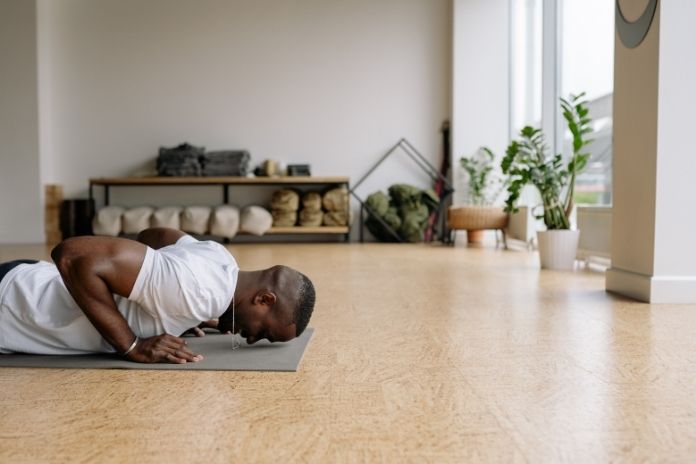
- The 11 push-up challenge is a simple starting point for building upper-body strength, muscular endurance, and daily exercise consistency.
- Eleven reps should be seen as the starting line, not the goal, since strength improves only with progressive overload over time.
- Research also links completing at least 11 push-ups in baseline tests with better cardiovascular fitness compared to those who cannot reach double digits.
Most fitness challenges overcomplicate things. Multiple movements, equipment requirements, and time commitments that evaporate by week two. The 11 push-up challenge cuts through all of that. No gear. No gym. A few feet of floor space and a consistent intention to show up. What makes it interesting, beyond its simplicity, is that the number 11 has some real science behind it.
Not as a magic threshold, but as a meaningful benchmark that separates people whose upper body strength and muscular endurance are functioning at a basic fitness level from those who haven’t trained that capacity in a while.
This guide covers what the 11 push-up challenge actually is, what muscles it trains, what completing 11 push-ups says about your fitness, whether 11 push-ups a day can build muscle, how to do them correctly, how to modify for every level, and how to use the challenge as a springboard for real progress in bodyweight training.
What Is the 11 Push-Up Challenge?

The 11 push-up challenge exists in two forms. The first is a daily habit version: commit to completing at least 11 push-ups every day as a minimum floor for consistent movement. The second is a benchmark version: use your ability to complete 11 consecutive push-ups with proper form and alignment as a snapshot of your current upper body strength baseline.
Both versions gained traction through fitness communities and social media as accessible, zero-equipment alternatives to gym-based fitness tracking. The ability to complete it anywhere, at any time, with no cost and no setup, makes it the kind of habit that actually sticks.
The number 11 sits in the right zone: achievable for most moderately active adults but genuinely challenging for those who have been sedentary. That’s exactly where useful fitness benchmarks live.
What Muscles Do Push-Ups Work?
The push-up is one of the most efficient bodyweight training exercises because of how many muscle groups it recruits simultaneously. The chest and triceps are the primary movers.
The pectoralis major drives the horizontal press, while the triceps extend the elbow through the top of the movement. The anterior deltoids assist with pressing and contribute to shoulder stability. The serratus anterior, along the ribcage, supports shoulder blade movement throughout.
Plank stability is the underappreciated component. The core, including the transverse abdominis, rectus abdominis, and obliques, engages isometrically throughout every rep to maintain the rigid position that proper form and alignment require.
Glutes and quadriceps contribute to holding the lower body in line. A push-up is simultaneously a pressing exercise and a plank stability challenge.
Read More: What Happens When You Do 20 Push-Ups Every Morning? 10 Surprising Benefits
What Does Being Able to Do 11 Push-Ups Say About Your Fitness?

The ability to complete 11 consecutive push-ups with good form is a useful snapshot of muscular endurance and functional upper body strength. It reflects the capacity of the chest and triceps, anterior deltoids, and core stabilizers to work under sustained load, which has implications for general physical function, injury resilience, and even metabolic health.
Cardiovascular fitness and push-up capacity are more closely related than most people expect. A landmark cohort study published in JAMA Network Open followed 1,104 active adult men for 10 years and found a significant inverse relationship between baseline push-up capacity and incident cardiovascular disease risk.
Men who could complete more than 40 push-ups had a 96% lower risk of cardiovascular events than those who completed fewer than 10. Those who could do at least 11 push-ups showed a lower risk as well, with the benefit increasing progressively with each additional push-up category.
Justin Yang, MD, MPH, explains the practical significance directly: “Our findings provide evidence that push-up capacity could be an easy, no-cost method to help assess cardiovascular disease risk in almost any setting. Surprisingly, push-up capacity was more strongly associated with cardiovascular disease risk than the results of submaximal treadmill tests,” he told the Harvard Gazette.
The key clarification here is that the relationship is correlational: push-up capacity is a proxy for overall physical fitness and conditioning level, not a direct cause of reduced heart disease. It measures fitness. Fitness protects the heart. The push-up strength test is an accessible measuring tool.
The honest interpretation is that 11 push-ups is a meaningful threshold, not a health guarantee. It reflects adequate upper body strength and muscular endurance for a sedentary-to-moderately-active adult, serves as a reasonable starting marker for the 11 push-up challenge, and sits just above the lower-risk category in the Harvard research.
For someone who can’t complete 11 clean reps today, it’s a concrete, achievable goal with documented health relevance.
Can Doing 11 Push-Ups a Day Build Muscle?
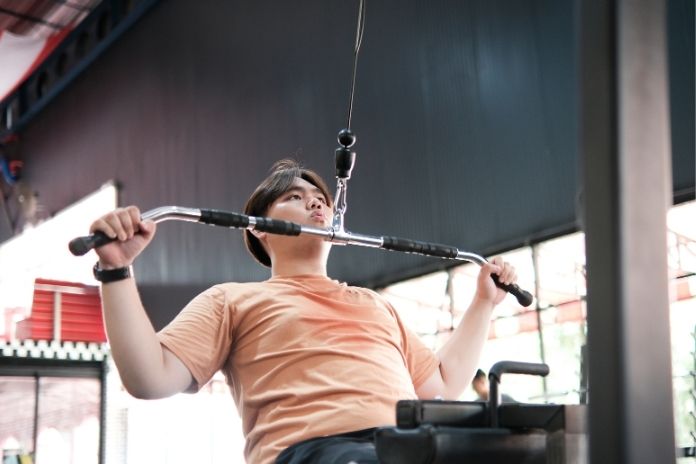
11 push-ups a day will build meaningful muscle for beginners who haven’t previously trained this movement pattern. At that level, 11 reps represent a significant enough stimulus relative to current capacity that the body adapts: muscle protein synthesis increases, motor unit recruitment improves, and over weeks, the exercise begins to feel easier. That feeling of increasing ease is the signal that adaptation is happening.
The mechanism that governs whether continued gains occur is progressive overload.
Dr. Brad Schoenfeld, PhD, CSCS, FNSCA, defines the governing principle of all muscle development: “progressive overload can be defined as consistently challenging the neuromuscular system beyond its present capacity,” he explains.
The neuromuscular system adapts to a given challenge within weeks. Once 11 push-ups become comfortable, the stimulus is no longer sufficient to drive further change. Muscle growth and muscular endurance gains both require the challenge to stay ahead of the adaptation.
For beginners, 11 push-ups a day is a real stimulus that produces real results. For anyone with a moderate training background, the daily 11 is a maintenance floor at best.
Real upper body strength development requires progressively increasing volume (more sets), density (more reps per set), or difficulty (incline reduction, tempo manipulation, added resistance). The 11 push-up challenge is not the destination. It’s the habit anchor that makes the destination achievable.
Benefits of the 11 Push-Up Challenge

Builds Upper Body Strength
Eleven push-ups performed consistently with a full range of motion load the chest and triceps, anterior deltoids, and serratus anterior through repeated cycles of stretch and contraction. Over weeks, particularly for those new to bodyweight training, this frequency is sufficient to produce measurable improvements in both muscular strength and endurance.
Improves Core Stability
Every push-up rep requires isometric engagement of the core from setup to finish. The abdominals, obliques, and glutes work to maintain the rigid plank position that proper form and alignment demand. Consistent push-up practice builds plank stability as a side effect of the pressing movement, improving the foundation for virtually every other athletic activity.
Encourages Daily Movement Habit
One of the most clinically underappreciated benefits of the 11 push-up challenge is the habit itself. Eleven reps take under a minute. The barrier to entry is low enough that excuses don’t hold, which makes consistency possible in a way that gym programs often aren’t.
Dr. Jordan Metzl, MD, frames the psychological dimension of building any fitness habit: “I want people to basically learn how to push themselves in mind and body,“ he told Today. “I want you to be a little bit comfortable being uncomfortable because the value of exercise goes up significantly.”
That discomfort tolerance, built through small but consistent daily challenges like the 11 push-up challenge, is what keeps people showing up when the novelty wears off. He notes that this is the mechanism behind long-term adherence: it’s not motivation that sustains a habit; it’s familiarity with the discomfort that makes showing up feel normal.
Increases Muscular Endurance
Repeated daily push-up practice specifically develops muscular endurance, the ability of a muscle group to sustain submaximal contractions over time. This type of endurance has functional relevance for daily activities and athletic performance well beyond what raw strength alone provides.
Boosts Confidence and Consistency
Completing a daily minimum, especially one that felt difficult at the start, builds the kind of incremental confidence that transfers to other areas of training. The push-up fitness challenge format is small enough to always be achievable and significant enough to feel like a win when completed.
Who Is the 11 Push-Up Challenge Suitable For?
The 11 push-up challenge is well-suited for beginners starting their first structured bodyweight training practice, busy individuals who need a no-equipment minimum daily movement commitment, people returning to fitness after a break or illness, and anyone who wants a consistent habit anchor that doesn’t require a gym, equipment, or significant time.
It is also useful as a monthly benchmark for intermediate trainees who want to track their baseline upper body strength without structured testing protocols.
Who May Need Modifications?
Wrist pain during standard push-ups often reflects wrist extension load. Fist push-ups or push-up handles that keep the wrist in neutral alignment can resolve this without compromising the movement. Shoulder injuries, particularly rotator cuff issues, may require load reduction via incline or wall push-up modifications and ideally a physical therapist’s assessment before progressing.
Lower back issues often indicate insufficient core engagement, which is corrected through conscious bracing rather than modification of the push-up itself in many cases. Beginners who cannot yet perform a full push-up benefit from incline, knee, or wall variations that reduce the percentage of body weight being pressed while maintaining proper form and alignment.
How to Do a Proper Push-Up
Proper form and alignment are more important than rep count. A technically correct push-up activates all the intended muscles, protects the joints, and produces the neuromuscular stimulus that drives adaptation. A sloppy push-up does less of both.
Dr. Edward Laskowski, MD, breaks down exactly what the movement demands: “The pushup is a classic exercise that uses your body weight for resistance. The pushup works the pectoral muscles, which are the muscles in the front of the chest wall. The pushup also works the triceps muscles, which are the muscles in the back of the upper arm. The pushup can be a great core stability exercise if performed properly.”
Proper execution requires hands placed slightly wider than shoulder width, abdominals contracted and held tight throughout, and a controlled lowering of the chest until it nearly reaches the floor before returning to the start. The core must stay braced through every rep. The lower back must not sag. Technique, he consistently emphasizes, is the variable that separates a productive push-up from an injury risk.
The most common form errors are a sagging lower back caused by insufficient core engagement, flared elbows creating shoulder impingement risk, a partial range of motion that limits both the stimulus and the joint health benefit, and a forward head position that strains the cervical spine. Correcting these before increasing reps is more productive than adding volume on top of poor mechanics.
Read More: Targeting Abs: Daily Exercises for Core Strengthening
Push-Up Modifications for All Levels

- Wall Push-Ups: Stand facing a wall with hands placed at chest height and shoulder width. Lean into the wall and press back. This version removes most of the body weight load and is appropriate for complete beginners or those managing upper body injuries.
- Incline Push-Ups: Place hands on a stable elevated surface such as a bench, step, or couch arm. The higher the surface, the lower the relative resistance. This is the best progression between wall push-ups and the floor version for building strength while maintaining form and alignment.
- Knee Push-Ups: Performed on the floor with knees down instead of toes. This reduces the body weight pressed to approximately 54% compared to a standard push-up. Good plank stability from knees to shoulders remains important in this variation.
- Decline or Weighted Push-Ups: For those for whom standard push-ups have become too easy, elevating the feet on a bench or box increases the load on the upper chest and triceps and adds difficulty without equipment. Wearing a loaded backpack or having a partner apply resistance to the upper back adds external load for advanced bodyweight training applications.
How to Progress Beyond 11 Push-Ups
Progressive overload in bodyweight training takes several forms beyond simply doing more reps. Adding a second and third set of 11 increases total training volume. Slowing the tempo, spending three to four seconds lowering down, increases time under tension and the mechanical stimulus for muscle growth without requiring more reps.
Progressing from incline to floor to decline progressively increases the percentage of body weight being pressed. Adding a pause at the bottom position increases the difficulty of each rep through isometric loading at the most challenging point of the movement. Any combination of these strategies, applied consistently over weeks, keeps the neuromuscular system adapting.
Does the 11 Push-Up Challenge Improve Heart Health?
Based on the Harvard JAMA study, push-up capacity correlates with cardiovascular fitness and inversely with cardiovascular disease risk. The relationship is not causal in the direction most people assume: push-ups don’t directly improve heart health the way aerobic training does. Rather, push-up capacity reflects overall physical fitness level, and higher overall fitness is independently associated with better cardiovascular outcomes.
Harvard Health confirmed in their summary of the research that men who could do at least 11 push-ups showed a lower cardiovascular disease risk than those who could do fewer than 10, with the benefit increasing progressively with higher push-up capacity. The 11 threshold matters as a practical indicator, not as a physiological mechanism.
Pairing the 11 push-up challenge with aerobic activity, progressive resistance training, and general physical activity produces the full-spectrum fitness that the research associates with genuine cardiovascular health benefits.
Common Mistakes in Push-Up Challenges
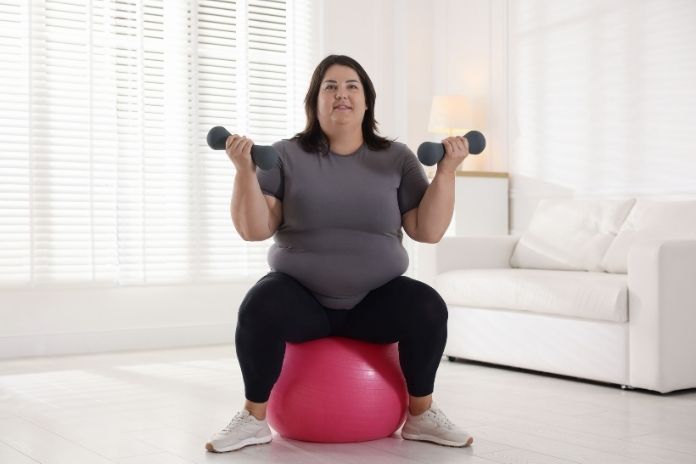
The most consequential mistake in any push-up fitness challenge is prioritizing rep count over form and alignment. Ten clean push-ups produce more stimulus and less injury risk than 20 sloppy ones. The second most common mistake is neglecting recovery. Daily push-ups without adequate protein, sleep, and occasional rest days for beginners can impair the adaptation process.
Third is failing to apply progressive overload, meaning the challenge stays fixed at 11 forever while the body has long since adapted to that load. And fourth is ignoring pain signals, particularly wrist discomfort or sharp shoulder pain, which warrants formal assessment before continuing.
How to Turn the 11 Push-Up Challenge Into a 30-Day Plan
- Week 1: Complete 11 push-ups daily, focusing exclusively on form, alignment, and full range of motion. Rest when needed, but aim for 5 of 7 days.
- Week 2: Add a second set of 11 with 60 to 90 seconds of rest between sets. Track reps and note where form degrades.
- Week 3: Increase each set to 13 to 15 reps if form is clean. Introduce one rest day for recovery. Pair push-ups with a squat or plank variation on three days per week to create a full-body bodyweight routine.
- Week 4: Add a third set. Experiment with one slow-tempo set (3 seconds down) per day to increase time under tension and muscular endurance stimulus. Retest your max clean push-up capacity and compare to Day 1.
The Bottom Line
The 11 push-up challenge earns its place in the fitness conversation not because 11 is a magic number, but because it sits at a meaningful intersection: accessible enough for most people to begin, significant enough to indicate baseline upper body strength and muscular endurance, and backed by research that links push-up capacity to broader cardiovascular fitness markers.
11 push-ups a day is an honest starting point. It builds chest and triceps strength, develops plank stability, reinforces daily movement consistency, and creates the habit infrastructure that real fitness progress runs on.
But the principle of progressive overload means the challenge must grow with you. More reps, more sets, slower tempo, harder variation. The floor is where you start. Where you go from there depends on how consistently you apply what you’ve learned.
Form and alignment protect the investment. Bodyweight training rewards the patient. Start with 11. But don’t stop there.
References
- Harvard T.H. Chan School of Public Health. (2019). Push-up capacity linked with lower incidence of future cardiovascular disease events among men. Harvard Gazette.
- Harvard Health Publishing. (2019). More push-ups may mean less risk of heart problems. Harvard Health.
- Laskowski, E. R. (2024). How to do a push-up properly. Mayo Clinic.
- Metzl, J. D. (2025). 4-week workout plan to build motivation, from a sports doctor. Today.
- Schoenfeld, B. J. (2021). Progressive overload without progressing load? The effects of load or repetition progression on muscular adaptations. LookGreatNaked.com.
- Yang, J., Christophi, C. A., Farioli, A., Baur, D. M., Moffatt, S., Zollinger, T. W., & Kales, S. N. (2019). Association between push-up exercise capacity and future cardiovascular events among active adult men. JAMA Network Open, 2(2), e188341.
- Breitowich, A. (2025). How many push-ups do women really need to be able to do? Experts weigh in. Women’s Health.
- Yang, J., Christophi, C. A., Farioli, A., Baur, D. M., Moffatt, S., Zollinger, T. W., & Kales, S. N. (2019). Association between push-up exercise capacity and future cardiovascular events among active adult men. JAMA Network Open, 2(2), e188341.
- Harvard Health Publishing. (2019, May 1). More push-ups may mean less risk of heart problems. Harvard Medical School.
- Health.com. (2025). Should you really be able to do 11 push-ups?
- PopSugar. (n.d.). The 11 push-up challenge.
- The Everygirl. (2025). Do we actually need to be able to do 11 push-ups?
- Vox. (2025). Can you do 11 push-ups? Should you?
In this Article