


















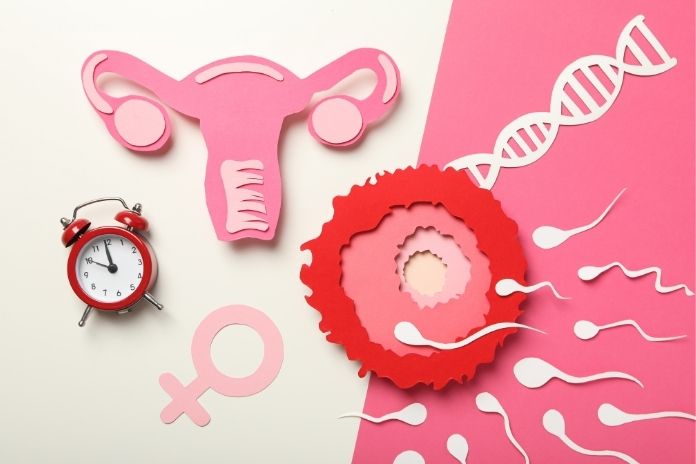
- Menopause is a long transition lasting about 10-14 years, including perimenopause, menopause, and postmenopause.
- Symptoms vary; some improve, while others persist for years or worsen over time.
- Every woman’s timeline is different and depends on factors like genetics, lifestyle, and overall health.
If you’ve been curious about how long menopause actually lasts, the answer may be more complicated than you think. Menopause isn’t just a quick experience that you go through; it’s a lengthy biological process that, for most women, can last as long as 14 years.
One of the primary reasons that menopause has seemed so mysterious in the past may be the way that the word itself has been used. In casual conversation, the word “menopause” may be used to refer to the overall experience of hormonal change.
However, in a medical context, the experience of menopause consists of just a single moment in time, which isn’t actually diagnosed until you’ve gone a year without a period. If you want to know what to expect during the experience of menopause, it’s helpful to think in terms of the different stages that the experience actually consists of: perimenopause, menopause, and postmenopause.
Once you understand the different stages that the experience consists of, the overall experience of menopause makes a lot more sense and isn’t nearly so mysterious. In this article, let’s discuss how long menopause lasts.
Read More: 8 Perimenopause Health Mistakes Many Women Don’t Realize They’re Making
The Three Stages of Menopause: A Quick Overview
The stages of menopause are often referred to as if they are all the same, but they are actually very different and have different functions in the process of menopause. Perimenopause is the longest and most unpredictable of the stages of menopause.
It can begin years before the last period and can last an average of 3-4 years, though the average is about four years. This is the phase in which hormones fluctuate, and the first signs of menopause appear.
Menopause is not a phase of menopause but rather a single event. It is only diagnosed after 12 months of no period. This occurs in the average woman between the ages of 51 and 52. Postmenopause begins the moment the 12 months are over and goes on for the rest of your life.
This phase is where some of the problems of menopause go away, but new problems emerge. This means that the entire process of menopause can last more than a decade, a fact that most people don’t find out until they are in the middle of the process.
Perimenopause: What’s Happening, How Long It Lasts, and What to Expect

Perimenopause is where the real transition happens. Hormones like estrogen and progesterone begin to fluctuate rather than decline in a straight line, which is why symptoms can feel inconsistent and unpredictable.
Early Perimenopause: The First Signs
In the early stages of perimenopause, the transition can begin quietly. Some women may start as early as their mid-30s, although the majority begin in their 40s. The first sign of the transition to menopause can be a subtle change in the timing of a woman’s menstruation. period. Their periods may begin earlier or later than usual, with a difference greater than a week from the usual pattern.
In the early stages of perimenopause, ovulation continues, making pregnancy possible. Since the symptoms are minor or inconsistent, a woman may not recognize these changes as the start of her transition to menopause.
Late Perimenopause: The Most Intense Phase
As the perimenopause progresses, the symptoms become more difficult to ignore. Long periods of time between menstrual cycles, 60 days or longer, are the hallmark of the late perimenopause. This phase of the journey tends to be the most intense.
The years leading up to the last menstrual period, as well as the two years before and after, are usually the peak years for symptoms. This phase of the perimenopause usually lasts one to three years, and it’s the phase in which women usually seek answers about the timeline of their perimenopause.
Symptoms to Expect During Perimenopause

The duration of the symptoms experienced during perimenopause varies, but the trend is the same. The periods become irregular, sometimes heavy, sometimes light. Hot flashes and night sweats begin to occur, which affects the quality of sleep. Mood swings, brain fogs, and the general feeling of unpredictability soon follow.
You will also experience physical changes such as vaginal dryness and weight gain or loss, as well as a decrease in libido. The problem with this phase is not the symptoms experienced, but the unpredictable way in which the symptoms occur.
Read More: Why Belly Fat Keeps Coming Back During Menopause (And How to Stop It)
What Menopause Actually Is—and Why You Can’t Know Until It’s Over
One of the most misunderstood aspects of the menopause process is menopause itself. Menopause is not something that occurs over a period of time. It is a moment in time and is determined by the absence of a period for 12 consecutive months.
The problem is that the diagnosis of menopause is always retrospective. It is impossible to know in the present that this is the last period. Hormonal levels are fluctuating so widely in the years of perimenopause that any tests run would not be able to definitively say that the woman has had her last period.
The normal range of menopause is between the ages of 51 and 52. However, there is a range of 46-55 years of age. Once the woman has been without a period for 12 months, there is no dramatic change physically on that exact day. There’s no sudden shift in symptoms—just a clinical confirmation that the transition has reached a key milestone.
How Long Do Menopause Symptoms Actually Last?
When women ask how long menopause symptoms last, they’re usually seeking an answer in terms of weeks, months, or years. The truth is, each symptom has its own unique duration. Menopausal vasomotor symptoms (hot flashes/night sweats), for example, have been found in research to have a median duration of 7.4 years. They begin in perimenopause and can last through postmenopause.
In some women, they can last longer than a decade, and in others, longer than that. Sleep problems usually accompany night sweats and can be long-lasting if not addressed. Mood swings and brain fog tend to be worse in perimenopause but subside once hormones stabilize.
One symptom that does not improve over time is genitourinary syndrome, which includes symptoms such as vaginal dryness and urinary problems. These symptoms do not improve but may worsen. These symptoms affect the majority of women in postmenopause. While some symptoms improve over time, others do not. The duration of hot flashes is not uniform.
Postmenopause: What Life Looks Like After—and the Health Priorities That Matter
Postmenopause is sometimes referred to as the “after” phase, but it is not merely a time when everything quietens down. It is a long-term phase in which everything becomes a priority. There are improvements in the quality of life as well.
The hot flashes reduce in frequency, the mood becomes stable, and the brain fog, which characterized the premenopausal years, disappears. There is a sense of stability in the hormones, which was lacking in the premenopausal years. However, some symptoms become more prominent in this phase.
Genitourinary syndrome of menopause symptoms continue to worsen if not treated. In addition, the loss in bone density accelerates in this phase, at a rate of one to two percent annually. Cardiovascular health becomes a priority in this phase. Heart disease is the leading cause of mortality in this phase because the risk accelerates immediately after menopause
Understanding postmenopause and what to expect means shifting focus from managing symptoms to protecting long-term health through screening, treatment, and lifestyle changes.
Menopause Doesn’t Last the Same Amount of Time for Everyone — Especially for Black Women

The notion that menopause occurs in a set time frame is not necessarily the case for all. In fact, studies have shown significant differences in the length of time symptoms last and the onset of symptoms, especially regarding racial differences.
African American women, for instance, are more likely to experience hot flashes. They also experience hot flashes for longer periods of time, on average, several years longer than their white counterparts. In addition, black women enter menopause slightly earlier.
However, there is a difference in the treatment process. Although black women experience the symptoms longer and to a higher degree, they are not as likely to undergo hormone therapy. In fact, this has significant implications because if hot flashes are not treated, the risk for cardiovascular diseases is increased.
Therefore, it is clear why it is not necessarily wise to go by the average time frame in which menopause occurs. In fact, if the symptoms begin earlier than expected, especially in the late 30s to early 40s, it is best to seek medical guidance.
What Affects How Long Your Menopause Transition Lasts
The duration of menopause transition is affected by a variety of biological and lifestyle factors. Smoking is one of the factors that has a significant impact on menopause, causing it to begin earlier and symptoms to be more severe.
Genetics is another significant factor, especially your mom’s age at menopause, which is one of the biggest factors that determine your menopause timeline. Your body weight may also influence how estrogen is metabolized in your body.
Medical factors, such as chemotherapy and radiation, may trigger menopause, causing it to begin abruptly. Surgical menopause, where your ovaries are surgically removed, completely alters your menopause timeline by skipping the perimenopause stage altogether. Women who begin menopause symptoms early in life tend to have a longer menopause transition.
Surgical, Early, and Premature Menopause: Different Timelines, Different Needs

Not all menopause journeys follow the typical pattern. Some women experience menopause much earlier, either naturally or due to medical reasons. Premature menopause, which occurs before the age of 40, is relatively rare but carries significant long-term health risks, particularly for the heart and bones.
Early menopause, between 40 and 45, is more common and comes with similar concerns. Surgical menopause is different again. Since the ovaries are removed, hormone levels drop suddenly, leading to immediate and often more intense symptoms. There is no gradual transition, which can make the experience more abrupt and challenging.
In all of these cases, early intervention and ongoing care are essential to manage symptoms and reduce long-term risks.
When to See a Doctor About Menopause Symptoms

While menopause symptoms are common, they don’t have to be suffered through without some support and guidance. If the symptoms are affecting the way you go through your daily life, it may be worth speaking with a healthcare provider. Additionally, if the periods stop before the age of 45 or if the bleeding is very heavy and irregular, it is a good idea to get further evaluation.
If there is bleeding after menopause, it is always something that should be further investigated, as it is not considered normal. In the same way, severe mood changes and depression are something that should be further investigated and can be helped. If there is any question about when menopause starts in a younger woman, guidance can be obtained.
Read More: Sleep Problems After Menopause: Why They Happen and How to Fix Them
Conclusion
So, how long does menopause last? While menopause is a single event, the process can last up to 14 years and goes through three stages: perimenopause, menopause, and postmenopause.
Each of the stages of the menopause process has its own set of problems and issues, ranging from the early stages of fluctuating symptoms to the later stages of health concerns.
While the duration of the process varies from woman to woman and is dependent on various factors such as genetics and lifestyle habits, the most important thing to remember is that you don’t have to go through the process alone. It is absolutely possible to get through each of the stages of the menopause process with confidence and care.
References
- Pfizer. (n.d.). Menopause: Disease and conditions.
- Phạm, A. N. Q., Cummings, M., Yuksel, N., et al. (2023). Development and validation of a case definition for problematic menopause in primary care electronic medical records.
- Richard-Davis, G., Singer, A., King, D. D., & Mattle, L. (2022). Understanding attitudes, beliefs, and behaviors surrounding menopause transition.
- StatPearls Publishing. (2023). Menopause. StatPearls Publishing
In this Article