


















For decades, the dominant message in women’s fitness has been deceptively simple: burn more than you eat. That meant the treadmill, the elliptical, the spin class, and the sixty-minute cardio block five mornings a week. And for a long time, maybe through your twenties and into your thirties, that approach more or less worked. You moved, you burned; things stayed roughly manageable.
Then something shifted. The workouts didn’t change, but the results did. The scale started moving in the wrong direction despite identical effort. The middle thickened. The energy flatlined. And no matter how many miles you logged or classes you attended, the momentum was gone.
For a lot of women, this is the experience of entering perimenopause, the multi-year hormonal transition that typically begins in the early-to-mid forties and can start as early as the late thirties. It’s not a failure of discipline. It’s a mismatch between the training approach and the hormonal reality.
The perimenopause exercise equation has fundamentally changed, and cardio-dominant routines, especially chronic moderate-intensity cardio, are among the least well-aligned with what this phase of life actually demands.
The strength pivot is what the research and a growing consensus among exercise scientists and women’s health physicians have been pointing toward for years. It’s not a fitness trend. It’s a metabolic and hormonal correction, and understanding why it works is the starting point for using it.
This article breaks down why traditional cardio-heavy routines stop working during perimenopause and how they can actually worsen muscle loss, metabolism, and fat storage. It introduces the “Strength Pivot” as a smarter, science-backed shift toward resistance training to support hormones, bone health, and long-term vitality.
- Hormonal changes make cardio less effective and can increase fat and muscle loss.
- Strength training restores muscle, metabolism, and bone health.
- Prioritize strength, add protein, and keep cardio moderate.
Read More: Perimenopause: Symptoms to Watch and Lifestyle Strategies to Ease the Transition
Why Cardio-First Routines Fail During Perimenopause
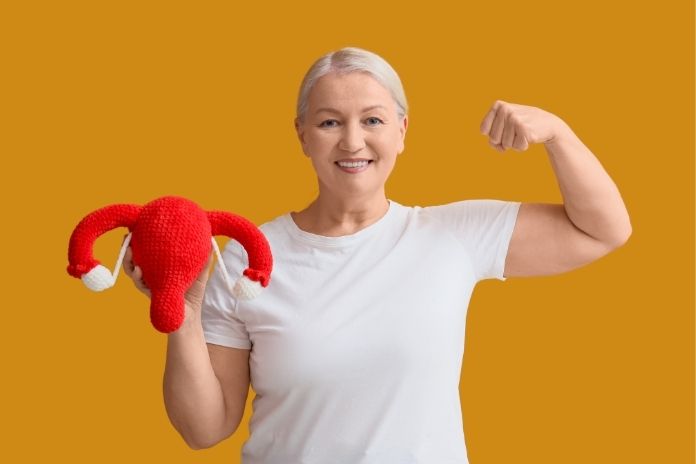
Perimenopause metabolism doesn’t respond to the same inputs it once did, and that’s not because the body has become lazy or broken. It’s because the hormonal context that made moderate cardio a reasonable strategy has changed.
Estrogen decline effects ripple through virtually every system in the body. Estrogen receptors are present in muscle tissue, bone, the brain, the gut, the cardiovascular system, and the skin. As estrogen fluctuates and eventually declines in perimenopause, those receptor systems receive less signal.
The downstream effects include accelerated muscle loss during menopause, reduced insulin sensitivity, altered fat distribution, and a shift in the body’s preferred site for energy storage. Visceral fat, the metabolically active fat that accumulates around the abdominal organs, is particularly prone to accumulation as estrogen declines.
Chronic moderate-intensity cardio, the sort of steady-state effort that characterized the aerobics era, creates a specific hormonal problem during perimenopause. Prolonged moderate cardio raises cortisol and fat storage in a meaningful way.
In a body already contending with estrogen-driven insulin sensitivity changes, elevated cortisol further promotes visceral fat accumulation, suppresses the anabolic signals needed to build and preserve muscle, and increases the catabolic signals that break it down. More cardio, in this hormonal context, can actively work against the outcomes the person is trying to achieve.
The Metabolic Cost of Losing Muscle
Sarcopenia and aging are not just a concern for frailty in older adults. It begins earlier than most people realize, and perimenopause accelerates it. The Study of Women’s Health Across the Nation (SWAN) found that lean muscle mass begins declining while fat accumulation doubles during the menopausal transition, not gradually and gently, but measurably and within a relatively compressed timeframe.
Muscle is a metabolically expensive tissue. It burns significantly more calories at rest than fat tissue, and it’s the primary site of glucose disposal in the body. When muscle declines, the resting metabolic rate drops proportionally. Calories that were previously metabolized by an active, muscle-rich metabolism begin to accumulate instead.
Insulin resistance increases as the primary site of glucose uptake is reduced. The result is a metabolic environment that makes weight maintenance materially harder than it was before, not because of personal failure, but because the engine running the metabolism has gotten smaller.
Preserving and rebuilding that muscle through resistance training benefits for women is the most direct metabolic intervention available during this transition period. Not because strength training burns the most calories during a session; it often doesn’t. But because it changes the baseline metabolic rate that governs how your body handles energy twenty-four hours a day.
The Perimenopause “Strength Pivot”: What It Means and Why It Works
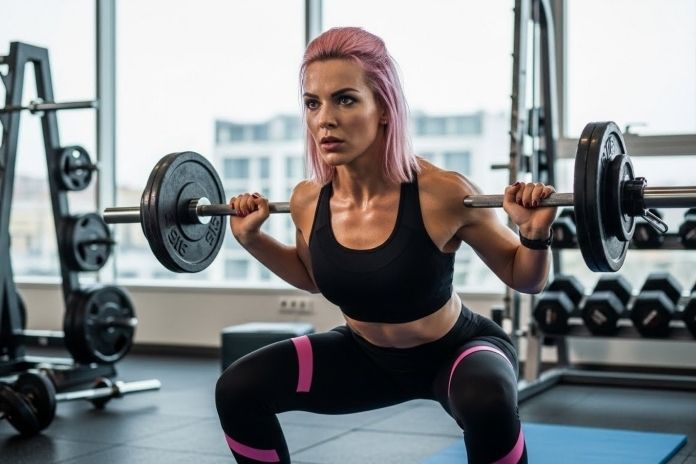
Strength training for women over 40 is not a different version of men’s training adapted down in weight. It’s a hormone-aligned intervention that addresses the specific physiological vulnerabilities of the menopausal transition with evidence that cardio alone doesn’t match.
The strength pivot means shifting the primary training emphasis from cardio-dominant to resistance training-dominant, with cardio repositioned as intentional and targeted rather than default and excessive.
It means choosing to build and preserve lean muscle mass as the foundation of metabolic, skeletal, and cardiovascular health for this phase of life. It means working with what the physiology needs rather than doubling down on what no longer serves it.
The Metabolic Engine: Maintaining Muscle for Longevity
Resistance training benefits for women begin with what happens at the muscle fiber level. Strength training signals muscle protein synthesis, the process of building and repairing muscle tissue. In a hormonal environment where estrogen is declining and anabolic signaling is weakening, that mechanical stimulus becomes the primary driver of muscle maintenance.
The body can no longer rely as heavily on hormonal support to preserve lean mass. The mechanical signal from lifting heavy becomes, correspondingly, more important.
A systematic review and meta-analysis published in the British Journal of Sports Medicine, examining the association between resistance training and all-cause, cardiovascular, and cancer mortality, found that any amount of weekly resistance training was associated with a 17% lower all-cause mortality risk compared to no strength training.
The effect was independent of aerobic activity. Strength training protected against mortality beyond what cardio provided, not instead of it, but meaningfully on top of it. Current physical activity guidelines from the American Heart Association recommend muscle-strengthening activities on at least two days per week.
The evidence from perimenopausal and menopausal research increasingly supports two to three sessions for women in this hormonal transition. Starting simply is both valid and recommended. Compound movements, exercises that use multiple muscle groups simultaneously, offer the highest metabolic return per exercise.
Squats, lunges, pushes, pulls, and hinging patterns, like deadlifts and Romanian deadlifts, are the foundation. Body weight mastery before added resistance, learning the patterns correctly before loading them, reduces injury risk and builds the movement quality that allows progressive loading over time.
Bone Density and Osteoporosis Prevention
Bone density and menopause are directly linked through estrogen decline effects. Estrogen is a key regulator of bone remodeling: it suppresses osteoclasts, the cells that break down bone, and supports the activity of osteoblasts, the cells that build it. As estrogen declines in perimenopause, the suppressive effect on bone breakdown diminishes. Bone loss accelerates.
A 2025 systematic review published in PMC on strength training and menopause symptoms confirmed across multiple trials that resistance training produces clinically significant improvements in bone mineral density in both peri- and postmenopausal women, with effects on the hip and lumbar spine, the sites most vulnerable to osteoporotic fracture.
Osteoporosis prevention isn’t just a concern for late postmenopause. The accelerated bone loss window begins in perimenopause, sometimes as early as the mid-forties.
The women who enter postmenopause with the highest bone mineral density, built through years of weight-bearing and resistance exercise, have the most structural reserve to draw down before fracture risk becomes clinically significant. Starting before symptoms appear is the most effective strategy available.
Dr. Stacy Sims, PhD, captures the core imperative of the Strength Pivot with clarity: “We need to find an external stress, primarily through exercise, that is going to cause the body to respond in the way these hormones are used to allow the body to respond.”
The hormones that once maintained bone density, muscle mass, and metabolic rate are withdrawing. Resistance training doesn’t replicate them. But it provides the mechanical stimulus that generates many of the same downstream effects, and it’s the most practical tool currently available for that purpose.
The Longevity Edge: Strength Training Extends Life
The mortality data on strength training in women are striking and surprisingly underreported. A cohort study published in the Journal of the American Heart Association tracking 28,879 women from the Women’s Health Study over an average of 12 years found that a moderate amount of strength training, roughly 1 to 145 minutes per week, was associated with a 27% lower risk of all-cause mortality compared to no strength training.
The association was independent of aerobic activity. Women who did both strength training and at least 150 minutes of weekly aerobic activity had the lowest overall mortality risk of any group.
There were also significant reductions in cardiovascular disease mortality among strength-training women in the cohort. These are large-scale, long-term numbers that go well beyond body composition and fitness, pointing toward systemic biological benefits of maintained muscle mass that affect how every organ system ages.
The mechanism connects to what muscle does beyond movement. Skeletal muscle is an endocrine organ. It produces myokines, signaling molecules released during exercise that exert anti-inflammatory, neuroprotective, and cardioprotective effects throughout the body.
Maintained muscle mass, even moderate muscle mass built through twice-weekly resistance training, keeps that signaling active in ways that sedentary aging and cardio-dominant training don’t provide equally.
Making the Transition: How to Pivot Without “Gymtimidation”

Starting strength training for women over 40, when you have little or no resistance training background, is genuinely manageable. It doesn’t require a gym, specialized equipment, or an experienced trainer to begin.
It requires learning fundamental movement patterns with bodyweight, building the kinesthetic awareness that allows you to progress safely, and then gradually adding external load as competence grows.
Bodyweight foundations, a squat pattern that preserves spinal alignment, a hip hinge that loads the posterior chain without stressing the lumbar, and a push-up that maintains shoulder integrity are worth the time investment to learn correctly.
They’re also the safest entry points for women whose connective tissue and collagen integrity are shifting in perimenopause, making injury risk from sudden high-load training more real than it was earlier in life.
Gradual overload is the principle that drives adaptation. As a movement becomes manageable at a given difficulty level, the next session progresses: a heavier weight, one more set, one more repetition, a slightly more challenging variation. The body adapts to the demands placed on it. The progression doesn’t need to be aggressive. It needs to be consistent.
Protein Intake for Muscle Maintenance
Protein intake for muscle maintenance during perimenopause is a variable that most women underestimate. Building and repairing muscle tissue requires dietary protein as the raw material for that process.
As estrogen declines, the body becomes more anabolically resistant, meaning it requires more protein stimulus to achieve the same level of muscle protein synthesis that lower amounts could drive earlier in life.
Dr. Gabrielle Lyon, DO, gives specific guidance: “One gram per pound ideal body weight,” she told the Finding Mastery podcast. “This is extremely important for women who are going through menopause, perimenopause, or even trying to lose that extra baby weight.”
For a 145-pound woman, that means approximately 145 grams of protein daily, distributed across meals, not concentrated in one sitting. This is meaningfully higher than the current RDA of 0.8 grams per kilogram, which Dr. Lyon and a growing number of protein researchers consider a threshold set to prevent deficiency, not to optimize muscle health in aging women.
Front-loading protein earlier in the day, with a meaningful portion at the first meal, supports muscle protein synthesis through the hours when physical activity typically occurs. Consistent adequate protein intake across the week, not just on training days, is what drives the sustained anabolic environment muscle maintenance requires.
The Confidence Cycle
There is a psychological dimension to the Strength Pivot that the research consistently but quietly documents. Resistance training benefits for women aren’t limited to the physiological. Strength training is associated with improvements in self-efficacy, the belief in one’s own capacity to accomplish physical and challenging tasks, that translate into broader confidence in navigating change.
This matters particularly in perimenopause, when many women describe feeling that their bodies have become unpredictable or unresponsive to the choices that used to work. That experience of losing control over physical outcomes is itself a source of significant stress.
Discovering that a different type of training produces new results, that the body is still responding and adapting, interrupts that narrative and replaces it with something more empowering.
The strength gain is real and measurable within four to eight weeks of beginning a structured program, even without meaningful muscle mass added initially, because early strength gains are largely neurological.
The body learns to recruit existing muscle more efficiently before it builds new tissue. The felt experience of getting stronger, of adding weight to a movement that was hard before, generates something that hours of cardio at steady state typically don’t: a concrete, directional, progressive sense of progress.
How to Balance Cardio and Strength for Hormonal Health

The goal of the Strength Pivot isn’t to eliminate cardio. It’s to get the relationship between cardio and strength right for perimenopause exercise outcomes. Moderate-intensity steady-state cardio in high volume is the problem, not cardiovascular exercise itself.
Excessive steady-state cardio chronically elevates cortisol, competes with recovery resources that could otherwise support muscle adaptation, and can contribute to the muscle breakdown it was never intended to cause. But targeted, intentional cardio supports cardiovascular health, metabolic flexibility, and mood in ways that complement strength training effectively.
The most evidence-aligned framework for cardio vs. strength training for women in perimenopause uses two distinct cardio modalities, each with a specific purpose. Zone 2 training, low-intensity steady-state exercise at a pace where you can hold a conversation but are working, develops mitochondrial density and metabolic flexibility, the ability to burn fat efficiently at rest and during moderate activity.
Thirty to forty-five minutes of brisk walking, light cycling, or swimming three to four times per week fills this role without the cortisol-elevating effect of higher-intensity efforts.
Sprint interval training, brief maximal-effort bursts of 20 to 30 seconds with full recovery between, elicits the growth hormone and testosterone responses that moderate cardio doesn’t. This is the high-intensity component that preserves cardiovascular power and supports the hormonal signaling that perimenopause otherwise withdraws.
Dr. Vonda Wright, MD, “We’ve come out of the era where cardio was king,” she writes in her Precision Longevity series. The training model she recommends for longevity places zone 2 cardio and sprint training alongside resistance work, with the balance tilted toward strength as the primary driver, and cardio as a targeted complement.
The key distinction, she emphasizes, is manipulating your heart rate intelligently across a workout week rather than spending most of your training hours at the moderate-effort plateau that raises cortisol without building the structural tissue that protects you.
The ideal weekly structure for most perimenopausal women looks approximately like this: two to three strength sessions of 30 to 45 minutes focused on compound movements, two to three Zone 2 cardio sessions of 30 to 45 minutes, and one to two brief HIIT or sprint sessions of 15 to 20 minutes, including warm-up.
That total training volume fits within seven to nine hours per week, easily, and delivers the hormonal, metabolic, and structural benefits that chronic cardio alone never will.
Read More: 8 Perimenopause Health Mistakes Many Women Don’t Realize They’re Making
Redefining “Fitness” for the Perimenopause Era

The women who are thriving physically and metabolically in their forties, fifties, and beyond are not the ones who are doing the most cardio. They’re the ones who made the pivot. They shifted their measure of fitness from how many calories they burned in a session to how much muscle they’re building, how strong their bones are, how efficiently their metabolism runs, and how much structural integrity they’re maintaining for the decades ahead.
Perimenopause exercise done right isn’t about working harder. It’s about working in alignment with a hormonal reality that has changed, and that cardio-dominant training was never designed to serve. The resistance training benefits for women during this transition extend far beyond aesthetics.
They protect bone density and menopause outcomes, preserve the lean mass that drives perimenopause metabolism, reduce all-cause and cardiovascular mortality risk in cohort data, and build the physical capacity that determines quality of life and independence in the decades that follow.
Start where you are. Two sessions of thirty minutes of basic compound movements per week is a meaningful intervention. Build from there. Eat enough protein. Keep some cardio, make it intentional. And understand that the body you’re training in perimenopause is genuinely, biologically different from the one you were training before, and it needs a different approach to thrive.
References
- American Heart Association. (2024). Strength training and cardiovascular health. Journal of the American Heart Association.
- Boyle, T., Shailendra, P., Baldock, K. L., Li, L. S. K., & Bennie, J. A. (2022). Resistance training and mortality risk: A systematic review and meta-analysis. American Journal of Preventive Medicine.
- Castelo-Branco, C., et al. (2023). The efficacy of strength exercises for reducing the symptoms of menopause: A systematic review. PMC.
- Haver, M. C. (2024). The new menopause: Navigating the journey with knowledge and confidence. In The Brené Brown Podcast — The New Menopause.
- Lyon, G. (2023). Forever strong: A new science-based strategy for aging well. In Finding Mastery Podcast, Episode 344.
- Sims, S. T. (2024). Stay strong through menopause. ZOE Science & Nutrition Podcast.
- Sims, S. T. (2024). Training during perimenopause: Harness the power window. DrStacySims.com.
- Shailendra, P., Baldock, K. L., Li, L. S. K., Gorzelitz, J., et al. (2024). Weight training and risk of all-cause, cardiovascular disease and cancer mortality among older adults. International Journal of Epidemiology, 53(3), dyae074.
- Wright, V. (2025). Women’s health and longevity: Training smarter in midlife. Learn at Pinnacle.
- Wright, V. (2024). Unbreakable: A woman’s guide to aging with power. In The Flow Space: Dr. Vonda Wright on bone health.
- The Nutrition Institute. (n.d.). Exercise and hormones. The Nutrition Institute.
- Allara Health. (n.d.). Weight training for hormonal health. Allara Health.
- Marion Gluck Clinic. (n.d.). The best way to exercise to balance hormones. Marion Gluck Clinic.
- Novo Nordisk Foundation Center for Basic Metabolic Research. (2018, August 24). Cardio exercise and strength training affect hormones differently. University of Copenhagen.
- Unique Health 4U. (n.d.). Exercise hormones: How to train smarter. Unique Health 4U.
- CARE Hospitals. (n.d.). Diet and exercise for hormone balance. CARE Hospitals.
- Motherhood Hospitals. (n.d.). Balancing hormones with exercise. Motherhood India.
In this Article