
















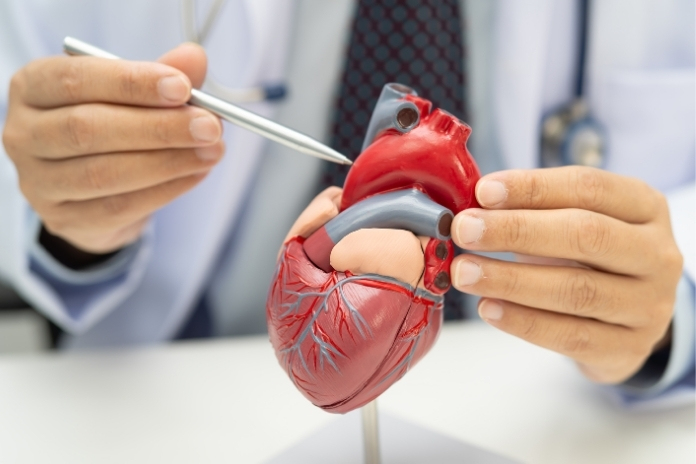
- Moderate, structured exercise improves heart failure outcomes and quality of life and reduces hospitalizations.
- Aerobic exercise is foundational; resistance and inspiratory muscle training safely add strength.
- Supervised cardiac rehab ensures safety, proper monitoring, and progressive improvement.
Patients were told for years that the best course of action for a weaker heart was to rest. But contemporary cardiology has disproved that notion. Today, strong evidence shows that exercise for heart failure patients is not only safe but also one of the most effective treatments when done correctly.
Structured aerobic exercise dramatically improved quality of life while reducing the combined risk of mortality or hospitalization by 11%, according to the historic HF-ACTION trial, the largest randomized controlled trial of exercise in heart failure.
Prestigious organizations, including AHA, ACC, and ESC, currently classify exercise training as a Class IA recommendation, the highest level of clinical endorsement in heart failure exercise guidelines.
This article will discuss the effects of exercise on failing hearts, the safest and most beneficial forms of exercise, the function of cardiac rehab heart failure programs, the activities to avoid, and the warning signs that suggest you should quit right away.
Read More: Heart Failure and the 12-Hour Shift: How Long Work Hours Can Trigger a Cardiovascular Emergency
What Exercise Does to a Heart Failure Patient’s Heart
The Biology of Exercise in Heart Failure
Breathlessness and exhaustion are common symptoms of heart failure. As a result, it may feel intimidating to deliberately engage in exercise that can temporarily increase these symptoms.
Doctors used to advise people with heart failure to get enough sleep. However, we now know that maintaining an active lifestyle can help alleviate symptoms and enhance quality of life. Your muscles and lungs will function better if you keep your body moving, which will lessen the strain on your heart.
Additionally, exercise can improve your attitude, boost your energy, and make daily tasks easier.
When individuals begin exercising regularly, even those who are extremely distressed by their heart failure symptoms may experience some improvements.
Weak pumping is not the only issue with heart failure. This systemic illness impacts the entire body. Patients not only have decreased cardiac output but also:
- Weak skeletal muscles
- Imbalance in the autonomic nerve system
- Elevated inflammation
- Decreased use of oxygen
It explains why, even with little exertion, many individuals experience the symptoms of exercise intolerance and heart failure.
Why Inactivity Makes Heart Failure Worse
People who do not engage in sufficient regular physical activity are considered physically inactive. To improve cardiovascular fitness, the American Heart Association suggests engaging in aerobic activity for 30 to 60 minutes three to four times per week.
The 1996 Report of the Surgeon General on Physical Activity and Health said that a daily expenditure of 150 kilocalories in moderate or strenuous activities was the minimal level of physical activity necessary to produce health benefits. The American College of Sports Medicine and the Centers for Disease Control and Prevention have established guidelines that align with this recommendation.
Frequent exercise lowers the chance of dying young from cardiovascular disease. Additionally, it lowers hypertension, aids in maintaining weight loss, and prevents the onset of diabetes, all of which are independent risk factors for CVD.
People who are less fit and active are 30–50% more likely to have high blood pressure. One major risk factor for CVD itself is physical inactivity. It is ranked comparable to excessive blood pressure, high cholesterol, and cigarette smoking. Its prevalence is one of the reasons it has such a significant impact on mortality.
In the US, there are twice as many adults who do not engage in physical activity as those who smoke cigarettes. Frequent exercise has been shown to lower the risk of recurrent cardiac events, aid recovery after coronary operations, and protect against the initial cardiac episode.
What Types of Exercise Are Safe and Evidence-Backed
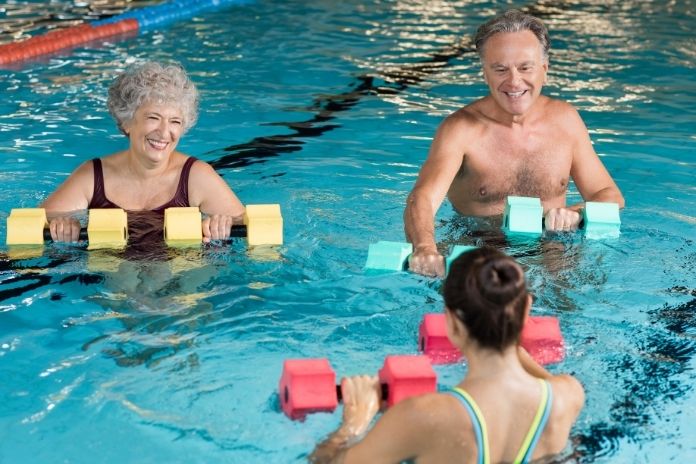
Aerobic Exercise — The Foundation
Aerobic activity is the cornerstone of exercise for heart failure patients and has the strongest scientific support. Typical and efficient choices consist of:
- Walking and stationary cycling
- Walking on a treadmill
- Swimming (with a doctor’s permission)
- Low-impact group courses
The protocol employed by HF-ACTION:
- Thirty to forty minutes
- Three to five days a week
- Moderate level of intensity
It serves as the basis for modern heart failure exercise guidelines. You should pay particular attention to walking. Walking-based heart failure recovery programs consistently improve endurance, reduce fatigue, and improve mental health.
Resistance Training — An Evidence-Supported Addition
To increase a person’s strength and endurance, resistance training involves exerting a muscle or muscle group against an external resistance. There are two types of resistance training: dynamic and isometric.
There is static resistance, no muscular movement, and no change in muscle length during isometric exercise. You can use fixed or variable muscle resistance in dynamic exercise.
Resistance exercise is a component of sports, particularly power and endurance group sports.
Resistance training can be done with equipment such as bands, dumbbells, kettlebells, and barbells, as well as bodyweight movements like push-ups and squats.
If exercise intensity is less than 60% of 1-RM, it is considered low or moderate. Experts commonly refer to resistance training at less than 20% of one’s one-repetition maximum (1RM) as aerobic endurance training. Muscular capillaries constrict during muscle contraction when the repetition maximum exceeds 20%, creating a hypoxic stimulus that results in training effects.
Read More: Congestive Heart Failure – Causes, Symptoms, Treatment, and Prevention
Inspiratory Muscle Training
Even low-intensity aerobic exercise may be challenging for persons with severe exercise intolerance and heart failure. Inspiratory muscle exercise provides an alternative in these situations.
To strengthen the respiratory muscles, this involves breathing through a resistance device.
Advantages consist of:
- Reduced breathlessness
- Increased stamina
- Increased functional capability
This technique increases the effectiveness of oxygen transport while putting less pressure on the heart.
The Role of Cardiac Rehabilitation

Why Supervised Exercise Is the Safest Starting Point
One of the leading causes of death in developed nations is congestive heart failure. The patient’s heart can no longer adequately pump blood and oxygen to the body due to this illness. Congestive heart failure has historically had a dismal prognosis that is on par with cancer.
“Previously, congestive heart failure was primarily treated with drugs. The range of treatments was expanded by the use of cardiac pacemakers to optimize heart muscle contraction and the implantation of defibrillators intended to improve myocardial function and prevent sudden cardiac death due to arrhythmia,” explained Professor Martin Halle, Professor of Preventive and Rehabilitative Sports Medicine at TU Munich.
Physical exercise was actually strongly prohibited for heart failure patients due to concerns that it might further impair the heart’s ability to pump blood.
However, recent research has demonstrated that increasing physical activity can improve endurance and reduce the likelihood of rehospitalization due to worsening symptoms.
Who Should Start With Cardiac Rehab Rather Than Home Exercise
Not every patient should start exercising on their own. Cardiac rehabilitation, often called cardiac rehab, is a specialized, medically supervised program that includes stress-reduction counseling, education on heart-healthy living, and exercise training.
According to studies, individuals who receive cardiac rehabilitation have a 20–30% lower risk of dying within five years of a heart attack or bypass surgery.
The patient and a medical team comprising physicians, nurses, exercise specialists, physical and occupational therapists, dietitians or nutritionists, and mental health specialists collaborate on cardiac rehabilitation.
The program may begin while the patient is still in the hospital or immediately upon their discharge and may continue for up to 3 months. Patients who have attended at least 25 sessions gain more from the program than those who have attended fewer sessions, according to research.
There are three stages to a cardiac rehabilitation program:
Phase I: Clinical Stage:
This stage, which starts shortly after surgery, entails evaluating the patient’s physical capacity and rehabilitation motivation. The cardiac rehab team may begin guiding the patient through range-of-motion activities and non-strenuous exercises.
Phase II: Cardiac Rehab Outpatient:
Outpatient cardiac rehabilitation can start as soon as the patient is stable and the attending physician gives the all-clear. These three stages comprise information/advice, a customized training program, and a relaxation program. It can last up to 12 weeks, but it usually lasts 3 to 6 weeks.
Phase III: Postcardiac Rehab:
More autonomy and self-monitoring are permitted for patients in this stage. It focuses on improving cardiovascular fitness, strength, and flexibility.
Read More: 4 Ways to Make the Most of Lifestyle Changes After a Heart Diagnosis
What to Avoid — Exercise That Carries a Higher Risk

The Contraindications and High-Risk Activities
While exercise is generally safe for heart failure, certain conditions require caution.
- Decompensated heart failure
- Uncontrolled arrhythmias
- Severe Aortic stenosis
- Active Myocarditis or Pericarditis
- Recent cardiac events
These fall under critical heart failure exercise contraindications.
Exercises to Avoid or Modify
Certain activities increase risk:
- Maximal effort during high-intensity interval training (HIIT)
- Heavy or intense resistance training
- Competitive sports
- Exercising in extremely hot or cold conditions
These can overtax the heart.
Warning Signs to Stop — During and After Exercise
Symptoms That Mean Stop Immediately
Patients with heart failure should be aware of the following warning signs during exercise::
- Chest pressure, tightness, or soreness
- Severe shortness of breath (dyspnea)
- Lightheadedness or fainting
- Irregular or uneven heartbeat (arrhythmia)
- Excessive or unusual fatigue
These signs point to possible heart stress.
The 24-hour monitoring rule
Daily observation is crucial:
- Every morning, check your weight
- Keep an eye out for abrupt gain (fluid retention)
- Monitor your heart rate at rest
- Before exercising, check for dyspnea
Stop right away and get medical attention if symptoms such as severe dyspnea or chest pain last for more than 2 minutes.
Read More: Signs of a Heart Attack vs. Panic Attack: When to Call 911
Conclusion
For those with heart failure, exercise is now a validated, evidence-based treatment rather than merely a “nice-to-have.” Studies like the HF-ACTION trial show that structured, moderate exercise for heart failure patients reduces hospitalizations, improves functional capacity, and enhances overall quality of life.
Clinicians must prioritize the safety and consider each patient’s heart failure exercise guidelines, ejection fraction, and medication schedule when determining the type, intensity, and frequency of exercise. For the majority of patients, enrolling in a supervised cardiac rehab heart failure program minimizes risk while ensuring appropriate monitoring and progressive advancement.
References
- Exercise is Medicine. Heart failure.
- O’Connor, C. M., Whellan, D. J., Lee, K. L., Keteyian, S. J., Cooper, L. S., Ellis, S. J., … Piña, I. L. (2009). Efficacy and safety of exercise training in patients with chronic heart failure: HF‑ACTION randomized controlled trial.
- Gill Farthing. (27 January, 2026). Exercise for heart failure: tips for exercising safely.
- American College of Cardiology. (2024, November 15). Sitting too long can harm heart health, even for active people.
- New York State Department of Health. Physical inactivity and cardiovascular disease (CVD).
- Torun, A. (2024). Role of resistance exercise in cardiology.
- American Heart Association. (2023, March 21). Top things to know: Supervised exercise training for chronic heart failure with preserved ejection fraction.:
- German Centre for Cardiovascular Research. (2017, February 21). Supervised exercise training helps patients with heart failure.
- Carondelet Health Network. Do I need cardiac rehab?
- Heart Online. Safety considerations — Exercise (including contraindications).
In this Article