
















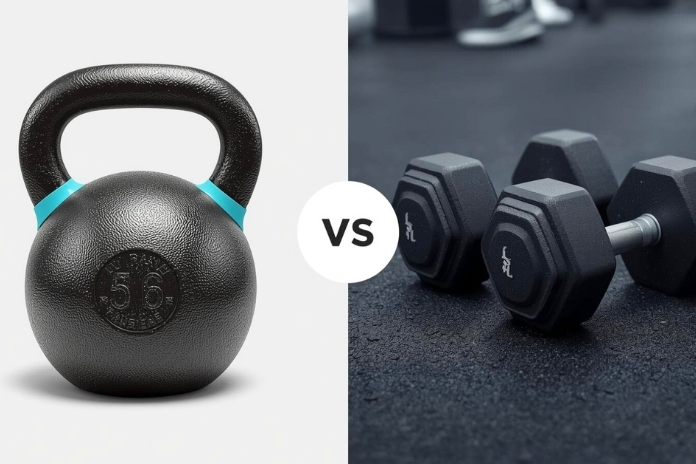
Kettlebells and dumbbells frequently share the spotlight in the big theater of strength training. One arcs into the air with explosive grace, swinging like a powerful pendulum. The other is the ageless sculptor, forming muscle with calm and deliberate accuracy. You can maintain or gain muscle mass and strength by engaging in muscle-strengthening exercises.
A selection of equipment greets you as soon as you enter a gym’s weight room. For strength training, dumbbells and kettlebells are among the most popular pieces of equipment. Although they are both quite successful, their uses and training methods differ.
But it takes more than simply what looks better on the rack to decide between them. Your exercise objectives, preferred movement style, and the type of outcomes you’re looking for (strength, endurance, fat loss, or functional power) will all play a role.
This article covers the main distinctions between dumbbells and kettlebells, along with their unique benefits and the workouts they perform best for.
Read More: Should You Exercise When You’re Exhausted or Take a Rest Day?
Key Differences Between Kettlebells and Dumbbells
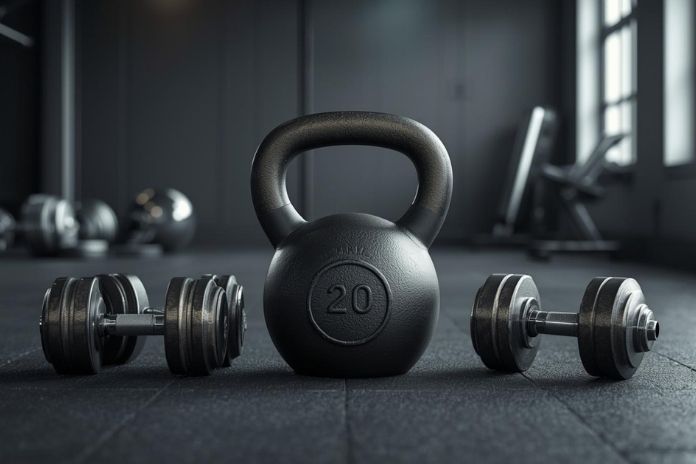
On the weight rack, dumbbells and kettlebells can appear to be distant cousins, but when they’re in motion, they have completely different personalities. Your body moves, balances, and gains strength differently as a result of each one.
The Shape: Kettlebells are spherical with a handle at the top, a feature that distinguishes them from dumbbells. The kettlebell’s bottom weighs a lot more than its top handle. When using dumbbells, the weight is distributed evenly and grasped with a grip on both sides.
The Center of Mass: Each weight’s center of mass is altered by the design variation. With every movement, the center of mass of your equipment will significantly change the stress on the muscles and joints.
The dumbbell’s evenly distributed weight places its center of mass at the midpoint. It enables you to isolate and rotate particular joints and muscles. Dumbbells are the ideal tool for targeting specific muscle groups.
The kettlebell feels different because most of its weight sits right by the sphere, close to your wrist when you hold it. That uneven weight shifts how your muscles work, especially in moves where you’d normally isolate a muscle group.
One Hand vs. Two: The length of the handle is another distinction between dumbbells and kettlebells. Unlike dumbbells, which only accommodate one hand, kettlebell handles allow you to utilize one or two hands simultaneously.
When to Use Kettlebells
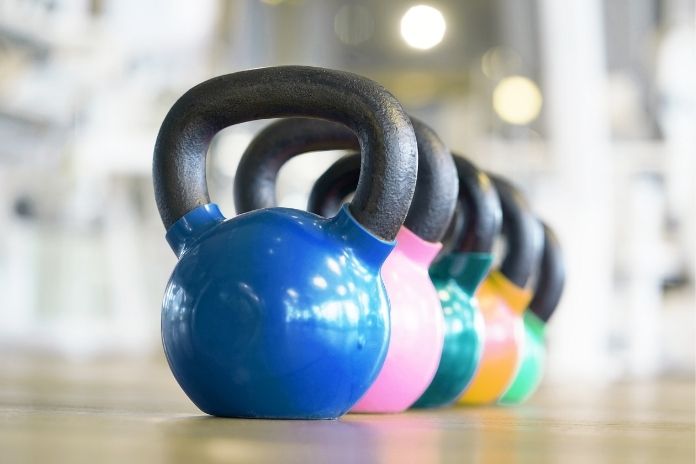
When movement becomes more than merely lifting weights, it becomes rhythm, flow, and controlled power. Kettlebells come to life. Each repeat becomes a full-body sensation since they are designed to swing, twist, and move across space rather than only be raised and lowered.
Since kettlebells are an excellent tool for full-body, ballistic exercises that target powerful muscles, they may improve your cardiovascular and respiratory fitness in addition to muscle strength.
Best for Functional Strength, Power, and Endurance: Kettlebells are an obvious choice if you want to build strength that you can use in your daily life. Swings, snatches, and cleans are exercises that teach your body to produce power at the hips and distribute it throughout your body.
Kettlebells Reduce Your Overall Workout Time: Since most of us have hectic lives and don’t have 2 or 3 hours a day for a great workout, kettlebells cut down on the time you spend working out altogether. You have more freedom in your day when you use kettlebells for a 20-minute full-body workout.
Core Engagement: Nearly all kettlebell exercises silently recruit your core. The off-center weight continuously tests your balance and makes your lower back, core, and stabilizing muscles work harder.
Kettlebells Aid Cardio: Kettlebell exercises are quite intense and work a variety of muscle groups. Your heart rate increases as you perform various exercises, providing built-in cardio.
“Kettlebell swings are a quick and effective movement for developing both power and endurance and can help with posture,” says Peloton instructor Katie Wang.
Read More: Low Impact Workouts That Burn Calories: 10 Exercises That Torch Fat
When to Use Dumbbells
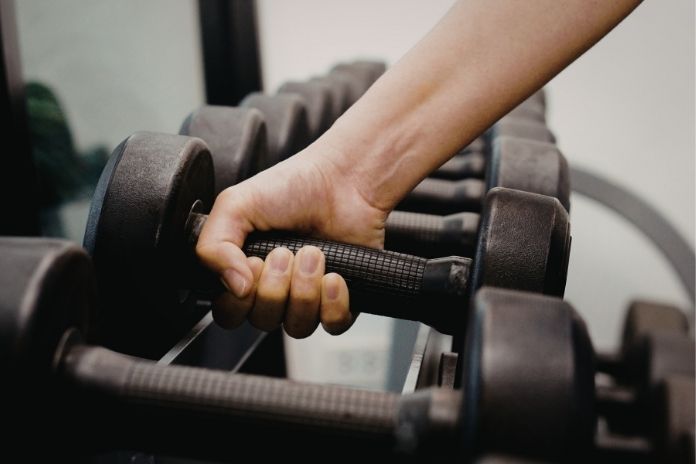
Dumbbells might not get as much hype as kettlebells, but they’re the real workhorses in the gym: no fancy swinging or spinning, just focused movement. With dumbbells, you actually feel every rep. Each lift is steady and controlled, making every muscle pull its own weight. You can strengthen almost every muscle group in your body with dumbbells.
Best for Muscle Isolation: If you want to zero in on a specific muscle, dumbbells are the way to go. Think tricep extensions, lateral raises, chest presses, and bicep curls; all those exercises let you really target one area at a time. You get to fine-tune your form and make sure every muscle gets its moment.
More Organic Motions: Dumbbells provide a way to use these organic motions in strength training and integrate them into our exercises. Dumbbells let us move more organically and freely than some weight machines, which can lock or force our bodies into strange positions.
Increased Diversity: Dumbbells offer countless options for varied training, unlike certain gym equipment that restricts our movements to a predetermined range. You can use them for traditional strength exercises like chest presses and bicep curls, or get creative with dynamic moves like renegade rows and wood chops.
Boosts Functional Fitness: The ability to carry out daily duties effectively and effortlessly is the foundation of functional fitness. You can improve the strength and coordination you need to move and perform daily tasks by incorporating dumbbells into your training.
Versatility: Dumbbells are surprisingly versatile. With just one set, fixed or adjustable, you can work your whole body and hit all sorts of muscle groups. Think squats, lunges, curls, presses, rows, and you name it. There’s a lot you can do with just these simple weights.
Which Tool Aligns with Your Fitness Goals?
When it comes to picking between the two dumbbells and kettlebells, it’s all about what you’re after. There’s no universal winner; pick the one that matches your goals.
For Gains in Muscle Mass and Strength: If you want to build muscle and get stronger, grab some dumbbells. They’re great for zeroing in on certain muscles and keeping your movements smooth and very steady. That control really helps you push yourself and see the results right where you want them.
For Conditioning, Core Strength, and Endurance: If you want to build real strength and push your endurance, kettlebells are hard to beat. They’re not just for bulking up; think of swings, cleans, and snatches.
These moves light up a bunch of muscles at once and get your heart racing. Still, you don’t have to stick with just one thing. Use both dumbbells and kettlebells, and you’ll get the best of both worlds.
Dumbbells are great for slow, focused strength work. Kettlebells bring in those explosive, full-body moves that really test you. Mix them up, and your workouts feel way more complete.
Read More: Strength Exercises to Make Your Daily Walks More Powerful (and Protect Your Joints)
Sample Exercises to Try
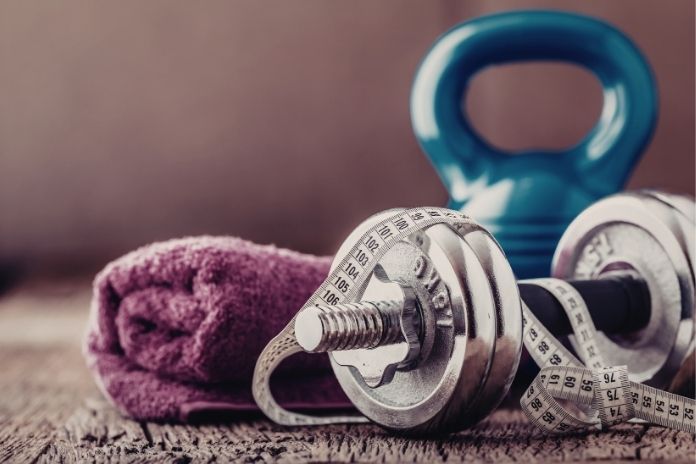
These sample workouts are your first interactions with dumbbells and kettlebells, if they are two different languages of strength. One uses strong swings and fluid transitions to communicate, while the other uses precise, controlled lifts. You’ll notice a difference in your body’s reaction if you try both.
Kettlebell Exercise
Kettlebell Single-Arm Deadlift Exercise: The single-arm deadlift works most muscles of the body, particularly the buttocks, hamstrings, and back. The deadlift movement pattern is important for so many other exercises (swing, clean, high pulls, and snatch) and must be performed correctly with a nice, flat back.
Kettlebell Halo Exercise: The kettlebell halo will condition and mobilize the upper back and shoulders. Throughout the exercise, keep the kettlebell close to your body. There are two ways to hold the halo: by the ball or by the handle, upside down.
Dumbbell Routine
Exercise for the Dumbbell Jefferson Squat: The Jefferson squat feels a lot like a single-arm deadlift, only now you’re using both hands. Plant your heels, keep your back flat, and push your chest up.
Since you’re using two hands and honestly, just about every muscle you’ve got, grab a heavier dumbbell this time. As you move, lock your arms out and drive through your hips and knees to power up.
Dumbbell Lateral Step-Up Exercise: Lateral step-ups strengthen the legs, core, and outer buttocks. Place the foot down gently, and make sure the step you’re stepping onto is lovely and stable. Instead of pushing yourself up from the leg on the ground, try to draw yourself up onto the step from the lead leg. Before moving to the other side, complete all your repetitions on the first side.
Read More: Staying Active: Fun and Effective Exercises for Every Stage of Life
Conclusion
In the end, it’s not really about which one is better, kettlebells or dumbbells. It’s about finding what actually fits into your workout goals. Dumbbells give structure, control, and a steady way to build muscle and strength.
Kettlebells bring a different energy. They’re about the movement, flow, and building the kind of strength you actually use in your real life. Your goals, training style, and even your personality can influence which one feels right in your hands.
In this Article