














- Vitamin C and vitamin D are safe to take together with no known negative interaction.
- They work through different biological pathways, so absorption of one doesn’t affect the other.
- Taking them at the same time is convenient and does not reduce effectiveness.
- Together, they may support immunity and overall health, but benefits are mostly complementary, not amplified.
It is safe to take vitamin C and D together. Moreover, there is no documented harmful interaction, no absorption conflict, and no clinical evidence suggesting the combination causes problems. That is the short answer, and it is worth stating clearly because many people hesitate over supplement combinations without any real reason to.
The more useful question is what the combination actually does. Approximately 13% of the U.S. population is estimated to be vitamin C-deficient, and about 29% lack sufficient vitamin D, making this one of the most common vitamin pairings people reach for.
Yet most people who combine them have no clear picture of what each vitamin does independently, let alone together. What makes vitamin C and vitamin D together an interesting combination is not that they work on the same systems. They largely do not.
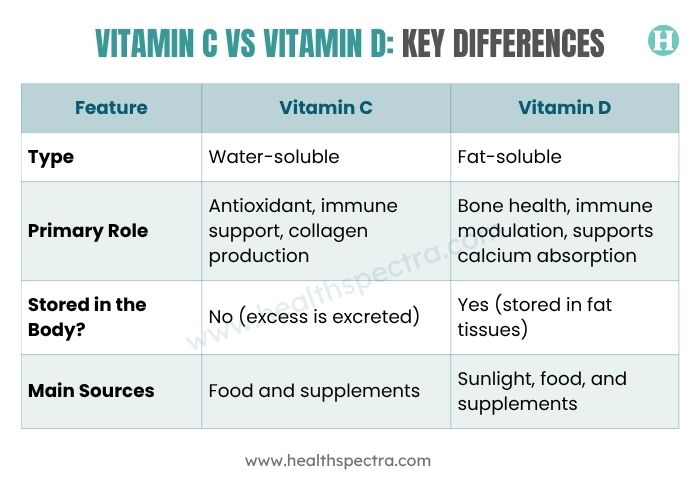
Vitamin C is water-soluble, cleared daily, and works primarily as an antioxidant and collagen cofactor. Vitamin D is fat-soluble, stored in tissue, and behaves more like a hormone, regulating gene expression across dozens of cell types, including nearly every immune cell the body produces.
The fact that they operate through different mechanisms is precisely what gives the vitamin C and D combination benefits. They are not redundant; they are complementary. When both are at adequate levels, the body has what it needs to run two separate but coordinated systems. When both are low simultaneously, research shows the combined deficit produces worse outcomes than either deficiency alone.
What this really means is that the value of combining them isn’t about stacking supplements; it’s about covering gaps. And that’s exactly what we’ll break down next. We’ll look at what each vitamin actually does, whether taking them together changes anything in real terms, and where the combination shows meaningful benefits backed by research.
Read More: Why Real Food Beats Multivitamins: 8 Nutrient Powerhouses That Work Better Than Pills
Different Vitamins, Different Jobs: Both Essential

Vitamin C and vitamin D do not duplicate each other. They operate on largely separate biological systems, which is part of what makes combining them rational rather than redundant.
Vitamin C (ascorbic acid) is water-soluble. The body cannot store it, which means it must be replenished daily through food or supplements. Its two primary roles are as an antioxidant and as a cofactor for collagen synthesis.
A PMC review examining over 100 studies found that vitamin C supports the production and function of white blood cells, protects immune cells from oxidative damage during infection, and plays a direct structural role in maintaining skin, blood vessels, cartilage, and wound healing.
Dr. Mark Moyad, MD, MPH, puts the breadth of vitamin C’s reach simply: “Higher blood levels of vitamin C may be the ideal nutrition marker for overall health. The more we study vitamin C, the better our understanding of how diverse it is in protecting our health, from cardiovascular disease, cancer, stroke, eye health, and immunity to living longer.”
Vitamin D (calciferol) is fat-soluble and behaves more like a hormone than a vitamin. The body can synthesize it from sunlight exposure, but deficiency is widespread, particularly in winter months, among people with limited sun exposure and in those with darker complexions.
A PMC review on vitamin D immune function confirmed that vitamin D receptors are expressed on B cells, T cells, and antigen-presenting cells, giving it a broad immunological role well beyond its well-known function in calcium absorption and bone mineralization.
No Interaction, No Interference: Here’s the Evidence
Taking vitamin C and D at the same time does not impair the absorption of either. Because they are absorbed through fundamentally different mechanisms, one water-soluble and one fat-soluble, there is no competition for the same transport pathways.
A critical care review published in Science Alert examining the combined use of vitamin C and D in clinical settings found that supplementation with both vitamins represents a cost-effective intervention with an excellent combined safety profile, with no documented harmful interactions across clinical trials.
Some research suggests that antioxidant nutrients like vitamin C may even protect fat-soluble vitamins from oxidative degradation during digestion, potentially supporting vitamin D stability, though this mechanism requires further study.
The one genuine caveat with either supplement is upper limits. Vitamin C taken above 2,000 mg per day can cause gastrointestinal upset and diarrhea. Vitamin D toxicity is rare but can occur with sustained intake above 10,000 IU per day, producing elevated blood calcium. Within recommended dosages, both are safe individually and in combination.
Dr. JoAnn Manson, MD, DrPH, is direct about what vitamin D does: “We do know that vitamin D can improve immune function, can tamp down inflammation,” noting the VITAL trial found a 22% reduction in autoimmune diseases among those taking vitamin D supplements.
Safety Reference:
- Vitamin C upper limit: 2,000 mg/day
- Vitamin D upper limit: 4,000 IU/day (NIH recommended upper limit for adults).
Consult a doctor if you are on medications or have a kidney condition.
Read More: 10 Vitamin and Mineral Combinations You Should Never Take Together
Do They Work Better Together? The Synergy Evidence

The Immune System, Complementary, Not Redundant
Both vitamins support immune function, but through different pathways. Vitamin C supports innate immunity and acts as an antioxidant that protects immune cells from the oxidative damage produced during active infection. Vitamin D modulates the adaptive immune response, helping immune cells respond proportionately rather than overreacting.
A 2020 review published in PMC examining the combined role of vitamins C and D in immune defense concluded that the two vitamins support different aspects of immune health and can work synergistically, enhancing overall immune defense rather than duplicating each other’s function.
The review found particular relevance for respiratory infections, where both vitamins have documented independent protective effects and where combined deficiency was associated with worse outcomes.
Bone Health: Where the Combined Deficiency Evidence Is Clearest
A 2024 study published found that combined vitamin C and D deficiency results in significantly lower bone mineral density and a higher risk of vertebral fracture, with a synergistic negative effect that exceeds either deficiency alone. Vitamin C supports collagen formation and osteoblast activity, which builds the protein matrix of bone.
Vitamin D promotes calcium absorption and bone mineralization, which fills and hardens the matrix. When both are below optimal levels, bone loss accelerates beyond what either deficiency produces independently.
The implication for supplementation: correcting both vitamin C and vitamin D deficiency together, rather than addressing only one, may offer more meaningful protection for bone health, particularly in older adults and postmenopausal women.
Small Practical Differences That Improve Absorption

Both vitamins are safe to take at the same time, but a few strategies improve how effectively each is absorbed individually. Vitamin D is fat-soluble, which means its absorption from supplements is meaningfully enhanced when taken with a meal containing healthy fats.
A study published found that taking vitamin D3 with a fat-containing meal increased absorption significantly compared to taking it without food. The fat source does not need to be large: a handful of nuts, a tablespoon of olive oil in cooking, or an avocado alongside the meal is sufficient.
Julia Zumpano, RD, a registered dietitian at the Cleveland Clinic Center for Human Nutrition, is straightforward on this point: “It’s best to take a vitamin D supplement with food, and at least a source of fat,” emphasizing that vitamin D’s fat-solubility makes this a practical absorption consideration rather than just a theoretical one.
Vitamin C is water-soluble and does not require food for absorption, though taking it with a meal can reduce the mild stomach irritation that some people experience at higher doses. The recommended daily amounts for healthy adults are 75 to 90 mg of vitamin C and 600 to 800 IU of vitamin D, though many clinicians recommend 1,000 to 2,000 IU of vitamin D for those with confirmed deficiency.
Vitamin D3 (cholecalciferol) is the more bioavailable and more studied supplemental form compared to D2. The practical summary: taking both vitamins together is fine for safety purposes. For optimal absorption, take vitamin D with a fatty meal and vitamin C at any point in the day. Consistency matters more than precise timing.
Read More: 8 Side Effects of Too Much Vitamin D That Can Be Dangerous
The Bottom Line
Vitamin C and vitamin D together are safe, rational, and supported by evidence as a combination. They share no harmful interaction, work on complementary biological pathways, and address two of the most common nutrient gaps in the American population simultaneously.
If you are unsure whether you are deficient in either, a simple blood test can confirm vitamin D levels. Vitamin C status is harder to assess routinely, but it can be inferred from dietary patterns. Your doctor can guide supplementation based on your individual baseline and health history.
Medical Disclaimer: This article is for informational purposes only and does not constitute medical advice. Always consult a qualified healthcare provider before starting or changing a supplement regimen.
References
- Dawson-Hughes, B., et al. (2015). Dietary fat increases vitamin D-3 absorption. Journal of the Academy of Nutrition and Dietetics.
- Hemilä, H., & Louhiala, P. (2013). Vitamin C for preventing and treating pneumonia. PMC.
- Manson, J. E. (2024). What we know and don’t know about vitamin D. WBUR.
- Moyad, M. A. (2013). Vitamin C: A concentrated survey. WebMD.
- Nabil, W., et al. (2023). Combined vitamin C and D deficiency and bone mineral density. Frontiers in Endocrinology.
- Pecora, F., et al. (2020). The role of micronutrients in support of the immune response against viral infections. PMC.
- Pullar, J. M., et al. (2017). The roles of vitamin C in skin health. PMC.
- Zumpano, J. (2025). Best time to take vitamin D supplements. TODAY.com.
In this Article