



















- Vitamin C and retinoids are the two periorbital skin care actives with the strongest evidence for improving under-eye skin.
- Vitamin C around the eyes helps brighten periorbital pigmentation, protect against oxidative stress, and support collagen synthesis.
- Retinoids for thin under-eye skin stimulate collagen production and improve fine lines and texture over time.
- The most effective routine combines vitamin C vs retinoids under the eyes with visible improvements in periorbital skin texture and fine lines.
There’s a graveyard of eye creams under most bathroom sinks. The one that promised to erase dark circles, the one a celebrity swore by, or the one that did absolutely nothing visible in three months of faithful use. If this sounds familiar, you’re not alone, and the problem usually isn’t that you gave up too soon or applied it wrong.
The problem is that most eye creams aren’t designed to meet what the periorbital skin actually needs. They’re built around what sounds impressive on a label. Understanding which ingredients penetrate under-eye skin and can actually do meaningful work, and which ones can’t, is the difference between a skincare routine that changes something and one that just smells nice.
This article focuses on the two actives with the strongest evidence for periorbital skin care: vitamin C and retinoids. Both can work here. But how they work, which forms survive the journey into thin skin, and how you use them without causing more damage than you started with.
Read More: Adapalene vs. Tretinoin for Acne: Which Retinoid Works Better for Your Skin?
Why Periorbital Skin Is So Hard to Treat

The skin around the eyes is structurally different from the rest of the face. It’s the thinnest skin on the face, sometimes measuring just 0.2 millimeters, with minimal fat cushioning beneath it. This makes the area more fragile and reactive. Ingredients that work well on the cheeks or forehead often irritate here before they can produce meaningful results.
As a result, treating concerns like fine lines, crow’s feet, periorbital pigmentation, under-eye puffiness, and crepey texture requires carefully formulated periorbital skin care actives designed specifically for thin under-eye skin care.
What “Penetration” Actually Means in Skincare
When a product claims to “deeply penetrate,” the reality depends on molecular size, formulation stability, and skin barrier permeability. Most actives must pass through the stratum corneum, the outer skin barrier.
Molecules larger than roughly 500 Daltons struggle to move beyond the surface, which means many ingredients marketed in eye creams never reach the dermis where structural changes occur.
Stability also matters. Vitamin C penetration into skin is limited by oxidation and pH sensitivity, while retinoids require enzymatic conversion before becoming biologically active. In the delicate periorbital skin care zone, the challenge is delivering actives that reach deeper layers without overwhelming thin under-eye skin.
Vitamin C Around the Eyes: What Works and What Doesn’t

The Science of Vitamin C Penetration
L-ascorbic acid, the pure form of vitamin C around the eyes, is effective but unstable and often irritating because it requires a low pH to penetrate the skin.
More stable derivatives, such as magnesium ascorbyl phosphate and tetrahexyldecyl ascorbate, are often better suited for periorbital skin care actives. These forms convert into active vitamin C within the skin while maintaining greater stability and gentler tolerability for thin under-eye skin care.
A comprehensive review found that vitamin C is essential for collagen biosynthesis, functioning directly as a cofactor in procollagen hydroxylation, and that a double-blind randomized trial of 5% vitamin C over six months showed clinically apparent improvement in overall photodamaged skin and a decrease in deep furrows compared to placebo.
Benefits for Periorbital Skin
For periorbital pigmentation treatment, vitamin C’s mechanism is well-suited to the task. It inhibits tyrosinase, the enzyme responsible for melanin production, which directly addresses the hyperpigmentation that causes under-eye darkness in many patients.
The antioxidant activity of vitamin C also neutralizes free radicals from UV and HEV light, reducing the oxidative stress that accelerates the breakdown of collagen synthesis in the dermis.
Thin under-eye skin care benefits from vitamin C’s ability to stimulate procollagen production, and it does this without the cell turnover mechanism that makes retinoids more irritating. That makes it a beneficial morning active ingredient, one that works defensively against environmental damage while the rest of the day’s exposure plays out.
Mild improvement in fine lines and tone with consistent use is the realistic expectation. Vitamin C is not a structural remodeling agent. It supports and protects. The rebuilding work belongs to retinoids.
Formulation Tips and Safe Use
For L-ascorbic acid around the eyes, 10 to 15% is the working range for the face. In periorbital skin, lower concentrations, 5 to 10%, reduce irritation risk significantly. With vitamin C derivatives, 3 to 5% is typically sufficient given their superior stability and bioavailability.
Packaging matters more than most people realize. Airless, opaque dispensers protect vitamin C from oxidation between uses. A product that turns orange or yellow in the bottle has already degraded and is delivering significantly less of the intended benefit.
Apply in the morning under sunscreen. Vitamin C’s antioxidant protection stacks directly with SPF to reduce photooxidative damage. Avoid pairing it with low-pH exfoliants near the eye area, where the combined irritation potential exceeds what thin skin can comfortably tolerate.
Dr. Joshua Zeichner, MD, speaks directly to vitamin C’s role in the under-eye area, “Vitamin C is a potent antioxidant that will help slow down the production of abnormal pigmentation under the eye to brighten it.”
Beyond brightening, he notes, it also improves the appearance of dark spots and lines and boosts collagen synthesis, making it a genuinely multi-purpose active when used consistently at the right concentration and in the right form.
Read More: Can You Take Vitamin C and Iron Together? Benefits, Risks & The Right Way to Do It
Retinoids: The Gold Standard (with Caveats)
How Retinoids Work on Thin Skin
Retinoic acid, the biologically active form of vitamin A, works through two distinct mechanisms that directly address periorbital skin aging. It binds to retinoic acid receptors in cell nuclei, regulating gene transcription to increase epidermal cell turnover and upregulate collagen synthesis in the dermis.
It also inhibits matrix metalloproteinases, the enzymes that break down existing collagen. The result, over time, is thicker, more resilient skin with improved texture and fewer visible fine lines. The small molecular size of retinoid compounds enables meaningful dermal absorption, which is part of why they outperform most other topical anti-aging actives in clinical evidence.
But in periorbital skin, that penetration capacity is both the mechanism and the challenge. Retinoids that reach the dermis effectively can also cause surface irritation, peeling, and barrier disruption when introduced too quickly or at too high a concentration.
Forms That Are Safe for the Eye Area
Retinol and retinaldehyde are the appropriate over-the-counter entry points for periorbital skin care actives. Both convert to retinoic acid through enzymatic steps in the skin, which creates a slower, more controlled delivery that reduces irritation substantially compared to prescription tretinoin.
A PMC review on tear trough and periorbital cosmeceuticals confirmed that retinaldehyde showed significantly better efficacy in reducing fine lines and improving skin roughness compared to retinoic acid while inducing similar epidermal thickening and cellular binding protein expression.
Encapsulated and microdosed retinoid formulations designed specifically for the eye area further reduce surface exposure while allowing active delivery at depth. The formulation addresses the narrow therapeutic window of thin under-eye skin care specifically.
Prescription tretinoin around the eye area should be handled under a dermatologist’s supervision. It’s effective, but the margin for error on delicate periorbital skin is smaller than elsewhere.
Clinical Results and Expected Timeline
A 12-week clinical study published in PubMed evaluating a retinoid eye cream formulation on periorbital wrinkles found that nightly application produced significant improvements in the appearance of lines and wrinkles, under-eye darkness, puffiness, and dryness at week 12, with the study products being non-irritating and patient satisfaction high throughout.
The timeline is the most common point of patient frustration. Visible improvement in periorbital skin texture and fine lines generally takes 8 to 12 weeks of consistent use. Collagen remodeling is slow.
Cells don’t turn over overnight. The patients who get results are the ones who stay consistent at a tolerable dose rather than those who escalate concentration, chasing faster results.
How to Introduce Retinoids Safely
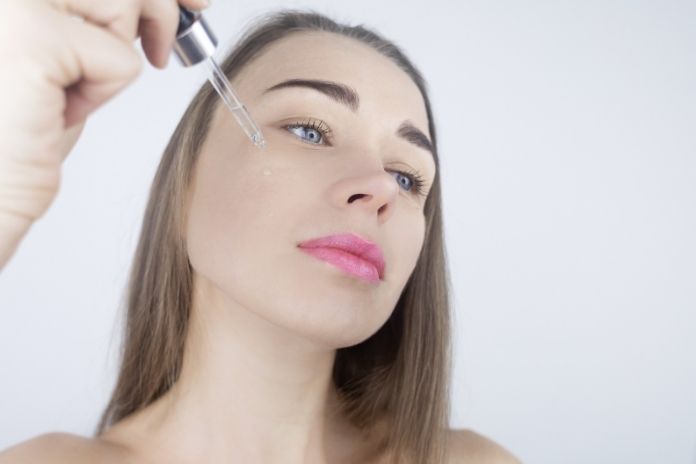
Start with a pea-sized amount for both eyes, applied one to two times per week. Allow your skin to adjust for three to four weeks before increasing frequency. Always follow with a gentle moisturizer. Avoid the eyelid margin directly. Stop if significant redness, flaking, or burning occurs and allow recovery before reintroducing at a lower frequency.
Dr. Shereene Idriss, MD, is direct about pacing, “The name of the game is consistency over intensity. Start low and go slow with an over-the-counter percentage retinol, like a 0.3 percent. Start by incorporating it one to two times a week and slowly build your way up.”
For periorbital skin, where the tolerance threshold is lower than anywhere else on the face, that advice isn’t just a caution. It’s the only approach with a realistic chance of working without causing setbacks.
Other Actives Worth Knowing (and Those to Skip)

Actives That Support Periorbital Health
Niacinamide is one of the most clinically well-supported active ingredients for the under-eye area. It strengthens the skin barrier permeability function by increasing ceramide production and reducing the transfer of pigment to skin cells.
Furthermore, it has anti-inflammatory properties that make it one of the gentler brightening options available. It also plays well with retinoids and vitamin C without competition or interaction concerns.
Peptides are amino acid sequences that signal dermal fibroblasts to produce more collagen, elastin, and hyaluronic acid. Their large molecular size limits transdermal absorption through normal pathways, but they are an appropriate adjunct for barrier support and elasticity, particularly in patients who can’t tolerate retinoids.
A 12-week clinical trial published in Skin Research and Technology found significant improvements in skin hydration, elasticity, and collagen density following peptide-containing eye cream application, with dermatologist evaluations confirming improved fine lines and skin roughness by week eight.
Caffeine has the most limited but also the most rapid action. It produces temporary vasoconstriction, reducing the blood pooling that contributes to the dark-circle appearance. It won’t change the structure of the skin. But for morning use on puffy or congested under-eyes, it’s a reasonable and well-tolerated option.
Dr. Mona Gohara, MD, doesn’t overcomplicate the supporting active conversation, “Niacinamide, shea butter, and glycerin,” calling this combination “a triple threat when it comes to hydration.”
For periorbital skin, hydration and barrier support aren’t ancillary concerns. They’re what make it possible for the actives to do their job without triggering an irritation response that sets everything back.
Actives to Avoid Near the Eyes
High-strength AHAs and BHAs belong on the rest of the face, not around the eyes. At concentrations effective for exfoliation, they can cause significant irritation on thin under-eye skin care surfaces and compound any barrier disruption already caused by retinoids.
Benzoyl peroxide has no appropriate use near the orbital area. Fragrance-rich serums and products with essential oils create unnecessary sensitization risk in a zone that is already reactive.
Overuse of any active ingredient, even the well-tolerated ones, can cause contact dermatitis in the periorbital zone, a condition that looks worse than the original concerns you were trying to address and can take weeks to resolve.
Application Techniques That Improve Penetration
Apply periorbital skin care actives by gently tapping along the orbital bone using your ring finger. This distributes the product without pulling delicate under-eye skin. Use retinoids at night, when skin barrier permeability and repair processes are naturally higher.
In the morning, focus on vitamin C around the eyes for antioxidant protection and always layer SPF. Pair actives with hydrators like ceramides and hyaluronic acid. Proper hydration supports dermal absorption and helps prevent irritation when using vitamin C vs retinoids under the eyes.
When Professional Treatments Work Better
Topical actives have a ceiling. For surface-level pigmentation and early fine lines, a well-constructed routine with vitamin C vs. retinoids under the eyes can produce real visible improvement over months of consistent use.
But for deeper, established wrinkles, significant laxity, or pigmentation that hasn’t responded to months of topical treatment, the mechanism required goes beyond what any cream can deliver.
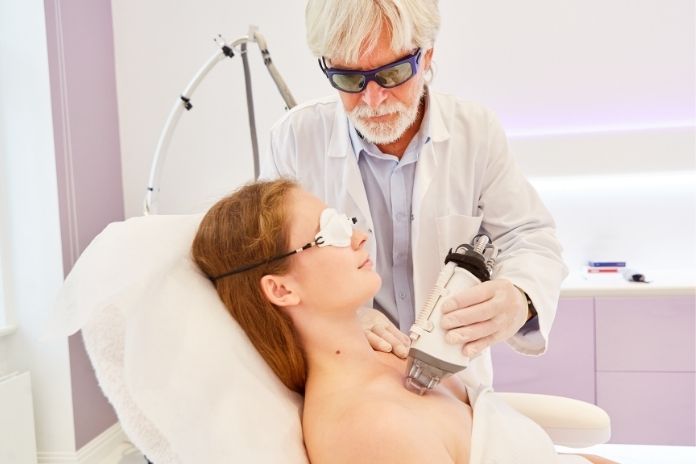
Fractional lasers, including Fraxel, create controlled microinjuries in the dermis that stimulate collagen remodeling at a depth that no topical active reaches. Microneedling operates on a similar principle of controlled injury and repair.
Chemical peels at professional concentrations resurface the epidermis in ways that accelerate collagen synthesis and pigmentation clearance more aggressively than cosmeceuticals. These procedures need to be performed by qualified dermatologists or oculoplastic surgeons, specifically, given the proximity to the eye.
The periorbital area is not a place for inexperienced hands with energy-based devices. Topical actives and professional treatments are also not mutually exclusive. They’re often most effective in combination.
Dr. Patricia Farris, MD, describes this integration directly, “Some great data is suggesting that topical antioxidants and even peptide-containing cosmeceuticals can improve the healing time and the patient experience with procedures such as laser resurfacing.”
The framework she describes, which she calls “integrated skin care,” positions topicals not as a replacement for professional procedures but as a foundation that makes procedures work better and a maintenance layer that preserves their results.
Read More: Can Too Many Skincare Actives Damage Your Skin Barrier?
The Takeaway
The periorbital skin care active conversation is not about which eye cream has the longest ingredient list. It’s about which actives can actually reach the right skin layer, in the right form, at the right concentration, without triggering a reaction that defeats the purpose.
Vitamin C brightens and protects against oxidative stress. It supports collagen synthesis in a way the skin tolerates well, especially in derivative forms at appropriate concentrations. It belongs in the morning.
Retinoids rebuild and are the only topical actives with robust clinical evidence for structural remodeling of periorbital skin. They belong at night, starting low, building slowly, with a moisturizer following every application.
The combination of both, with niacinamide and peptides as supporting players and consistent daily SPF as the foundation, is a routine built on evidence rather than marketing. It won’t show results in a week. It will show them in three months, and those results will compound. When topicals hit their ceiling, professional evaluation is the next step, not a more expensive cream.
References
- Farris, P. K. (2024). Patricia Farris, MD, discusses integrated skin care. Dermatology Times.
- Levin, J., & Momin, S. B. (2024). A review of the efficacy of popular eye cream ingredients. International Journal of Women’s Dermatology.
- Mukherjee, S., et al. (2006). Retinoids in the treatment of skin aging: An overview of clinical efficacy and safety. Clinical Interventions in Aging, 1(4), 327-348.
- Siddiqui, K., et al. (2025). Tretinoin for photodamaged facial skin: Systematic review and meta-analysis of randomized controlled trials. PMC.
- Soleymani, T., & Lanoue, J. (2018). A practical approach to chemical peels. Journal of Clinical and Aesthetic Dermatology, 11(8), 21-28.
- Stettler, H., Kurka, P., Lunau, N., et al. (2017). A new topical panthenol-containing emollient: Skin-moisturizing effect over 24 hours, with a special focus on the stratum corneum. Journal of Dermatological Treatment, 28(4), 374-379.
- Waibel, J., & Rudnick, A. (2015). The tricky tear trough: A review of topical cosmeceuticals for periorbital skin rejuvenation. Journal of Drugs in Dermatology.
- Yang, J., et al. (2024). Comprehensive evaluation of the efficacy and safety of a new multi-component anti-aging topical eye cream. Skin Research and Technology.
- https://pmc.ncbi.nlm.nih.gov/articles/PMC9653569/
- https://www.sciencedirect.com/topics/pharmacology-toxicology-and-pharmaceutical-science/penetration-enhancing-agent
- https://pmc.ncbi.nlm.nih.gov/articles/PMC12035766/
- https://www.mdpi.com/2673-4141/3/2/11
- https://gethydrogenie.com/how-to-use-hydrogen-water-for-skin-care/
- https://link.springer.com/article/10.1208/s12249-024-02886-8
- https://www.longdom.org/open-access/hyaluronic-acid-elucidating-its-penetration-and-effect-through-the-hair-fibre-using-confocal-raman-spectroscopy-and-biometric-tech-105894.html
- https://beautyflash.pl/en/procedures/hydrogen-treatment/
In this Article