


















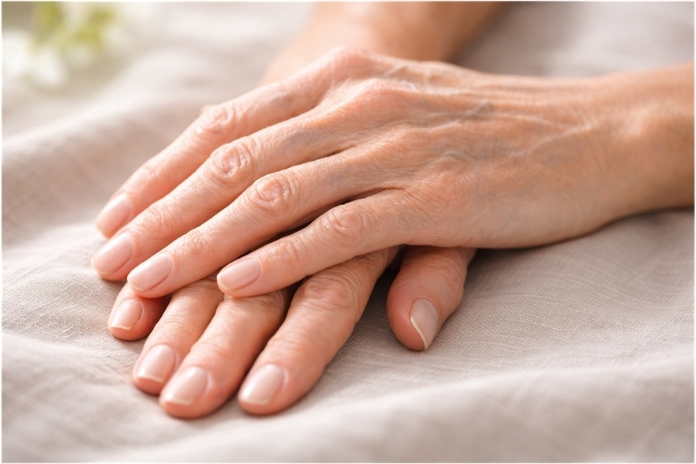
You’ve hit your goal weight. Your clothes fit, your lab work looks better, and people are noticing. Then you glance down at your hands and see something unexpected: prominent veins, looser skin, and a crepey texture that wasn’t there before.
Ozempic hand aging has become one of the more talked-about cosmetic side effects of GLP-1 medications, and the first question most people ask is whether it goes away. The answer depends on several factors, none of which have anything to do with the medication itself being toxic to your skin.
What’s happening is a structural response to rapid fat loss, and understanding the timeline realistically is what allows for sound decisions about what to do next. This article covers what “Ozempic hand” actually is, the biological reasons it occurs, what recovery looks like week by week, and which interventions, from lifestyle to cosmetic, have real evidence behind them.
- “Ozempic hand” is an informal term for volume loss, visible veins, and crepey skin in the hands after rapid GLP-1-assisted weight loss, not a medical diagnosis.
- Skin remodeling continues for months after weight stabilizes, with the most natural improvement typically occurring within the 6 to 12-month window.
- Age, total weight lost, speed of loss, and genetics all determine how much natural recovery is possible.
- Resistance training, adequate protein, hydration, and sun protection are the most evidence-backed lifestyle strategies to support skin recovery.
Read More: Does ‘Nature’s Ozempic’ Really Exist? What Science Says About Natural Alternatives for Weight Loss
What People Mean by “Ozempic Hand”
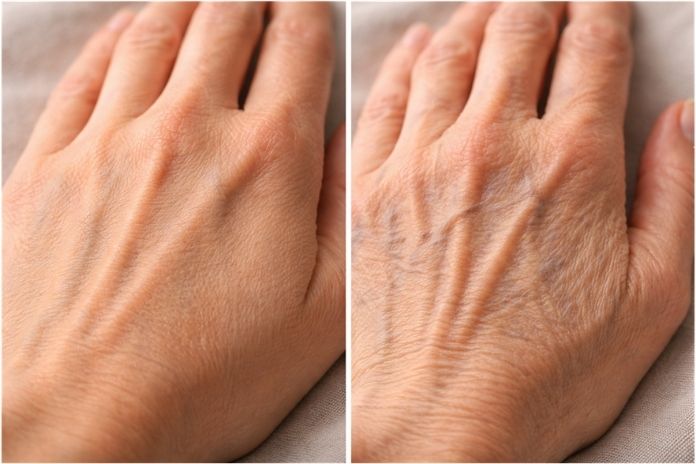
“Ozempic hand” is not a clinical diagnosis. It’s a colloquial phrase used to describe a cluster of cosmetic changes that some people notice in their hands after significant weight loss, whether from GLP-1 medications, bariatric surgery, or intensive dieting.
The changes people describe include increased visibility of veins and tendons beneath the skin, an overall thinner or more deflated appearance of the back of the hand, a crepey or paper-like skin texture, and more pronounced wrinkles at rest.
These changes are not unique to semaglutide or tirzepatide users. They reflect what happens when a body part with limited fat reserves loses even a small portion of its subcutaneous volume. Hands tend to show these changes earlier than other body parts for a straightforward reason.
The dorsal surface of the hand carries very little subcutaneous fat to begin with. Unlike the abdomen or thighs, there is no deep fat reserve to absorb the visual impact of tissue loss. When overall body fat decreases, the hands have almost no buffer, and structural changes become visible quickly.
Why Rapid Weight Loss Affects the Hands
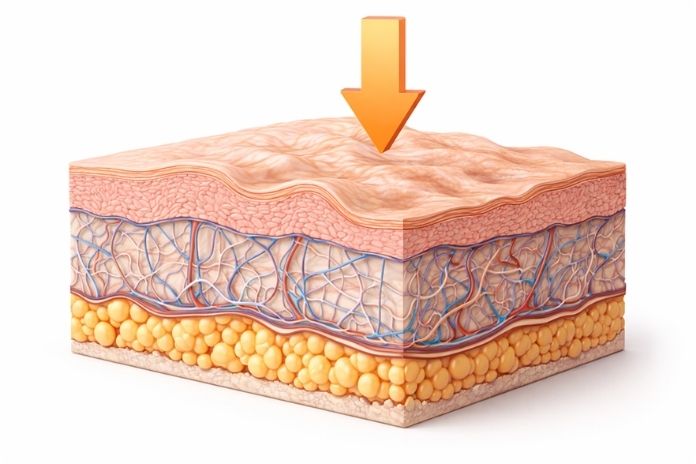
A layered system of collagen, elastin, and subcutaneous fat supports skin. When body weight decreases slowly, the skin has biological time to adapt, remodeling its collagen architecture gradually as the underlying volume shrinks. When weight drops rapidly, that adaptation process cannot keep pace.
A study published in PubMed on skin collagen after massive weight loss found that patients who experienced significant, rapid weight loss showed structural changes in the dermis: a reduction in thick, organized collagen fibers and an increase in thinner, more loosely arranged ones. This structural shift is part of why skin can appear lax rather than simply smaller after fast fat loss.
Collagen and elastin both degrade naturally with age, and this plays directly into how visible hand changes become. People who begin GLP-1 therapy in their 40s, 50s, or beyond have a lower baseline of skin resilience, meaning the same degree of fat loss produces more visible changes than it would in someone younger.
Hydration and nutrition compound the picture. A 2023 review published in Nutrients found that dehydration significantly reduces skin elasticity, skin thickness, and overall skin barrier function. Researchers noted that even mild dehydration can exaggerate the appearance of crepey or deflated skin, especially in areas already affected by fat loss, such as the hands.
Dehydration makes skin look thinner and more crepey, independent of actual fat loss, and nutritional deficiencies in protein, vitamin C, or zinc can impair the skin’s ability to produce new collagen.
Is “Ozempic Hand” Permanent?
In many cases, no. But the degree of natural improvement varies considerably depending on the individual. Dr. Lindsey Bordone, a board-certified dermatologist in the Department of Dermatology at Columbia University Medical Center, has stated that “there is often improvement in skin laxity after weight stabilization: a period of 6-12 months of skin remodeling at the new weight.”
She notes that this happens naturally since skin is always remodeling and that the degree of improvement varies, with some patients ultimately pursuing removal of excess skin in severe cases.
Younger patients with good skin quality and moderate total weight loss are the most likely to see meaningful natural improvement. Older adults, or those who’ve lost large amounts of weight rapidly, may see a more limited rebound.
Once fat cells in a given area are substantially depleted and collagen architecture is disrupted, full restoration to the pre-weight-loss state is unlikely without intervention. What is not in question is whether the medication caused permanent damage. GLP-1 receptor agonists do not chemically alter skin tissue. The changes are structural and mechanical, driven by fat loss speed, not by the drug itself.
Read More: What Happens to Your Collagen After 25 – and 5 Early Signs You’re Losing It
Timeline: How Skin May Change After Weight Loss
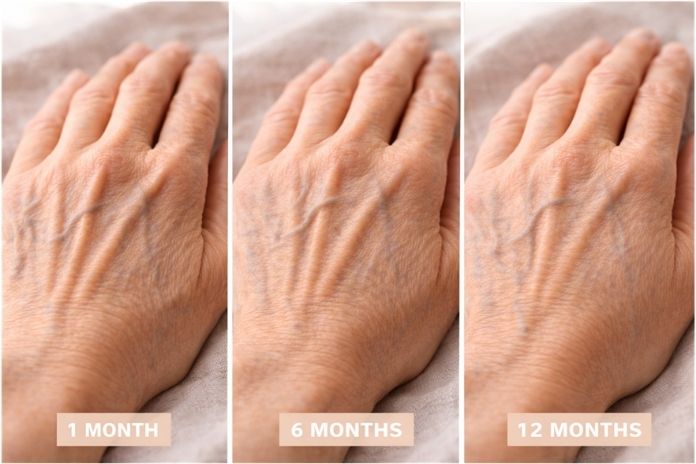
Recovery does not follow a fixed schedule, but clinical observation and skin biology together suggest some general benchmarks. In the first zero to four weeks of significant weight loss, fat depletion is most rapid, and volume changes in the hands are most noticeable. This is also when the visual gap between the rate of fat loss and the rate of skin adaptation is widest.
Between one and three months, the skin enters an early adjustment phase. Collagen remodeling begins, though its effects are not yet visible. Skin texture may feel different before it looks different.
From three to six months, people with moderate weight loss, younger age, and better skin baseline may begin to notice subtle tightening. This is not universal, and for those who’ve lost weight quickly or in large amounts, visible improvement at this stage is limited.
The six-to twelve-month window is where the most meaningful natural improvement tends to occur. Dr. Bordone’s observation aligns here: once weight stabilizes, the skin’s remodeling process has a consistent target volume to adapt toward.
Collagen synthesis continues actively during this period. After one year with little visible change, further natural improvement becomes unlikely. At that point, cosmetic options become a more relevant conversation.
Factors That Affect Skin “Snap-Back”
Dr. Vinni Makin, an endocrinologist at Cleveland Clinic, has explained that rapid weight loss accelerates processes that naturally occur with aging, noting that “rapid weight loss can cause these processes to occur more rapidly, which can mimic the natural aging process.”
She also points out that older adults are more susceptible because they have lower subcutaneous fat reserves even before beginning weight loss treatment. Total weight lost matters significantly. Losing 20 pounds produces far less hand volume loss than losing 80, and the degree of skin change scales with the magnitude of fat reduction.
The speed of weight reduction is closely related. GLP-1 medications often produce faster loss than conventional dieting, which means less biological time for gradual skin adaptation. The mismatch between fat loss speed and skin remodeling speed is the core driver of sagging skin on the hands after rapid weight loss. Sun exposure history is frequently underestimated.
A study published in Dermatologic Surgery found that chronic ultraviolet exposure accelerates collagen breakdown and elastin degeneration in hand skin, making age-related thinning and wrinkling more visible. Researchers noted that hands often show structural aging earlier because they receive frequent cumulative sun exposure over decades.
Cumulative UV damage degrades collagen over the years, and hands are among the most consistently sun-exposed areas of the body. People with significant sun damage may find that hand skin has lower remodeling potential. Genetics influences how any individual’s skin responds to volume change throughout life, independent of other factors.
At-Home Strategies That May Support Skin Recovery
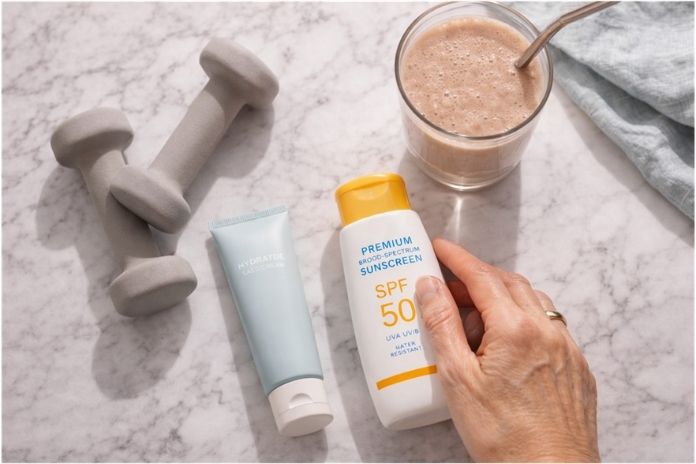
Protein intake is the most evidence-backed nutritional lever. A systematic review published in the Journal of Cachexia, Sarcopenia, and Muscle reported that higher protein intake helps preserve lean body mass during weight loss.
Researchers suggested that maintaining muscle and connective tissue support may reduce the deflated appearance that often accompanies rapid fat loss, especially when combined with resistance training. Collagen is synthesized from amino acids, and inadequate dietary protein directly limits the raw material available for skin remodeling.
Most clinical guidance for active weight loss recommends 1.2 to 1.6 grams of protein per kilogram of body weight per day. Resistance training is the most powerful lifestyle intervention for limiting the visible impact of loose skin on hands after weight loss.
A systematic review and meta-analysis published in PMC covering 114 trials found that lean mass was preserved in groups undertaking resistance training combined with caloric restriction, while it declined significantly in groups relying on diet alone. Lean mass supports the overlying skin structure in the forearm and hand region, and its preservation reduces the extent of visible deflation.
Hydration supports skin turgor. Drinking adequate water, around 2 liters daily, keeps the skin from looking more depleted than it structurally is. Hand-specific skincare is a modest but worthwhile adjunct. Daily broad-spectrum SPF applied to the dorsal hands prevents further UV-related collagen degradation.
Moisturizers help maintain surface texture and reduce the appearance of crepiness, even if they cannot restore lost volume. Avoiding extreme weight cycling matters too. Repeated cycles of significant weight gain and loss stretch the skin repeatedly, compounding structural changes with each cycle.
Read More: How to Build Muscle Without Going to the Gym (Science-Backed Strategies)
Do Topical Products Help Tighten Hand Skin?

Topical products can improve how skin looks and feels, but they cannot replace lost subcutaneous volume or fully reverse structural collagen changes. Retinoids, vitamin A derivatives, stimulate collagen production when applied consistently over time. Prescription-strength formulations outperform over-the-counter options.
On the hands, they can improve surface texture and reduce the appearance of fine lines with regular use, though results take months and require ongoing application. Peptide-containing moisturizers and hyaluronic acid formulations support skin hydration and surface health.
The evidence for their structural impact on significant skin laxity is limited. They are useful maintenance tools, not primary treatments for volume loss.
Medical and Cosmetic Options If Changes Persist
For patients whose hand changes don’t improve sufficiently through lifestyle and topical approaches, several clinical options exist. Dermal fillers, particularly hyaluronic acid-based products, can restore dorsal hand volume effectively.
Results are visible immediately and typically last 12 to 18 months. For patients with more pronounced volume loss, this remains one of the most direct and satisfying treatment options.
Dr. Lyle Leipziger, MD, FACS, has noted that demand for body contouring after GLP-1 weight loss has grown substantially in his practice, and that “every patient’s journey may be unique, and a thorough evaluation of the patient’s condition by a board-certified plastic surgeon should yield superior results.”
Energy-based treatments, including radiofrequency devices and ultrasound-based systems, stimulate collagen production in deeper skin layers. These require multiple sessions spaced weeks apart, and results develop over three to six months. They are most effective for mild to moderate laxity rather than for significant volume deficit.
Fat grafting is a surgical option for restoring hand volume using the patient’s own fat. It carries more recovery time than fillers but produces longer-lasting structural restoration for patients with more significant loss.
When to Talk to a Healthcare Professional
Most people experiencing GLP-1 weight loss lose skin on their hands and do not need urgent medical attention for cosmetic changes alone. However, there are circumstances where a conversation with a provider is warranted sooner rather than later.
Rapid or extreme weight loss that significantly outpaces what was expected or planned may indicate excessive calorie restriction or inadequate nutrition, both of which have systemic consequences beyond skin changes.
Nutritional deficiencies, particularly in protein, zinc, or vitamins C and E, impair wound healing and collagen synthesis. If skin appears unusually fragile or slow to heal from minor cuts or abrasions during weight loss, a nutritional assessment is appropriate.
Anyone considering cosmetic treatment for persistent hand changes should consult a board-certified dermatologist or plastic surgeon with demonstrated experience in hand rejuvenation specifically, since the anatomy of the hand differs meaningfully from facial tissue.
Read More: How to Get Rid of Loose Skin? 11 Fool Proof Methods
Key Takeaway
Ozempic hand aging is not a sign that something went wrong. It is a predictable structural response to rapid fat loss in an area of the body that carries very little subcutaneous cushioning to begin with. The medication did its job. What follows is simply the next part of the process.
Skin biology does not stop when the scale does. Collagen remodeling continues for months after weight stabilizes, and meaningful natural improvement is possible for many people, particularly those who are younger, have lost moderate amounts of weight, and have maintained strong nutrition throughout.
What happens during the recovery window matters. Protein intake, resistance training, daily SPF on the hands, and consistent hydration are the inputs that determine how much biological recovery is actually possible. Being deliberate about these during active weight loss, not just after, gives the skin its best foundation.
For those whose hand changes persist beyond 12 months, cosmetic options, including dermal fillers and energy-based treatments, are available and effective for the right candidate. These are not admissions of failure. They are tools, available when natural recovery has run its course.
Understanding the mechanism behind loose skin after Ozempic treatment allows for realistic expectations and smarter decisions throughout the journey. The changes are real, but so is the capacity to manage them over time, through lifestyle changes and, when needed, medical support.
Frequently Asked Questions
1. What exactly is “Ozempic hand”?
It is an informal term for cosmetic changes in the hands, including visible veins, looser skin, crepey texture, and loss of fullness, that some people notice after rapid weight loss on GLP-1 medications. It is not a medical diagnosis, and the changes are linked to fat loss speed rather than to any toxic effect of the medication.
2. Is an Ozempic hand permanent?
Not necessarily. Skin continues to remodel for 6 to 12 months after weight stabilizes, and some natural tightening is possible during that window. The degree of improvement depends on age, total weight lost, skin quality, and other individual factors.
3. At what point can I expect to see improvement?
Meaningful natural tightening is most likely to occur between 6 and 12 months after reaching a stable weight. Some improvement in texture and hydration may appear within 4 to 8 weeks with consistent nutrition and skincare, but structural changes take longer.
4. Does resistance training actually help with hand skin?
Resistance training helps preserve lean mass throughout the body, which supports the structural tissue underlying hand and forearm skin. It won’t replace lost fat volume, but it significantly reduces the extent of the tissue deflation that makes hands look older.
5. When should I consider fillers or other cosmetic treatments?
If hand changes haven’t improved meaningfully after 12 months of weight stabilization and consistent lifestyle strategies, consulting a board-certified dermatologist about dermal fillers or energy-based treatments is a reasonable next step.
References
- Bordone, L. (2025, November 18). Explaining skin laxity after a patient’s drastic GLP-1 medication weight loss. Medscape.
- Watchmaker, J. (2026, January 5). Sagging skin after weight loss? Here’s what you can do. U.S. Dermatology Partners.
- Woolery-Lloyd, H. (2025, October 14). Patient buzz: Skin care after GLP-1 weight loss. Next Steps in Dermatology.
- Basu, C. B. (2024, August 29). Loose skin after weight loss. WebMD.
- Orpheu, S. C., Coltro, P. S., Scopel, G., Gomez, D., Rodrigues, C., Modolin, M. L., & Gemperli, R. (2010). Collagen and elastic content of abdominal skin after surgical weight loss. Obesity Surgery, 20(4), 480–486.
- Pouliot, J., Lepage, M., Gariepy, G., Piche, M. E., & Poirier, P. (2021). Skin changes due to massive weight loss: Histological changes and the causes of the limited results of contouring surgeries. Plastic and Reconstructive Surgery,
- Loureiro Sato, T. O., Bracht, C. K., Menegassi, M. M., Petry, M. B., Bertolini Neto, F., & Ferreira, L. M. (2024). Comparison of histological skin changes after massive weight loss in post-bariatric and non-bariatric patients. PubMed.
- Schoenfeld, B. J., & Grgic, J. (2022). Resistance training effectiveness on body composition and body weight outcomes in individuals with overweight and obesity across the lifespan: A systematic review and meta-analysis. PMC.
- The Tweakments Guide. (n.d.). Fat and muscle loss in hands.
- Apollo 247. (n.d.). Reducing hand fat.
- ScienceDirect. (2024). Article S1555415524001934.
- National Institutes of Health. (2023). Article PMC9982186.
- Specialty Orthopaedics of New York. (2020). Does my weight affect my carpal tunnel?
- Lose It!. (n.d.). Will your ring size decrease when you lose weight?
- Cleveland Clinic. (n.d.). Unexplained weight loss.
- Bariatric Surgery Corner. (n.d.). The effects of obesity on the hands, wrists, elbows.
- Westlake Dermatology. (n.d.). Rapid weight loss and negative dermatological issues.
- Bolt Pharmacy. (n.d.). What are Ozempic hands?
In this Article