












- Exercise can make the brain appear younger. People who exercised regularly had brains that looked about one year younger on MRI scans..
- Physical activity strengthens the brain. Exercise increases BDNF, improves blood flow, and supports brain cell growth.
- Staying active may reduce dementia risk. Regular exercise in adulthood is linked to a lower risk of cognitive decline later in life.
When people are asked to think about the word “aging,” the first things that come to mind are wrinkles, gray hair, and a slower metabolism. However, scientists now recognize that there is a more subtle and quantifiable aspect of aging that takes place in the human brain. Similar to the body, there is a biological aging process that takes place in the human brain. This may or may not correlate with the individual’s real chronological age.
Thanks to advances in medical imaging, scientists are now able to make estimates on the biological aging process that takes place in the human brain by utilizing advanced MRI imaging tests that analyze patterns in the human brain, such as gray matter density, cortical thickness, and connectivity between different regions in the human brain.
According to a study conducted in 2026 by the AdventHealth Research Institute and published in the Journal of Sport and Health Science, a clinical trial that examined the role that lifestyle factors play in the human aging process found that individuals who partook in regular aerobic exercises over a period of a year experienced improvements in the aging markers in the human brain.
The MRI imaging tests revealed that the human brains of the participants in the study who performed aerobic exercises were nearly a year younger than the human brains of the participants who did not exercise at all.
Regular exercise is known to benefit the human brain. Scientists can now visualize these benefits, which provide important new evidence. This helps researchers studying dementia prevention better understand how regular exercise may influence physical activity and brain aging.
In this article, we will explore what researchers discovered about the relationship between exercise and brain aging and how MRI technology is helping scientists measure these changes. We will also examine the biological mechanisms behind the brain benefits of exercise, including the roles of BDNF, neuroplasticity, and improved cerebral blood flow.
Read More: What Are Brain Zaps? Causes, Symptoms, and Why They Happen
What the Study Found
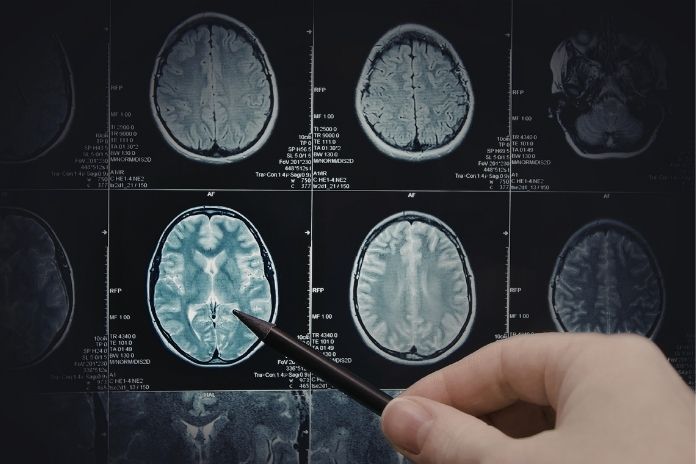
To understand how physical activity could affect brain aging, a clinical trial was conducted, where a group of 130 healthy adults aged 26 to 58 years was studied. Half of the participants continued their normal lifestyle, while the other half were provided with a physical training program.
The participants who underwent physical training did 150 minutes of moderate- to vigorous-intensity aerobic exercises every week, including brisk walking, cycling, and treadmill running. This level of physical activity aligns with the public health guidelines for heart health.
The participants underwent brain scans using MRI before the study to calculate their brain age. After twelve months, the participants who underwent physical training underwent another brain scan to check if any changes had occurred.
The results of the MRI scans were interpreted using a tool called “brain-PAD,” or “Brain Predicted Age Difference.” Brain-PAD is the difference between a person’s actual age and the age indicated by their MRI scan results.
If the age indicated by the MRI scan is higher than the person’s actual age, then the person’s brain is experiencing accelerated aging. Conversely, if the age indicated by the MRI scan is lower, then the person’s brain is experiencing healthy aging.
The results of the study revealed that, at the end of the study, the differences in the study subjects were significant. The study subjects who participated in the aerobic exercises experienced a significant decrease in their brain-PAD when compared to those who did not participate in the exercises.
This means, quite literally, that the MRI scans of the study subjects who participated in the aerobic exercises looked one year younger when compared to those who did not participate in the exercises.
Although one year may seem like a small difference, the researchers emphasize the significance of this finding, as the process of brain aging occurs slowly over many years, and the study demonstrated the impact of lifestyle change in one year.
Why Exercise Changes the Brain

BDNF—The Brain’s Growth Hormone
The way this works is complex, but it involves a number of interrelated processes. At the heart of it all is brain-derived neurotrophic factor, or BDNF, which is a protein that has been called a “growth factor” for brain cells. BDNF is essential for the health, strength, and interconnection of brain cells, as well as brain learning and memory.
When we engage in physical exercise, our bodies release more BDNF, which in turn helps create brain networks. This is a fundamental aspect of neuroplasticity, which is the brain’s ability to adapt, change, and grow throughout our lives.
Blood Flow, Inflammation, and Structure
Exercise also improves cerebral blood flow to the brain, which brings more oxygen and nutrients to brain tissue while removing toxins that collect in the brain during normal brain activity. Another process that physical exercise initiates is the reduction of chronic inflammation, which is a known cause of a variety of cognitive problems, including neurodegenerative diseases.
Some areas of the brain seem to particularly benefit from physical exercise. One such region is the hippocampus, a part of the brain that is essential to our ability to create memories and navigate our way through our surroundings.
Previous studies showed that this region increased in size when physical exercise was continued. Some studies showed that this increased size was enough to offset a year or two of age-related shrinkage in this region.
One study also noted that improvements in cardiovascular fitness, while significant, did not entirely explain the benefits seen in brain aging. The study showed that the participants increased their VO2peak, a measure of cardiovascular fitness, but this did not entirely explain the decrease in brain-PAD.
Read More: How to Keep Your Brain Sharp as You Age: Science-Backed Habits That Work
What This Means for Dementia and Long-Term Brain Health

Why Midlife Is the Most Important Window
The first major conclusion to be drawn from this study is how it helps us exercise and prevent cognitive decline as we age. Researchers believe with increasing certainty that the processes in the brain that lead to dementia begin many years before the first symptoms appear.
Hence, midlife has become a critical time for preventing dementia. Between the ages of 45 and 64, small changes in the structure and metabolism of the brain may begin to accumulate, and the habits we form during this time may influence whether we progress or stabilize.
Large-scale studies have revealed that those who remain physically active in midlife is associated with a notably lower risk of dementia when they age, with some studies indicating as much as a 40 percent lower risk.
While no single factor will prevent neurodegenerative diseases, exercise is one of the most important factors in the prevention of cognitive decline as we age.
The Alzheimer’s Connection
Physical activity may also play a role in influencing factors related to Alzheimer’s, the most common cause of dementia. Studies indicate that regular exercise helps remove amyloid-beta proteins and slow down the development of tau protein, both of which play a major role in Alzheimer’s development.
Additionally, regular exercise helps improve blood flow and reduce inflammation, creating a healthy environment for brain cells to thrive. More than 55 million people worldwide suffer from dementia, and this number is expected to skyrocket as the population ages.
Since there is no cure for Alzheimer’s, prevention becomes essential. The researchers deliberately focused on adults between 26 and 58 years old, well before the age at which dementia typically appears. Their goal was to examine whether lifestyle interventions during earlier adulthood could influence biological brain aging long before cognitive decline occurs.
How Much Exercise Do You Actually Need?

The 150-Minute Benchmark
The bright side of this research is that you don’t have to overdo things to reap the brain benefits. The research subjects were able to achieve the recommended amount of aerobic exercise, about 150 minutes per week, which is in line with the recommendations of major health organizations worldwide.
The aerobic exercises recommended in the research have many forms, depending on the individual. For instance, some people prefer brisk walks a few times a week, while others prefer cycling, swimming, running, or dancing. The only requirement is that the exercises be vigorous enough to increase heart rate and significantly challenge the cardiovascular system.
Aerobic vs. Resistance — What Works Best
While aerobic exercise for brain health has the strongest evidence supporting its benefits, many experts recommend adding resistance training to the exercise routine. This is because resistance training helps to build muscle mass, which indirectly helps the brain.
While regular exercise is the key, the research also shows that moderate exercise is the way to go rather than overexertion followed by long periods of inactivity.
The best thing is that individuals don’t need to join the gym to achieve the recommended aerobic exercises; they can achieve this through regular walks in the park, climbing the stairs, or biking to work.
Movement, whether it is walking, running, swimming, or any other aerobic exercise, appears to be good for our brains, regardless of our age.
As researchers continue to study this, some are even considering whether physical exercise could be part of a plan to prevent or treat brain decline.
What the Science Still Can’t Tell Us
Still, despite the promising indicators, there are numerous unanswered questions. For instance, the increase in biological brain age, which the study revealed, was actual, albeit limited, as the increase between the two groups was less than one year’s difference.
Furthermore, the fact that the trial participants were rather healthy and well-educated individuals means that the results may not apply to individuals who have more risk factors for poor health.
A final concern that medical experts have mentioned is that, in the long term, the results of the study may actually translate into lower rates of dementia, but this can only be determined after several years have elapsed.
Finally, medical experts have also cautioned that, while the results of the study are promising, one must also consider the long-term effects of engaging in physical activity, especially if one is currently in poor health. As such, if one is considering making significant changes to their physical activity, they must first consult their healthcare provider.
Read More: Brain Habits That Lower Your Dementia Risk After 40
The Bottom Line
New information from brain imaging studies is helping researchers understand how the choices we make about our lifestyle affect our brain’s aging process. In the clinical trial, participants who continued with regular aerobic exercises showed improvements in brain aging within a year.
While the changes seen in the MRI scans are small, they are significant, showing that physical exercises can influence changes in brain structure. This could, in the long run, provide greater brain strength, reducing the possibility of neurodegenerative diseases. Most important, however, is that the intervention is simple. Movement of all kinds, whether it is walking, running, swimming, or any other aerobic exercise, seems to promote our brain health.
The message from the current science, however, is quite simple: our brains benefit from movement, and this can happen well before old age.
References
- The New York Times. (2015, April 15). The right dose of exercise for a longer life. Retrieved from
- National Center for Biotechnology Information. (2023). Exercise protects the brain: A review of mechanisms linking physical activity and neurodegenerative disease.
- National Center for Biotechnology Information. (2012). Midlife exercise and reduced risks of dementia and mild cognitive impairment: A review of prospective cohort studies.
- National Center for Biotechnology Information. (2024). Exercise intervention and cognitive function: A randomized controlled trial.
- American Physiological Society. (2024). Exercise and brain health across the lifespan.
- Medical Xpress. (2026). Regular aerobic exercise may slow brain aging in midlife.
- National Center for Biotechnology Information. (2024). Exercise intervention and cognitive function: A randomized controlled trial.
In this Article