













- Pancreatitis pain is intense, deep, and often spreads to the back. Indigestion is usually milder and improves with antacids, rest, or passing gas.
- Pain that worsens for hours, especially with vomiting, fever, or after a heavy fatty meal, may indicate acute pancreatitis rather than simple indigestion.
- Pancreatitis needs medical evaluation. Early treatment helps prevent complications like pancreatic necrosis or organ failure.
- If severe upper abdominal pain does not improve within a few hours, seek urgent medical care.
Pancreatitis vs indigestion is a comparison that matters because they can look deceptively similar in the early hours. Both involve upper abdominal discomfort. Both can cause nausea. Both often follow eating. But the difference between stomach ache and pancreatitis is the difference between a problem that resolves on its own and one that can land you in the ICU if you wait too long.
Pancreatitis is digestive inflammation of the pancreas, the organ sitting behind your stomach that produces both insulin and the pancreatic enzymes needed to break down food. When it becomes inflamed, either acutely or chronically, the result is not just uncomfortable. It can be genuinely dangerous.
According to StatPearls at NCBI, acute pancreatitis is the leading cause of hospitalization for gastrointestinal disease in the United States, with over 275,000 hospital admissions annually, and mortality ranging from 3% in mild cases to 20% in necrotizing forms.
Knowing what signs of acute pancreatitis actually look like, and how they differ from ordinary digestive discomfort causes, is genuinely useful information.
Why Pancreatitis Can Feel Like a “Bad Stomach Ache”
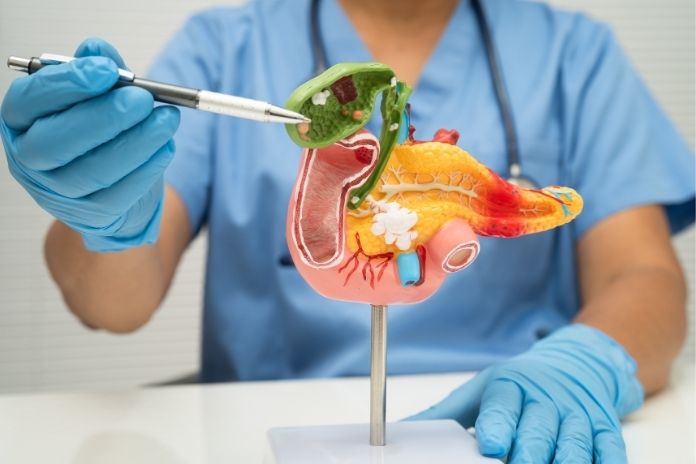
The pancreas is tucked deep in the retroperitoneum, behind the stomach and in front of the spine. When it inflames, the pain comes from a place you can’t easily pinpoint. It radiates. It’s dull in some people and knife-like in others. And because the pancreas is a digestive organ, the timing, after meals, after drinking, in the upper abdomen, overlaps precisely with how most people experience ordinary indigestion or gastritis.
Gallstones and pancreatitis are among the most commonly confused conditions. Gallstone pain typically starts in the right upper quadrant and is episodic. Pancreatitis pain tends to be more central or left-sided, often boring straight through to the back, and it doesn’t let up the same way gallstone pain does after the stone passes. But until the back radiation becomes obvious, patients, and sometimes clinicians, don’t make the distinction immediately.
Early acute pancreatitis can also look like food poisoning. Nausea, vomiting, abdominal cramping after a meal, and general misery. The difference becomes apparent when the symptoms don’t resolve within a few hours and instead intensify.
Dr. Shilpa Mehra Dang, MD, a double board-certified gastroenterologist at the Medical Offices of Manhattan, speaks directly to why pancreatitis gets missed in early presentation: “One of the signs of pancreatitis that is easy to miss, especially in the early stages, is slight or vague pain in the abdomen,” she told Parade.
“People often ignore or downplay this pain because it can be confused with indigestion or general stomach pain.” By the time the pain becomes impossible to ignore, the window for early intervention has often already closed.
Read More: Easy-to-Digest Foods for an Upset Stomach: What to Eat (and Avoid) for Faster Relief
Pancreatitis vs. Common Digestive Issues: Key Differences
Pain Location and Radiation
This is the most diagnostically useful signal. Pancreatitis pain location is characteristically epigastric, in the upper central abdomen, sometimes shifting left. The defining feature is upper abdominal pain radiating to the back, often described as a boring or drilling sensation that goes straight through the torso. Lying flat almost always makes it worse, which is why patients instinctively lean forward or curl into a fetal position.
Pain location in pancreatitis vs. indigestion differs significantly. Indigestion is typically localized, either substernal from reflux or lower abdominal from gas and bloating. It doesn’t radiate to the back. It doesn’t worsen with lying down in the same way. And it responds to antacids or passing gas, which pancreatitis symptoms vs digestive issues rarely do.
Pain Intensity and Character
The type of pancreatitis symptoms vs digestive issues is one of the clearest differentiators. Patients with signs of acute pancreatitis consistently describe the pain as deep, severe, and unrelenting. “Boring,” “knife-like,” and “the worst pain I’ve ever had” are common descriptions. It doesn’t come and go in waves the way cramping or gas pain does. It sits there and intensifies.
Indigestion, gastritis, and digestive discomfort causes like IBS produce dull, crampy, or pressure-like pain that cycles. It’s uncomfortable, sometimes genuinely painful, but it has a different architecture. It moves, it changes with position, and it responds to movement or medication.
What Makes It Worse (and Better)
Upper abdominal pain after eating is common to both, but what happens next is different. With indigestion, eating a smaller meal, taking an antacid, or lying down for a while often brings relief. With pancreatitis pain location and acute inflammation, eating is one of the worst things you can do. High-fat meals particularly aggravate the pancreas because they trigger the release of enzymes from an already inflamed gland.
Lying flat worsens upper abdominal pain radiating to the back in pancreatitis. Sitting forward, which takes pressure off the inflamed gland, is often the only position that provides partial relief. That positional pattern is specific enough to be clinically meaningful.
Duration and Progression
Indigestion resolves. It might take a few hours, or a bowel movement, or a night of sleep. But it doesn’t keep building. Signs of acute pancreatitis follow a different trajectory entirely. The pain typically lasts for hours to days and often continues to intensify rather than plateau or improve. Vomiting provides no relief, which distinguishes it from most GI illnesses, where vomiting at least temporarily reduces discomfort.
A stomachache that worsens after 12 hours is not indigestion. That’s the rule of thumb worth remembering.
Associated Symptoms to Watch For
The systemic symptom picture is where the pancreatitis symptoms vs digestive issues distinction becomes most clear. Signs of acute pancreatitis include fever, rapid heart rate, and sometimes symptoms of jaundice, when the common bile duct is obstructed by gallstones, and pancreatitis together requires immediate endoscopic evaluation. Nausea and vomiting are severe and persistent, not the mild post-meal queasiness of indigestion.
Digestive discomfort, such as gastritis, reflux, or IBS, doesn’t cause fever. They don’t raise heart rate. They don’t cause visible jaundice. If any of those systemic features are present alongside upper abdominal pain, that’s not a GI upset situation.
Dr. Santhi Swaroop Vege, MD, FACP, Director of the Pancreas Interest Group, is specific about the diagnostic challenge: “Remember that amylase can be elevated with several conditions that cause abdominal pain, and some patients with acute pancreatitis may not have elevated amylase,” he told ACP Hospitalist.
“Test for both amylase and lipase, but if you have to choose, lipase is better because it stays elevated longer.” This is exactly why self-diagnosis isn’t reliable and clinical testing is essential.
When to Seek Emergency Care

The threshold for emergency evaluation is lower with suspected pancreatitis than most people realize. This is not a condition where waiting a day to see if it passes is a reasonable strategy.
Go to the emergency room if you experience sudden, severe upper abdominal pain after eating that doesn’t ease with rest, especially if it radiates to your back. Persistent vomiting, particularly when it doesn’t provide relief, is another signal. A fever with abdominal tenderness suggests the inflammatory process may be escalating toward systemic involvement.
The American College of Gastroenterology guidelines, published in PubMed, are explicit: almost one-fifth of patients with acute pancreatitis go on to develop complications, including pancreatic necrosis or organ failure. Early management is the variable that makes the most difference in preventing those outcomes.
Do not eat or drink while waiting for evaluation. Fasting removes the stimulus for pancreatic enzyme secretion and reduces ongoing damage to an already inflamed gland.
Dr. Nison Badalov, MD, a gastroenterologist at Maimonides Medical Center in Brooklyn, presented data at the American College of Gastroenterology annual meeting showing that early feeding appears safe and may lead to reduced emotional and financial costs in mild acute pancreatitis, with patients placed on an early regular diet having a median hospital stay of 3.1 days compared to 5.8 days for those kept NPO.
The takeaway for patients: early medical evaluation, not delayed presentation, determines outcomes.
Common Causes of Pancreatitis
Gallstones and pancreatitis account for roughly 40% of all acute cases. A gallstone large enough to lodge at the junction of the common bile duct and the pancreatic duct creates a backup of bile and pancreatic enzymes into the gland itself. The enzymes that are supposed to digest food start digesting the pancreas instead. The result is rapid, severe inflammation.
Alcohol-related pancreatitis is the second most common cause, accounting for approximately 30% of cases. It’s not always heavy, chronic drinking that triggers it. Binge drinking, particularly in someone with an underlying susceptibility, can cause an acute episode.
A review published in Gastroenterology notes that alcohol-related pancreatitis is also the most common pathway to progression from acute episodes to chronic pancreatitis, particularly when combined with smoking.
High triglycerides are a less recognized but clinically significant cause. When serum triglyceride levels exceed 1,000 mg/dL, the lipid-rich environment can trigger pancreatic inflammation through mechanisms similar to those of gallstone obstruction. This is why metabolic risk factors, not just alcohol and gallstones, are part of the evaluation.
Certain medications, including some diuretics, immunosuppressants, and antiretrovirals, are also associated with drug-induced pancreatitis. Infections like mumps and genetic conditions, including CFTR mutations, round out the less common causes.
How Doctors Diagnose Pancreatitis
Diagnosis of pancreatitis vs. indigestion in a clinical setting is not based solely on symptoms, though the history and physical examination are important starting points.
Blood tests come first. Serum lipase is the preferred marker. Lipase at three times or more above the upper limit of normal is one of the diagnostic criteria under the Revised Atlanta Classification. Amylase can be normal in some presentations and elevated in non-pancreatic conditions, making lipase the more reliable single test.
According to the diagnostic and management review published in PMC, the diagnosis of acute pancreatitis requires two of three criteria: characteristic abdominal pain, serum lipase or amylase at three times the upper normal limit, or cross-sectional imaging findings consistent with inflammation. Meeting only one criterion warrants further investigation rather than a definitive diagnosis.
Abdominal ultrasound is the standard initial imaging, primarily to check for gallstones and pancreatitis. A CT scan is reserved for cases where the diagnosis is uncertain, the clinical course is severe or worsening, or complications are suspected.
Self-diagnosis is not possible with this condition, and delaying evaluation in the hope that the pain will resolve independently is one of the most common ways mild acute pancreatitis becomes moderate or severe.
Read More: Gut Health and Diet: Foods that Promote a Healthy Digestive System
Recovery and Prevention Tips (Evidence-Based)

Inpatient treatment for acute pancreatitis centers on IV fluid resuscitation, pain management, and nutritional support. Historically, fasting to rest the pancreas was the standard. But early oral feeding in mild cases is now supported by evidence and associated with shorter hospital stays.
Once discharged, the prevention calculus is straightforward: address the cause.
If gallstones and pancreatitis were the trigger, cholecystectomy, surgical removal of the gallbladder, is typically recommended to prevent recurrence. A second gallstone episode of pancreatitis is preventable. A third is not acceptable.
Alcohol-related pancreatitis requires complete alcohol cessation. There is no safe level of alcohol consumption after an episode of pancreatitis if alcohol was the cause. Even moderate intake significantly increases the risk of recurrence and progression to chronic disease. Smoking cessation matters too. The combination of alcohol and smoking dramatically accelerates the chronic pancreatitis pathway.
High-fat meals should be avoided during the recovery period and kept moderate in the long term. The pancreas secretes more enzymes in response to fat than to any other macronutrient. Smaller, more frequent meals with moderate fat content reduce pancreatic workload without requiring an indefinitely medically restrictive diet.
Hydration matters throughout recovery. Dehydration contributes to the severity of acute attacks, and maintaining adequate fluid intake is one of the simplest prevention strategies.
Dr. Timothy B. Gardner, MD, MS, FACG, is unambiguous about what actually prevents recurrence: “Identifying and treating the underlying etiology remains the most effective means of preventing a recurrence of acute pancreatitis,” he writes in his published clinical review.
Whether that etiology is gallstones and pancreatitis, alcohol-related pancreatitis, or a metabolic trigger, addressing the cause is the only intervention that reliably changes the long-term trajectory. Treating the episode without addressing the cause is treating the fire while leaving the fuel in place.
Key Takeaway
Not every stomachache is indigestion. A pain that radiates to the back, keeps building over hours, doesn’t ease with rest or antacids, and comes with nausea or fever is something that requires urgent clinical evaluation.
The difference between stomach ache and pancreatitis often comes down to pattern and trajectory. Indigestion changes, improves, responds. Signs of acute pancreatitis persist, intensify, and spread. Upper abdominal pain radiating to the back after a high-fat meal or an evening of drinking is the combination that needs emergency care right away.
When to seek care for stomach pain is the question that changes outcomes here. The answer, when multiple symptoms from this list are present and have been building for several hours: sooner is always better. Acute pancreatitis, if managed early, stays mild; if not, the condition can accelerate.
Frequently Asked Questions
How do I know if my stomach pain is pancreatitis or indigestion?
The key differences in pancreatitis vs indigestion are pain intensity, radiation, and duration. Pancreatitis produces severe, deep upper abdominal pain radiating to the back that doesn’t improve with antacids, rest, or passing gas. Indigestion is milder, localized, and responds to common remedies. If your pain has been intensifying for more than a few hours and nothing is helping, seek evaluation.
What does pancreatitis pain feel like?
Most patients describe it as a deep, boring, or drilling pain in the upper abdomen that radiates straight through to the back. It is often severe from the start, worsened by eating or lying flat, and unrelieved by the usual digestive discomfort. Nausea and vomiting are common, but vomiting doesn’t relieve the pain.
Can pancreatitis go away on its own?
Mild acute pancreatitis can resolve with supportive care, rest, and fasting. But it requires medical supervision to confirm if it’s mild and whether it is progressing. Attempting to wait out suspected pancreatitis at home is risky because a mild attack can spiral quickly without warning.
What are the most common causes of pancreatitis?
Gallstones and pancreatitis together account for roughly 40% of cases. Alcohol-related pancreatitis accounts for approximately 30%. High triglycerides, certain medications, and rare genetic or infectious causes make up the rest.
What tests confirm a pancreatitis diagnosis?
Blood tests measuring serum lipase and amylase are the first step. Lipase is preferred because it stays elevated longer. An abdominal ultrasound evaluates for gallstones and pancreatitis as the cause. A CT scan is used when the diagnosis is uncertain or the clinical course is concerning.
Is pancreatitis the same as gastritis?
No. Gastritis is inflammation of the stomach lining, a common condition often caused by H. pylori, NSAID use, or alcohol. It produces burning, upper abdominal discomfort that usually responds to antacids or acid reducers. Pancreatitis symptoms differ significantly in severity, radiation pattern, and systemic involvement from digestive issues like gastritis. Gastritis does not cause back pain, fever, or elevated blood levels of pancreatic enzymes.
References
- Badalov, N. (2007). Early oral feeding in mild acute pancreatitis: A randomized prospective trial. ACG Annual Meeting, AstraZeneca Senior Fellow Award. Reported in MDedge Family Medicine.
- Chutkan, R. (2023). Fix gut issues with a top GI doctor. The Mel Robbins Podcast, Episode 181.
- Forsmark, C. E., Vege, S. S., & Wilcox, C. M. (2016). Acute pancreatitis. New England Journal of Medicine, 375(20), 1972-1981.
- Leppäniemi, A., Tolonen, M., Tarasconi, A., et al. (2022). Diagnosis and management of acute pancreatitis. Gastroenterology.
- Mederos, M. A., Reber, H. A., & Girgis, M. D. (2021). Acute pancreatitis: A review. JAMA, 325(4), 382-390.
- Tenner, S., Vege, S. S., Sheth, S. G., et al. (2024). American College of Gastroenterology guidelines: Management of acute pancreatitis. American Journal of Gastroenterology.
- Vege, S. S. (2014). With acute pancreatitis, time is of the essence. ACP Hospitalist.
- Wang, C., et al. (2022). Acute pancreatitis. StatPearls, NCBI Bookshelf.
- AFC Urgent Care. (n.d.). Indigestion or pancreatitis: How to tell the difference.
- Cleveland Clinic. (2023, January 12). Pancreatitis: Symptoms, causes & treatment.
- Charleston GI. (n.d.). Warning signs of acute vs. chronic pancreatitis.
- MSD Manual Professional Edition. (n.d.). Acute pancreatitis.
- Drake, M., et al. (2021). Sex-related differences of acute and chronic pancreatitis. Journal of Clinical Medicine, 10(2), 300.
- American College of Gastroenterology. (n.d.). Pancreatitis: Acute and chronic.
- NHS Inform. (n.d.). Chronic pancreatitis.
In this Article