















- Sustainable eating is not about strict rules or perfection, but about building consistent, flexible habits that support both long-term health and the reduced environmental impact of diet.
- The most effective sustainable eating habits focus on patterns, such as a plant-forward diet, reducing food waste, and making mindful food choices.
- The most sustainable diet is one that you can realistically maintain over time, balancing personal needs with environmentally responsible choices.
Sustainable eating is not about following a set of hard and fast rules. It’s not just “eat less meat, skip the packaged foods, try to eat organic as much as possible.” These sorts of definitions, while well-intentioned, may be challenging.
The reality of eating sustainably in the real world is not about cutting out entire food groups. It’s about creating an approach that makes sense in the real world, that helps you maintain your health over the long haul, and that gradually helps reduce the environmental impact of diet through practical, sustainable food choices.
A truly sustainable diet is not based on eating habits that change over time but rather on an approach that remains the same even as your life changes around it. How to eat sustainably begins with the idea that sustainability is not just one decision but rather a set of sustainable eating habits throughout life.
In this article, we will discuss sustainable eating habits, different ways to include a plant-friendly diet, how to build a diet around whole foods, and how to choose seasonal produce. Read on to know more!
Read More: 12 Heart-Healthy Foods to Include in Your Diet
What “Sustainable Eating” Really Means

People get confused about sustainable eating because it tries to balance two competing goals at once: caring for the planet and doing something practical and concrete. From the planet’s perspective, the impact of the food we eat depends on the amount of land and water used and the greenhouse gases emitted while producing the food. In other words, it is closely tied to the carbon footprint of food.
From a human perspective, sustainability is whether a diet is affordable, culturally appropriate, nutritious, and sustainable.
The two definitions are not independent; they are actually related. Eating patterns that are high in whole foods, variety, and moderation are likely to be good for the planet and good for the person at the same time.
Therefore, many patterns that reduce the risk of chronic diseases also reduce the environmental impact of diet, reinforcing the importance of dietary sustainability.
Why Eating Habits Matter More Than Individual Foods
The biggest misunderstanding people have is that there are certain foods that are morally right and others that are not. But the truth is, there is no such thing as a sustainable meal.
Sustainability is not based on any one meal. It is based on the overall pattern of how we are eating. What we really need to focus on is the choices we make daily as part of our sustainable eating habits.
What we really need is a change in how we are eating. One sustainable product won’t change our footprint. What will change our footprint is an eco-friendly eating pattern that cuts waste, uses diverse sources of protein, and so on.
To really change and move in the right direction, we need to start thinking at the habit level instead of the product level. Instead of thinking about whether a certain product is sustainable, we need to start thinking about how our overall eating pattern functions and whether it reflects true eco-friendly eating habits.
Shift Toward a More Plant-Forward Plate
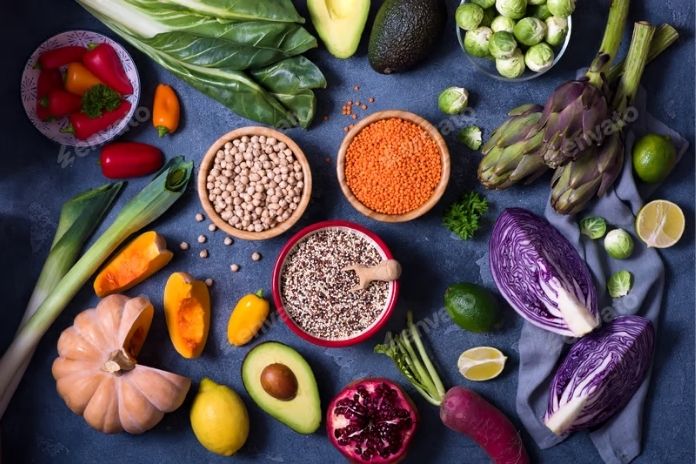
Among all the ways to improve health and promote sustainability, the best solution is adopting a plant-forward diet. This does not necessarily mean people have to become vegetarian or vegan; they just need to ensure they maintain a balance of plant-based meals as the main source of their diet.
When vegetables, legumes, whole grains, nuts, and seeds form the main part of the diet, they not only improve health but also reduce the diet’s carbon footprint, making it more environmentally friendly. Legumes are especially important for sustainable eating, as they contain protein, fiber, and essential vitamins. They are also not as expensive as other foods in terms of their environmental footprint.
The same holds true for whole grains and vegetables, which are rich in vitamins and other essential nutrients. This makes them central to sustainable food choices.
Be More Selective With Animal-Based Foods
Animal-based foods are included in a sustainable diet, and their importance depends on certain decisions. However, the environmental impact of animal-based foods varies.
In most cases, red meat has a much higher carbon footprint than other animal-based foods, such as poultry and eggs. Therefore, instead of completely avoiding animal-based foods, it is important to adjust their frequency and amount.
Reducing their use and pairing them with other foods can lower their environmental impact without requiring significant behavioral changes. However, it is important to note that waste is an essential factor in the environmental impact of animal-based foods.
Reducing the amount of animal-based foods that are wasted is as important as reducing their consumption when choosing sustainable food choices.
Read More: Eat Smart, Stay Healthy: How Physicians Now Prescribe Food
Reduce Food Waste as a Core Sustainable Habit

If you’re looking for a practical way to make an impact, then reducing food waste is the way to go. A significant part of food waste reduction lies in recognizing how much food never gets eaten, along with all the energy, water, and effort that goes into producing, processing, and delivering it.
You don’t have to control every detail of every meal to make an impact. Think in terms of flexible planning, and shop, cook, and get creative with what you have on hand. Making a habit of using up what you have rather than discarding it is one of the most effective eco-friendly eating habits.
Finally, it is also important to understand the concept of expiration dates and how they contribute to waste, increasing the environmental impact of a diet.
Choose Seasonal and Local Foods When Possible
Seasonal eating has an impact on sustainability, and it’s an impact that’s subtle yet significant. Foods that are harvested and eaten during their respective seasons often require less intervention. This includes fewer controlled environments, fewer warehouses, and less transport. This all adds up and could potentially reduce the carbon footprint of food.
It’s important to note that “local” does not always mean “green.” This is because food often travels long distances from its place of production to its point of consumption, contributing to its overall environmental impact.
While shorter travel distances can reduce this impact, how the food is produced often matters more. Local foods don’t always guarantee a lower footprint, but they are still an important factor to consider. When possible, choosing locally and seasonally produced foods can support more sustainable eating habits.
Build Meals Around Whole, Minimally Processed Foods

The level of processing that goes into the food we eat not only affects the nutritional content but also influences the larger picture. Foods that are highly processed, in most cases, require more energy, packaging, and even more complex logistics, hence having a larger environmental impact. On the health front, diets dominated by highly processed foods are also associated with poorer health.
Eating whole or minimally processed foods makes the decision regarding health and the environment much simpler. These foods require fewer resources to produce and generate less waste, making them the cornerstone of a sustainable diet and supporting eco-friendly eating habits.
Rethink Protein Choices Across the Week
Protein is often viewed in a small manner, with many diets relying heavily on a single source. From a sustainability perspective, this lack of diversity can increase environmental pressure. A more balanced approach involves varying protein sources across the week.
Incorporating plant-based proteins alongside moderate amounts of animal-based options allows for greater flexibility and improved nutrient coverage. This diversity supports both health and sustainable food choices, while also reducing dependence on resource-intensive foods. Over time, this approach contributes to a more balanced and resilient sustainable diet.
Eat in a Way You Can Maintain Long-Term
One of the most important, yet overlooked, aspects of sustainable eating is long-term adherence. A diet that is theoretically sustainable but practically unmanageable will not produce meaningful results.
Rigid frameworks often fail because they do not account for real-life scenarios such as time constraints, cultural preferences, social settings, and financial limitations. In contrast, flexible approaches that allow for variation and adaptation are far more likely to persist.
Sustainability, in this sense, is not about strict compliance. It is about creating a system of sustainable eating habits that can evolve with your circumstances without breaking down.
Read More: Top 7 Healthy Snacks on the Go: Portable and Nutrient-Rich Foods and Snack Options
Sustainable Eating on a Budget
There is a widespread perception that a sustainable diet is inherently expensive, but this is not necessarily the case. Many of the most sustainable foods are lentils, beans, grains, and seasonal vegetables, which are fairly reasonable.
In fact, one of the most effective ways to reduce food costs is to reduce food waste. Avoiding unnecessary waste often has a greater financial impact than purchasing premium or specialty products marketed as sustainable.
This highlights an important point: sustainability is less about buying specific products and more about adopting practical, efficient, eco-friendly eating habits.
How Sustainable Eating Supports Personal Health

The connection between sustainable eating and personal health is a key reason to adopt these practices. Diets that emphasize a variety of plant-based, whole foods in appropriate amounts naturally support overall health. Higher fiber intake promotes healthy digestion, while dietary diversity helps prevent nutrient deficiencies and reduces disease risk, especially when fewer ultra-processed foods are consumed.
This overlap highlights that more sustainable eating patterns also benefit individual health, reinforcing the importance of dietary sustainability and its role in reducing the environmental impact of a diet.
Small Habit Changes That Add Up Over Time
Sustainable eating habits rarely come from dramatic changes. Rather, they start with small tweaks that add up over time. Making a few meals per week more plant-forward, being more mindful of leftovers, or gradually changing your diet in small ways all contribute to significant changes.
When Sustainability Advice Becomes Unhelpful
Not all advice for sustainability is actually good advice. When the advice relies on guilt, perfectionism, or all-or-nothing thinking, it can actually make things harder and make people less likely to follow the advice. When the advice fails to consider individuals’ health needs or circumstances, it is unlikely to inspire action.
Good advice helps individuals make informed decisions without overwhelming them with complexity. The goal is not perfection, but more consistent, better decisions over time when building sustainable eating habits.
The Practical Takeaway
The truth is, sustainable eating is not about strict guidelines; it’s a long-term way of eating. The biggest changes happen when we move toward a more plant-based way of eating, reduce waste, and provide ourselves with flexible, realistic options for sustainable food choices.
In the end, choose a sustainable way of eating that is practical and can be continued over the long run. When our daily habits enhance our health and reduce the environmental impact of diet, sustainability becomes effortless and becomes a part of life.
References
- New Food Magazine. (n.d.). Protein diversification: A win for people and planet. Retrieved March 18, 2026, from
- ScienceDirect. (2023). Quantitative evidence on the environmental impacts of food systems.
- National Center for Biotechnology Information. (n.d.). Study on environmental and dietary patterns. Retrieved March 18, 2026, from
- National Center for Biotechnology Information. (n.d.). Sustainability and benefits of legumes in food systems. Retrieved March 18, 2026, from
- Our World in Data. (n.d.). Environmental impacts of food production. Retrieved March 18, 2026, from
- Academy of Nutrition and Dietetics. (n.d.). Sustainable eating. Retrieved March 18, 2026, from
In this Article