














Walk into any gym, and you’ll see the same shoulder routine playing out an endless number of lateral raises, heavy presses, and maybe also a couple of front raises thrown in just to be safe. Everyone’s obsessed with building up the front and side delts. The rear delts? They sit in the background, ignored and forgotten, barely getting any real work or respect.
But here’s what everyone overlooks: the posterior deltoid, the back of your shoulder, is missing from the picture. That’s the muscle that gives your shoulders a real depth, keeps your posture solid, and helps balance your upper-body strength.
In this article, we will break down why rear delt flyes matter, how they fix your posture, and what the research actually says about their role in shoulder mechanics.
Read More: 7 Exercise Habits We Thought Were Healthy, Until They Weren’t
What Makes Rear Delt Flyes the “Missing Link” in Shoulder Training
The anterior (front), lateral (side), and posterior (back) heads make up your shoulders. The anterior deltoid powers pressing motions. The lateral head produces width. The shoulder is externally rotated, stabilized, and retracted by the posterior head.
Bench pressing, overhead pressing, typing, texting, and pushing doors forward are all highly favored in contemporary training regimens and daily life. It ignores the posterior chain and overdevelops the anterior delts.
Rear delt flyes restore balance. They complete the 3D-rounded look that characterizes well-built shoulders, bring the shoulders back, and create the appearance of depth. Stronger rear delts improve symmetry and make the shoulders and upper back more distinct from an aesthetic standpoint.
In terms of function, they lessen compensatory strain by encouraging a balanced force distribution throughout the shoulder joint. “I would say this head of the shoulder [muscle] is probably one of the most undertrained,” says Peloton instructor Adrian Williams.
The Science Behind Rear Delt Flyes

Rear delt flyes zero in on the back part of your shoulders, the rear delts. People tend to forget about these muscles, but they matter a lot. They help you move your arms out to the sides and behind you, and they’re a big reason some shoulders look so well-rounded from every angle.
When you work your rear delts, you’re not just hitting one muscle. You’re also pulling in the rhomboids, which pull your shoulder blades together, and the lower and middle traps, which keep your shoulder blades steady while you move.
On top of that, two important rotator cuff muscles, the infraspinatus and teres minor, jump in to help rotate your shoulder and keep everything stable. Rear delt flyes do a lot more than make your shoulders look good. They actually build real strength and keep your shoulders steady.
When you work the backside of the posterior chain, you stand taller, lower your chances of shoulder injuries, and your shoulders move better overall. If you want a solid shoulder routine, rear delt flyes belong in there.
Why Most People Have Weak Rear Delts
Modern life sets us up for round shoulders and that forward head slump. Hours at the desk, scrolling on your phone, barely pulling anything, these habits slowly weaken the muscles across your back.
Gyms don’t help much, either. Most routines focus way more on pushing than pulling. That makes the imbalance worse, leading to nagging shoulder pain and joints that feel anything but stable.
There’s also the mind-muscle disconnect. Rear delts are tricky because you can’t see them in the mirror. A lot of people can’t seem to activate them correctly, so those muscles stay neglected, no matter how hard they try.
Read More: Sit-Ups vs. Crunches vs. Planks: Which Exercise Is Best for Your Core?
The Top Rear Delt Fly Variations for Every Fitness Level
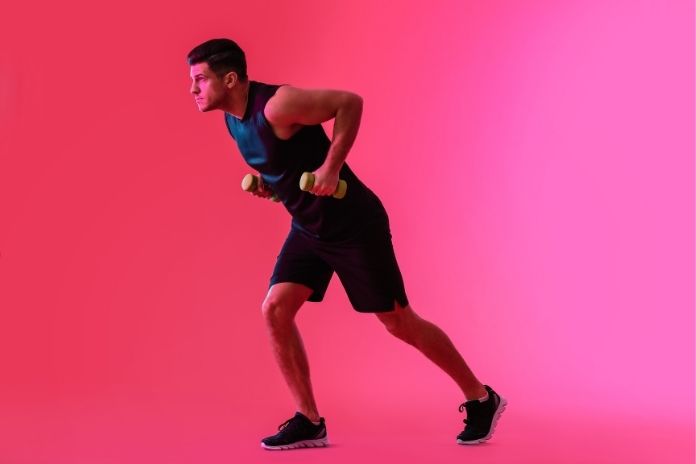
Dumbbell Rear Delt Fly (Bent-Over)
The dumbbell rear delt fly primarily targets your back delts, but it also works other upper-body muscles. The anterior, lateral, and posterior deltoids are three primary muscles that make up the deltoid. This workout targets your posterior delts the most.
- Make sure your feet are shoulder-width apart and stand up.
- To have your back almost parallel to the floor, hinge at the waist.
- To raise and release the weight to your sides, contract your rear deltoids while keeping your arms slightly bent. At the peak of the rep, squeeze your shoulder blades together.
- Return your arms to the beginning position slowly.
- Repeat while keeping your core firm.
Cable Rear Delt Fly
Cables enable precise control and maintain a steady tension. Pull outward while maintaining rigid form, gently crossing the cords. ideal during periods of hypertrophy.
- Grab the handles of a cable pulley by gripping the right-hand handle with the left hand and the left-hand handle with the right.
- Bend at the waist, not the lower back, while standing in the center of both handles. Ensure your back is straight and parallel to the floor.
- Make the cords cross over by lifting your hands to shoulder level.
- Lower the handles to the beginning position gradually.
- For the number of reps and sets you want, repeat these instructions.
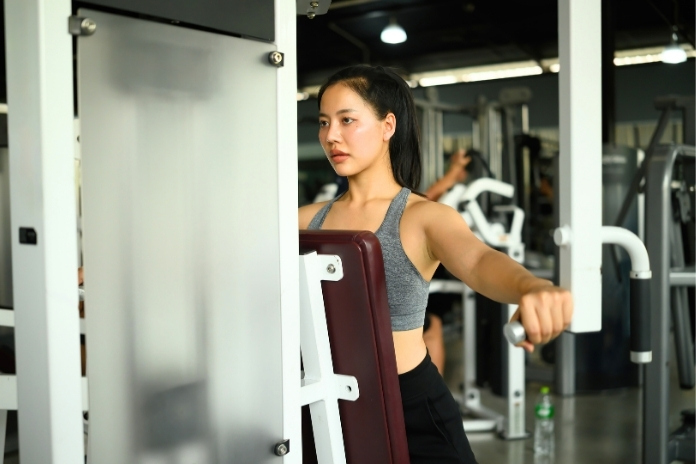
Machine Rear Delt Fly (Reverse Pec Deck)
The rear delt fly, also called the reverse pec deck, is a great seated exercise for building the back of your shoulders. It helps with posture and makes your shoulder blades more stable.
- Sit down facing the rear deltoid machine.
- Press your chest firmly against the pad and grab the handles.
- Stretch your arms to at least shoulder height and place your hands directly in front of you.
- Keeping perfect form, start pulling the handles back as far as you can. Make sure your arms are parallel to the floor, and your elbows are high.
- Put the handles back in front of you to return to the starting position.
- For the number of reps and sets you want, repeat these instructions.
Chest-Supported Dumbbell Rear Delt Fly
Lie face down on a bench set at a 30 to 45-degree incline. This angle keeps you honest, with no swinging or cheating with momentum. The chest-supported dumbbell rear delt fly really targets your rear delts, upper back, and traps. It forces you to use good form, which does wonders for building those muscles, easing back pain, and helping you stand taller.
- Put a dumbbell on each side of the bench.
- Once you’ve got everything set, lie down with your chest pressed against the incline.
- Grab a dumbbell in each hand, then lift your arms out to the sides.
- At the top of the movement, squeeze your rear delts for the best muscle activation.
- To keep them from locking out, keep their elbows slightly bent.
- After holding this position for two counts, gradually lower the dumbbells to their starting position.
- For the number of reps and sets you want, repeat these instructions.
Face Pulls (Bonus Movement)
This move builds up your shoulder muscles, improves your posture, and keeps your shoulders healthy. You’ll also get better at moving and pulling back your shoulder blades.
- Grab a resistance band and loop it around something sturdy at about chin level, or use the cable machine at the gym.
- Stand with your knees slightly bent and also hold the band with your palms facing down.
- Pull your hands up to your ears while keeping your wrists and elbows straight, just below shoulder height. Brace your core and bend your elbows while keeping your shoulders down and away from your ears.
- To return to the starting spot, move smoothly back the way you came.
Read More: Daily Exercises to Transform Your Core Beliefs
How to Get the Most Out of Rear Delt Training
Focus on the stretch when you’re doing a lot of isolation work for your rear delts, about 12 to 20+ reps a couple of times a week. That’s how you really get them to grow.
- If you’re starting, don’t overdo it. Stick to 4-6 sets a week and see how your body handles it.
- Pay attention to what you’re actually feeling during each rep. If you can’t feel your rear delts working, the weight’s too heavy. Drop it down until you can really dial in that squeeze.
- Stick with sets in the 10-20 rep range. Most people see the best results with moderate or higher reps for rear delts.
- Watch how quickly you recover. If you feel beat up before your next session, cut back a bit. If you’re bouncing back fast, you can handle more.
- Don’t get frustrated if progress feels slow. Rear delts are small, stubborn muscles. They need time and consistent effort, so keep at it.
How Rear Delt Flyes Support Posture and Shoulder Health
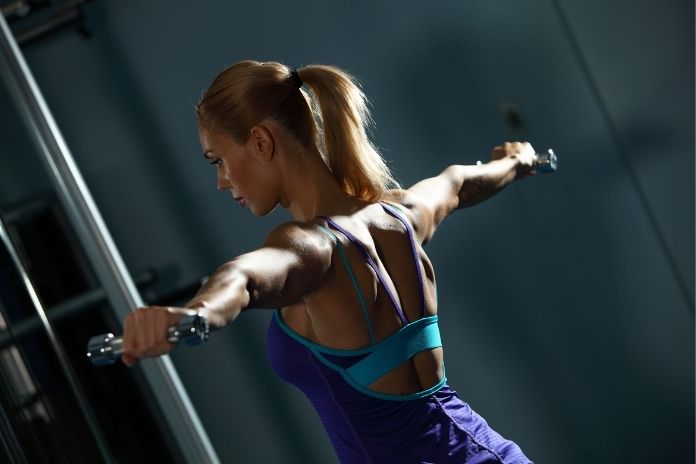
When you spend a lot of time hunched over a phone or computer, your shoulders start rounding forward. Rear delt flyes help fix that. Strengthening your rear delts gives you better control over your shoulder blades and makes your shoulders more stable overall.
That means less strain on your neck and rotator cuff. People usually combine rear delt flyes with upper-back mobility work and chest stretches to get their posture and balance back on track.
Conclusion
Rear delt flyes look simple, but they pack a real punch for your shoulders and overall body shape. Training your rear delts does more than build muscle; it helps you stand taller, keeps your joints solid, and balances out all the pressing exercises most people do.
When your rear delts are strong, your lifting form gets better, your shoulders stay back instead of hunching forward, and you’re less likely to deal with neck pain or rotator cuff issues.
In this Article