














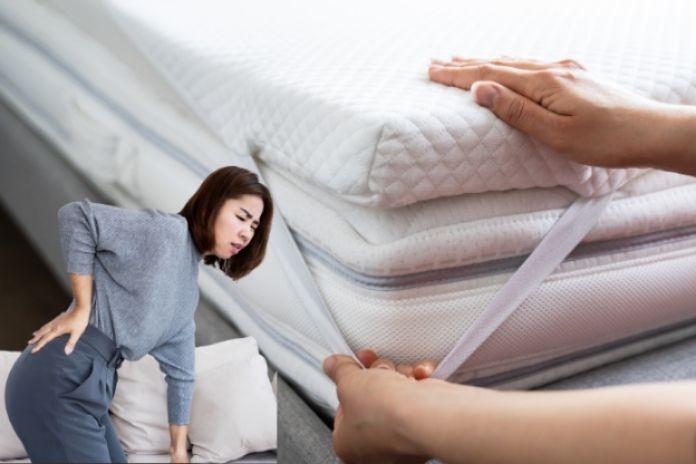
- Hip pain at night is usually mechanical, not random
- Pressure redistribution without pelvic collapse is the real goal
- Thickness beyond 4 inches often worsens alignment
- Material choice should match the pain source, not the trend
- Body weight and sleep position are non-negotiable factors in topper selection
- Temperature regulation matters. Heat amplifies inflammatory pain
- Trial periods (30+ nights) are essential for proper evaluation
- Research is still limited on long-term topper use for joint-specific pain; most studies focus on mattresses, not add-on sleep surfaces
Hip pain during sleep is rarely about the hip alone. In most cases, it is the mattress-body interaction that slowly overloads the joint through the night. People change mattresses expecting relief, but often the issue is not the mattress being “bad.” It is about how pressure is distributed around the hip when the body is still for 6-8 hours.
A mattress topper can be a corrective layer, not a comfort accessory. When chosen correctly, it changes how force travels through the hip joint, pelvis, and lower spine. When chosen wrongly, it quietly worsens the problem.
This article examines the best mattress topper for hip pain from a structural, sleep-mechanics perspective. How pressure redistribution, spinal alignment, body weight, and joint health interact over 6-8 hours of side sleeping. No filler, no trendy claims, just what actually works based on biomechanical research and clinical experience.
Why Hip Pain Often Gets Worse on Your Mattress
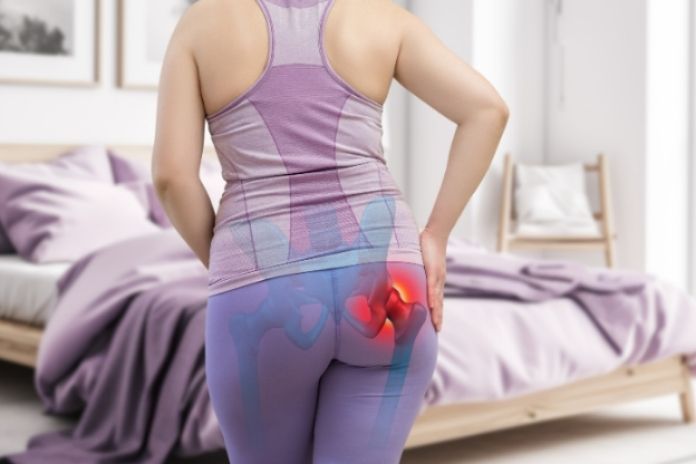
Hip pain at night is not random. It is mechanical.
1. Side sleeping concentrates force on one joint
When you sleep on your side, most of your body weight is concentrated on your hip and shoulder, creating significantly higher pressure per square inch than when you sleep on your back or stomach. If the surface beneath you cannot effectively redistribute that load, the hip joint absorbs repeated compression over hours. Blood flow reduces, tissues become irritated, and pain signals amplify.
2. Mattress firmness and sagging matter more than age
A mattress does not have to be old to cause hip pain. Even newer mattresses can fail if the comfort layer compresses unevenly, the support core allows pelvic sag, or the surface is too firm to allow controlled sinking.
Hip pain is often caused by surface pressure, not lack of overall firmness. Research on mattress stiffness and spinal curvature shows that mattresses that are too soft cause the hip area, where weight is concentrated, to sink excessively, leading to unnatural lumbar kyphosis and abnormal pressure on the intervertebral discs.
3. Surface pressure vs structural support
This is where many people get confused:
- Surface pressurecauses pain and numbness at pressure points
- Structural supportmaintains spinal alignment and pelvic positioning
A mattress topper only affects the surface layer. It cannot fix a collapsing mattress, but it can correct excessive pressure if chosen correctly.
Can a Mattress Topper Really Help With Hip Pain?
Yes, but with limits. A mattress topper does not “heal” hip pain. What it does is reduce nightly mechanical irritation, which allows inflammation to settle over time.
1. What a Topper can Fix
A properly designed hip pain mattress topper can reduce peak pressure at the greater trochanter (outer hip bone) and improve pressure distribution across the thighs and waist. It can also fine-tune firmness without replacing the mattress, improving side sleeping comfort significantly.
Research on mattress toppers for back pain demonstrates that toppers made from memory foam or latex offer excellent contouring and weight distribution, helping maintain the spine, hips, and shoulders in proper alignment throughout the night.
“A topper can improve contouring and provide pressure point relief, which helps the spine settle into a more natural alignment while you sleep,” says Dr. Ari Hoschander, a board-certified plastic surgeon.
This combination of contouring and controlled support is what allows irritated tissues to calm down overnight, rather than being mechanically stressed for hours.
2. What a Topper cannot Fix
A topper will not help if your mattress has deep sagging or broken support, or if your hip pain is severe, inflammatory, or progressive. If you have nerve compression or advanced joint disease, adding softness may worsen alignment.
Additionally, toppers cannot address hip pain that stems from medical conditions requiring professional treatment, such as acute bursitis flares, labral tears, or inflammatory arthritis.
3. Matching Topper Type to Pain Cause
Hip pain from pressure overload responds well to toppers. But hip pain from instability or collapse does not. Understanding this distinction saves money and frustration.
Key Features to Look for in a Mattress Topper for Hip Pain
1. Pressure Relief Without Bottoming Out
Hips need cushioning and resistance. Overly soft toppers allow the pelvis to sink too deeply, creating hip drop, lumbar side bending, and morning stiffness.
The best mattress topper for hip pain compresses gradually, slowing down the sink rather than eliminating it. This controlled compression maintains spinal alignment while still relieving pressure points.
2. Proper Thickness (Why 2-4 Inches Matters)
Thickness is not about luxury, but about biomechanics.
- Below 2 inches: insufficient pressure redistribution
- 2-3 inches: ideal for most side sleepers
- 4 inches: suitable for heavier bodies or very firm mattresses
Thicker is not always better. Excess thickness increases instability, especially for back sleepers with hip discomfort. This is why mattress topper thickness for hip pain should always match body weight and sleep position.
3. Material Type and Its Impact on Joint Comfort
Different materials behave very differently under load.
- Memory foam compresses slowly and deeply
- Latex compresses quickly but rebounds
- Hybrids balance contour and pushback
Material choice influences pressure redistribution, heat buildup, and ease of movement during sleep. There is no “best” material universally, only better matches for specific pain patterns and sleep preferences.
4. Firmness Level and Body Weight Considerations
Firmness should never be guessed.
- Under 130 pounds: soft to medium
- 130-230 pounds: medium
- Above 230 pounds: medium-firm
Research on sleeping position and sleep quality shows that side sleepers usually need one firmness level softer than back sleepers to accommodate the concentrated pressure on hips and shoulders. This is why many people searching for the best mattress topper for side sleepers with hip pain end up disappointed. They choose softness without resistance.
5. What to Look for When Shopping
Understanding product specifications helps you evaluate quality:
Memory Foam Density: Look for 3-5 lb/ft³ density. Below 3 lb/ft³ compresses too quickly and loses support; above 5 lb/ft³ can feel too firm and trap excessive heat. Medium density (3.5-4 lb/ft³) typically offers the best balance for hip pain relief.
Latex ILD Rating: Indentation Load Deflection measures firmness. For side sleepers with hip pain, aim for 24-32 ILD (medium to medium-firm). Below 24 feels too soft; above 32 may create pressure points.
Certifications: CertiPUR-US certification ensures foam is made without harmful chemicals, heavy metals, or excessive VOCs. OEKO-TEX Standard 100 indicates textiles are free from harmful substances.
Cooling Technologies: Gel infusions, copper particles, graphite, or phase-change materials help regulate temperature. This matters because heat affects inflammation and pain perception—higher temperature can intensify joint discomfort overnight.
6. Price Expectations by Material
Understanding typical price ranges helps you avoid both overpriced marketing and suspiciously cheap products:
- Budget Memory Foam($50-$150): Basic polyfoam, lower density, shorter lifespan (1-2 years)
- Mid-Range Memory/Gel Foam($150-$300): Better density, cooling features, 3-5 year lifespan
- Premium Memory Foam($300-$500): High-density, advanced cooling, 5-7 years
- Latex Toppers($200-$600): Natural Talalay or Dunlop, most durable (7-10 years)
- Hybrid Toppers($250-$500): Combination materials, zoned support features
Extremely cheap toppers (under $50) often use low-quality materials that compress quickly and off-gas unpleasant odors.
7. Trial Periods and Return Policies
Given how personal topper selection is, look for:
- Minimum 30-night trial: Your body needs 2-4 weeks to adjust to a new sleep surface
- Full refund policy: Avoid restocking fees when possible
- Return shipping: Some companies cover return shipping, others do not
Testing at home on your actual mattress is essential—showroom testing cannot replicate 6-8 hours of sleep.
Best Mattress Topper Types for Hip Pain (By Material)
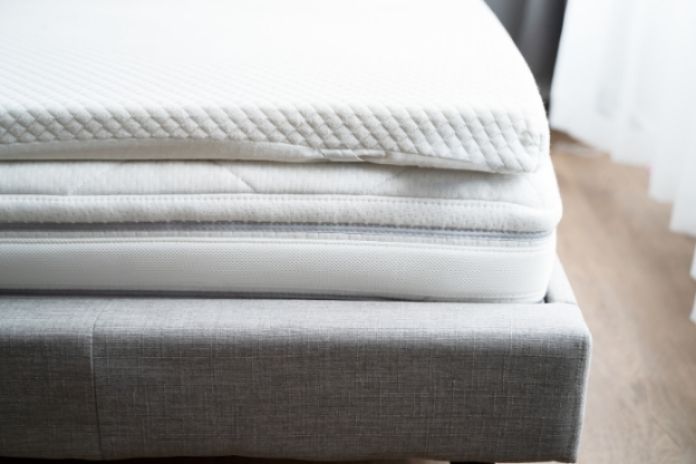
1. Memory Foam Mattress Toppers
Pros
- Excellent contouring to the body shape
- Strong pressure point relief
- Reduces sharp pressure at bony prominences
Cons
- Heat retention can be significant
- Can allow excessive sink if the density is too low
- Harder to change positions during sleep
A memory foam topper for hip pain works best for lighter side sleepers with pressure-sensitive joints, but should be medium density (3.5-4 lb/ft³), not ultra-soft.
Recommended Latex Mattress Toppers

Tempur-Pedic TEMPUR-Adapt + Cooling 3-Inch Queen Mattress Topper
We recommend The TEMPUR-Adapt topper is known for deep pressure contouring and is often recommended for side sleepers who experience shoulder and hip pressure on firm mattresses
*Purchases through this link support our research at no extra cost to you.

Linenspa Memory Foam Mattress Topper
We recommend Linenspa Memory Foam Mattress Topperprovides contouring pressure relief while helping regulate temperature, which can be useful for people whose pain worsens with heat buildup during sleep.
*Purchases through this link support our research at no extra cost to you.
2. Latex Mattress Toppers
Pros
- Responsive support with quick pressure response
- Maintains spinal alignment better than memory foam
- Durable and naturally breathable
Cons
- Firmer feel may not suit very light sleepers
- Higher cost than foam alternatives
This alignment advantage is one reason latex is often preferred in pain management settings.
“Latex mattresses are often a better choice over memory foam because they tend to respond better to pressure,” explains Dr. Thomas Pontinen, a double-board-certified pain management physician. He notes that latex allows heavier body parts to sink while continuing to support softer areas, helping keep the spine in a more natural alignment through the night.
For people whose hip pain worsens due to pelvic drop or rotational strain rather than surface pressure alone, this responsive support can be more protective than deep-contouring foam. The latex mattress topper for hip pain is particularly effective for those needing both pressure relief and structural support.
Recommended Latex Mattress Toppers

Saatva Natural Latex Mattress Topper
We recommend Saatva Natural Latex Mattress Topper such as the Saatva models compress quickly but push back immediately, helping prevent excessive pelvic drop that can aggravate hip joints during side sleeping.
*Purchases through this link support our research at no extra cost to you.

Pure Green Natural Latex Mattress Topper
We recommend Pure Green Natural Latex Mattress Topper is also naturally breathable and durable, making them a good long-term option for sleepers who want pressure relief without the “stuck” feeling sometimes associated with memory foam.
*Purchases through this link support our research at no extra cost to you.

Foamma Dunlop Organic Latex Mattress Topper
We recommend Foamma Dunlop Organic Latex Mattress Topper is also naturally breathable and durable, making them a good long-term option for sleepers who want pressure relief without the “stuck” feeling sometimes associated with memory foam.
*Purchases through this link support our research at no extra cost to you.
Natural latex toppers such as the Saatva or Pure Green models compress quickly but push back immediately, helping prevent excessive pelvic drop that can aggravate hip joints during side sleeping.
They are also naturally breathable and durable, making them a good long-term option for sleepers who want pressure relief without the “stuck” feeling sometimes associated with memory foam.
3. Gel-Infused or Hybrid Toppers
These combine contouring foam with cooling or responsive layers.
Best for:
- Hot sleepers who experience pain flare-ups with heat
- People with pain sensitivity that increases with temperature
- Those who shift positions often during the night
Why Temperature Regulation Matters for Pain
Heat affects pain perception through a physiological mechanism: elevated temperature increases blood flow to inflamed tissues, which can temporarily intensify swelling and discomfort around the hip joint. Additionally, warmer sleep environments can trigger inflammatory responses in people with osteoarthritis or hip bursitis.
Cooling technologies like gel infusions, graphite, or phase-change materials help maintain a neutral temperature around pressure points, reducing this heat-related pain amplification.
Recommended Gel-Infused or Hybrid Mattress Toppers

HOFISH 2 Inches Gel-Infused Memory Foam Mattress Topper
We recommend HOFISH 2 Inches Gel-Infused Memory Foam Mattress Topper Gel-infused toppers disperse body heat more effectively than traditional memory foam, which may improve comfort for sleepers whose joint pain worsens with overheating during the night.
*Purchases through this link support our research at no extra cost to you.

Dual Layer 4 Inch Memory Foam Mattress Topper Queen – 2 Inch Gel Memory Foam and 2 Inch Pillow Top Mattress Pad
We recommend Dual Layer 4 Inch Memory Foam Mattress Topper Queen – 2 Inch Gel Memory Foam and 2 Inch Pillow Top Mattress Pad Gel-infused toppers disperse body heat more effectively than traditional memory foam, which may improve comfort for sleepers whose joint pain worsens with overheating during the night.
*Purchases through this link support our research at no extra cost to you.
Best Mattress Topper Choice Based on Sleeping Position
1. Side Sleepers With Hip Pain
Side sleepers need 2-4 inches of thickness, medium firmness, and deep but controlled compression.
Proper side sleeping posture should create alignment from shoulder → rib cage → hip without dips or rotations. The mattress topper for joint pain must allow the hip to sink just enough to keep the spine level, while still providing enough resistance to prevent pelvic tilt.
Pillow Coordination for Side Sleepers
Head pillow height directly affects hip alignment. If your pillow is too low, your head drops, causing your upper body to rotate downward and your lower hip to press harder into the mattress. If too high, it tilts your upper body upward, creating the opposite problem.
For most side sleepers, pillow height should equal the distance from your ear to the edge of your shoulder. This keeps your cervical spine level with your thoracic spine, which in turn keeps your pelvis neutral and reduces hip pressure.
2. Back Sleepers With Hip Discomfort
Back sleepers benefit from:
- Slight cushioning at the pelvis to maintain lumbar lordosis
- Firmness to prevent hammocking (excessive sinking in the middle)
- Thinner toppers (2-3 inches) to avoid instability
Too much softness increases lumbar strain and can create a gap between the lower back and the surface, forcing muscles to work during sleep.
Hip Pain Conditions and What to Consider
Different hip conditions require different topper approaches:
Hip Bursitis
Inflammation of the bursa (fluid-filled sac) on the outer hip bone makes direct pressure extremely painful. People with hip bursitis need maximum pressure redistribution with medium to medium-soft toppers that allow the hip to nestle without creating concentrated force. Avoid firm surfaces that push back against the inflamed area.
Osteoarthritis
Joint degeneration causes stiffness and pain that worsens with poor alignment. Osteoarthritis sufferers typically benefit from medium-firm toppers that maintain hip positioning while still cushioning the joint. Excessive sinking can force the hip into positions that strain already-degraded cartilage.
Post-Surgical or Post-Injury Sensitivity
Recent hip surgery or injury often involves both inflammation and structural vulnerability. Start with softer, more cushioning toppers during acute recovery, then gradually transition to medium-firm support as healing progresses. Consult your surgeon about the appropriate timing for each phase.
Why Pain Source Influences Topper Choice
Pressure-based pain (from too-firm surfaces) responds to cushioning. Instability-based pain (from too-soft surfaces causing misalignment) requires support. Inflammatory pain (bursitis, arthritis flares) needs both pressure relief and temperature control. Matching the topper to your specific pain mechanism is more important than following generic recommendations.
Common Mistakes When Buying a Mattress Topper for Hip Pain
1. Choosing Softness Over Support
The most common error is assuming “softer equals better for pain.” While cushioning helps, unchecked sinking creates new problems—pelvic rotation, lumbar strain, and pressure concentration elsewhere on the body.
2. Ignoring Body Weight and Sleep Position
A 120-pound side sleeper and a 200-pound side sleeper need completely different toppers. Weight determines how deeply you sink, and position determines where force concentrates. Failing to account for both leads to poor outcomes.
3. Expecting Instant Pain Resolution
Sleep surfaces require an adjustment period. Your body has adapted to your current mattress, and muscles, joints, and soft tissues need time to recalibrate to a new pressure pattern.
4. Buying the Wrong Topper for Your Existing Mattress
Mattress Compatibility Matters
Not all mattresses work well with toppers:
- Pillow-top mattresses: Already have thick comfort layers; adding a topper often creates too much softness and poor support
- Very soft mattresses: A topper cannot fix an already-collapsing support core; it will just sink with the existing surface
- Platform beds: Work well with toppers since the solid base provides consistent support
- Box springs: May allow more give, which can either help or hurt depending on topper firmness
- Adjustable bases: Require flexible toppers that bend with the base; thick, dense memory foam may crack
If your mattress already sags noticeably, a topper is not the solution—the support structure is compromised and needs replacement.
How Long Does It Take to Notice Relief
Adjustment Period vs Immediate Comfort
Your body needs 2-4 weeks to adapt to a new sleep surface. Here is what to expect:
- Week 1: May feel different, potentially uncomfortable as your body adjusts position
- Week 2-3: Gradual reduction in morning stiffness if the topper is appropriate
- Week 4+: Full adaptation; you should notice consistent improvement
Some toppers feel comfortable immediately, but do not provide long-term relief. Others feel strange initially but yield better results after adaptation.
Signs the Topper is Helping
- Reduced morning hip stiffness
- Less need to shift positions during the night
- Decreased pain intensity upon waking
- Improved ability to sleep on your affected side
Signs the Topper is Worsening Symptoms
- Increased morning stiffness that persists beyond 30 minutes
- New pain in the lower back, shoulders, or opposite hip
- Difficulty getting comfortable in any position
- Waking more frequently during the night
If symptoms worsen after 3-4 weeks, the topper is likely the wrong firmness or thickness for your needs.
Read More: What Sleeping on Your Left Side Does for Heartburn Relief
When a Mattress Topper Isn’t Enough
Red Flags Requiring Medical Attention
A topper addresses mechanical sleep pain, not medical conditions. Seek professional evaluation if you experience:
- Progressive pain: Gets worse week-to-week regardless of sleep surface changes
- Pain that persists all day: Does not improve with movement or as the day progresses
- Nighttime pain that wakes you from deep sleep: Not just discomfort when rolling over, but pain that actively disrupts sleep
- Pain accompanied by numbness, tingling, or weakness: Suggests nerve involvement
- Pain in both hips or multiple joints: May indicate systemic inflammatory conditions
- Inability to bear weight or significant limping: Suggests structural hip damage
Distinguishing Mechanical vs Inflammatory Pain
- Mechanical pain: Worse after rest, improves with movement, directly related to positioning
- Inflammatory pain: Worse with movement, accompanied by swelling or warmth, responds to anti-inflammatory medication
If changing your sleep surface has zero impact on your pain level after 4+ weeks, the problem is likely not mechanical and requires medical assessment.
Read More: Essential Newborn Gear: What You Really Need in the First 3 Months
How to Maximise Hip Pain Relief Beyond a Topper
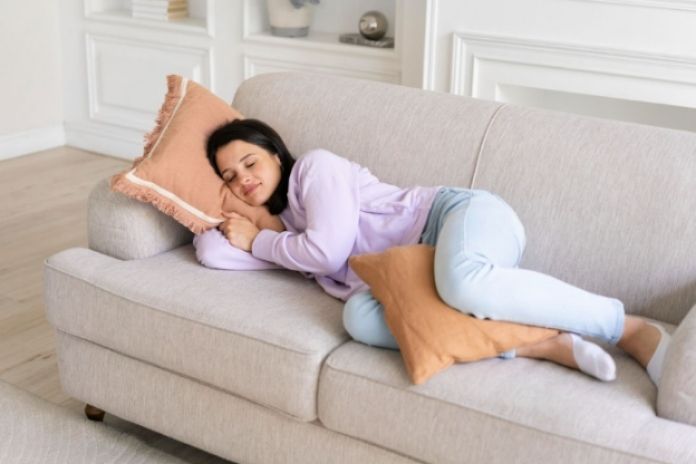
Small changes amplify results.
Sleep Ergonomics Essentials
- Place a pillow between your knees: Prevents the top leg from pulling the pelvis forward, which torques the hip joint
- Keep hips stacked, not rolled forward: Even a slight forward rotation increases pressure on the lower hip
- Maintain neutral spine: Avoid curling into a tight fetal position, which flexes the hip excessively
Pre-Sleep Hip Mobility
Gentle hip movements before bed can reduce nighttime stiffness:
- Hip circles (5-10 each direction while standing)
- Supine figure-4 stretch (30-60 seconds each side)
- Gentle cat-cow movements to mobilize the pelvis
These micro-movements promote synovial fluid circulation in the hip joint, reducing morning stiffness.
Topper Care and Maintenance
Proper care extends the lifespan and maintains hygiene, especially important for people with joint inflammation:
- Rotate every 2-3 months: Prevents uneven compression in your primary sleep zone
- Use a breathable mattress protector: Protects against moisture, dust mites, and allergens
- Spot-clean spills immediately: Use enzyme cleaners for body oils and sweat
- Air out monthly: Remove bedding and let the topper breathe to reduce odor and moisture buildup
- Replace when: Visible body impressions remain, you feel the mattress through the topper, or pain returns after previously improving
Most memory foam toppers last 3-5 years; latex toppers last 7-10 years with proper care.
Read More: Crib vs Bassinet: Which One Is Safer and Better for Your Newborn?
Final Thoughts on Choosing the Best Mattress Topper for Hip Pain
The best mattress topper for hip pain is not the softest one. It is the one that reduces pressure, maintains spinal alignment, and matches your body weight and sleeping position.
Most people do best with a medium to medium-firm, 2-4 inch topper, selected based on pain pattern and biomechanical needs, not marketing claims.
References
- Hong, T. T.-H., Wang, Y., Wong, D. W.-C., Zhang, G., Tan, Q., Chen, T. L.-W., & Zhang, M. (2022). The Influence of Mattress Stiffness on Spinal Curvature and Intervertebral Disc Stress—An Experimental and Computational Study. Biology, 11(7), 1030.
- National Council on Aging. (2025, December 12). Find Your Perfect Mattress Topper for Back Pain 2026. Ncoa.org.
- Zhang, Y., Xiao, A., Zheng, T., Xiao, H., & Huang, R. (2022). The Relationship between Sleeping Position and Sleep Quality: A Flexible Sensor-Based Study. Sensors, 22(16), 6220.
In this Article