



















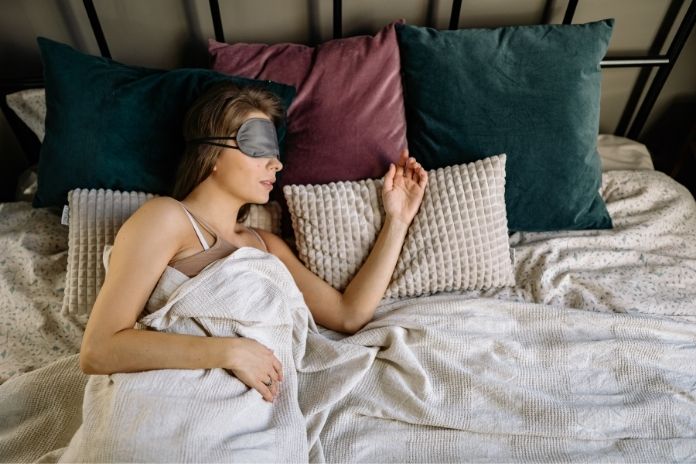
- Back- or supported-side sleeping keeps the neck aligned and reduces nerve pressure.
- Elevating the upper body slightly may ease nighttime nerve pain and arm tingling.
- Avoid sleeping with your arm under your head to prevent compression of the elbow and neck nerves.
Sleep discomfort and frustration can result from neck pain that radiates down the arm and shoulder. Many sufferers of cervical nerve root compression report that lying down at night exacerbates their symptoms.
Common symptoms of cervical radiculopathy include tingling in the fingers, burning in the shoulder, and nerve pain radiating to the arm and hand. In certain instances, arm numbness during sleep can result from nerve compression in the elbow or neck.
This article covers the 3 best sleeping positions for cervical radiculopathy, how to sleep with a pinched nerve in the neck, and why symptoms tend to worsen at night.
Read More: What Sleeping on Your Left Side Does for Heartburn Relief
Why Cervical Radiculopathy Symptoms Often Worsen at Night
When they lie down to sleep, people with cervical radiculopathy often realize that their symptoms get worse. When the body is motionless, numbness may become more apparent, and pain may radiate to the hand, arm, or shoulder. Better sleep techniques can be guided by an understanding of why neck nerve pain worsens at night.
Changes in Neck Position During Sleep
Poor neck alignment is one of the most common causes of symptoms worsening at night. The neck may bend into angles that worsen cervical nerve root compression when sleeping without adequate support.
If you’re dealing with cervical radiculopathy, sleeping on your side can actually take some pressure off those irritated nerves. The trick is to keep your head and neck lined up right. Grab a good pillow, one that holds your spine straight. That way, you skip the extra strain and nagging nerve pain.
Some people feel better when their upper body is slightly raised while sleeping. Propping yourself up with a wedge pillow or using an adjustable bed helps your neck relax. It keeps your cervical spine in a comfortable spot, which calms nerve pain and helps you sleep better.
Reduced Movement While Sleeping
Your body naturally stays pretty still when you sleep, and that actually makes neck nerve pain worse at night. During the day, you’re always moving, changing positions, shifting around, so no single nerve or joint gets stuck under pressure for too long.
But at night? You might not move much for hours. If you end up in a position that puts stress on your neck or elbow nerves, inflammation builds up over time. That’s why the pain can really kick in after a few hours of sleep.
Learning how to prevent arm numbness while sleeping involves both neck alignment and proper arm positioning.
What Makes a Sleeping Position “Nerve-Friendly”
The body responds differently to different sleeping postures. While some positions strain the neck and shoulders, others promote the natural curvature of the spine. Choosing the right sleeping positions for cervical radiculopathy can reduce nerve irritation and improve overall rest.
Maintaining a Neutral Cervical Spine
The key goal of any cervical radiculopathy sleep position is maintaining a neutral cervical spine.
The natural alignment of your spine when its three curves, the cervical (neck), thoracic (upper back), and lumbar (lower back), are balanced, this posture is known as a neutral spine. Your body is well-supported in this posture, and the surrounding muscles and ligaments, discs, and vertebrae are under little strain.
Keeping your spine in a neutral position while you sleep may ease neck and back stress and help prevent aches and pains later.
Supporting the Natural Curve of the Neck
The cervical spine curves gently by nature. In addition to keeping the head from sinking too far into the mattress, a supportive pillow helps maintain this curve. Choosing the best pillow for cervical radiculopathy often involves selecting one that:
- Keeps the head from moving forward while supporting the neck.
- Maintains neck muscle relaxation.
Sleeping Position #1: Back Sleeping With Cervical Support

Sleeping on one’s back, commonly known as the supine position, is often considered the best sleeping position for cervical radiculopathy.
Why Supine Sleeping Often Works Best
Lying flat on your back with your arms by your sides and legs slightly apart is known as the supine sleep position. It’s regarded as one of the finest ways to sleep. When done correctly, this sleeping posture maintains the alignment of your head, neck, and spine. Additionally, it often keeps your airways open while you sleep.
The neck can rest naturally in this position without bending or twisting too much. Back sleeping, when properly supported, can reduce cervical nerve root compression and alleviate nerve pain radiating to the arm and hand.
How to Set Up This Position Correctly
Back sleeping can be helpful, but it requires the right kind of support. The following modifications can lessen discomfort and increase comfort:
Select a firm mattress. Your back will not receive the necessary support in this position if it is too soft. In particular, a mattress that sags in the middle should be avoided.
Let’s go on to the pillows. To maintain alignment with your back, your head and neck need sufficient support.
Neither of them will maintain your head and neck in line with your spine’s natural curvature. A medium-loft pillow, roughly 3 to 5 inches, is what you need. Additionally, you can select a memory foam cushion or a wedge-shaped cushion.
The supine sleep posture could put pressure on your back if you’re not careful. Once more, cushions are useful. Put one beneath your lower back, where your spine curves, for additional support. A thin one beneath your knees helps maintain the natural curvature of your spine.
Read More: What Sleeping Position Says About Personality? 10 Astonishing Results!
Sleeping Position #2: Side Sleeping With Proper Neck Alignment

Another popular and pleasant position for many people is side sleeping. It can be one of the best sleeping positions for cervical radiculopathy if done appropriately.
How Side Sleeping Can Reduce Nerve Irritation
With the right support, side sleeping is a wonderful choice for people with neck and back problems. It reduces the risk of spinal misalignment and helps maintain the spine’s elongation.
This cervical radiculopathy sleep position can help ease cervical nerve root compression and lessen pressure on the cervical discs if alignment is maintained.
Pillow Adjustments That Make a Difference
To keep your neck aligned with your spine, use a firm cushion that fills the space between your head and the mattress.
To keep your spine from being pulled out of alignment by your upper leg, place a pillow between your knees.
Avoid curling up too tightly, which can strain the neck and upper back, and try to keep your knees slightly bent.
Sleeping Position #3: Slightly Reclined Sleeping

Lying entirely flat can exacerbate symptoms for some people. A slightly raised position might be helpful in some situations.
When an Elevated Position May Help
The cervical spine and discs can be less stressed by sleeping with the upper body slightly raised. For those with chronic neck nerve discomfort that worsens at night, this position may reduce cervical nerve root compression and improve comfort.
A gentle incline may also reduce nerve pain radiating to the arm and hand by changing the angle of the cervical spine.
Ways to Create a Comfortable Reclined Setup
You can attain this status in several ways:
- Adjustable bed frames.
- Place a wedge pillow beneath the shoulders and upper back.
- Pillows that are stacked to support the chest and neck.
Read More: 7 Reasons Sleeping On Your Stomach Is Bad – Know The Side Effects
The Sleeping Habit That Can Worsen Cubital Tunnel Syndrome
While improving neck posture is important, arm position during sleep also matters. Certain behaviors, particularly those that squeeze the elbow, can exacerbate cubital tunnel syndrome at night.
Sleeping With Your Arm Under Your Head
Placing the arm beneath the head or pillow while sleeping is one of the most common bad habits. In this position, you compress the inner side of the joint and bend the elbow tightly.
The ulnar nerve, which regulates feeling in the ring and little fingers, is located in this region. Ulnar nerve compression can happen when the elbow is bent for extended periods of time.
Consequently, people may encounter symptoms like:
- Ring and small fingers that tingle.
- Weak grasping power.
- Increased arm numbness during sleep.
Why This Habit Also Aggravates Neck Nerve Pain
If you sleep with your arm under your head, you’ll probably notice your neck pain gets worse. That position usually twists your neck off to one side and puts extra pressure on the nerves there.
Before long, that weird angle can really crank up the cervical nerve root compression, making your neck nerve pain worse at night. Furthermore, stress along the nerve pathway may worsen nerve pain radiating to the arm and hand.
Sleep Tips That May Reduce Nighttime Nerve Symptoms
Choose a Pillow That Maintains Neck Alignment
The pillow you use really affects how your neck lines up and how comfortable you feel while you sleep. Cervical pillows follow the natural curve of your neck, so they help keep everything in place and take pressure off your spinal nerves.
Memory foam pillows do their own thing, too. They mold to the contours of your head and also neck, providing support right where you need it. That kind of support makes a big difference in easing discomfort and helping you sleep better.
Avoid Positions That Twist the Neck
Try a few different positions to find the most comfortable one if you have back or neck problems. Lying on your back may be one of the finest positions to sleep in, since it supports your body’s natural posture.
If you use a pillow between your knees to keep your hips aligned, sleeping on your side can also be beneficial. Most of the time, sleeping on one’s stomach is not advised because it puts additional strain on the spine, which could exacerbate neck pain.
Keep the Arms in a Relaxed, Neutral Position
At night, you can ease ulnar nerve pressure and steer clear of cubital tunnel syndrome by letting your arms stay relaxed and a little stretched out.
Here’s what helps:
- Try not to bend your elbows too much.
- Don’t tuck your arms under your head; keep them by your sides.
- If your doctor suggests it, wear a loose elbow splint.
Read More: 7 Best Sleep Masks for Women’s Restful Nights
When Nighttime Nerve Symptoms Should Be Evaluated

Sleep discomfort is not always a sign of a serious illness. On the other hand, a medical professional should evaluate persistent symptoms.
Signs That Medical Assessment May Be Helpful
It may be time to see a doctor if you’ve improved your sleeping posture but still have chronic neck or back pain.
Persistent discomfort may indicate underlying medical issues like:
- Dislocated discs.
- Stenosis of the spine.
- Sleep apnea.
- Fibromyalgia
Possible Diagnostic Approaches
Most patients begin by explaining when and how they first started experiencing neck pain. Clinicians listen for trends, such as if pain developed gradually after extended desk work or abruptly following an injury. They inquire about how the pain impacts work, sleep, movement, and focus.
Neck movement, strength, reflexes (involuntary nervous system reactions to stimuli), and sensation in the hands and arms will all be examined.
These aid in determining which of the following four major patterns the pain fits:
- Non-specific, or what people sometimes call “mechanical” neck pain, usually feels like a dull ache or stiffness that gets worse when you move your neck a certain way or hold it in one position for too long.
- Whiplash-associated disorders often come after a sudden jolt, like in a car accident. People often deal with headaches, feel wiped out, or get dizzy after that kind of injury.
- Cervicogenic headaches actually start in your neck and get more intense when you move it.
- Cervical radiculopathy occurs when pain, tingling, or weakness travels down your arm or hand because a nerve in your neck is irritated.
Read More: Why Carpal Tunnel Pain Often Gets Worse at Night — Causes & How to Sleep Better
Conclusion
Dealing with neck nerve pain? The way you sleep can make a huge difference. Sometimes, simply changing your sleep position, grabbing the best pillow for cervical radiculopathy, or even adjusting where you put your arms can take the pressure off those nerves. You’ll probably notice you feel a lot more comfortable at night.
Avoiding behaviors that could exacerbate nerve symptoms, including sleeping with the arm tucked under the head or bending the elbows tightly, is equally crucial. Sleeping in certain positions can worsen conditions like cubital tunnel syndrome, leading to tingling or numbness in your hand at night.
You don’t always need a big overhaul; just shifting your sleep habits can take the edge off and help you wake up feeling more rested, even if it doesn’t totally solve the problem. If your symptoms appear or persist, it’s a good idea to see a doctor. They can figure out what’s really going on and suggest the right treatment.
References
- KC Rehab. (June 2, 2025). Cubital tunnel syndrome: 5 signs you shouldn’t ignore & how to address it.
- University of Utah Health. (2025, March 12). How to prevent and treat cubital tunnel syndrome.
- Cuéllar Spine. (2024, December 4). How to sleep with cervical radiculopathy.
- Limitless Physical Therapy Specialists. (2025, December 15). How to sleep with neck pain: Positions that work.
- Hinge Health. (2025, July 4). How to sleep with cervical radiculopathy: Best sleeping positions and tips.
- University of Maryland Medical Center. Cervical radiculopathy.
- KC Rehab. (February 10, 2025). 4 physical therapy treatments for neck pain from sleeping.
- The Carpal Solution. Tingling or Numbness in Hands at Night: 7 Common Causes and What Helps.
- North Lakes Pain Consultants. (2025, June 16). The best sleeping positions for reducing back and neck pain
- Sword Health. How to diagnose and treat neck pain
In this Article