

















You have been following a daily probiotic routine for a while now. But you got busy and forgot to pre-order them. Your bloating and constipation symptoms come back, and now you’re wondering, “What happens when I stop probiotics?”
When you stop taking probiotics, your gut microbiome may revert to its original state within a few weeks. If you have been taking probiotics to treat digestive issues such as bloating or constipation, these symptoms may recur. For otherwise healthy individuals, they might be normal even after stopping probiotics.
In this article, we will discuss the impact of taking probiotics, what happens when you stop taking them, side effects, alternatives to probiotics, and when you should consult a doctor.
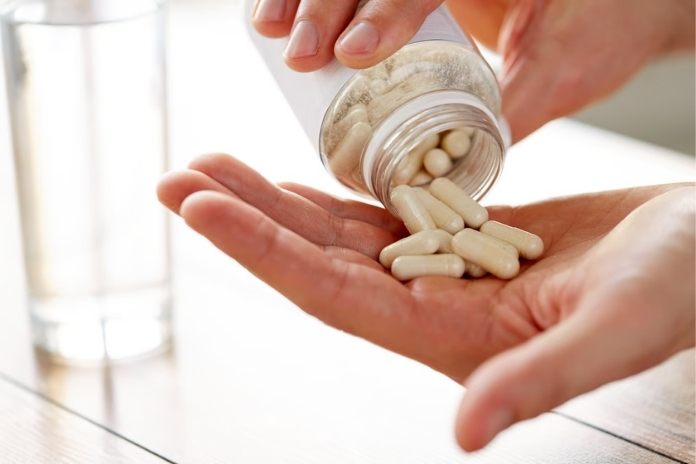
Probiotics are live bacteria and yeasts. When taken in adequate amounts, they may help treat specific conditions such as digestive issues, constipation, IBS, or diarrhea.
How Long Do Probiotics Stay in Your System?
Probiotic strains from supplements are mostly transient. They do not permanently colonize the gut. Within 1 to 3 weeks of stopping, supplemental strains begin clearing from the GI tract, and your gut microbiome gradually reverts to its pre-supplementation baseline.
This happens because probiotics provide temporary support, improving digestion and crowding out harmful bacteria, but they don’t take up permanent residence. As those strains clear, the digestive benefits they provided fade with them.
A landmark 2018 study published in Cell by researchers at the Weizmann Institute of Science went further. Using endoscopy and colonoscopy, they tested whether probiotic strains actually colonized the gut lining.
Participants fell into two distinct groups: “persisters,” in whom the supplemental strains took hold and altered the local microbiome, and “resisters,” whose guts expelled them entirely. Up to two-thirds of participants were resisters, showing no evidence of colonization even while actively taking supplements.
The implication is significant: if your gut didn’t change much when you started, it likely won’t change much when you stop either.
Read More: Are you overdoing probiotics? Your gut needs a break
Impact of Stopping Probiotics
People taking probiotics for a specific condition are the most likely to feel a difference when they stop. Healthy adults taking them for general wellness are much less likely to notice anything at all.
Group 1 — Who Actually Notices:
- IBS, chronic constipation, or diarrhea: Symptom relief was condition-driven, so symptoms are likely to return as probiotic strains clear.
- Chronic bloating: Those who had significant relief from daily abdominal discomfort will often see it come back within 1 to 3 weeks.
- Post-antibiotic recovery: People who used probiotics to rebuild their microbiome after antibiotics may find their gut feels off again as supplemental support fades.
One important exception: People with SIBO (small intestinal bacterial overgrowth) may actually feel better after stopping. In a disrupted small intestine, probiotic strains can feed bacteria in the wrong location, worsening brain fog, bloating, and abdominal pain. A meta-analysis of 50 studies found SIBO present in roughly 38% of IBS patients. For this subset, stopping probiotics may be the right call, not a failure of adherence.
Group 2 — Who Doesn’t Notice:
- Healthy adults taking probiotics for general wellness, with no specific condition being managed. The 2018 Cell study finding that up to two-thirds of people showed no gut colonization even while taking supplements applies most directly here.
- People whose gut microbiome was already robust from a diverse, probiotic-rich diet.
“If a person improves while on a probiotic, then there is a possibility that they will see a worsening of their digestive symptoms when they stop,” says Dr. Will Bulsiewicz. He added, “If the person never really improved on the probiotic in the first place, then they likely won’t notice a difference whether they continue or stop.”
Read More: Should a pregnant woman take probiotics
Side Effects of Stopping Probiotics
There are no large-scale clinical studies focused specifically on what happens when you stop taking probiotics. The best direct evidence comes from the 2018 Cell study by Zmora et al., which found that supplemental strains begin wearing off within 1 to 3 weeks of stopping, and gut microbiota revert to their previous state shortly after.
For people who were genuinely benefiting, the most common things that return are bloating, changes in bowel movements, diarrhea, constipation, and IBS symptoms. These are not withdrawal effects. Probiotics do not create physiological dependency, and there is no evidence of a withdrawal syndrome. The body simply returns to where it was before supplementation began.
One animal study found that abruptly stopping probiotics could temporarily increase susceptibility to infection. However, this research was conducted on a tilapia model and has not been replicated in humans. For most healthy adults, this is not a concern.
People managing IBS, chronic digestive conditions, or a compromised immune system are the most likely to feel the shift when they stop, and are the group most worth monitoring for returning symptoms.
Read More: Digestive Enzymes Vs. Probiotics
What to Do Instead of Supplementing Indefinitely?

If you’re stepping back from daily probiotic supplements, the most effective long-term strategy is building a diet that supports the gut bacteria already living there.
A Stanford clinical trial published in Cell assigned 36 healthy adults to either a high-fermented-food or high-fiber diet for 10 weeks. The fermented food group, eating foods like yogurt, kefir, fermented cottage cheese, kimchi, and kombucha, saw increases in overall microbial diversity and reduced markers of inflammation. The high-fiber group showed no comparable improvement over the same period.
The takeaway: a single-strain capsule cannot replicate what a diverse diet of fermented foods does for the gut.
Beyond fermented foods, prebiotic fiber feeds the beneficial bacteria already present in your gut. Foods like onions, garlic, oats, bananas, and legumes act as fuel for those strains, making them a more durable long-term investment than adding new strains through supplementation.
ZOE’s research suggests aiming for 30 different plant foods per week, including vegetables, fruits, seeds, nuts, grains, herbs, and spices, as one of the most practical ways to build microbiome diversity.
If you were taking probiotics for a specific condition and symptoms return when you stop, that is the clearest signal that continuing, or rotating strains, is warranted. In that case, use them with a defined goal rather than as an open-ended daily habit.
Read More: Are probiotics key to clear skin
When to See a Doctor
Consult a doctor if you experience any of the following after stopping probiotics:
- Intense abdominal pain, persistent vomiting, or serious diarrhea
- Signs of infection or high fever
- Blood in the stool
- Unexplained weight loss
If you were prescribed probiotics by a doctor for a specific condition, talk to them before stopping rather than stopping on your own. And if you have an underlying immune condition, any significant change to your gut routine is worth a conversation with your provider.
Conclusion
To conclude, for healthy individuals, stopping probiotics means the supplemental strains clear within 1 to 3 weeks and the gut returns to its baseline state, with no lasting harm. Those most likely to notice are people who were taking probiotics to manage a specific condition like IBS, post-antibiotic recovery, or chronic digestive issues.
If symptoms return and don’t settle within a few weeks, that’s your signal to revisit your supplement routine or talk to a doctor. For everyone else, the better long-term investment is a diet rich in fermented foods and diverse plants that support the microbiome already there.
References
- Zmora, N., et al. (2018). Personalized gut mucosal colonization resistance to empiric probiotics is associated with unique host and microbiome features. Cell.
- Dahl, W. J., & Zhu, H. (2015). Gut microbiota and probiotics: A review. PMC.
- Cleveland Clinic. (2022). Probiotics.
- Amy Myers MD. (n.d.). What happens when you stop taking probiotics.
- Hiya Health. (n.d.). What happens when you stop taking probiotics.
- Cymbiotika. (n.d.). Can stopping probiotics cause bloating? Understanding the effects on your gut health.
- WebMD. (n.d.). Probiotics: Risks and benefits.
In this Article