



















- Occasional restless nights are normal; chronic issues may signal insomnia.
- Insomnia happens most nights for months and affects daily energy levels.
- Temporary sleep slumps improve with habits; persistent insomnia needs professional help.
Almost everyone has evenings when they can’t fall asleep. You may find yourself looking at the ceiling due to stressful deadlines, travel, illness, or even an exceptionally late cup of coffee. People frequently question whether they develop sleeplessness as a result of these episodes.
In actuality, a lot of people are going through a brief sleep disturbance that is sometimes referred to as a “sleep slump vs insomnia” situation. People often experience brief, restless nights, but these usually resolve once the trigger disappears. Persistent sleep issues, however, may occasionally indicate an illness called insomnia disorder.
This article will examine the distinction between sleep slump vs. insomnia, describe clinical insomnia symptoms, and explain how the 3-3-3 rule for insomnia helps determine how long insomnia must last to be diagnosed.
Read More: Always Tired but Can’t Sleep? Why IBS Patients Are 4x More Likely to Suffer from “Hypersomnia”
What Is a “Sleep Slump”?
Short-Term Sleep Disruptions That Many People Experience
A brief period of disturbed sleep is called a “sleep slump.” A person may experience sleep latency, nighttime awakenings, or feel exhausted the following day during this phase. But the issue usually goes away quickly.
Instead of a medical sleep condition, many people who inquire “why I suddenly can’t sleep” are dealing with precisely this kind of transient disturbance. When comparing sleep slump vs insomnia, a sleep slump, is typically triggered by identifiable external factors. These could include illness, travel, stress, or lifestyle changes.
Typical Signs of a Temporary Sleep Slump
The Centers for Disease Control and Prevention state that, for optimal health and wellness, the average adult requires at least 7 hours of sleep each night.
Individuals who are having trouble sleeping may observe:
- A few evenings of trouble falling asleep.
- Environmental factors.
- Issues about health.
- Lifestyle Decisions.
- Mild fatigue the following day.
Nevertheless, these symptoms typically don’t last long enough to meet the criteria for an insomnia diagnosis.
Why Sleep Slumps Are Common
Plenty of things can cause those midday energy crashes. For starters, our bodies naturally dip in alertness during the early afternoon; it’s just how our internal clocks work. But that’s not all. High levels of stress, irregular sleep cycles, sleep inertia upon awakening, and underlying illnesses like iron deficiency or sleep apnea are major contributing factors.
Because of this biological response, short episodes of temporary sleep problems vs. insomnia are a normal part of life.
What Is Clinical Insomnia?

Definition of Insomnia disorder
One prevalent sleep issue is insomnia. You may struggle to fall asleep, stay asleep, or get a restful sleep if you have insomnia. It happens even when you have the time and the ideal conditions for a good night’s sleep. Your everyday activities may be hampered by insomnia, which can also make you feel drowsy during the day.
Changes in your environment or schedule, as well as stress, can lead to short-term insomnia. A few days or weeks may pass. Chronic (long-term) insomnia is characterized by three or more nights per week, lasting more than three months, and is not entirely explained by another medical condition.
Key Diagnostic Features
Medical professionals use several typical symptoms to diagnose insomnia disorder. The patient reports, or the patient’s parent or caregiver witnesses, one or more of the following:
- Unable to fall asleep.
- Inability to stay asleep.
- Last awakening before the targeted time.
- Opposition to adhering to a proper sleep pattern.
- Difficulty falling asleep without the assistance or presence of parents or other caregivers.
These issues at night often have repercussions throughout the day, including fatigue, low energy, difficulty focusing, irritability, and decreased productivity.
Why Diagnosis Matters
Catching insomnia early really matters because ignoring sleep problems takes a toll on your health. When insomnia drags on, it often leads to anxiety or depression, messes with your thinking, and even bumps up your risk for serious heart and metabolic issues down the road.
Read More: Sexsomnia (Sleep Sex): What It Is, Why It Happens, and How to Manage It
The 3-3-3 Rule: A Simple Framework Doctors Use
The 3-3-3 rule for insomnia is a basic teaching tool that doctors frequently use to outline the essential insomnia diagnosis criteria.
Sleep Problems Occur 3 Nights per Week
Frequency is the first element in the 3-3-3 rule for insomnia. For a sleep issue to be considered clinically significant, it must occur at least 3 nights a week.
It refers to repeated issues such as:
- Having trouble falling asleep.
- Frequent nighttime awakenings.
- Waking up early in the morning.
Occasional bad nights do not meet the threshold for clinical insomnia symptoms.
The Problem Lasts At Least 3 Months
The second component specifies how long insomnia must last to be diagnosed.
Sleep specialists categorize insomnia according to its duration:
- Less than three months is considered short-term insomnia.
- Chronic insomnia means you’ve had trouble sleeping for three months or longer.
Sleep Issues Cause Daytime Problems
The last part of the 3-3-3 rule is how well you function during the day. Even if you’re struggling to sleep most nights, doctors usually only call it “insomnia” if it actually messes with your daytime impairment, including:
- Enduring exhaustion.
- Inability to focus.
- Mood swings or irritability.
- Decreased productivity at work.
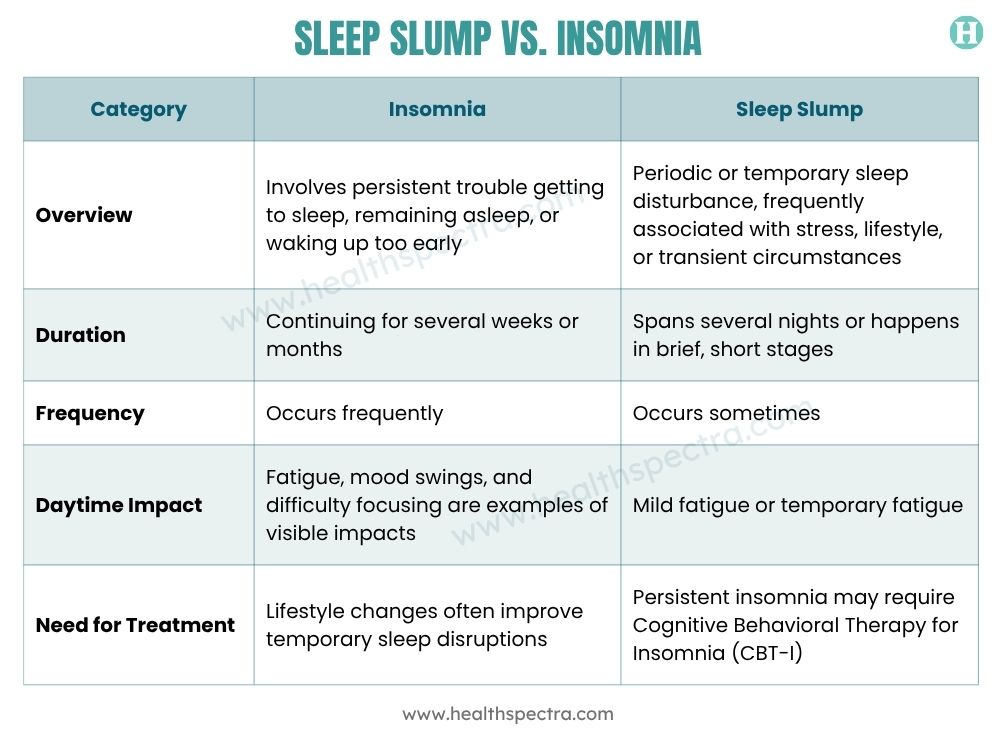
Sleep Slump vs. Insomnia: Key Differences
Examining several key elements is necessary to distinguish insomnia from a sleep slump.
 Read More: Sleepwalking (“Somnambulism”): Why It Happens, How to Stay Safe & When to Get Help
Common Causes of Temporary Sleep Slumps
Understanding the reasons behind temporary sleep problems vs insomnia can help people address the root cause.
Stress or Major Life Events: Emotional stress is among the most common causes of sleep disturbances. Financial worries, marital problems, and work pressure can all trigger the brain’s alertness system, making it harder to fall asleep.
Travel and Circadian Rhythm Disruption: The body’s internal clock may become temporarily confused when crossing time zones, leading to disruption of circadian rhythm. Jet lag can cause numerous evening awakenings and increased sleep latency.
Lifestyle Factors: Inconsistent bed and wake timings and voluntary decisions that limit sleep time, such as late-night electronic device use.
Illness or Medication Changes: Chronic pain can disrupt sleep. Mental health (like depression and anxiety disorders). These may be strongly comorbid with sleep issues. Waking up several times during the night to get out of bed to urinate is known as nocturia. It may interfere with regular sleep cycles.
What Can Help If You’re Experiencing a Sleep Slump?
Simple lifestyle changes can often restore healthy sleep when treating temporary sleep issues rather than insomnia.
Reset Your Sleep Schedule: You can prevent future sleepless nights by maintaining a regular sleep routine. You may feel drowsy and lethargic if you sleep well past your typical wake-up time. Even if you get an extra hour or two of sleep, your day may be less productive overall. To stop the cycle and get back on track, make sure you get to bed on time the next night.
Improve Sleep Hygiene: Restful sleep-promoting behaviors are part of good sleep hygiene. Caffeine can interfere with sleep even if you take it six hours before bed, according to studies. Each person’s tolerance varies. Therefore, avoid coffee at least eight hours before bed if you know it keeps you awake. Avoiding screens right before bed. Keep the bedroom chilly and dark as well.
Use Stress-Reduction Techniques: Even if you had a poor night’s sleep, fretting about it won’t make you feel better.
“Everyone has trouble sleeping at times,” said Dr. Gregory Mahr, M.D., Henry Ford Health psychiatrist. He added, “Thinking about it all day or blaming yourself only adds to your stress, which then makes it harder to sleep.”
When Persistent Insomnia May Need Treatment
Clinicians may look for underlying medical or psychological factors when sleep issues fit the 3-3-3 rule of insomnia.
Among the possible contributors are:
- Persistent worry or tension
- Depression
- Persistent discomfort
- Sleep apnea
Evidence-Based Treatment Options
Cognitive behavioral therapy (CBT) for insomnia: CBT can help you manage or cease the unpleasant thoughts and behaviors that keep you awake. Doctors typically advise it as the initial treatment for those who have insomnia.
Prescription Medications: You can use prescription sleeping pills to help you get to sleep, stay asleep, or do both. Doctors generally do not recommend relying on prescribed sleeping drugs for longer than a few weeks. Additionally, medications shouldn’t be the sole form of treatment. However, doctors authorize several medications for long-term use.
Read More: What Sleeping on Your Left Side Does for Heartburn Relief
Warning Signs You Should Speak With a Healthcare Professional

Early intervention is crucial for identifying the symptoms of chronic insomnia.
You ought to think about visiting a physician if
- Insomnia has lasted for more than 3 weeks.
- Most evenings, there are sleep issues.
- Daily living is hampered by daytime weariness.
- You go through extreme mood swings.
- Over time, sleep issues get worse.
- You frequently take sleep aids.
- Insomnia impairs work or relationships.
Read More: Beauty Sleep Hacks: 8 Tips for Glowing Skin and Restful Nights
Conclusion
Anyone can have trouble sleeping. Stress piles up, you travel, catch a cold, or your routine goes sideways. Usually, these sleep hiccups don’t hang around. Once you handle what’s throwing you off, things get back to normal.
If you keep tossing and turning every night and it starts creeping into your days, messing with how you feel or function, that’s a sign something bigger might be going on. A crucial first step in safeguarding long-term health and sleep quality is identifying the early indicators of chronic sleep disorders.
References
- Jessica Hamlin. (Sep 21, 2019). Surviving your no-sleep slump: Tips for avoiding insomnia.
- Jacksonville Sleep Center. (2024, January 22). The most common signs of sleep deprivation.
- National Heart, Lung, and Blood Institute. (2022, March 24). What Is Insomnia?
- Harvard Medical School Division of Sleep Medicine. Understanding insomnia.
- Hope Gillette. (July 5, 2022). DSM-5 Criteria for Insomnia.
- American Academy of Sleep Medicine. (2022). International classification of sleep disorders.
- State Government of Victoria. Sleep deprivation.
- Passion Health Physicians. Insomnia: Causes, symptoms, and when to see a doctor.
In this Article