

















Climbing stairs, rising from a chair, or walking on uneven surfaces all rely on one muscle group that is often overlooked.
Knowing how to strengthen quadriceps with the right quad strengthening exercises is key to effectively strengthening quads and improving daily movement. The quadriceps are the largest muscles in your legs, essential for knee extension, shock absorption, and stability.
Strong quads support joint protection, balance, and independence. Including targeted exercises in your routine can enhance knee health and help your body manage everyday physical demands more efficiently.
In this guide, let’s explore how to strengthen your quads effectively and safely.
- Why Quads Matter: The quadriceps are the main knee-support muscles responsible for walking, stair climbing, balance, shock absorption, and long-term joint protection.
- Strong Evidence Links Strength To Health: Research shows weaker quads are associated with a higher risk of knee pain, cartilage damage, reduced function, and poorer long-term mobility outcomes.
- Best Training Approach = Mix Of Exercises: Combine closed-chain exercises (squats, split squats, step-ups, leg press) for functional strength and open-chain exercises (leg extensions, straight-leg raises) for targeted activation.
- Progressive Overload Is Essential: Strength improves only when load, reps, or difficulty are gradually increased over time, along with proper recovery (48–72 hours between sessions).
- Minimum Effective Routine: Training quads 2 times per week, 3–5 sets of 6–15 reps, with controlled tempo (especially slow lowering), is enough to build strength and support knee health.
Why Strong Quads Matter Beyond Fitness
The benefits of quadriceps strength extend far beyond athletic performance and are strongly linked to long-term health outcomes.
A big 2013 study called MOST tracked over 2,400 older adults (50-79 years old) and nearly 4,650 knees for 5 years. It found women with the weakest quads at the start had a 28% higher chance of worse knee pain later on, no matter their age, weight, activity level, or past knee surgery (unlike men, where it didn’t matter).
The 2022 Osteoarthritis Initiative study analyzed 1,338 adults aged 45-79 and found stronger baseline quads linked to less cartilage damage, fewer bone marrow lesions, and reduced joint swelling in women’s lateral knee compartments over 1 year via MRI.
An 8-week randomized controlled trial in 100 patients with knee osteoarthritis showed that quad strengthening led to meaningful improvements in pain, physical function, and quality of life, representing high-level evidence.
Population-based data consistently identify quadriceps strength as an independent predictor of mortality risk, alongside traditional markers such as blood pressure, cholesterol, and BMI.
In adults over 60, higher quad strength is also linked to better cognitive performance, including faster processing speed and sharper working memory, based on data from the National Health and Nutrition Examination Survey (NHANES).
There’s another reason this matters more as you get older. After age 30, adults naturally lose 3 to 8 percent of their muscle mass per decade, a process called sarcopenia that accelerates significantly after 60.
The quadriceps, as the largest muscle group in the body, are among the first places this loss shows up, and the consequences are direct: slower walking speed, difficulty rising from a chair, higher fall risk, and reduced independence. Targeted quad training is one of the most effective tools for slowing that decline.
Read More: 9 Effective Exercises to Relieve Knee Pain
Quad Anatomy That Shapes How You Train
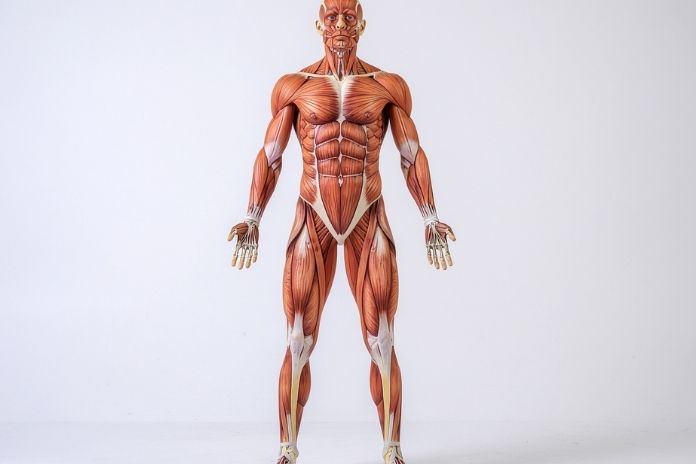
The quadriceps are made up of four muscles. Three of them, the vastus lateralis on the outer thigh, the vastus medialis on the inner thigh, and the vastus intermedius located deeper in the middle, all originate from the femur and act primarily at the knee.
Their main role is knee extension, which means they respond best to exercises that take the knee through a full range of motion under load. Movements like squats, lunges, leg press, and leg extensions directly target these muscles.
The rectus femoris is slightly different. It runs down the center of the thigh and crosses both the hip and knee joints. Because it functions as both a knee extensor and a hip flexor, it is more effectively engaged when the hip is flexed.
The vastus medialis, often referred to as the VMO, plays a key role in stabilizing the kneecap. It becomes especially active during the final phase of knee extension and in single-leg movements.
These distinctions matter when you choose your exercises. The three vasti muscles respond best to squats, lunges, and leg press movements that take the knee through a full range of motion. The rectus femoris, because it crosses the hip, needs hip flexion to be fully loaded.
That means a reclined leg extension or an upright-torso Bulgarian split squat will target it more effectively than a forward-leaning squat. And if knee stability is your goal, single-leg movements like step-ups and terminal knee extensions place the greatest demand on the VMO.
Read More: 5 Effective Knee Strengthening Exercises
The Best Exercises and Why They Work
Not all quad exercises train your legs in the same way. Some build strength through full-body, functional patterns, while others isolate the quadriceps for more targeted activation. Including both types helps improve strength, muscle development, and knee stability.
Closed Kinetic Chain: Functional and Multi-Muscle
These exercises keep your foot fixed on a surface, allowing the quads to work together with the glutes, hamstrings, and calves. This makes them effective for building strength that carries over into everyday movement.
Squat
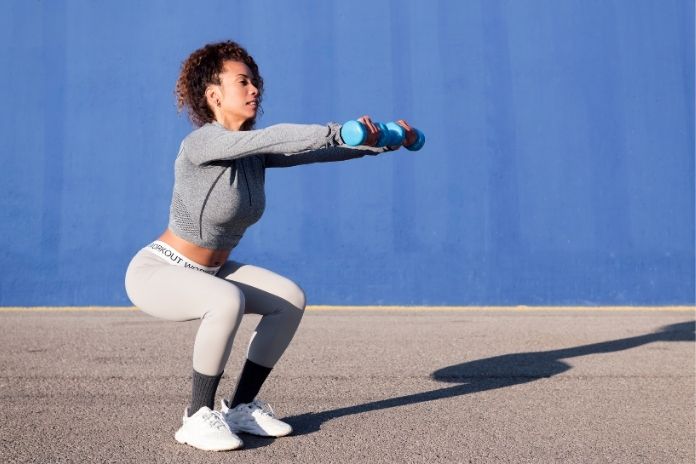
A foundational movement for quad development. Front-loaded variations, such as goblet or front squats, place more demand on the quads compared to back squats with forward lean. Training to at least parallel depth helps engage the quads through a fuller range. A goblet squat with a dumbbell or kettlebell held at the chest is a practical starting point.
Split Squat or Bulgarian Split Squat
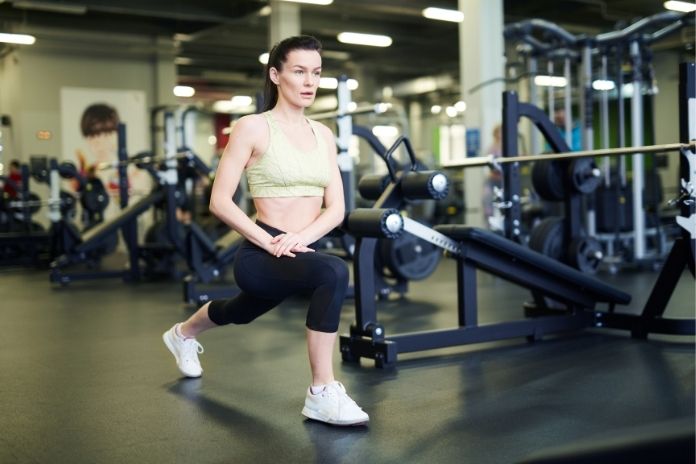
A very good single-leg exercise that puts a lot of stress on the quads. A slightly shorter stance and an upright torso make the quads work harder. It is great for getting stronger and building muscle, as well as improving the balance and coordination needed to walk, run, and go up and down stairs.
Leg Press
Lets you load the quads more without having to balance as much as with free weights. The focus changes when you move your feet. A lower and narrower stance puts more stress on the quads, while a higher stance puts more stress on the glutes and hamstrings.
A 2020 review highlighted that the leg press cranks up quad activation. Vastus lateralis and medialis fire hardest, with rectus femoris close behind. Activation peaks at deep knee flexion from 90 degrees down to near full extension.
Step-Up
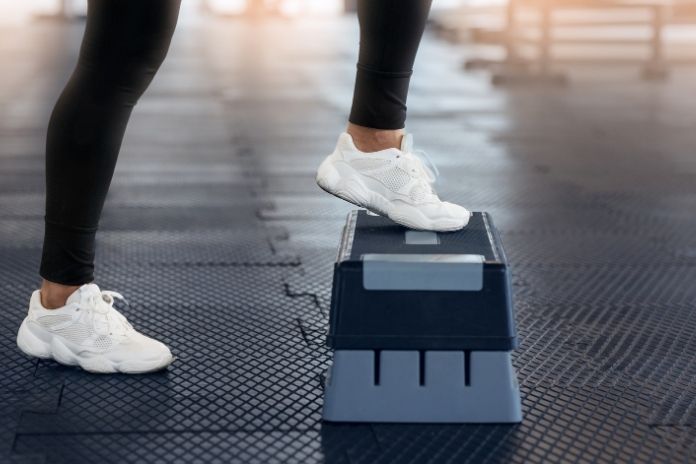
A movement that works the same way as climbing stairs. It works especially well to activate the inner quad at the end of knee extension. You can make progress by either raising the step height or adding weight.
Dr. Joseph Hribick notes that single-leg movements place greater demand on the working limb, increasing quadriceps activation. This makes exercises such as step-ups and split squats effective for targeted quad strengthening.
Wall Sit
A static hold that keeps the quadriceps tense all the time. This helps build muscle endurance and improve activation, which is great for beginners or people who are just starting to get better.
Read More: Kettlebell vs. Dumbbells: Which Should You Use for Strength Training?
Open Kinetic Chain: Targeted and High Activation
These exercises allow the lower leg to move freely, keeping the thigh stable and isolating the quadriceps, helping direct engagement.
Straight-Leg Raise (SLR)
SLR is a low-load exercise that is good for early rehab or when you can’t move your knee very much. It activates the quads less than dynamic exercises, but it does help get them going and is a safe way to start rebuilding strength.
Elle Carlson, PT, DPT at Hinge Health, endorses straight-leg raises (SLR) to build hip flexor and core strength for better stability, mobility, and injury prevention around knees/hips.
Leg Extension
This is one of the most effective exercises for directly targeting the quads, producing high levels of muscle activation. When performed with appropriate resistance, it is considered safe without placing excessive stress on the knee.
For individuals with patellofemoral pain (PFP), it is recommended to limit the range between 90° and 40° of knee flexion that reduces pressure on the kneecap. Slightly reclining the torso increases rectus femoris activation.
A 2024 IJSPT commentary titled “Oh, My Quad” noted that leg extension exercises are generally safe for the knees. It also explained that joint forces during leg extensions are similar to those seen in squats between 45° and 90°, and suggested avoiding full knee lockout by stopping about 10 to 15 degrees short of full extension.
You may have heard they are, but current evidence says otherwise. A 2024 clinical review in the International Journal of Sports Physical Therapy explicitly endorsed leg extensions as a core rehabilitation exercise, even after ACL surgery.
EMG research confirms they produce higher quad activation than squats at comparable loads. The one real caveat: if you have patellofemoral pain (pain under or around the kneecap), limit your range to between 90 and 40 degrees of knee flexion. That range avoids the peak compression that occurs near full extension.
For everyone else, leg extensions are a safe and effective tool.
OKC vs CKC: Why You Need Both
Open-chain movements like leg extensions isolate the quads and typically produce higher direct muscle activation.
In contrast, closed-chain exercises such as squats and lunges involve multiple muscle groups, helping build strength that translates into real-life movement.
Rather than choosing one over the other, combining both gives better results. Closed-chain exercises can form the base for strength and muscle growth, while open-chain movements help target the quads more precisely, especially the rectus femoris, and address gaps that compound exercises may not fully cover.
How to Build Stronger Quads
It’s not enough to just pick the right exercises to build quad strength. Progress depends on using progressive overload, which means that the muscles are gradually given more work to do over time. If you don’t use progressive overload, your strength gains will stop after a while. You can see big changes when you make small, steady changes to the load, volume, or difficulty.
If you’re starting from scratch, begin with bodyweight movements: wall sits, bodyweight squats, and straight-leg raises. These build the baseline activation and control you need before adding load.
Once you can complete three sets of 15 bodyweight squats with good form and no knee discomfort, add a dumbbell or progress to a split squat. From there, apply the progression guidelines below.
The Minimum Effective Dose and How to Progress
To see consistent results, your training needs a clear structure. The right balance of frequency, volume, progression, and recovery ensures that your quads are challenged enough to grow while still allowing adequate time to adapt.
- Frequency: Training the quads at least two times per week can effectively build strength, while increasing to three sessions weekly may accelerate progress.
- Volume: Performing three to five sets per exercise with six to fifteen repetitions works well for most goals. Lower reps with heavier weights support strength, whereas moderate loads with higher reps help improve muscle size and endurance.
- Progression: When you can complete all sets at the higher end of your rep range with proper form, increase the weight slightly or add another repetition. For bodyweight movements, you can progress by slowing the tempo, adding resistance, or advancing to single-leg variations.
- Recovery: Giving your muscles 48 to 72 hours between quad-focused sessions allows proper recovery and supports continued strength gains.
- Eccentric Emphasis: The lowering phase of any exercise, such as the descent in a squat or split squat, is called the eccentric phase. Muscle fibers are under the most tension during this phase, and research consistently shows that training them deliberately produces greater strength and muscle growth than rushing through it.
In practice, take three to five seconds to lower yourself on every rep. It feels harder than it sounds, and that’s the point. This is the single easiest technique change you can make to get more out of the exercises you’re already doing.
Conclusion
Your quads are more than an aesthetic muscle or performance marker. They are the primary load-bearing and shock-absorbing tissues around the knee, directly influencing mobility, independence, and long-term joint health.
Evidence consistently shows that to strengthen quads, you need structured quad strengthening exercises and a clear understanding of how to strengthen quadriceps through progressive loading and full-range training.
Two sessions per week can already initiate meaningful adaptation and build lasting functional strength.
References
- Soderberg GL, Cook TM. An electromyographic analysis of quadriceps femoris muscle setting and straight leg raising. Phys Ther. 1983;63(9):1434-1438. doi:10.1093/ptj/63.9.1434.
- Cho M. The effects of modified wall squat exercises on average adults’ deep abdominal muscle thickness and lumbar stability. J Phys Ther Sci. 2013;25(6):689-692. doi:10.1589/jpts.25.689.
- Stensdotter AK, Hodges PW, Mellor R, Sundelin G, Häger-Ross C. Quadriceps activation in closed and in open kinetic chain exercise. Med Sci Sports Exerc. 2003;35(12):2043-2047.
- Mackey ER, Riemann BL. Biomechanical differences between the Bulgarian split-squat and back squat. Sports (Basel). 2021;9(4):53.
- Imoto AM, Peccin MS, Trevisani VFM. Quadriceps strengthening exercises are effective in improving pain, function and quality of life in patients with osteoarthritis of the knee. Acta Ortop Bras. 2012;20(3):174-179.
- Geng R, Li J, Yu C, et al. Knee osteoarthritis: current status and research progress in treatment (review). Exp Ther Med. 2023;26(4):481.
- Patellofemoral Pain Syndrome. Physiopedia. Updated continuously.
In this Article