


















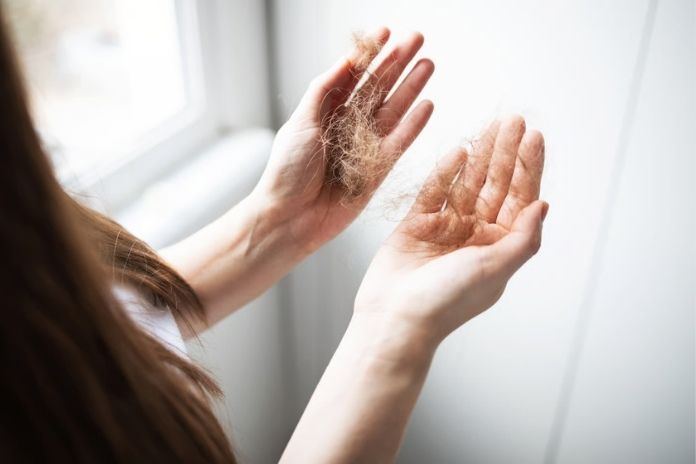
The difference between hair shedding and hair loss comes down to whether your hair follicles can still grow new hair. Hair shedding is usually a temporary process where hair falls out, but regrowth eventually catches up.
Hair loss is a condition in which hair falls out and does not fully return, often due to disorders such as androgenic alopecia or alopecia areata. Normal daily shedding ranges from about 50 to 100 hairs. The key difference is whether the follicles remain healthy and capable of producing new hair.
Finding more hair than usual in your shower drain or on your hairbrush can be alarming. Many people immediately worry they are going bald, but it is not always easy to tell whether you are experiencing hair shedding or hair loss.
In reality, increased hair fall may simply reflect normal variation in the hair growth cycle, a temporary shedding condition triggered by stress or hormonal changes, or a true hair loss disorder that affects the follicles themselves.
Understanding the difference matters because the cause, treatment, and long-term outlook can be very different. This guide explains how to tell them apart by looking at the hair growth cycle, shedding patterns, timelines, and scalp changes.
- Hair shedding is usually temporary and reversible.
- Hair loss often involves damaged follicles and can become permanent.
- Pattern, timing, and scalp changes help tell the difference.
Read More: Androgenetic Alopecia in Women: What You Need to Know About Female Pattern Hair Loss
The Hair Growth Cycle—Why This Is the Foundation of the Distinction
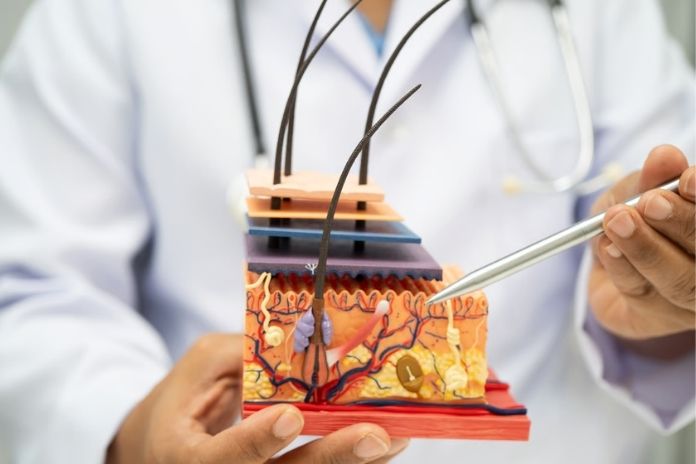
Every hair follicle on the scalp goes through a repeating growth cycle consisting of three phases. The anagen phase is the active growth stage and typically lasts between two and seven years. This is followed by catagen, a brief transition phase lasting about two to three weeks.
Finally, the hair enters the telogen phase, a resting stage that lasts roughly three to four months before the hair is shed. In a healthy scalp, approximately 85% of hairs are in the anagen phase while about 15% are in the telogen phase.
A follicle usually produces hair for almost four years before resting for several months. During that resting period, a new anagen hair begins growing underneath and eventually pushes the old hair out. The daily shedding of 100 to 150 telogen club hairs is a normal result of this cycle. This process does not cause visible thinning or reduced hair density.
What Normal Hair Shedding Looks Like—and When It Becomes Excessive

Most people lose between 60 and 100 hairs per day. The exact amount varies depending on hair type, grooming habits, and washing frequency. People who wash their hair daily often notice fewer hairs during each wash because shedding occurs more regularly. In contrast, people who wash their hair every few days may see a larger number of hairs come out at once.
Shedding becomes more concerning when the number consistently exceeds the normal range. During telogen effluvium, the most common cause of excessive shedding, a person may lose between 300 and 500 hairs daily, although total hair loss usually involves less than half of the scalp hair.
A simple home assessment is the gentle hair-pull test. Take a section of about 60 dry hairs and lightly pull. Normally, only one to three hairs should come away. If more than six hairs are released, increased shedding may be present, and further evaluation may be helpful.
Hair Shedding — Telogen Effluvium Explained
When people ask, “Is my hair shedding or falling out?”, the answer is often telogen effluvium.
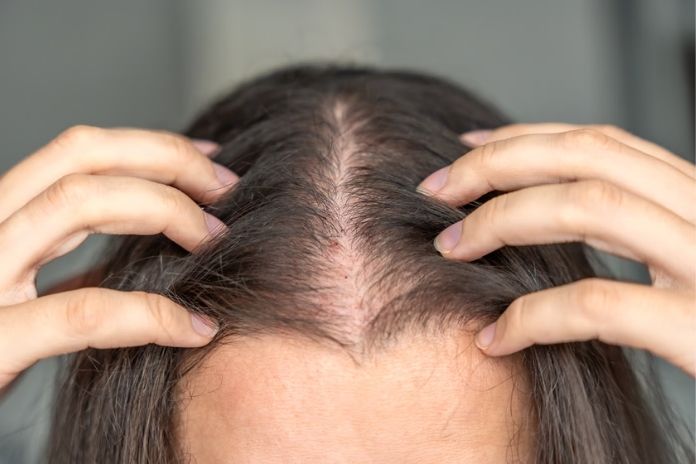
Telogen effluvium is a form of nonscarring alopecia characterized by diffuse hair shedding across the scalp. It occurs when a significant number of follicles leave the growth phase prematurely and enter the telogen phase.
Following a physical or emotional stressor, up to 70% of hairs in the anagen stage may shift into the resting phase. Because telogen hairs remain attached for several months before falling, shedding usually begins two to three months after the triggering event rather than immediately.
Common triggers include:
- Major illness or surgery
- Severe psychological stress
- Childbirth
- Rapid weight loss
- Iron deficiency
- Zinc deficiency
- Protein deficiency
- Vitamin D deficiency
- Hypothyroidism
- Starting or stopping hormonal birth control
Postpartum hair shedding is a common example. Many new mothers notice significant shedding about three to four months after delivery due to hormonal changes.
The reassuring news is that acute telogen effluvium is usually temporary.
It typically lasts less than six months, and approximately 95% of cases resolve completely. The follicles remain intact and healthy, meaning hair can regrow once the trigger is addressed and the hair growth cycle returns to normal.
Hair Loss — When Follicles Are Permanently or Progressively Affected
Unlike temporary shedding, true hair loss often involves progressive changes within the follicle itself.
Androgenic Alopecia
Androgenic alopecia, commonly called male or female pattern hair loss, is the most common cause of permanent hair loss. In this condition, hair follicles gradually shrink through a process called miniaturization. Over time, hair becomes thinner, shorter, and less visible until growth may stop altogether.
In men, this usually appears as recession at the temples and thinning at the crown. In women, it commonly presents as diffuse thinning over the top of the scalp with widening of the part line while the frontal hairline remains relatively preserved.
Alopecia Areata
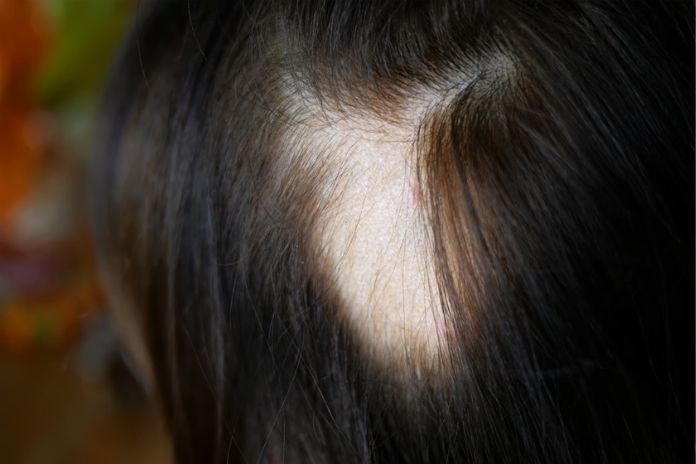
Alopecia areata is an autoimmune condition in which the immune system attacks hair follicles.
Instead of diffuse shedding, it causes smooth, round patches of hair loss with sharply defined borders. Some cases recover spontaneously, while others are recurrent or more extensive.
Scarring Alopecia
Scarring alopecia refers to a group of inflammatory disorders that permanently destroy hair follicles and replace them with scar tissue. Examples include lichen planopilaris and central centrifugal cicatricial alopecia.
Once follicles are destroyed, regrowth is not possible, making early diagnosis particularly important. Some people initially assume they have ordinary pattern hair loss when they actually have a scarring condition requiring prompt treatment.
Read More: My Experience With Postpartum Hair Loss (And How I Managed It Without Panicking)
How to Tell Them Apart—The Practical Distinctions
Understanding the practical differences between telogen effluvium and alopecia can help you identify when medical evaluation may be necessary.
Pattern of Hair Loss
Telogen effluvium causes diffuse thinning across the scalp, often most noticeable on the top of the head. Hair density decreases evenly rather than in a specific pattern. Androgenic alopecia follows predictable patterns.
Men often lose hair at the temples and crown, while women usually notice widening of the part and thinning at the crown. Alopecia areata causes distinct round or oval patches of hair loss.
Timeline
Telogen effluvium usually develops two to three months after a triggering event such as illness, childbirth, or major stress. Androgenic alopecia progresses slowly over the years. Alopecia areata can appear suddenly, sometimes over days or weeks.
The Hair Root
Examining shed hairs may provide useful clues. Telogen hairs often have a small white bulb at the root. This is known as a club hair, indicating that the hair completed a normal telogen phase before shedding. Broken hairs without a bulb suggest hair shaft damage rather than normal shedding. Hairs with a dark, sheath-like root may indicate anagen effluvium.
Scalp Appearance
In telogen effluvium, the scalp generally appears normal. Alopecia areata causes smooth bald patches with normal-looking skin. Scarring alopecia may cause redness, scaling, inflammation, tenderness, or shiny scarred areas where follicles have been destroyed.
When to See a Dermatologist

You should consider seeing a dermatologist or healthcare professional if shedding remains significantly increased for more than three months, especially when no obvious trigger can be identified.
Medical assessment is also important if you notice:
- Receding temples or crown thinning
- Widening of the part line
- Round bald patches
- Redness, scaling, or irritation of the scalp
- Fatigue, cold intolerance, or unexplained weight changes
- No improvement within six months after a known trigger
Blood tests may be prescribed to evaluate conditions such as thyroid disease, iron deficiency, or other nutritional deficiencies that can contribute to diffuse hair loss. Emotional shock may lead to further shedding. The condition is usually reversible once the trigger is managed.
Read More: How to Naturally Slow Down Age-Related Hair Loss
Conclusion
Most cases of excessive hair shedding are temporary, reversible, and linked to a specific trigger that can be identified and addressed. The key distinction between hair shedding and true hair loss is whether the follicles remain capable of producing healthy new hair.
Pattern, timing, and scalp appearance often provide valuable clues. If the cause is unclear, symptoms persist beyond six months, or you notice patches or progressive thinning, a dermatologist can provide an accurate diagnosis and guide right treatment.
FAQs
Q. How many hairs falling out a day is normal?
The physiological daily shedding of 100 to 150 telogen club hairs is a normal consequence of the hair cycle. Most experts cite 50 to 100 hairs daily as the standard range, although washing frequency affects what you notice.
Q. Does telogen effluvium cause permanent hair loss?
In most cases, no. Telogen effluvium is a benign and spontaneously reversible condition with no associated complications. About 95% of acute cases resolve within six months after the trigger is addressed.
Q. Can stress cause hair loss or just shedding?
Stress most commonly causes hair shedding rather than permanent hair loss. Telogen effluvium often develops two to three months after a stressful event, illness, or e
References
- Malkud, S. (2015). Telogen effluvium: A review. Journal of Clinical and Diagnostic Research, 9(9), WE01–WE03.
- Mysore, V., & Shashikumar, B. M. (2016). Guidelines on the diagnosis and management of hair loss. Indian Journal of Dermatology, Venereology and Leprology, 82(4), 404–415.
- Sperling, L. C., Sinclair, R. D., El Shabrawi-Caelen, L., & Zouboulis, C. C. (2023). Alopecia. In StatPearls. StatPearls Publishing.
- Aslam, A., & Saleem, M. (2023). Telogen effluvium. In StatPearls. StatPearls Publishing.
- Oasis Dermatology. (n.d.). Telogen effluvium.
- American Academy of Dermatology Association. (n.d.). Hair shedding: What’s normal and what’s not?
In this Article