

















Diabetes burnout affects an estimated 79% of people living with diabetes, according to a 2024 International Diabetes Federation survey. Three-quarters of those who experienced it stopped or interrupted treatment as a result. If that includes you, the first thing to understand is that this is not a willpower failure.
People with diabetes make roughly 180 more decisions per day than people without it, over 65,000 extra choices per year, with no days off and no finish line. Burnout is the predictable outcome of that load. This article explains what diabetes burnout actually is, how it differs from distress and depression, and what the evidence shows actually helps.
- Diabetes burnout is a predictable result of the constant mental load of managing diabetes—not a failure of willpower.
- It’s different from distress and depression, and treating it incorrectly ignores the real issue: overwhelming daily management demands.
- Managing burnout involves simplifying routines, using therapies like CBT/ACT, building support, and taking structured breaks to sustain care.
Read More: 16 Unusual Warning Signs of Diabetes You Might Not Know
Diabetes Burnout, Diabetes Distress, and Depression: They Are Not the Same Thing

These three conditions are routinely conflated, but the distinction matters enormously because the treatments differ significantly. Diabetes distress is a contextual emotional response to the ongoing burden of managing a chronic condition. It affects 40 to 50% of people with diabetes and is not a psychiatric disorder. It does not respond to antidepressants.
The primary drivers are the demands of the regimen itself, and treatment means addressing those demands through regimen adjustment and behavioral support. Diabetes burnout develops when distress goes unaddressed over time. It is characterized by emotional detachment, apathy, and paralysis in self-care.
People describe feeling disconnected from both themselves and their diabetes management. It is not that they stopped caring; it is that sustained caring without relief has exhausted the system entirely.
Clinical depression is a generalized mood disorder that occurs at two to three times the rate in people with diabetes compared to the general population. Unlike distress and burnout, it does respond to antidepressants. Critically, only about 23% of diabetes distress cases overlap with clinical depression.
Dr. Betul Hatipoglu, MD, Medical Director of the Diabetes and Metabolic Care Center at University Hospitals Cleveland Medical Center and Professor at Case Western Reserve University School of Medicine, puts it plainly: “When everything isn’t fine, it is too often seen as the patient’s fault.” Treating burnout with antidepressants alone leaves the root cause untouched.
Why Burnout Happens: 180 Decisions a Day Has a Name
Decision fatigue is a well-documented neuropsychological phenomenon. Sustained decision-making over time degrades the quality of subsequent decisions, eventually defaulting to avoidance. For most people, decision fatigue accumulates across a workday. For people with diabetes, it begins before breakfast and does not stop.
Those 180 additional daily decisions add up to more than 65,000 extra choices per year, each carrying real consequences. A wrong call on insulin dosing, carbohydrate estimation, or activity adjustment can produce hours of physical misery or genuine medical risk. There is no acceptable margin for switching off.
Compounding factors accelerate the path to burnout: fear of hypoglycemia, unpredictable glucose responses despite careful effort, stigma from people who do not understand the condition, and healthcare encounters that respond to struggling numbers with judgment rather than support. Diabetes burnout is not a character flaw. It is the predictable endpoint of a cognitive marathon with no finish line.
Read More: Is Aspartame Bad for Diabetics? Blood Sugar, Insulin, and Safety Explained
Signs You May Be Experiencing Diabetes Burnout
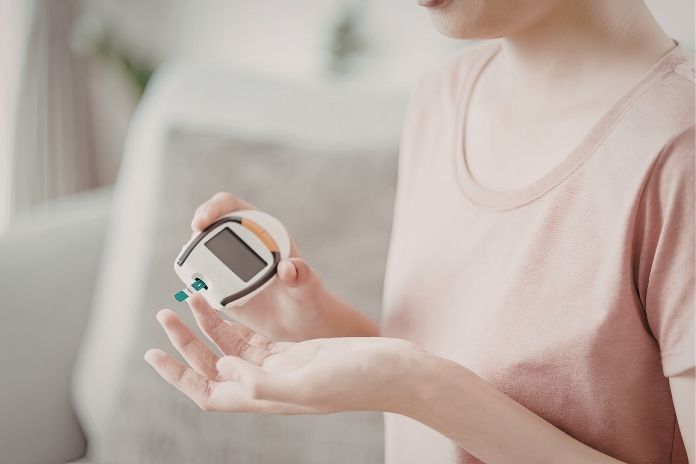
Behavioral signs include skipping blood glucose checks, guessing at doses rather than measuring, cancelling medical appointments, not refilling prescriptions, and quietly stepping back from the parts of management that feel most overwhelming.
Emotional signs include persistent resentment toward the condition, a sense of powerlessness, detachment from health outcomes, and all-or-nothing thinking. That last pattern is one of the most damaging: one unexpectedly high reading becomes “I’ve failed,” which becomes “what’s the point,” which becomes a full withdrawal from self-care.
One framing worth naming directly: the word “non-compliant” appears in medical records and clinical conversations to describe people experiencing exactly this state.
The American Diabetes Association’s own literature identifies this label as stigmatizing. People described this way are not making a character choice. They are experiencing an underdiagnosed condition that the healthcare system has largely failed to screen for or address.
Who Is Most Likely to Experience Diabetes Burnout
Burnout can occur at any stage, not only around diagnosis. It frequently re-emerges after years of apparently stable management, often triggered by a new life stressor or a run of discouraging results despite genuine effort.
Type 1 diabetes carries a particular risk. The requirement for 24/7 insulin management with no physiological safety net means there is no natural break. Studies indicate that around 42% of people with T1D report elevated diabetes distress at any given time.
Type 2 diabetes carries its own distinct burden: persistent cultural stigma framing the condition as self-caused, guilt around disease progression despite effort, and a sense that the system is moving in the wrong direction regardless of what the person does.
Shared risk factors across both types include social isolation, experiences of shame in healthcare settings, perfectionist tendencies colliding with the inherent variability of glucose management, co-occurring health conditions, and recent significant life stress.
Read More: American Diabetes Month 2025: Simple Steps to Lower Your Risk
What Happens to Your Health When Burnout Takes Hold
The cycle that develops is self-reinforcing. Burnout leads to avoidance, avoidance leads to deteriorating control, deteriorating control generates fear and guilt, and fear and guilt deepen the distress that caused the burnout.
The IDF 2024 data is clear: three-quarters of people who experienced burnout stopped or interrupted treatment. In the short term, this results in erratic glucose levels, increased hypoglycemic episodes, and declining well-being. Over time, sustained poor glycemic control drives cardiovascular disease, peripheral neuropathy, retinal damage, and renal deterioration.
Dr. Martin Greenfield, MD, FACP, FACE, endocrinologist at ProHEALTH Lake Success in New York, captures why this condition is so isolating: “For many other conditions, you just take a pill. Diabetes is different. It can feel like it’s taking over your life.”
Addressing burnout is addressing diabetes care. Emotional sustainability over the long term produces better outcomes than compliance that eventually collapses.
How to Overcome Diabetes Burnout: What the Evidence Actually Shows

The first step is naming it. Labeling burnout for what it is removes the shame spiral that keeps people from seeking support and from telling their care team what is actually happening. The second is reducing decision load.
Work with your care team to identify the minimum viable routine that keeps you safe. Done is better than perfect. A simplified regimen maintained consistently outperforms an optimal regimen abandoned under pressure.
Tell your care team. Disclosure should trigger regimen simplification and support, not additional demands. If it is met with judgment, that is a signal you may need a different team. Finally, address the basics: poor sleep and chronic stress independently worsen both blood glucose regulation and emotional exhaustion. Neither is a luxury to address later.
Evidence-Based Therapy: CBT, ACT, and the Antidepressants Caution
Cognitive behavioral therapy targets the all-or-nothing thinking patterns that accelerate burnout. Research consistently shows reductions in diabetes distress, depression, and anxiety, and modest but real improvements in A1C.
Acceptance and Commitment Therapy does not ask you to feel positively about having diabetes. It focuses on values clarification and taking meaningful action with diabetes present. A 2024 meta-analysis in the Journal of Psychosomatic Research found ACT reduced A1C by 0.87 to 1 full percentage point in people with type 2 diabetes, an effect comparable to some medications.
Antidepressants are not the right first response to burnout or distress. They do not address the management burden driving the problem. They are appropriate when clinical depression is also present, but should not substitute for burnout-specific care.
The Diabetes Vacation
This concept is almost absent from mainstream diabetes content, and it is one of the most practical recovery tools available. A diabetes vacation is a planned, time-limited, structurally safe break from strict management.
The parameters matter: medications are always maintained, the break is deliberate and time-bounded, and ideally discussed with your care team in advance. An example: one Friday evening, you eat with your family without tracking, guilt, or logging. You still take your medications.
The rationale is straightforward. The chronic emotional exhaustion that comes from relentless perfectionism causes more long-term harm than one planned, contained period of relaxed tracking. Giving yourself a structured release valve is not giving up. It is sustainable management.
Read More: National Diabetes Month: Raising Awareness and Promoting Healthy Lifestyles
Why Connection Is a Clinical Intervention, Not Just Emotional Support

Social isolation is the single strongest modifiable risk factor for diabetes burnout. Pooled data from a systematic review in Diabetes Spectrum shows peer support groups produce an average A1C reduction of 0.28% on their own. Combined with structured diabetes education, this rises to 0.41%, an effect size comparable to some pharmacological interventions.
Peer support offers what no healthcare professional can replicate: lived understanding. Practical options include in-person and online diabetes-specific support groups, the Beyond Type 1 app, JDRF community forums, and working with a certified diabetes care and education specialist trained in psychosocial support.
How to Talk to Your Care Team, and What to Do If They Do Not Listen
Burnout is systematically underscreened in clinical settings. Most appointments focus on A1C numbers and medication adjustments. The emotional experience of managing the condition rarely makes it onto the agenda unless the patient raises it.
Two validated screening tools exist: the Problem Areas in Diabetes scale (PAID) and the Diabetes Distress Scale (DDS). You can ask your care team directly whether either has been used with you.
A straightforward opening: “I think I might be burned out from managing my diabetes. Can we talk about that?” If that conversation is met with judgment or dismissed, ask for a referral to a diabetes psychologist, health psychologist, or therapist with chronic illness experience. You are entitled to that support.
If burnout has reached a point of hopelessness, thoughts of self-harm, or suicidal ideation, contact the 988 Suicide and Crisis Lifeline immediately by calling or texting 988.
The Bottom Line
Diabetes burnout is one of the most common, least-discussed, and most treatable complications of living with diabetes. It is not a weakness. It is the predictable outcome of extraordinary, unrelenting demands on a person’s cognitive and emotional resources. Distress is not a flaw. Burnout is not failure. They are signals, and signals can be answered.
Evidence-based paths forward exist: therapy that works, peer support with measurable clinical benefit, planned recovery strategies, and care teams who screen for what they cannot see in an A1C number. If you are experiencing diabetes burnout, the starting point is the same as it is for any other diabetes complication: name it, get the right support, and treat it.
If you are in crisis, call or text 988 at any time. This article is informational only and does not constitute medical advice. Please speak with your diabetes care team or a qualified mental health professional about your individual situation.
Frequently Asked Questions
1. What is diabetes burnout?
Diabetes burnout is a state of emotional exhaustion and detachment from diabetes self-care that develops when the demands of managing the condition become chronically overwhelming. It is distinct from diabetes distress, which is a broader emotional response to management burden, and from clinical depression, which requires different treatment.
2. How do I know if I have diabetes burnout or depression?
Diabetes burnout and distress center on the specific burden of managing diabetes. Clinical depression is a generalized mood disorder affecting all areas of life. Around 23% of diabetes distress cases overlap with clinical depression. A diabetes psychologist or health psychologist can help distinguish between them, which matters because the treatments differ significantly.
3. Can I take a break from managing my diabetes?
A structured “diabetes vacation” is a recognized recovery strategy: a planned, time-limited period of relaxed management in which medications are always maintained. It is not abandoning care. It is a deliberate break from strict tracking to prevent the burnout that causes real long-term harm. Discuss the parameters with your care team first.
4. What therapy works best for diabetes burnout?
Both CBT and ACT have strong evidence for diabetes distress and burnout. A 2024 meta-analysis found ACT reduced A1C by nearly 1 full percentage point in type 2 diabetes. Antidepressants are not a first-line response to burnout unless clinical depression is also present, as they do not address the management burden driving the condition.
References
- Hessler, D. M., Fisher, L., Naranjo, D., & Polonsky, W. H. (2012). Diabetes distress in adults with type 1 diabetes. Journal of Diabetes and Its Complications, 26(6), 533-540.
- Polonsky, W. H., Anderson, B. J., Lohrer, P. A., Welch, G., Jacobson, A. M., Aponte, J. E., & Schwartz, C. E. (1995). Assessment of diabetes-related distress. Diabetes Care, 18(6), 754-760.
- Fisher, L., Hessler, D., Polonsky, W., & Mullan, J. (2012). When is diabetes distress clinically meaningful? Diabetes Care, 35(2), 259-264.
- Pal, K., Eastwood, S. V., Michie, S., Farmer, A., Barnard, M. L., Peacock, R., Wood, B., Inniss, J. D., & Murray, E. (2014). Computer-based diabetes self-management interventions for adults with type 2 diabetes mellitus. Cochrane Database of Systematic Reviews.
- Uchendu, C., & Blake, H. (2017). Effectiveness of cognitive-behavioural therapy on glycaemic control and psychological outcomes in adults with diabetes mellitus. Diabetic Medicine, 34(3), 328-339.
- Tang, T. S., Ayala, G. X., Cherrington, A., & Rana, G. (2011). A review of volunteer-based peer support interventions in diabetes. Diabetes Spectrum, 24(2), 85-98.
- Kontoangelos, K., et al. (2022). Burnout related to diabetes mellitus: A critical analysis.
- Diabetes UK. (n.d.). Diabetes burnout.
- University Hospitals. (2023, August). Dealing with diabetes burnout.
- Franciscan Health. (n.d.). Diabetes burnout.
- MyDiabetes Somerset. (n.d.). Diabetes burnout.
In this Article