



















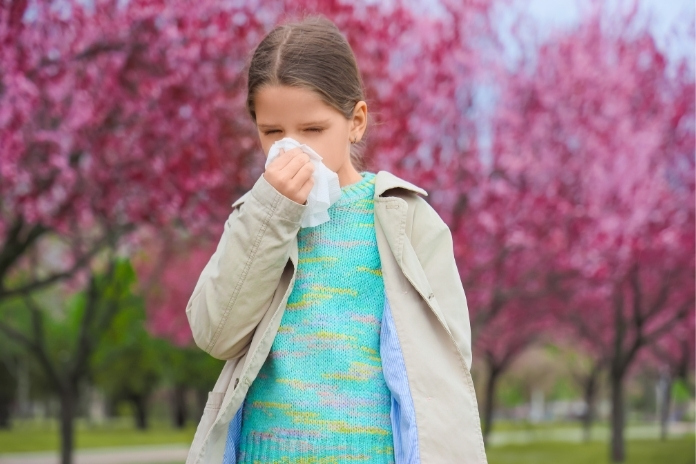
Hay fever, also known as allergic rhinitis in children, is one of the most common allergic conditions affecting kids today. In contrast to illnesses, this condition is associated with the body’s immune response to allergens such as dust, pollen, and pet dander. However, many parents mistake it for a simple cold. Early detection of hay fever in children can significantly improve their comfort, sleep quality, and academic achievement.
This article will cover everything you need to know about seasonal allergies in kids, including symptoms, causes, triggers, medications, and practical at-home strategies. Additionally, you will learn how to minimize exposure to allergens, when to seek medical attention, and the difference between a child having a cold and one with hay fever.
- Hay fever in kids is an allergic reaction (not a cold) triggered by pollen, dust, or pet dander.
- Key signs include sneezing, itchy eyes, and a runny nose without fever.
- Managing triggers, using medication, and simple home care can greatly improve your child’s comfort.
Read More: Hay Fever vs. Common Cold: How to Tell the Difference
What Is Hay Fever in Children?
A frequent allergic reaction in the nose that can also affect the eyes, throat, ears, and sinuses is hay fever, also known as allergic rhinitis. It is a response to things like dust mites or pollen. Hay fever symptoms can linger for a few hours to days or weeks, depending on the underlying cause.
An allergic reaction occurs when your child comes into contact with pollen. Instead of realizing that this “harmless” material is safe, their immune system overreacts to it, treating it like a virus. Your child’s symptoms, such as itching, inflammation, and irritation, are caused by the production of excess histamine.
Although weed pollen and tree pollen from birch, cypress, oak, plane, and sweet chestnut can also cause symptoms, grass pollen is the most prevalent cause of hay fever.
Signs and Symptoms of Hay Fever in Kids
Children with hay fever may exhibit the following signs and symptoms:
- Runny or clogged nose (one or both nostrils)
- Eyes that are watery, puffy, itching, or red
- Irritating nose, throat, the roof of the mouth, and ears
- Sneezing
Hay fever can occasionally also:
- Give you headaches
- Make it more difficult for your toddler to fall asleep
- Make asthma symptoms worse
- Affect your child’s capacity for focus and learning
- Cause a sore throat, a hoarse voice, or poor breath
- Itchy eyes, which can lead to eye infections
Common Triggers of Hay Fever in Children
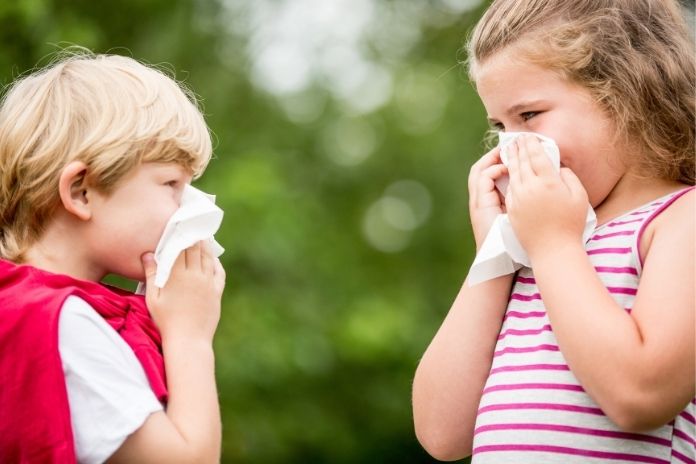
You may experience hay fever symptoms year-round, or they may begin or worsen during a specific season. We refer to this as seasonal allergies. Triggers for hay fever include the following:
- Tree pollen frequently appears in the early spring
- Grass pollen frequently appears throughout late spring and summer
- Ragweed pollen is widespread in the fall
- Cockroach droppings and dust mites are year-round
- Pet dander can be annoying year-round, but during winter, when homes are closed, it may exacerbate symptoms
- Spores from both seasonal and year-round molds and fungi, both indoors and outdoors
Read More: Can Hay Fever Make You Dizzy? Surprising Symptoms of Seasonal Allergies
Hay Fever vs Common Cold: How to Tell the Difference
It might be challenging to differentiate between a typical cold and hay fever (seasonal allergic rhinitis) when you are feeling ill and overwhelmed by unpleasant symptoms. It is because both these conditions have some common symptoms.
Your nose, throat, and lungs are affected by both hay fever and colds, which can cause symptoms such as:
- Stuffy or runny nose
- Coughing
- Sneezing
- Congestion
- Headache
- Fatigue
You can distinguish between the two using a few crucial symptoms. Hay fever and other allergies can result in watery, itchy eyes, puffiness around the eyes, and clear nasal discharge. Conversely, the symptoms of a common cold develop gradually and are frequently associated with fever, sore throat, and a cough (very uncommon).
How Hay Fever Affects a Child’s Daily Life
Seasonal allergies in kids can affect more than just their physical well-being.
Children with hay fever may experience the following:
- Nasal congestion leading to poor sleep quality
- Daytime exhaustion and low energy
- Difficulty focusing in class
- Reduced participation in outdoor activities
In some cases, untreated allergic rhinitis in children may worsen asthma symptoms or increase the risk of sinus infections.
Treatment Options for Hay Fever in Children
Hay fever has no known treatment, but there are effective techniques to control it and lessen its symptoms.
You might want to consult a physician or pharmacist if your child’s hay fever is negatively affecting their quality of life. Based on your child’s symptoms, they can advise you.
Doctors advise three primary forms of hay fever medication for youngsters:
- Antihistamines that don’t make you sleepy can assist with sneezing, runny noses, and itching.
- A nasal steroid spray reduces nasal discomfort and edema.
- Hay fever symptoms and nasal edema are both alleviated with a combination of an antihistamine and steroid nasal spray.
Your child’s age and symptoms will determine the best course of action. Before beginning treatment, see a physician or pharmacist.
Hay fever immunotherapy:
Avoiding triggers or taking medication does not always help children with severe and persistent hay fever. You might wish to talk to a doctor about immunotherapy in these situations. This intensive treatment increases a child’s tolerance to allergens such as dust mites and pollen. The goal of the treatment is to gradually lessen the child’s hay fever symptoms by exposing them to small doses of the allergen.
Practical Ways Parents Can Reduce Exposure to Triggers
Help your child avoid triggers, as reducing exposure is the most effective way to prevent hay fever symptoms. The less contact they have with triggers, the less likely they are to develop a reaction
If your child has pollen-induced seasonal hay fever:
- Check pollen levels regularly during spring and summer
- Keep them indoors on high-pollen days, with doors and windows closed
- Dry clothes indoors instead of outside
- Limit exposure to triggers such as freshly cut grass
- Avoid outdoor play during or just after thunderstorms
- After outdoor play, have them bathe or shower, especially if they feel itchy
If your child suffers from chronic hay fever:
- Consult a physician about testing for potential triggers, such as dust mites and pollens
- Minimize their exposure to triggers; for instance, dusting couches and carpets once a week and keeping them out of the room for 20 minutes thereafter may help if they react to dust mites
- Encourage them to wash their hands frequently
Read More: 12 Home Remedies For Hay Fever – Get Them Sneezes Out
Safe Home Remedies and Supportive Care

Supportive care, along with medicine, can effectively manage seasonal allergies in kids.
- Saline nasal rinses can remove allergens and lessen nasal congestion in kids
- Staying hydrated thins mucus
- Itchy eyes can be relieved with cold compresses
- Keeping your surroundings tidy lowers your exposure to dust mites and pet dander
These simple methods complement medical treatment for hay fever in children and improve comfort.
When to See a Doctor
Seek medical care if you feel your child has:
- Persistent or frequent coughing
- Allergy medications relieve only congestion but do not improve sinus pain
- Hay fever symptoms make it difficult to go to school or carry out daily tasks
- Nasal allergy symptoms are present year-round
- Snoring is a common issue
- You have many unanswered questions
Can Hay Fever Be Prevented?
You cannot avoid hay fever, but you can manage your allergies by making lifestyle adjustments. Avoiding irritants as much as possible can help reduce hay fever symptoms.
To lessen symptoms, you ought to:
- Refrain from rubbing your nose or eyes or touching your face
- When pollen levels are greater in the spring, summer, and early fall, close the windows in your house and vehicle
- To prevent dust mites, cover box springs, pillows, and mattresses
- Close the doors to any bedrooms you don’t want pets to enter, and keep them away from couches and beds
- To lessen the quantity of allergens in the air, use filters in your air conditioner and vacuum cleaner
- Wash your hands frequently, especially after petting animals.
- When you’re outside, shield your eyes from pollen by donning a hat and sunglasses. As soon as you enter the house, change into new clothes
Read More: Chills Without a Fever: Common Causes, What They Mean, and When to See a Doctor
Conclusion
When identified early and treated in an appropriate manner, hay fever in children is a very common but treatable illness. Parents may significantly reduce their child’s discomfort by understanding the symptoms, recognizing the triggers, and selecting the most appropriate course of action.
Simple lifestyle adjustment and appropriate medical care usually help manage seasonal allergies in kids and improve sleep, concentration, and overall well-being. To make sure kids can continue to enjoy their everyday activities without continual allergy disturbances, it’s important to stay aware and proactive.
References
- A.Vogel. Hayfever and children: What to know & how to treat it.
- Benadryl. Hay fever in children.
- The Royal Children’s Hospital Melbourne. Hay fever.
- National Jewish Health. Pediatric allergic rhinitis.
- Mayo Clinic. (August 13, 2024). Hay fever.
- Dymista. Do you have hay fever or a cold?
- National Library of Medicine. (June 19, 2023). Overview: Hay fever.
- Kleenex. Children with hay fever.
- NHS. (2024, March 21). Hay fever.
In this Article