


















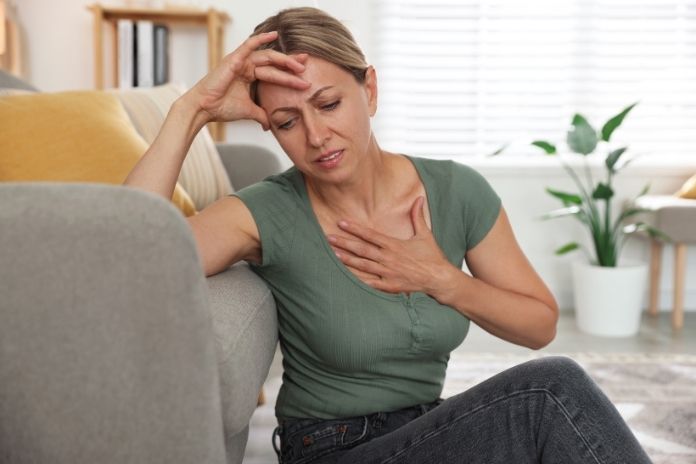
She’s 48, lying in bed at 2 a.m., heart hammering against her chest. Her skin is damp. Her breath feels shallow. She sits up, convinced something is seriously wrong, and waits for it to pass. It does, eventually. But she doesn’t know if what just happened was a panic attack or menopause symptoms, and her doctor hasn’t given her a straight answer either.
This is one of the most common and most misunderstood experiences women face in midlife. Anxiety attack vs menopause is not a simple question, and the confusion is not irrational. Both conditions can produce a racing heart, sweating, shortness of breath, and a physical sense of alarm that is genuinely difficult to distinguish in the moment.
But the underlying causes are different, the trajectory is different, and what your body actually needs in response is different, too. Here’s how to tell them apart, what the research says about why they overlap, and when the answer matters enough to call your doctor.
Why Anxiety and Menopause Can Feel So Similar
To understand why anxiety attack vs menopause is such a confusing clinical picture, you have to understand what both conditions are actually doing to the body.
A panic attack is a surge activation of the autonomic nervous system, specifically the sympathetic branch, which floods the body with adrenaline and cortisol as part of the stress response. Heart rate spikes, breathing becomes rapid and shallow, and muscles tense. The body is preparing to fight or flee something that, in most cases, isn’t physically there.
Perimenopause creates a different but eerily similar sequence. As estrogen levels decline, the hypothalamus, which regulates body temperature and interacts closely with the autonomic nervous system, becomes destabilized. The result can be sudden vasomotor events: surges of heat, menopause, heart pounding at night, flushing, sweating.
These vasomotor episodes activate some of the same physical pathways as a stress response, which is precisely why women and sometimes their doctors mistake one for the other.
What makes it more complicated is that estrogen decline directly affects the sensitivity of the entire stress system. Lower estrogen means less buffering of cortisol and adrenaline, which means hormonal changes and anxiety become tightly linked. The body becomes more reactive to everyday stressors that it previously handled without incident.
A systematic review published in PMC on anxiety disorders during the menopausal transition found that perimenopausal women showed significantly higher rates of nervousness and tension than their premenopausal counterparts, with anxiety symptoms consistently linked to vasomotor symptoms, including hot flashes and night sweats.
Dr. Mary Claire Haver, MD, a board-certified OB/GYN, described the clinical confusion directly in an interview on The Mel Robbins Podcast: “A woman will walk into the emergency room sweating profusely, horrible palpitations, she’s anxious, and they’ll tell us she’s having a panic attack.”
Her point is clear: menopause heart palpitations are a legitimate vasomotor symptom, not a psychological event, and the failure to recognize them as such leads to real diagnostic delays.
Key Differences Between an Anxiety Attack and Menopause Symptoms
Onset and Duration
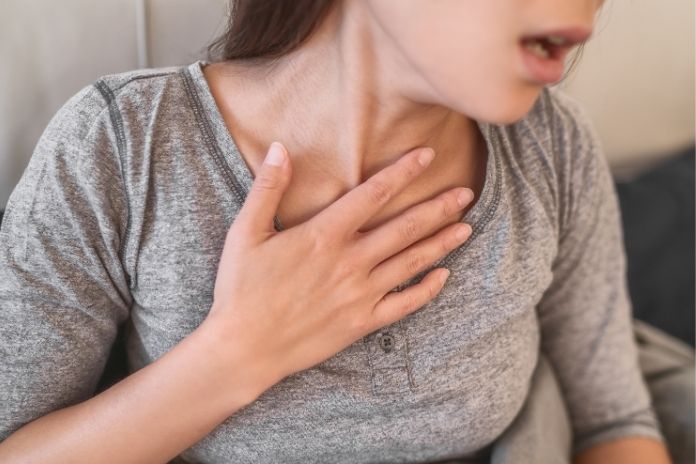
This is the clearest diagnostic signal. An anxiety attack typically arrives fast and peaks hard. The sense of dread and the physical symptoms escalate within minutes, hit a ceiling, and then begin to fade. Most anxiety and panic episodes resolve within 10 to 30 minutes, and they tend to leave patients feeling wrung out but physically settled.
Menopause symptoms vs panic attacks differ here in a meaningful way. Menopause-related menopause heart palpitations and vasomotor episodes tend to be more recurring and less architecturally dramatic. They often begin as a wave of warmth or chest tightness, build gradually, and can linger or cycle.
Menopause heart pounding at night is often tied to hot flashes and night sweats that interrupt sleep repeatedly, rather than producing a single acute event.
Accompanying Symptoms
An anxiety attack typically includes a psychological dimension: an intense sense of dread, fear that something catastrophic is happening, and sometimes a feeling of unreality. Physical symptoms like chest tightness, trembling, shortness of breath, and a racing heart are present, accompanied by cognitive alarm.
Menopause-related episodes are more likely to involve hot flashes and night sweats, flushing of the skin, fatigue, dizziness, and mood disturbance without the same sense of impending doom. The body is dysregulated; the mind is often relatively clear, if confused and frightened by the physical sensations.
Triggers and Timing
Perimenopause anxiety symptoms and panic attacks often have different provenance. Anxiety attacks are frequently tied to identifiable emotional stressors, social situations, or psychological triggers. They tend to arrive amid fear or tension.
Menopause symptoms vs panic attack diverge here, too. Menopause-related menopause heart palpitations and vasomotor episodes are more likely to be triggered by heat exposure, hormonal fluctuations at specific points in the menstrual cycle, sleep deprivation, or alcohol. Menopause heart pounding at night is particularly common in the early morning hours when estrogen levels naturally dip.
Read More: Ease Menopause Symptoms: 6 Cooling Gel Pads for Hot Flash Relief
How Hormones Affect Heart Rate During Menopause
Estrogen decline does not just affect reproduction. Estrogen receptors are distributed throughout the cardiovascular system, including in the sinoatrial node, the heart’s natural pacemaker. When estrogen is present at normal levels, it has a stabilizing effect on cardiac electrical activity. As estrogen decline progresses through perimenopause, that stabilizing influence erodes.
A systematic review published in PMC examining menopausal symptom treatments and palpitations found that palpitations are reported by 20 to 42 percent of perimenopausal women and 16 to 54 percent of postmenopausal women, and confirmed that estrogen decline plays a central mechanistic role in disrupting the heart’s electrical rhythm.
The interaction between estrogen and the autonomic nervous system is particularly relevant. Hormonal changes and anxiety are physiologically linked because estrogen modulates the balance between the sympathetic and parasympathetic nervous systems.
As levels fall, sympathetic activity, the branch responsible for the stress response, becomes more dominant. The result is that anxiety, heart palpitations, and menopause-related heart palpitations causes converge on the same physiological pathway, even when the precipitating factor is entirely different.
Cortisol compounds this further. Chronic stress raises cortisol, and elevated cortisol further suppresses estrogen production, creating a feedback loop where hormonal changes and anxiety each amplify the other. Hot flashes and night sweats also activate the sympathetic nervous system, which is why they reliably produce accompanying heart rate spikes.
Dr. Hadine Joffe, MD, MSc, Executive Director of the Mary Horrigan Connors Center for Women’s Health Research at Mass General Brigham, explains the overlap plainly: “Symptoms that occur in menopause can appear to be mental health symptoms. So it can be hard to tell if something you’re experiencing is related to menopause or to a mental health episode such as anxiety or depression.”
When Anxiety and Menopause Overlap
The relationship between perimenopause and anxiety is not just one of mimicry. Perimenopause anxiety symptoms can be genuinely caused and worsened by hormonal changes, not merely mistaken for them.
Estrogen decline reduces the availability of serotonin and GABA, two neurotransmitters with direct calming effects on the nervous system. When levels of these brain chemicals drop alongside estrogen, mood instability and anxiety vulnerability increase.
Women who had no prior anxiety history sometimes find themselves developing perimenopause anxiety symptoms for the first time in their 40s, which is disorienting precisely because they have no prior frame of reference.
A global burden of disease study published in PubMed analyzing anxiety disorders during perimenopause from 1990 to 2021 found that the age-standardized disability rate for anxiety disorders among perimenopausal women increased significantly over that period, with projections indicating a continued rise through 2035, attributing the trend largely to hormonal changes and anxiety as interacting biological mechanisms.
Sleep is the other major amplifier. Hot flashes and night sweats disrupt sleep architecture, and sleep deprivation is one of the most reliable triggers for both heightened anxiety and increased sensitivity to the stress response. The feedback loop is vicious: perimenopause disturbs sleep, sleep deprivation worsens anxiety, anxiety worsens menopause heart pounding at night, which disturbs sleep further.
Menopause heart palpitations that occur in this context are often not separable into clean categories of “anxiety” versus “menopause.” They are the product of both, running together through the same depleted nervous system.
Dr. Adele Viguera, MD, a psychiatrist at Cleveland Clinic, addresses the diagnostic challenge directly: “Panic disorders can be hard to identify because some symptoms, such as sweating and palpitations, mirror many of the common symptoms brought on by perimenopause and menopause. But just because a panic disorder isn’t easily diagnosed, that doesn’t mean it doesn’t exist or that you can’t treat it.”
How to Tell Which One You’re Experiencing
No symptom checklist replaces clinical evaluation, but there are signals worth paying attention to before you walk into a doctor’s office.
Age and menstrual pattern are the first context markers. If you’re in your late 30s to early 50s and noticing changes in cycle regularity, heavier or lighter periods, or new sleep disruption, perimenopause is a real possibility even if your doctor hasn’t raised it. Menopause heart palpitations in this demographic deserve hormonal evaluation, not just a referral to cardiology.
Pattern of episodes is a useful differentiator. Do your pounding-heart episodes arrive suddenly out of nowhere, peak quickly, and subside in under 30 minutes? That pattern is more consistent with anxiety and heart palpitations. Do they tend to accompany or follow hot flashes and night sweats, occur at predictable times in your cycle, or cluster around temperature exposure? That points more toward a vasomotor origin.
Trigger mapping helps here. Keep a log for two weeks. Note what was happening before each episode: emotional state, ambient temperature, sleep quality the night before, caffeine and alcohol intake, and where you were in your menstrual cycle. Patterns usually emerge. Stress response triggers suggest anxiety; hormonal and environmental triggers suggest menopause symptoms vs panic attack.
A study published in PMC examining palpitations in middle-aged women found that women with menopause heart palpitations showed lower heart rate variability and longer runs of atrial tachycardia, suggesting measurable cardiac changes distinct from typical anxiety-driven palpitations and warranting cardiovascular evaluation alongside hormonal assessment.
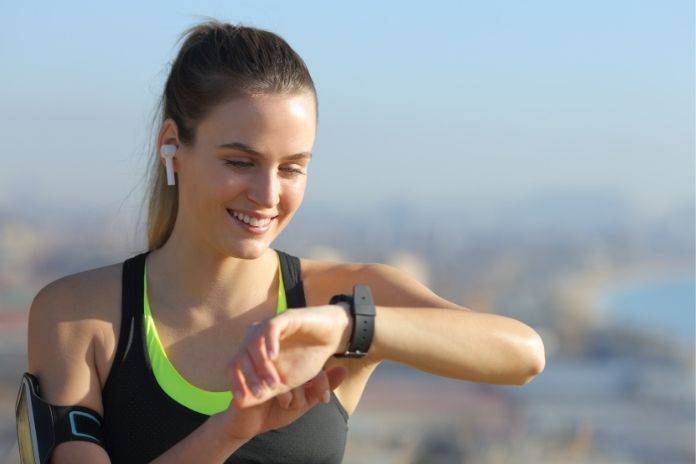
Health apps and wearables can assist with this tracking. A smartwatch that logs heart rate data alongside your manual symptom notes can reveal patterns invisible to memory alone.
What You Can Do to Manage Each Safely

If It’s Likely Anxiety
Anxiety and heart palpitations triggered by the stress response respond well to targeted interventions. Diaphragmatic breathing, the kind that activates the parasympathetic nervous system by extending the exhale, can interrupt a panic cycle within minutes. The 4-7-8 pattern (inhale 4 counts, hold 7, exhale 8) has some evidence supporting its use for acute anxiety management.
Grounding techniques, the practice of actively engaging the senses to anchor attention to the present, are effective for episodes with a strong cognitive component, the sense-of-doom variety of anxiety, and heart palpitations.
Reducing caffeine is worth doing regardless of which category you’re in, but it matters especially for anxiety-driven heart palpitations. Caffeine elevates cortisol and sensitizes the adrenergic system, the exact mechanism behind a stress-response spiral.
Cognitive-behavioral therapy (CBT) remains the gold standard psychological treatment for panic disorder and perimenopausal anxiety symptoms. Its effects are durable and often superior to medication for long-term outcomes.
If It’s Related to Menopause
Menopause heart palpitations with a clear vasomotor pattern respond to a different toolkit.
Keeping cool, particularly at night, directly reduces the frequency of hot flashes and night sweats that trigger cardiac symptoms. Layered bedding, a cooler bedroom, cooling pillows, and breathable fabrics are not cosmetic adjustments. They are clinical interventions for vasomotor instability.
Sleep hygiene improvements, a consistent sleep schedule, no screens in the hour before bed, and a room temperature below 68 degrees can reduce the nocturnal stress response, turning menopause heart pounding at night into a nightly event.
Hormone therapy, when appropriate and not contraindicated, addresses the root mechanism of vasomotor menopause symptoms vs panic attacks. It reduces estrogen decline-driven cardiac instability, improves sleep, and can simultaneously reduce perimenopause anxiety symptoms by restoring serotonin and GABA modulation. This is a conversation to have with your healthcare provider based on your full medical history.
Read More: Sleep Problems After Menopause: Why They Happen and How to Fix Them
Red Flags: When to Seek Immediate Medical Care
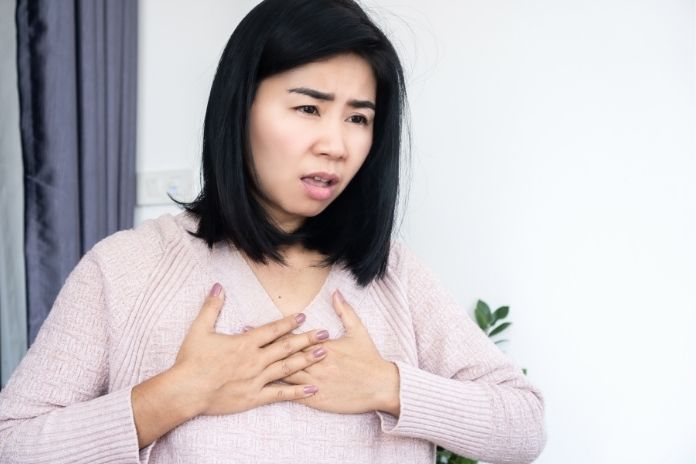
Neither anxiety attack nor menopause is the right framework when certain symptoms are present. Some cardiac events share features with both conditions, and the cost of missing them is too high.
Seek immediate care if you experience chest tightness accompanied by pressure, pain radiating to your arm, jaw, or back, nausea, or cold sweating that does not resolve quickly. Severe shortness of breath that continues at rest is another emergency signal. Episodes that are lasting longer than your previous pattern or changing in character warrant same-day evaluation, not watchful waiting.
When to seek medical help also applies to patterns, not just acute events. If you are experiencing menopause, heart palpitations, or anxiety heart palpitations frequently enough to affect your quality of life, disrupting sleep, limiting activity, or causing ongoing dread, that frequency itself is a clinical problem regardless of the underlying cause.
Thyroid dysfunction, anemia, and arrhythmias can all produce palpitation patterns that mimic both perimenopause and anxiety. Rule these out before settling on either diagnosis.
Takeaway
Your heart’s signal deserves to be taken seriously, and the question of anxiety attack vs menopause deserves a real answer, not a dismissal. The overlap between menopause, heart palpitations, and anxiety is real and physiologically grounded. Both draw from the same hormonal and autonomic pathways.
Both are treatable. And both are frequently misidentified when women present to emergency rooms or general practitioners who haven’t been trained to see perimenopause as a whole-body neurological event.
Track your patterns. Note your triggers. Bring your log to your appointment. Ask specifically about hormonal changes and anxiety, and whether hormonal evaluation is appropriate for your age and symptoms. If you’re getting menopause heart pounding at night alongside other perimenopause anxiety symptoms, that combination deserves a thorough workup, not reassurance and a prescription for benzodiazepines.
And if any episode includes chest tightness with pressure, radiation to the arm or jaw, or severe shortness of breath that doesn’t resolve, stop reading and get evaluated. Rule out cardiac causes first, always. The framework of anxiety attack vs menopause only becomes useful once the dangerous possibilities are off the table.
References
- Bromberger, J. T., Kravitz, H. M., Chang, Y., Randolph, J. F., Avis, N. E., & Gold, E. B. (2013). Does risk for anxiety increase during the menopausal transition? Study of Women’s Health Across the Nation. Menopause, 20(5), 488-495.
- Carpenter, J. S., et al. (2025). Palpitations in midlife women: The Menopause Racing Heart Pilot Study. Menopause, 32(7), 571-582.
- Joffe, H. (2023). Menopause and mental health. Mass General Brigham.
- Kaszubowska, M., et al. (2022). Effect of menopausal symptom treatment options on palpitations: A systematic review. PMC.
- Li, X., et al. (2025). Global, regional, and national burden of anxiety disorders during the perimenopause (1990-2021) and projections to 2035. BMC Women’s Health.
- Schnatz, P. F., et al. (2022). Menopause and women’s cardiovascular health: Is it really an obvious relationship? PMC.
- Viguera, C. (2025). Is menopause causing your mood swings, depression, or anxiety?
- Johns Hopkins Medicine. (n.d.). Perimenopause and anxiety.
- Paras Hospitals. (n.d.). Connection between menopause and anxiety.
- National Center for Biotechnology Information. (1999). Menopause and anxiety: A review of the literature. PMC
- Maki, P. M., Kornstein, S. G., Joffe, H., et al. (2019). Menopause and mental health: Understanding the link. Journal of Affective Disorders, Abstract. Maki, P. M., Kornstein, S. G., Joffe, H., et al. (2019). Menopause and mental health: Understanding the link. Journal of Affective Disorders, Abstract.
- Let’s Talk Menopause. (n.d.). Menopause and mental health resources.
- Her Stasis. (n.d.). Menopause anxiety: What to know.
- GoodRx. (n.d.). Anxiety during menopause.
- OnStella. (n.d.). Menopause and panic attacks.
In this Article