


















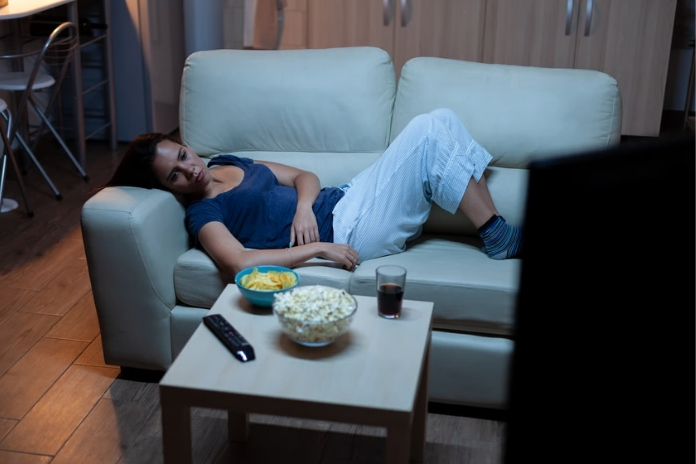
Sleeping with the TV on is a surprisingly deliberate habit for many people. It’s not just something people forget to turn off; it often serves a purpose. The steady background noise softens silence, interrupts racing thoughts, and makes it easier to drift into sleep. That’s why the question “Is sleeping with the TV on bad?” isn’t as straightforward as it seems.
Research does point to several cons, including poorer sleep quality, shorter sleep duration, and even long-term metabolic effects. At the same time, it also explains why the habit is so persistent. The real story lies in the interaction between light, sound, and brain activity and why replacing the TV can be harder than simply switching it off.
- Sleeping with the TV on is consistently linked to poorer sleep quality, shorter sleep duration, and more irregular sleep patterns.
- The disruption is driven by light, continuous sound, and engaging content, which keep the brain partially active and reduce deep sleep.
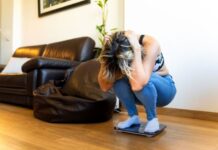
- Nighttime TV exposure is also associated with long-term metabolic effects like weight gain, even beyond differences in sleep duration.
Read More: Is It a Sleep Slump or Clinical Insomnia? Understanding the 3-3-3 Rule for Diagnosis
What the Research Shows
Large-scale studies give a clear directional answer, even if they don’t prove cause in every individual. A 2025 analysis published in JAMA Network Open followed over 120,000 adults and found that people who regularly used screens at bedtime were significantly more likely to report poor sleep quality.
On average, they also slept less across the week, losing small amounts of sleep each night that accumulated over time. A separate study found that sleeping with the TV on was linked to both shorter sleep and more irregular sleep schedules.
People in this group were more likely to get less than the recommended seven hours and less likely to maintain a consistent sleep–wake rhythm. A study in JAMA Internal Medicine tracking over 40,000 women reported that sleeping with a TV or light on was associated with a higher risk of significant weight gain over five years.
Importantly, this relationship persisted even after accounting for how long participants slept, suggesting that sleep quality and circadian disruption play a role beyond simple sleep duration. Taken together, these findings don’t suggest that a TV automatically ruins sleep for everyone. But they do show a consistent pattern: people who sleep with background light and media tend to sleep less well, less consistently.
The Three Mechanisms — Light, Sound, and Content
How Each Pathway Disrupts Sleep Differently
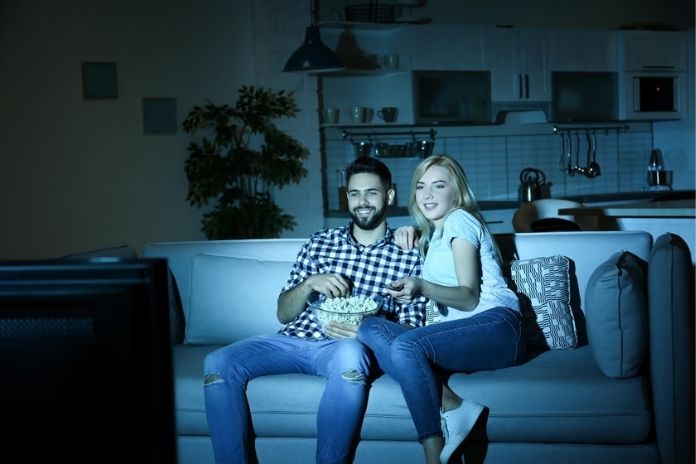
The effects of sleeping with the TV on are not driven by a single factor. Instead, they come from three overlapping mechanisms that influence the brain in different ways. The first is light. Artificial light at night interferes with melatonin, the hormone that signals the body to prepare for sleep.
This process begins in the retina, where specialized cells respond to light and communicate with the brain’s circadian clock. However, the strength of this effect depends heavily on distance. A television placed across the room produces far less retinal exposure than a phone held close to the face.
This difference matters because it explains why TV is often believed to be less disruptive than other screens. The light effect is real, but in the case of TV, it is moderated by how far away the screen is.
The second mechanism is content, and it is often underestimated. The brain does not passively receive what it watches. Engaging or emotionally charged content activates alertness networks, increases cognitive arousal, and delays the transition into deeper stages of sleep.
A suspenseful crime series or late-night news broadcast can keep the brain in a semi-alert state long after the screen is turned off. In contrast, slower and more predictable programming tends to have a much smaller effect. This makes content one of the most practical and modifiable factors in how TV affects sleep.
The third mechanism is sound, and it is arguably the most important when the TV remains on throughout the night. Even during sleep, the brain continues to process auditory input, especially speech and changing sounds.
Dialogue, music shifts, and fluctuations in volume create small interruptions known as micro-arousals. These do not always wake a person fully, but they impact sleep architecture and reduce time spent in deep, restorative slow-wave sleep.
Unlike light, this effect does not reduce with distance. A quiet television across the room can still be enough to prevent the brain from fully disengaging. Together, these three pathways explain why sleeping with the TV on is different from simply watching TV before bed.
Read More: Sleeping With the TV On: Why It May Be Hurting Your Health (And What to Do Instead)
TV vs. Other Screens — Why TV Is the Least Problematic Screen Choice
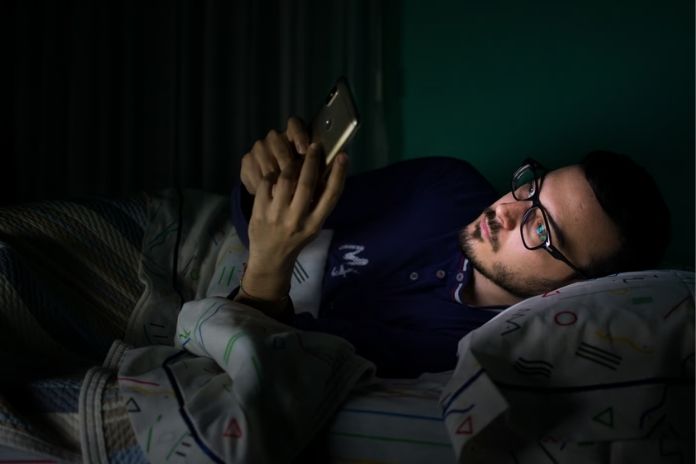
One of the most common oversimplifications in sleep advice is treating all screens as equally disruptive. In reality, the evidence suggests otherwise. The key difference lies in proximity. Devices like smartphones and tablets are used very close to the face, delivering a concentrated dose of light directly to the retina.
Televisions, by contrast, are usually viewed from several meters away, which significantly reduces their biological impact on melatonin. This doesn’t make TV harmless, but it does place it lower on the spectrum of concern.
The primary issues with TV are not just about light exposure but about the combination of content, sound, and the tendency to leave it on for extended periods. That’s why many people feel that TV affects their sleep less than their phone, and in terms of light exposure, they are often correct.
The Weight Gain Connection — The Mechanism Behind the Headline

The link between sleeping with a TV on and weight gain often seems surprising at first glance. However, it becomes more intuitive when viewed through the lens of circadian biology. Light exposure at night disrupts the internal clock that regulates hormonal rhythms, including those that control hunger and satiety.
When circadian signaling is disrupted, levels of leptin, the hormone that signals fullness, tend to decrease, while ghrelin, the hormone that stimulates hunger, increases. This creates a physiological environment that encourages higher food intake, even if a person is not consciously aware of eating more.
At the same time, poor sleep quality reduces insulin sensitivity, which further affects how the body processes energy. There is also a behavioral layer to consider. People who fall asleep with the TV on are more likely to extend their waking hours, snack late into the evening, and accumulate more sedentary time.
Over months and years, these small patterns can compound into measurable weight changes. The association observed in long-term studies is therefore not a coincidence, but the result of interacting biological and behavioral mechanisms.
Why People Do It — and Why “Just Turn It Off” Rarely Works
For many individuals, sleeping with the TV on serves a psychological function that is often overlooked. In a quiet environment, the brain’s default mode network becomes more active. This network is responsible for introspection, memory processing, and, in many cases, worry and rumination.
For people prone to anxiety or racing thoughts, silence can amplify mental activity rather than calm it. Television provides a form of controlled distraction. It introduces just enough external input to interrupt repetitive thought patterns without requiring active engagement. This is why removing the TV can initially make it harder to fall asleep.
The mind, no longer occupied, fills the gap with internal noise. Understanding this dynamic shifts the goal. The aim is not simply to eliminate stimulation but to replace it with something that provides the same mental buffering effect without the downsides of light and engaging content.
What to Do — Practical Steps That Don’t Require Going Cold Turkey
The Progression From TV to Better Alternatives
Changing this habit is most effective when it happens gradually rather than abruptly. For many people, the first useful tip is using a sleep timer so that the television turns off after they have fallen asleep. This helps you sleep while reducing exposure during the deeper stages of the night.
From there, reducing both volume and brightness can significantly lower the level of stimulation the brain is exposed to. Even small adjustments in these settings can make the transition into sleep smoother and reduce disruptions later in the night.
Content choice also plays a critical role. Moving toward calmer, more predictable shows helps reduce cognitive arousal before sleep. Over time, this can make it easier to fall asleep with less reliance on the TV.
A significant shift involves shifting to audio-only alternatives such as white noise, nature soundscapes, or low-volume spoken content like podcasts or audiobooks. These options preserve the mental distraction that helps with sleep onset while removing the visual component and reducing narrative engagement.
Finally, separating the bedroom from prolonged screen exposure strengthens the brain’s association between bed and sleep. This principle, central to cognitive behavioral therapy for insomnia, helps reinforce more stable and consistent sleep patterns over time.
Read More: Hypnic Jerks: Why Your Body Jolts as You Fall Asleep (And When to Worry)
Conclusion
Sleeping with the TV on is not a harmless habit, but it is also not as simple as a bad behavior that needs to be eliminated immediately. The research shows consistent associations with poorer sleep, disrupted circadian rhythms, and long-term health effects such as weight gain. At the same time, the psychological role it plays, especially in managing nighttime overthinking, is real and significant.
A more effective approach lies in gradual change: limiting all-night exposure, lowering stimulation, and transitioning toward audio-based alternatives. This allows you to keep the part of the habit that helps you fall asleep while reducing the factors that interfere with the quality of sleep that follows.
References
- Zhong, C., Masters, M., Donzella, B., et al. (2025). Bedtime screen use and sleep outcomes in adults. JAMA Network Open.
- National Institutes of Health. (n.d.). Sleeping with artificial light at night associated with weight gain in women.
- National Institute of Neurological Disorders and Stroke. (n.d.). Brain basics: Understanding sleep.
- Exelmans, L., & Van den Bulck, J. (2015). Associations of overall sedentary time and screen time with sleep outcomes. Sleep Medicine Reviews.
- Cespedes Feliciano, E. M., et al. (2015). Association of artificial light at night with weight gain. JAMA Internal Medicine.
- Choi, K., et al. (2022). Effects of screen exposure on sleep and circadian rhythms. International Journal of Environmental Research and Public Health.
- He, M., et al. (2022). Screen time and sleep disturbances: A systematic review. Frontiers in Public Health.
- MDPI. (2024). Screen exposure and sleep health outcomes. Sleep Science and Practice, 5(2), 48.
In this Article