

















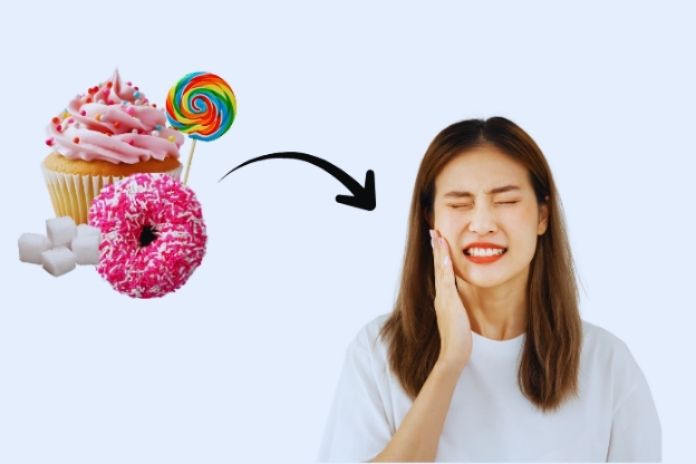
Most people know that sugar and cavities go together, but the real story is more interesting than you’d think. Sugar doesn’t directly eat through your teeth. What it actually does is feed oral bacteria, particularly Streptococcus mutans (the primary acid-producing bacteria in your mouth), which then release acids that trigger enamel erosion and demineralization (the loss of minerals from tooth enamel).
Understanding exactly how sugar causes tooth decay and why plaque and tooth decay connect the way they do changes how you think about every sip of juice, every handful of gummies, and every skipped brushing session.
Here’s what surprises most people: it’s not how much sugar you eat in a day that drives the most damage. It’s how often you expose your teeth to it. A single dessert after dinner gives your mouth time to recover. Sipping a sweetened coffee over three hours does not.
That gap between what people assume and what the research actually shows is exactly what this article addresses. You’ll get the full mechanism, the risk factors, the foods to watch, and a clear picture of when damage can be managed and when it can’t.
- Sugar doesn’t directly damage teeth; it fuels oral bacteria that produce enamel-dissolving acids, and repeated acid exposure over time causes cavities.
- Streptococcus mutans, the primary cavity-causing bacterium, metabolizes dietary sugars and produces lactic acid that lowers oral pH below the critical threshold of 5.5, triggering enamel demineralization.
- Brush twice daily with a fluoride toothpaste, limit between-meal sugar exposure, and see your dentist regularly; these three habits address all three stages of tooth decay.
- Frequency of sugar exposure matters as much as quantity. Sipping a sugary drink slowly over two hours causes more acid damage than drinking it in ten minutes.
How Sugar Causes Tooth Decay: The Step-by-Step Process
The role of bacteria in the mouth
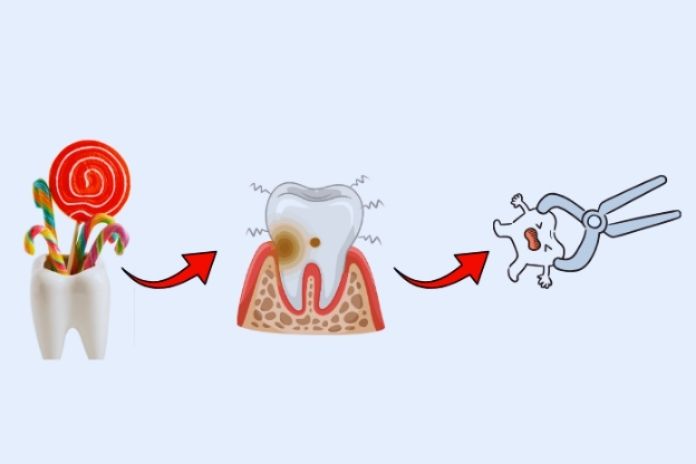
Your mouth naturally hosts hundreds of bacterial species. Most are harmless. But a handful, especially Streptococcus mutans (S. mutans), a gram-positive bacterium that colonizes tooth surfaces, actively contributes to decay.
These bacteria organize themselves into dental plaque (a sticky biofilm) that adheres to enamel surfaces, particularly in grooves, between teeth, and along the gumline. Research confirms that S. mutans produces lactic acid as a byproduct of fermenting dietary carbohydrates, and this acid is the direct agent of enamel damage.
Think of plaque biofilm as a thin, invisible blanket that traps acid against your tooth surface. Without regular brushing and flossing to physically disrupt it, that blanket stays in place — and the acid underneath keeps working.
What happens after you eat sugar
Within minutes of consuming sugar or refined starch, bacteria in your plaque biofilm begin fermenting it. The result is a rapid drop in oral pH (the measure of acidity in your mouth). Normal resting oral pH sits around 6.7–7.0, but after a sugary exposure it can fall below 5.5 within two to five minutes.
Below pH 5.5, the critical threshold known as the “critical pH,” enamel begins to dissolve. This is called an acid attack, and it lasts approximately 20–40 minutes after each sugar exposure before saliva can buffer it back to a safe level.
How acid weakens tooth enamel
Dental enamel is the hardest substance in the human body, but it is not impervious to acid. Each acid attack pulls calcium and phosphate ions out of the enamel’s crystalline structure, a process called demineralization (mineral loss from tooth enamel).
In the early stages, this damage is microscopic and invisible. But repeated demineralization without adequate remineralization (mineral replacement, driven primarily by fluoride and saliva) leads to progressive structural weakening and eventually to visible cavity formation.
Why Sugar Is So Harmful to Teeth: Frequency, Type, and Contact Time
Types of sugars linked to tooth decay
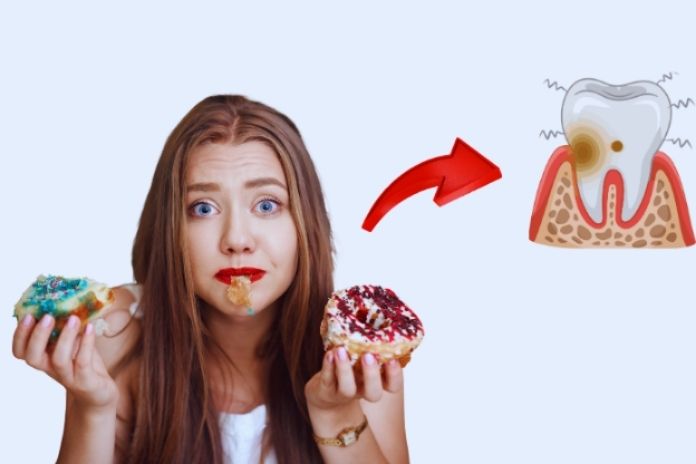
Added sugars such as sucrose, glucose, and fructose are the primary fuel for S. mutans. But starches matter too. Fermentable carbohydrates in white bread, crackers, and chips can lower oral pH in the same way refined sugar does.
Sticky sweets like caramel and gummies are particularly problematic because they physically adhere to enamel surfaces, extending the duration of sugar contact beyond what liquids or quickly dissolved foods create. And sugary drinks combine sugar with their own acidity, delivering a dual assault on enamel.
Why frequent sugar exposure matters more than quantity alone
This is the part most articles miss. Each sugar exposure triggers a 20–40 minute acid attack. Three sugar exposures spread across a day produce three discrete acid attacks, giving enamel time to remineralize between them.
But snacking every hour, even on small amounts, chains those acid attacks together, leaving enamel in a near-constant state of demineralization. Sipping habits are a key culprit: a sweetened coffee consumed over two hours produces effectively continuous acid exposure for that entire period.
Why sugary drinks can be especially damaging
Sodas, energy drinks, and fruit juices combine two problems: high sugar content and intrinsic acidity. Carbonated soft drinks have a pH as low as 2.3–2.5, far below the enamel dissolution threshold of 5.5.
When you sip these drinks slowly, you extend both the sugar exposure and the direct acid contact time. Even sugar-free carbonated drinks can carry a risk of enamel erosion because of their low pH. This highlights an important distinction between cavity formation, which requires fermentable sugar, and acid erosion, which is caused by the direct chemical dissolution of enamel by dietary acids and does not require sugar.
How Cavities Form Over Time: From White Spots to Tooth Loss
Early signs of enamel damage
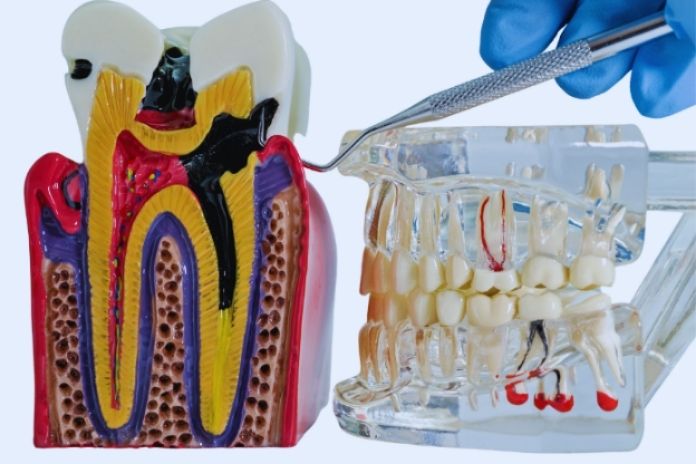
The first visible sign of enamel demineralization is a chalky white or opaque spot on the tooth surface called a “white spot lesion.” You’re also likely to notice increased sensitivity to cold drinks or sweet foods at this stage, as exposed dentin (the softer layer beneath enamel) begins to transmit sensations more readily. White spot lesions represent the earliest reversible stage of dental caries (the clinical term for tooth decay), but only if the underlying demineralization process is halted and reversed before cavitation occurs.
What happens when decay progresses deeper
Once acid damage breaches through enamel and reaches dentin, the decay process accelerates. Dentin is softer and less mineralized than enamel, meaning it erodes faster under continued acid attack.
Pain and sensitivity become more pronounced. If decay reaches the dental pulp (the innermost layer of the tooth containing nerves and blood vessels), infection risk increases sharply, and treatment escalates from a simple filling to root canal therapy or extraction.
Risks of untreated tooth decay
Untreated dental caries don’t stabilize on their own. Left without treatment, decay progresses into deeper tooth structures, creates pathways for oral bacteria to reach the pulp, and can develop into a dental abscess (a pus-filled bacterial infection at the root of the tooth).
The WHO identifies dental caries as the most prevalent non-communicable disease globally, affecting approximately 2.5 billion people with untreated cavities in permanent teeth. Severe cases can lead to tooth loss and systemic infection with significant impacts on nutrition, speech, and quality of life.
Factors That Can Increase the Risk of Tooth Decay
Poor oral hygiene habits
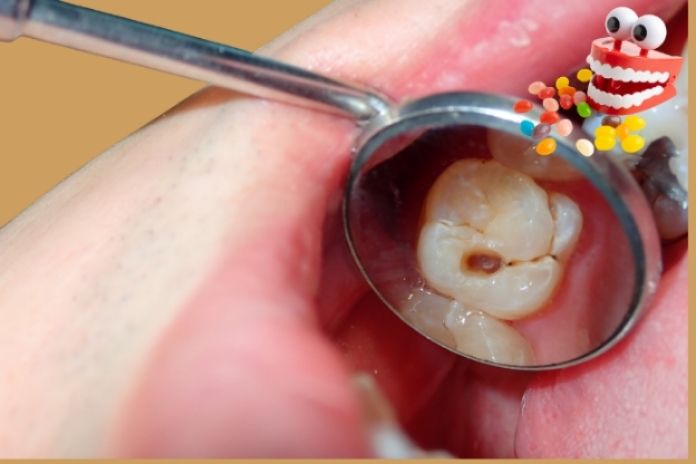
Infrequent brushing and flossing allow plaque biofilm to mature undisturbed on tooth surfaces. Studies consistently show that brushing twice daily with fluoride toothpaste significantly reduces caries incidence across all age groups.
Flossing removes plaque from interproximal spaces (the areas between teeth) where brushes can’t reach, a critical step given that interproximal surfaces are among the most common sites for new cavity formation.
Dry mouth and reduced saliva production
Saliva is your mouth’s built-in defense system. It buffers oral pH after acid attacks, delivers calcium and phosphate to support remineralization, and physically washes away food debris and bacteria.
Xerostomia (chronic dry mouth) significantly elevates caries risk by reducing the neutralizing and remineralizing capacity of saliva. Common causes include certain medications (antihistamines, antidepressants, and blood pressure drugs), dehydration, and medical conditions, including Sjögren’s syndrome.
As Dr. Nigel Pitts, Professor of Dental Caries and Director of Innovation at King’s College London Dental Institute, notes in his research on caries prevention, “Dental caries is a dynamic process; the balance between demineralization and remineralization determines whether early lesions progress or are arrested. Saliva is central to maintaining that balance, and anything that disrupts salivary flow tips the scales toward disease.”
Diet patterns that contribute to cavities
Frequent snacking keeps oral pH depressed throughout the day. Acidic beverages add direct erosive damage on top of the bacterial acid cycle. Highly processed foods, white bread, chips, and sweetened cereals break down rapidly into fermentable sugars in the mouth, feeding S. mutans just as effectively as a candy bar does. The overall dietary pattern matters as much as any individual food choice.
Why children may be especially vulnerable
Children face a compounding set of risk factors. Developing brushing habits takes years of parental guidance and reinforcement. Primary (baby) teeth have thinner enamel than permanent teeth, making them more susceptible to rapid decay once the acid cycle begins.
Frequent sugary snacks and sweetened drinks, juice boxes, flavored milk, and fruit pouches, are dietary staples for many children, creating sustained sugar exposure throughout the day. And bedtime bottles or sippy cups with juice or milk left in contact with teeth overnight create a prolonged acid environment while salivary flow naturally decreases during sleep.
Foods and Drinks Most Commonly Linked to Cavities: Risk Table
Not all sugary foods cause equal damage. Contact time, stickiness, acidity, and sugar concentration all influence cavity risk. Here’s a practical breakdown.
Dental Health Guide
Foods and Drinks Most Commonly Linked to Cavities
| Food / Drink | Sugar Level | Cavity Risk | Why It’s Problematic |
|---|---|---|---|
| Soda (12 fl oz) | ~39g | Very High | Acid + sugar combo; prolonged contact |
| Gummy candy | ~45g per bag | Very High | Sticks to enamel; slow sugar release |
| Energy drinks | ~27–34g | Very High | Highly acidic pH + high sugar |
| Fruit juice (8 fl oz) | ~24g | High | Natural sugar; still triggers acid cycle |
| Flavored yogurt | ~17–26g | High | Hidden added sugar; perceived as healthy |
| Sports drinks | ~21g | High | Acidic + sugary; sipped repeatedly |
| Sweetened coffee | ~15–20g | Moderate–High | Sipped slowly = extended acid exposure |
| Breakfast cereals | ~10–18g | Moderate | Often refined starch + added sugar |
| Hard candy | ~11g per piece | Moderate | Dissolves slowly; prolonged sugar bath |
| Dried fruit | ~25–30g | Moderate | Concentrated sugar; sticks to teeth |
As Dr. Amid Ismail, Dean of Temple University’s Kornberg School of Dentistry and a leading dental caries researcher, explains in his work on caries prevention strategies, “The cariogenic (cavity-causing) potential of a food is not simply about its sugar content; it’s about how long it stays in contact with tooth surfaces and how effectively oral hygiene removes it afterward. A sticky sweet consumed at mealtime with adequate saliva flow and followed by brushing is far less damaging than the same sweet consumed repeatedly between meals.”
How to Protect Your Teeth From Sugar Damage and Prevent Tooth Decay

Consistent daily habits address all three stages of the acid attack cycle: reducing bacterial fuel, strengthening enamel, and enabling remineralization.
- Brush twice daily with fluoride toothpaste: Use a soft-bristled brush for two full minutes, covering all surfaces.Fluoride strengthens enamel by incorporating into the mineral structure as fluorapatite, which is more acid-resistant than the natural hydroxyapatite. Don’t rinse with water immediately after brushing; instead, just spit and leave the residue to maximize fluoride contact time.
- Floss daily: Interproximal cavities (between teeth) are among the most common and most preventable. Floss once per day, before your evening brush, to remove plaque from surfaces that a toothbrush can’t reach.
- Limit between-meal sugar exposures: Consolidate sweet foods and drinks with mealtimes wherever possible. Your mouth gets one acid attack per meal rather than one per snack. This is the single most impactful behavioral change for reducing cavity risk.
- Drink water after sugary foods: Water rinses residual sugars from tooth surfaces, dilutes oral acids, and stimulates saliva production. Fluoridated tap water adds a low-dose remineralization benefit with every sip.
- Chew sugar-free gum after meals: Xylitol-containing sugar-free gum stimulates saliva flow and has demonstrated modest caries-reduction benefits in clinical studies. It is particularly useful after meals when brushing isn’t immediately possible.
- Schedule dental check-ups every six months: Professional cleanings remove calcified plaque (tartar) that brushing alone cannot address. Early cavity detection at the white-spot-lesion stage allows for non-invasive fluoride treatment that is far simpler and less costly than a filling.
As Dr. Ismail summarizes, prevention is always more effective and less costly than treatment, once cavities form.
Can Early Tooth Decay Be Reversed?
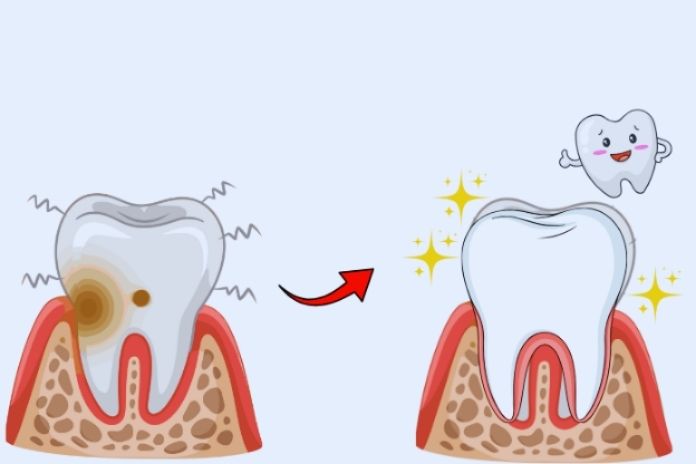
When enamel damage may still be reversible
Early-stage demineralization, visible as white spot lesions, represents a window during which the decay process can be arrested. Fluoride application through toothpaste, professional fluoride varnish, or fluoridated water can remineralize early lesions by driving calcium and phosphate back into the enamel.
This process doesn’t restore perfectly uniform enamel, but it hardens the surface and stops active decay progression. The critical condition: no cavitation (physical hole) has formed yet. Once the surface breaks, remineralization alone cannot restore structural integrity.
When a cavity requires dental treatment
Once decay progresses through enamel into dentin and creates a cavity, mechanical treatment is required. Composite resin or amalgam fillings address early to moderate cavities by removing decayed tissue and sealing the tooth.
Deeper decay reaching near or into the pulp may require a dental crown (a cap covering the entire visible tooth surface). Pulp involvement typically necessitates root canal treatment (removal of infected pulp tissue, cleaning, and sealing of the root canals).
Early intervention produces better clinical outcomes and reduces the requirement for complicated treatment modalities than delayed care.
Why delaying treatment can worsen damage
Dental caries doesn’t pause. Once the bacterial-acid cycle is established in a cavity, decay progresses into deeper tooth structures at an accelerating rate. What begins as a small filling becomes a crown.
A crown that’s delayed becomes a root canal. A root canal deferred becomes an extraction. Each step up the treatment ladder involves more cost, more complexity, and more irreversible tooth structure loss. The clinical and economic case for early treatment is unambiguous.
Read More: Dental Implants vs. Dentures: A Comprehensive Guide to Replacing Missing Teeth
Common Myths About Sugar and Tooth Decay
Only candy causes cavities
It’s completely understandable to focus on candy as the obvious sugar source, but the science is broader than that. Starches from white bread, crackers, and chips ferment into simple sugars in the mouth and feed the same acid-producing bacteria.
Fruit juice delivers concentrated sugar with none of the fiber that slows sugar absorption in whole fruit. Sports drinks, sweetened coffee, and flavored yogurts are among the most overlooked sources of cavity-driving sugar in the modern diet.
Research confirms that fermentable carbohydrates from starchy foods contribute to caries risk independently of added sugar consumption.
Brushing immediately after sweets fixes the problem
The instinct to brush right after eating something acidic or sweet makes sense, but timing matters. After consuming acidic foods or drinks, enamel is temporarily softened. Brushing within 30–60 minutes of an acidic exposure can physically abrade softened enamel before saliva has had time to re-harden it.
The better approach: rinse with water immediately, wait 30–60 minutes, then brush. For non-acidic sugary foods without significant dietary acid, brushing promptly is fine and beneficial.
Natural sugars are always safe for teeth
Honey, dried fruit, and 100% fruit juice all contain naturally occurring sugars, but S. mutans does not distinguish between natural and added sugars. Fructose and sucrose from these sources fuel the same acid-production cycle as sugar from a candy bar.
Dried fruit is particularly problematic because it concentrates sugar and sticks to tooth surfaces in the same way gummy candy does. Natural origin does not neutralize cavity-causing potential.
Read More: How to Whiten Sensitive Teeth Without Pain (Dentist-Approved Methods)
When to See a Dentist Regarding Tooth Decay

Symptoms that may signal tooth decay
Don’t wait for pain to book an appointment; by the time a cavity hurts, it’s already progressed well beyond the earliest treatable stage.
Watch for sensitivity to sweet foods or cold drinks; a dull ache when biting; visible white, brown, or dark spots on tooth surfaces; or food consistently getting caught in the same spot between teeth. Any of these warrants a dental assessment sooner rather than later.
Signs of more advanced dental problems
Escalating symptoms require urgent dental attention. A persistent toothache, swelling of the jaw or gum, pus or a bad taste near a tooth, or fever alongside dental pain are all signs of a potential dental abscess, a bacterial infection that can spread to surrounding tissues and, in rare cases, become systemically dangerous. A dental abscess is not a condition to manage with over-the-counter pain relief and delay.
Read More: Plaque vs Tartar: What’s the Difference and How to Get Rid of Both
Final Word
You started this article knowing sugar was bad for teeth. You’re leaving with something more useful: the actual mechanism, the factors that amplify it, and the specific habits that interrupt it at every stage.
The science is unambiguous. Sugar feeds bacteria. Bacteria produce acid. Acid dissolves enamel. Repeated exposure without adequate fluoride protection and oral hygiene allows that process to progress from invisible mineral loss to irreversible structural damage.
None of that means you can’t eat sugar. It means understanding when, how often, and what happens after matters as much as what you’re eating. Knowing the mechanism is the first step to managing it.
- Sugar causes tooth decay by feeding oral bacteria that produce enamel-dissolving acids; the damage progresses gradually. With every acid attack, your enamel wears off without adequate time for recovery.
- The frequency of sugar exposure, poor oral hygiene, and lack of fluoride protection all amplify cavity risk. A single sugary meal is far less damaging than repeated small sugar exposures throughout the day
- Brush twice daily with fluoride toothpaste, reduce between-meal snacking on sugary foods, drink water after sweet foods, and schedule a dental check-up every six months for early cavity detection.
FAQs
1. How does sugar cause tooth decay exactly? I thought it just stuck to the teeth.
Sugar fuels oral bacteria, particularly S. mutans, which produce lactic acid as they metabolize it. Acids drop the oral pH below 5.5, triggering enamel demineralization. Repeated acid attacks gradually weaken the enamel structure, eventually forming cavities. Sugar itself doesn’t dissolve enamel; the acid does.
2. Does how often I eat sugar matter more than how much I eat?
Yes, frequency drives more damage than total quantity. Each sugar exposure triggers a 20–40 minute acid attack. Three discrete exposures allow enamel recovery time between attacks; continuous sipping or snacking chains attacks together without recovery. Consolidating sweet foods to mealtimes significantly reduces overall acid exposure time for me.
3. Can tooth decay from sugar be reversed without a dentist?
Early-stage enamel demineralization (white spot lesions without cavitation) can be arrested and partially reversed with consistent fluoride toothpaste use and improved oral hygiene. Once a visible cavity forms, professional dental treatment is required, as no home remedy can restore structural enamel integrity. Early dental visits prevent escalation.
4. Are natural sugars like honey or fruit juice safer for teeth than regular sugar?
No, S. mutans ferments fructose and sucrose from natural sources just as efficiently as added sugar. Honey is particularly sticky, extending enamel contact time. Fruit juice delivers concentrated sugar with none of the fiber that slows fermentation in whole fruit. Natural origin does not reduce cavity risk.
5. What foods cause cavities most besides the obvious candy?
Sugary drinks (soda, energy drinks, sports drinks) rank highest due to acidity plus high sugar. Gummies and dried fruit cause damage through stickiness and prolonged contact. Starchy processed foods like white bread and crackers also ferment into cavity-driving acids. Flavored yogurt and breakfast cereals are often underestimated sugar sources.
References
- Pitts, N. B., Zero, D. T., Marsh, P. D., Ekstrand, K., Weintraub, J. A., Ramos-Gomez, F., Tagami, J., Twetman, S., Tsakos, G., & Ismail, A. (2017). Dental caries. Nature Reviews Disease Primers
- Takahashi, N., & Nyvad, B. (2011). The role of bacteria in the caries process. Journal of Dental Research
- Sheiham, A., & James, W. P. T. (2015). Diet and dental caries: The pivotal role of free sugars reemphasized. Journal of Dental Research
- Moynihan, P., & Petersen, P. E. (2004). Diet, nutrition and the prevention of dental diseases. Public Health Nutrition
- Zero, D. T. (1996). Etiology of dental erosion: Extrinsic factors. European Journal of Oral Sciences
- Kassebaum, N. J., Smith, A. G. C., Bernabé, E., Fleming, T. D., Reynolds, A. E., Vos, T., & Murray, C. J. L. (2017). Global, regional, and national prevalence, incidence, and disability-adjusted life years for oral conditions for 195 countries. Journal of Dental Research
- World Health Organization. (2023). Oral health fact sheet
- Walsh, T., Worthington, H. V., Glenny, A. M., Marinho, V. C., & Jeroncic, A. (2019). Fluoride toothpastes of different concentrations for preventing dental caries. Cochrane Database of Systematic Reviews
- NHS. (2023). Tooth decay. National Health Service.
In this Article