











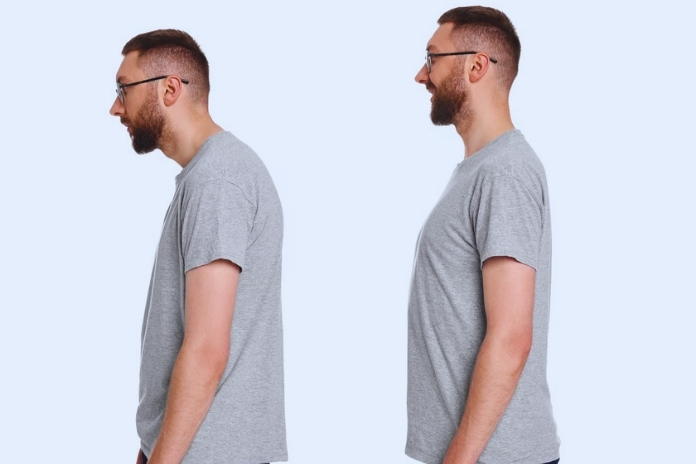
The benefits of good posture go far beyond looking more upright. Good posture reduces mechanical stress on the spine, muscles, and joints, helping lower the risk of neck pain, back pain, muscle fatigue, and tension headaches. Research also shows that upright posture improves breathing efficiency, with some lung capacity measures increasing by up to 30% compared with slumped sitting. Additional health benefits of having a good posture include improved mood, greater confidence, and better digestive function. Lasting posture improvement comes from muscle conditioning and habit change rather than simply reminding yourself to sit straight.
Lower back pain is now the leading cause of disability worldwide. Neck pain is not far behind. Depending on the study, around one in three adults experiences it every year.
Then there are headaches. The kind that starts near the base of the skull after a long workday. Many people blame stress. Sometimes stress is part of the story. Sometimes posture is too.
The important thing is this. Posture is not responsible for every ache and pain. Some posture articles make that mistake. They turn posture into the villain behind every health problem.
Reality is less dramatic. But posture does affect how the load moves through the body. It influences the way muscles work, how joints absorb force, how freely the lungs expand, and even how the body responds during stressful situations. That makes it worth paying attention to.
- Good posture is about distributing load efficiently across the body.
- Research shows that good posture can reduce neck and back pain, improve breathing capacity, lower tension headache frequency, support digestive function, and positively influence mood and confidence.
- The most effective posture correction strategies involve strengthening underactive muscles, improving movement patterns, creating an ergonomic workspace, and reducing prolonged sitting time.
What Good Posture Actually Is: A Precise Definition

Ask ten people what good posture looks like, and most will demonstrate military posture. Chest out. Shoulders back. Back perfectly straight. That is not actually what clinicians mean by good posture.
Good posture is not rigid posture. Good posture is the position where the body can support itself with the least amount of unnecessary effort. “Your head is on top of your body in alignment with your spine — not leaning forward or right or left,” says Dr. Laura Deon, a physical medicine and rehabilitation specialist. The spine naturally has curves.
The neck curves slightly inward. The mid-back curves outward. The lower back curves inward again. These curves are not flaws. They are part of the design. Problems usually appear when those curves become exaggerated or flattened for long periods.
Forward head posture is a common example. Rounded shoulders are another. Excessive thoracic kyphosis, where the upper back becomes increasingly rounded, is also frequently seen in people who spend long hours at desks.
There is another point that often gets missed. Posture is not only about how you sit. It is also about how you move. A person can sit perfectly upright for ten minutes and still have poor movement habits during the remaining sixteen waking hours. Static posture and dynamic posture both matter.
Reduced Back and Neck Pain: The Benefit With the Strongest Evidence

This is probably the most researched posture benefit. And honestly, it is the one clinicians care about most. Many people first become interested in posture after pain appears. Maybe the neck feels stiff every evening. Maybe the lower back starts complaining after sitting through several meetings. Maybe turning the head while reversing the car suddenly feels uncomfortable.
When posture drifts forward for months or years, certain muscles start doing more work than they were designed to do. The chest muscles often become tight. Hip flexors shorten. Meanwhile, other muscles gradually stop contributing enough.
The deep neck flexors become weaker. The muscles between the shoulder blades become less active. Glute muscles often become underused. The result is not always immediate pain. Sometimes the body tolerates it surprisingly well for years.
But eventually those altered mechanics begin placing extra stress on discs, facet joints, ligaments, and surrounding soft tissue. Research published in the Journal of Physical Therapy Science has repeatedly found links between forward head posture, neck pain intensity, and disability levels.
What makes posture correction useful is that it is modifiable. You cannot change your age. You cannot change your genetics. You can change how the load is distributed across the spine. That is why posture and back pain continue to be closely linked in rehabilitation settings.
Improved Breathing: Something Most People Notice Only After It Improves

People rarely complain about poor breathing caused by posture. They complain about feeling tired. Or feeling like they need to take a deep breath every few minutes. Or noticing they breathe easier while standing than while working at a laptop. The connection is surprisingly mechanical.
The rib cage and thoracic spine form the framework through which breathing happens. When the upper back rounds excessively and the shoulders drift forward, the chest wall cannot expand as freely. There is simply less room available. The diaphragm also works less efficiently in a compressed position.
Researchers publishing in Respiratory Care compared breathing measurements in upright and slumped positions. They found significantly better lung function measurements in upright posture. Some measurements improved by approximately 30%.
That number gets attention. But the real-world takeaway is simpler. If you spend eight hours folded over a laptop, your breathing mechanics are probably not operating at their best.
You do not need perfect posture all day. Nobody maintains perfect posture all day. But creating more space for the rib cage to move can make a measurable difference.
Better Mood and Confidence: The Research Is More Specific Than People Think

This is where posture articles often become exaggerated. Claims like “sit straight and become successful” belong more in motivational seminars than in healthcare. The actual research is more interesting.
Participants in a 2017 study from the University of Auckland were assigned either upright or slumped sitting positions while performing a stressful task. The results were surprisingly consistent. Those sitting upright reported better mood, higher self-esteem, and less fear compared with participants sitting in a slumped posture.
Why this happens is still explored. Part of it may involve proprioception. The brain constantly receives information about body position. That information appears to influence emotional processing more than many people realize.
Part of it may also involve stress physiology. Some studies suggest upright posture may reduce certain stress-related responses, although the exact mechanisms remain under investigation. What is important is not to overstate the finding.
Good posture will not cure depression. It will not eliminate anxiety. But posture and mood research does suggest that how we physically position ourselves affects how we experience challenging situations. Sometimes in subtle ways. Sometimes more than expected.
Reduced Headache Frequency: One Benefit People Often Discover by Accident

Sometimes people work on posture because of neck pain. Then something unexpected happens. The headaches become less frequent. Not always. Not for everyone. But often enough that physiotherapists pay attention to it.
The most common headache type is the tension-type headache. It usually feels different from a migraine. More pressure. More tightness. Less throbbing. A common pattern is pain that starts near the base of the skull and slowly spreads upward.
This is where forward head posture becomes important. When the head gradually drifts forward, the muscles at the back of the neck are forced to support more weight than they should. Small muscles near the base of the skull remain active for long periods without much rest.
Over time, they become irritated. The interesting part is that the head does not need to move very far before the load changes significantly. A few centimeters forward may not look dramatic in a mirror. To the neck muscles, however, it is a very different job.
Research published in the Journal of Physical Therapy Science found associations between forward head posture, headache frequency, and headache severity among desk workers. This does not mean posture is the cause of every headache.
Sleep deprivation matters. Stress matters. Hydration matters. But for people spending most of their day looking at screens, posture correction exercises often become part of headache management because they address one of the mechanical contributors.
Read More: Top Anti-Fatigue Mats for Standing Desks: Improve Posture, Reduce Pain, and Boost Comfort
Improved Digestion: Not a Cure, But a Real Effect

This benefit sometimes surprises people. After all, digestion happens in the stomach and intestines. What does posture have to do with it? More than you might expect. Think about how many people eat lunch while leaning over a keyboard. Or spend an hour on the couch immediately after dinner. The body usually tolerates it. But posture affects the amount of space available inside the abdominal cavity.
A prolonged slumped position compresses the abdominal region. Not dramatically. Just enough that normal digestive mechanics may become less efficient.
Researchers studying gastrointestinal motility have found that body position influences how quickly food moves through parts of the digestive system. People who sit upright after meals generally demonstrate better gastric emptying compared with people who remain slumped or reclined. This does not mean posture treats acid reflux.
It does not cure IBS. It does not replace medical treatment for digestive disorders. But posture and digestion are connected in small practical ways.
Sometimes, healthcare advice becomes complicated when the solution is surprisingly basic. Eat. Stay upright for a while.
Read More: 7 Exercises to Fix Hunchback Posture and Straighten Your Spine Naturally
What Actually Improves Posture: Evidence-Based Approaches
This is where many posture articles go off track. They spend 1,500 words explaining why posture matters and then finish with advice like “Remember to sit straight.” Unfortunately, that rarely works.
If posture could be fixed by awareness alone, most people would solve it in a week. The problem is usually not awareness. The problem is capacity. Certain muscles stop contributing enough. Other muscles start compensating.
The body adapts to whatever position it spends the most time in. That is why targeted strengthening remains the most effective intervention. For forward head posture, exercises such as chin tucks help strengthen the deep neck flexors. For rounded shoulders, rowing movements, face pulls, and exercises targeting the mid-trapezius and rhomboid muscles are commonly prescribed.
For overall spinal support, strengthening the posterior chain becomes important. Glutes. Hamstrings. Spinal stabilizers. These muscles quietly support posture throughout the day. When they are weak, maintaining good alignment becomes much harder.
The second intervention is environmental. An ergonomic workspace will not magically create perfect posture. But it removes unnecessary obstacles. Screen height matters more than people realize. If the screen sits too low, the head naturally follows it downward. Chair height matters too. So does lumbar support. Small adjustments repeated every working day eventually become significant.
There is another point worth mentioning. Many studies now suggest that prolonged sitting itself may be as important as sitting posture. A perfectly positioned person who remains seated for six uninterrupted hours is still exposing the body to sustained loading. “No posture is good for too long a period of time,” Astrid J. DiVincent, a physical therapist, says.
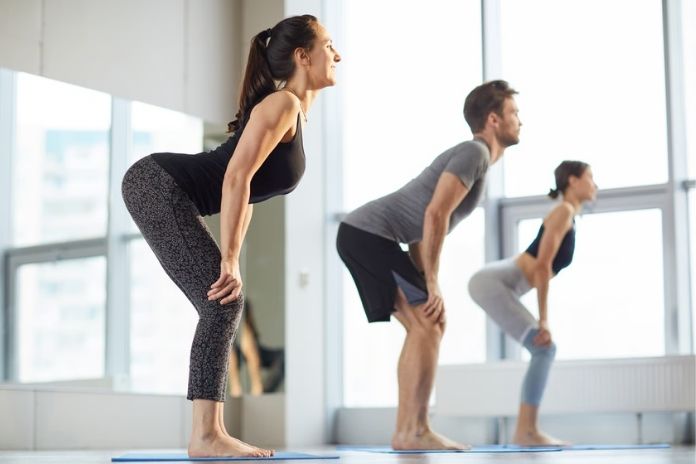
Movement breaks matter. Standing for two minutes. Walking to refill a water bottle. Taking a brief lap around the office. These things seem insignificant while doing them. Over months and years, they are not insignificant at all. Yoga and Pilates deserve mention as well. Not because they are fashionable. Because clinical trials repeatedly show improvements in spinal mobility, core strength, flexibility, and back pain outcomes among regular participants.
Neither system is magic. Both simply address many of the physical limitations that contribute to poor posture.
Read More: How Rear Delt Flyes Fix Posture, Build Stability, and Create the “3D” Look
Conclusion
The benefits of good posture are often misunderstood. Some people dismiss posture entirely. Others treat it as the answer to every physical complaint. The truth sits somewhere in the middle.
Good posture reduces unnecessary stress on the spine, joints, and muscles. It supports breathing mechanics. It may reduce headache frequency. Research suggests it can positively influence mood, confidence, and digestive function as well.
The important part is understanding how posture improves. Not through motivational quotes. Not through constantly reminding yourself to sit up straight. Posture changes when muscles become stronger, movement patterns improve, and the environments where we spend most of our day stop working against us.
That process takes time. But unlike many health factors, it is one that people can actually influence.
- Most posture-related benefits come from improved load distribution across joints and muscles rather than from “standing straighter” itself.
- Research on posture and back pain is stronger than research on posture and mood, but both areas show meaningful associations.
- Sitting duration may be as important as sitting posture. Even good posture becomes problematic when movement disappears for hours.
- Many posture problems involve muscle deconditioning rather than lack of awareness, which is why strengthening exercises outperform posture reminders alone.
- One major research gap remains in understanding why some people develop pain despite poor posture while others remain symptom-free for decades.
FAQs
1. What are the effects of a bad posture on your body?
Bad posture causes predictable muscle imbalances and increased spinal stress. Tightness in the chest and hip flexors develops, while the neck, glute, and upper back muscles weaken. Over time, this contributes to neck pain, back pain, headaches, reduced breathing efficiency, and discomfort.
2. Can you correct bad posture permanently?
Yes, bad posture can be corrected permanently with consistent effort over time. It requires strengthening weak muscles, improving mobility, and changing daily habits. Most people see improvement within eight to twelve weeks, but long-term maintenance depends on sustained movement and posture awareness.
3. What is the fastest way to improve posture?
There is no instant fix, but targeted exercises and ergonomic changes work fastest. Movements like chin tucks, rows, and face pulls correct muscle imbalances, while proper workstation setup reduces strain. Braces may help temporarily, but do not fix underlying muscular causes.
References
- Albarrati, A., Zafar, H., Alghadir, A. H., & Anwer, S. (2018). Effect of Upright and Slouched Sitting Postures on the Respiratory Muscle Strength in Healthy Young Males. BioMed Research International, 2018, 1–5.
- Dainese, R. (2003). Influence of body posture on intestinal transit of gas. Gut, 52(7), 971–974.
- Fernández-de-las-Peñas, C., Alonso-Blanco, C., Cuadrado, M., & Pareja, J. (2006). Forward Head Posture and Neck Mobility in Chronic Tension-Type Headache. Cephalalgia, 26(3), 314–319.
- Kim, E.-K., & Kim, J. S. (2016). Correlation between rounded shoulder posture, neck disability indices, and degree of forward head posture. Journal of Physical Therapy Science, 28(10), 2929–2932.
- Kuo, Y.-L., Huang, K.-Y., Kao, C.-Y., & Tsai, Y.-J. (2021). Sitting Posture during Prolonged Computer Typing with and without a Wearable Biofeedback Sensor. International Journal of Environmental Research and Public Health, 18(10), 5430.
- Nair, S., Sagar, M., Sollers, J., Consedine, N., & Broadbent, E. (2015). Do slumped and upright postures affect stress responses? A randomized trial. Health Psychology: Official Journal of the Division of Health Psychology, American Psychological Association, 34(6), 632–641.
- Wilkes, C., Kydd, R., Sagar, M., & Broadbent, E. (2017). Upright posture improves affect and fatigue in people with depressive symptoms. Journal of Behavior Therapy and Experimental Psychiatry, 54, 143–149.
In this Article