

















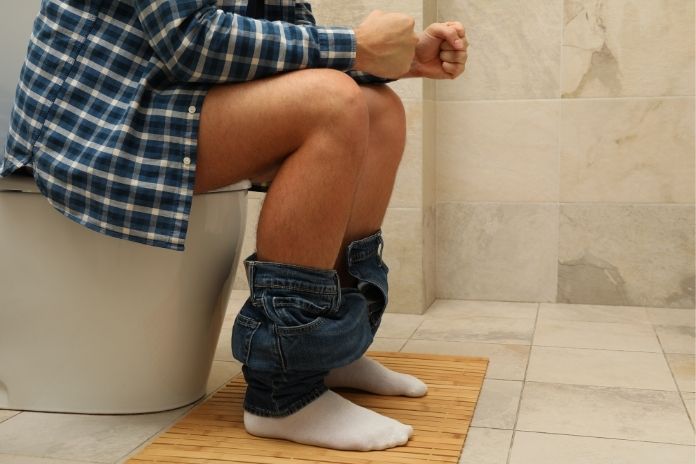
Most people never think about toilet position health, yet the way you sit can quietly shape how your body works. The debate of squatting vs sitting toilets is gaining real attention because posture affects elimination more than most people realize, and even small adjustments can deliver meaningful toilet squat position benefits over time.
The modern Western toilet was designed for comfort and dignity, not optimal defecation mechanics. At 15–18 inches in height, it places the body in a seated posture that can partially restrict natural rectal emptying by altering the anorectal angle and limiting full relaxation of the puborectalis muscle. This can make bowel movements slower and more effortful.
Over time, repeated straining may contribute to hemorrhoids, fissures, diverticulosis, and pelvic floor dysfunction.
A 2025 PRISMA-based scoping review published in BMC Public Health analyzed 42 studies and concluded that squatting postures likely reduce digestive strain and improve bowel evacuation, while sitting toilets may worsen bowel-related issues, though they offer greater comfort and lower joint stress for vulnerable groups like older adults.
In this article, we explore what the evidence shows and how small posture changes may improve bowel health without replacing your toilet.
- Toilet position health: Sitting toilets can partially restrict the anorectal angle, making bowel movements slower and more effortful.
- Squatting vs sitting toilet: Squatting allows better alignment, reducing straining and lowering the risk of issues like hemorrhoids and diverticulosis.
- Toilet squat position benefits: Using a footstool elevates the feet, improves posture, and supports easier, more complete bowel movements without changing your toilet.
- Chronic straining consequences: Repeated straining can contribute to hemorrhoids, fissures, pelvic floor dysfunction, and even cardiovascular effects in rare cases.
- Modern design mismatch: Western toilets prioritize comfort, but do not align with natural defecation posture, making simple posture changes highly beneficial.
The Anatomy: Why Position Changes Everything
The way your body eliminates waste is closely linked to toilet position health, and at the center of this process is the puborectalis muscle, a sling-like structure that forms part of the levator ani, the group of muscles making up your pelvic floor.
This muscle wraps around the rectum from front to back, pulling it slightly forward and creating a natural bend, much like a kink in a garden hose. That kink is intentional: it helps maintain continence when you are upright or seated by keeping the passageway partially closed. The technical name for this bend is the anorectal angle (ARA), which sits at roughly 90 degrees in a seated position.
The puborectalis is part of the larger levator ani muscle group, which also supports the bladder, uterus (in women), and prostate (in men). This means the effects of habitual straining and poor defecation posture extend beyond the bowel. Repeated strain can affect the entire pelvic floor, contributing to urinary symptoms, sexual dysfunction, and over time, pelvic organ prolapse, particularly in women.
When you shift to a squatting position, the puborectalis relaxes. The kink straightens out, and the anorectal angle widens to approximately 126 to 140 degrees. This change explains many toilet squat position benefits: it creates a more direct, unobstructed pathway for stool to pass with minimal effort. Think of it as uncrimping the hose.
In a sitting position, the muscle stays partly engaged, which is where the difference in squatting vs sitting toilet mechanics becomes clear. The restricted pathway frequently leads to straining.
That straining involves what doctors call the Valsalva maneuver, which means forcefully bearing down against a closed airway to build enough pressure to push stool through a less-than-ideal angle. As you will see, this is more than a minor inconvenience.
The Valsalva maneuver, in plain terms, is what happens when you hold your breath and bear down hard. It temporarily raises pressure inside your chest and abdomen, which can slow your heart rate, spike and then drop your blood pressure, and reduce blood flow to the brain.
In healthy people, this is rarely a problem, but in people with cardiovascular conditions, repeated Valsalva-type straining can carry real risk.
What the Research Actually Shows

The discussion around squatting vs sitting toilets is backed by clinical evidence, not just opinion.
One of the most cited studies in this area was conducted in 2003 by researcher Dov Sikirov. The study examined 28 healthy volunteers who each recorded the time needed and the perceived effort for six bowel movements in three positions: standard sitting (41 to 42 cm high), lower sitting (31 to 32 cm high), and squatting.
The results were clear: squatting position defecation significantly reduced both time to complete evacuation and subjective straining compared to both sitting positions (p<0.0001), and this held true across all participants regardless of age.
More recent evidence strengthens these findings. A 2025 PRISMA scoping review published in BMC Public Health analyzed 42 studies covering digestive, musculoskeletal, cardiovascular, and pelvic floor outcomes. It concluded that squatting improves bowel emptying and reduces digestive strain, supporting key toilet squat position benefits, particularly for constipation.
Another 2024 study in the Turkish Journal of Gastroenterology involving 929 patients found that sitting toilet use was an independent risk factor for diverticulosis, with an odds ratio of 3.36 (95% CI: 1.684 to 6.705, p=0.001). Diverticulosis is a condition where small bulging pouches form in the wall of the colon under chronic pressure.
This finding aligns directly with concerns about the long-term straining defecation consequences associated with sitting toilets.
A 2019 clinical study at The Ohio State University Wexner Medical Center, published in the Journal of Clinical Gastroenterology, put the question directly to a US population. Researchers led by gastroenterologist Dr. Peter Stanich found that using a device resulted in significantly improved bowel emptiness (odds ratio 3.64) and reduced straining (odds ratio 0.23), with bowel movement duration also shorter without the device.
Notably, at baseline, 44% of the “healthy” volunteers already reported increased straining, and 28.8% reported incomplete emptying, suggesting that straining is far more common in Western populations than most people realize.
Dr. Michael Greger, a physician and practitioner at NutritionFacts.org, explains that squatting is the body’s natural position for defecation, as it straightens the anorectal angle and allows smoother, easier bowel movements compared to sitting.
Time differences are also notable. Squatting typically allows bowel movements in about one minute, while sitting positions may take between 4 and 15 minutes, reflecting less efficient defecation posture.
Read More: Gentle Relief: The Top 7 Laxative Powders for Effective Constipation Relief
The Real Consequences of Chronic Straining
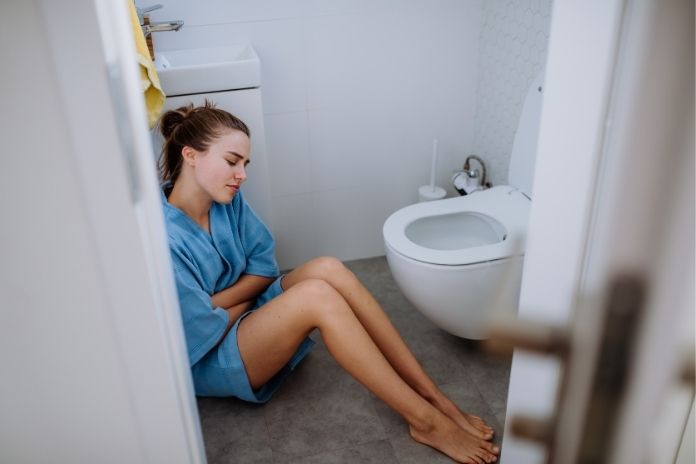
From Hemorrhoids to Cardiovascular Effects: Why Straining Is a Health Risk
Habitual straining during bowel movements is more than a temporary discomfort. Over time, it can lead to measurable health complications affecting the digestive system, pelvic floor, and even cardiovascular function.
- Hemorrhoids: Repeated straining increases intra-abdominal pressure, causing swelling of the veins in the anal canal. These are essentially varicose veins of the rectum and are less common in populations using squatting toilets.
- Anal Fissures: Excessive force during bowel movements can cause small tears in the anal lining, especially when stool passes through a less optimal anorectal angle.
- Diverticulosis: Chronic pressure within the colon can lead to the formation of small pouches in the colon wall. Studies have linkedprolonged sitting toilet use and straining with a higher risk of this condition.
- Pelvic Organ Prolapse: Long-term strain, often involving repeated Valsalva-type effort, can weaken pelvic floor support, increasing the risk of organ descent, particularly in women.
- Defecation Syncope: In rare cases, intense straining can trigger a vagal response. This may temporarily reduce heart rate and blood pressure, leading to dizziness or fainting during or after a bowel movement.
Read More: Why Sitting Too Long on the Toilet May Raise Your Risk of Hemorrhoids
Why This Is a Modern Problem
Squat toilets are still widely used across parts of Asia, the Middle East, and Africa, where rates of hemorrhoids, diverticular disease, and some colorectal conditions have traditionally been lower than in Western populations. While diet, especially higher fiber intake, plays an important role, toilet posture is increasingly recognized as a contributing factor.
Children offer a clear insight. Before toilet training, they naturally adopt a squatting posture for bowel movements. This suggests that squatting is the body’s instinctive position, whereas sitting is learned.
The seated toilet, introduced in Western Europe during the 19th century, is more a product of cultural preference and industrial design than human physiology. Its typical height of 15–18 inches prioritizes comfort and convenience, but does not align with the natural function of the puborectalis muscle.
Do Toilet Stools Really Work
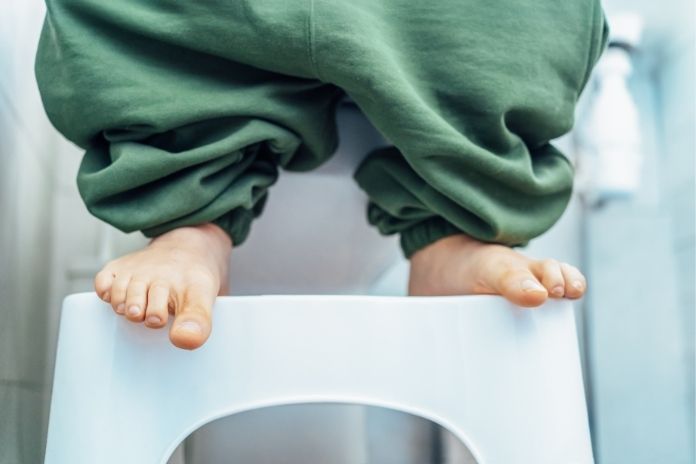
Footstools vs True Squatting: What the Evidence Shows
Toilet footstools are often recommended because they raise the feet by about 7 to 9 inches while using a standard toilet. This lifts the knees above the hips, helping the body move closer to a natural squatting posture.
As a result, the puborectalis muscle relaxes more, and the anorectal angle widens, supporting some toilet squat position benefits, though not to the same extent as a full squat.
Research on defecation posture modification devices shows consistent improvement over standard sitting. Users report less straining, shorter bowel movement time, and a better sense of complete evacuation.
A 2022 analysis published in the Journal of the American Board of Family Medicine reviewed more than 10,000 user experiences and found high satisfaction, with only minor side effects such as temporary leg discomfort or numbness.
Dr. Peter Stanich, a gastroenterologist at The Ohio State University Wexner Medical Center, explains that toilet footstools can help relieve constipation and promote more comfortable, effective bowel movements.
True squatting allows for more complete muscle relaxation. Leaning forward can enhance the effect. For most people, it offers a practical way to improve overall toilet position health without needing to replace the toilet.
Here is how to actually use a footstool correctly. Place both feet flat on the stool, hip-width apart. Your knees should rise noticeably above the level of your hips. From there, lean your torso forward and rest your elbows on your thighs. Breathe normally and let your pelvic floor relax instead of bearing down forcefully.
This position allows the puborectalis to release without requiring you to strain. Try not to sit for more than a few minutes total; prolonged sitting on a toilet, even with a footstool, increases pressure on the anal veins.
Toilet Footstool Benefits And Cautions
- Who Benefits Most:
- People with chronic constipation or incomplete bowel emptying
- Those who experience frequent straining during bowel movements
- Individuals with hemorrhoids or anal fissures
- People with constipation-predominant irritable bowel symptoms
- Who Should be Cautious:
- Older adults with reduced mobility
- Individuals with knee or hip joint problems
- Those with balance issues or risk of falls, especially with full squatting
When to See a Doctor: A footstool addresses posture, not pathology. If you have chronic constipation that doesn’t respond to posture changes and dietary adjustments, experience rectal bleeding, notice significant changes in your bowel habits, or have persistent pelvic pain or pressure, those symptoms warrant a conversation with your doctor.
Posture optimization works best alongside adequate fiber intake, hydration, and regular movement. It is a complement to good digestive health, not a replacement for medical evaluation when something seems wrong.
A toilet footstool improves posture by elevating the feet and partially straightening the anorectal angle, reducing the need for straining. While it does not fully replicate squatting, it offers a safe and effective alternative for easier bowel movements.
Conclusion
Modern design has prioritized comfort, but toilet position health tells a different story. When you look at squatting vs sitting on a toilet, the body clearly works better with a more natural alignment.
You do not need to overhaul your bathroom to see change. A simple footstool, a slight forward lean, and less time spent straining can unlock real toilet squat position benefits.
In the end, the body is not asking for much, just a position that lets it function the way it was designed to.
References
- Sebo P, Quinio C, Viry M, Haller DM, Maisonneuve H. Perceived effectiveness and overall satisfaction of using a toilet stool to prevent or treat constipation: an analysis of online comments. J Am Board Fam Med. 2022;35(4):836-839.
- Sikirov D. Comparison of straining during defecation in three positions: results and implications for human health. Dig Dis Sci. 2003;48(7):1201-1205.
- Buldukoğlu OÇ, Öcal S, Atar GE, Akbay Harmandar F, Çekin AH. Sit or squat? Toilet type is a determinant of diverticulosis development. Turk J Gastroenterol. 2024;35(6):475-480.
- Rahgoshay N, Rahdar M, Nikoo L, Daneshmandi H. Sitting vs. squatting: a scoping review of toilet postures and associated health outcomes. BMC Public Health. 2025;25(1):2192.
- Nallapeta NS, Farooq U, Patel K. Diverticulosis. In: StatPearls [Internet]. Treasure Island (FL): StatPearls Publishing; 2023.
- Merck Manual Consumer Version. Diverticulosis of the large intestine. Accessed April 14, 2026.
- Sakakibara R, Tsunoyama K, Hosoi H, et al. Influence of body position on defecation in humans. Low Urin Tract Symptoms. 2010;2(1):16-21.
In this Article