

















Have you ever asked yourself, “Why does my skin feel bumpy but look smooth?” Your skin looks perfectly normal, but when you run your hand over your arms or thighs, it feels like sandpaper. Contrary to popular belief, this perplexing feeling is often associated with a mild condition called keratosis pilaris.
This mild variant of keratosis pilaris, also known as keratosis pilaris without bumps, mainly affects skin texture rather than the traditional variety, which has obvious red bumps. It is often confused with dryness, leading many people to neglect appropriate care.
In this article, we’ll explore everything you need to know about skin that feels like sandpaper but looks normal, including its causes, symptoms, how it differs from other conditions, and the most effective ways to treat it.
- Rough, sandpaper-like skin with no visible bumps is often mild keratosis pilaris, not just dryness.
- Moisturizers alone give temporary relief; consistent exfoliation + hydration works better.
- Avoid harsh soaps and hot showers; they worsen texture and dryness over time.
Read More: Effective Home Remedies for Keratosis Pilaris
What Is “Invisible” Keratosis Pilaris?
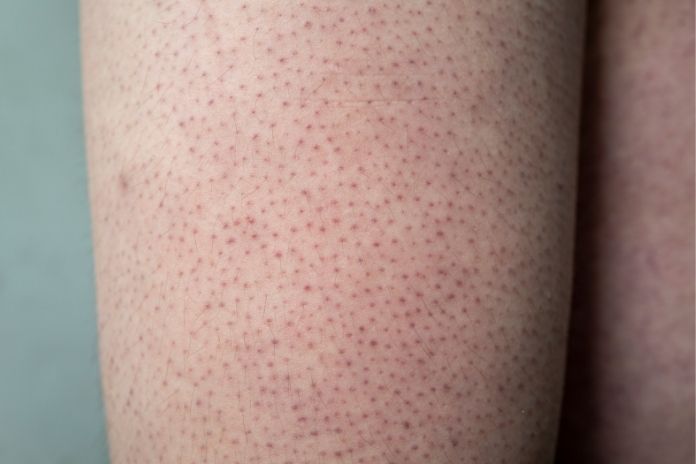
Keratosis pilaris appears as small red bumps on the skin. Unwanted pimples that turn into dry, rough patches are caused by a common, benign skin ailment. Little red bumps usually appear on the upper arms, thighs, cheeks, or buttocks. Although there are no signs of keratosis pilaris, such as pain or itching, most people are only self-conscious about their appearance.
The mild, non-inflammatory type of keratosis pilaris, known as “invisible keratosis pilaris,” causes the skin to feel rough but shows few or no outward symptoms. Experts consider it a mild or early manifestation of follicular hyperkeratosis, a disorder in which excess keratin builds up in hair follicles.
This version appears differently from the standard form:
- No obvious red or swollen lumps
- From a distance, skin appears smooth
- Only the touch reveals a rough, gritty texture
The reason for this misconception is that dry skin vs. keratosis pilaris feel quite similar. A rough texture can be produced using either, but:
- Moisturizers rapidly improve dry skin
- There may only be a brief improvement in invisible keratosis pilaris
“The bumps are rough to the touch and usually appear in small clusters on various parts of the body, especially on the upper arms, elbows, thighs, and buttocks,” says Dendy Engelman, MD, a board-certified cosmetic dermatologist in New York City.
Why Your Skin Feels Like Sandpaper
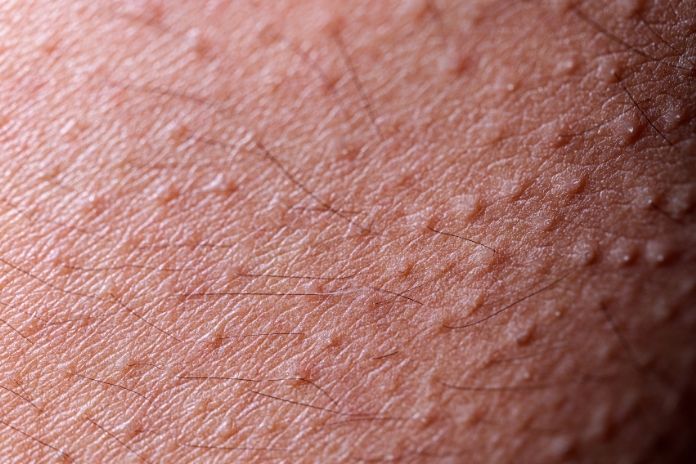
Keratosis pilaris may be the cause of your skin’s persistent “chicken skin,” sandpaper-like texture, or appearance of tiny bumps. It is very widespread, usually innocuous, and frequently misinterpreted.
A common misconception is that it’s dry skin or clogged pores due to poor hygiene. It’s not. Actually, keratosis pilaris is a medical skin disorder caused by the way your body makes keratin, a skin-protective protein.
There is very little redness or discomfort in non-inflammatory keratosis pilaris. Rather:
- The main symptom is texture.
- Skin may appear uneven or gritty.
- Visually, the disease is still subtle.
An impaired skin barrier, which reduces the skin’s capacity to retain moisture, is another important component. This results in:
- Increased dryness
- Texture deterioration
- Increased buildup of keratin
Common Areas Where Invisible Keratosis Pilaris Appears
Areas with a high number of hair follicles are more likely to develop invisible keratosis pilaris:
- Thighs and upper arms
- Buttocks
- Cheeks (particularly in younger people)
If you notice rough skin with no visible bumps in these areas, especially symmetrically, it may indicate keratosis pilaris without bumps.
Read More: Top 10 Skincare Ingredients for Radiant and Healthy Skin
Signs That Suggest Invisible Keratosis Pilaris (Not Just Dry Skin)
Differentiating between dry skin and keratosis pilaris is crucial. Key indicators are as follows:
- Feel as dry and coarse as sandpaper.
- Resemble goosebumps or the skin of plucked chicken.
- In a dry climate or throughout the winter, it becomes more obvious.
- Appear in a variety of hues, such as your skin tone, white, red, pinkish purple on fair skin, and brownish black on a dark complexion.
These are common early keratosis pilaris signs and indicators of mild keratosis pilaris symptoms.
Invisible Keratosis Pilaris vs Other Causes of Rough Skin
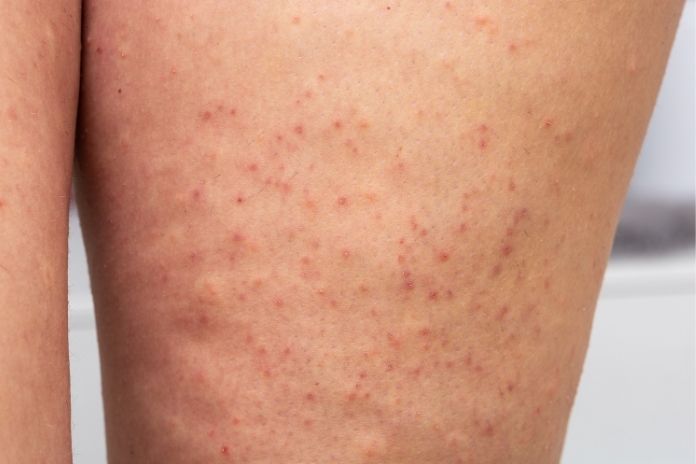
Dry Skin (Xerosis): Dry skin can feel like sandpaper but look normal, and it improves quickly with hydration and often shows visible flaking.
Mild Eczema: Itching, red spots, and sporadic inflammation are common symptoms of eczema.
Heat Rash or Folliculitis: Folliculitis and heat rash are distinct conditions that are both inflammatory and occasionally unpleasant or irritating.
What Causes Invisible Keratosis Pilaris?
The accumulation of keratin in hair follicles as a result of dead skin cells is the primary cause of invisible keratosis pilaris. Sometimes the keratin blockage resembles a pimple. These don’t have skin surface bacteria like real acne pimples do.
The exact cause of keratin accumulation remains unclear. However, changes in your skin’s barrier function may contribute to it. KP is neither contagious nor autoimmune, and no specific food causes it.
It is frequently associated with eczema. Additionally, because your skin dries out more readily in winter and in low-humidity environments, it tends to develop more severely. Researchers have also associated it with larger body sizes.
Read More: 22 Benefits of Sweet Almond Oil For Health, Skin, and Hair
How to Treat Invisible Keratosis Pilaris
Keratosis pilaris is usually benign and not communicable, so it may not require treatment. However, if the bumps bother you, you can take steps to treat them. You can use any of the following interventions to manage keratosis pilaris:
Moisturizers: Dryness can exacerbate keratosis pilaris and cause irritation and itching. Use a creamy moisturizer with an occlusive, a chemical that forms a seal over the skin to reduce moisture evaporation, to calm your skin. Manufacturers commonly use occlusives such as
lanolin, glycerin, and petroleum jelly in moisturizers.
Exfoliation: The process of removing the dead skin cells. Regular use of an exfoliator may help soften your skin and release some of the keratin that is trapped in your pores if you have keratosis pilaris.
Retinoids: Keratosis pilaris may appear less noticeable if your body eliminates skin cells more quickly. Topical retinoids derived from vitamin A aid cellular turnover and may help reduce some of the keratin buildup that causes bumps.
Laser and Light Therapy: Medical professionals may recommend light or laser therapy, performed in an outpatient setting, when keratosis pilaris doesn’t improve with conventional therapies.
Self-care: A key component of any keratosis pilaris treatment strategy is caring for your skin.
Daily Skincare Routine for Smooth Texture
A straightforward regimen can be used to treat invisible keratosis pilaris:
Step 1: Cleanse Without Stripping: Remove makeup, oil, and grime with a mild, pH-balanced cleanser that won’t damage your skin’s barrier. Because they cause micro-irritation, hot water and aggressive cleansers can exacerbate texture problems.
Step 2: Use a mask to detoxify once a week: Pores occasionally need a little more help, particularly if your skin is frequently congested or exposed to pollution. You can achieve a tailored detox by incorporating a weekly mask treatment.
Step 3: Use lactic acid to exfoliate. Chemical exfoliation using alpha hydroxy acids (AHAs), such as lactic acid, is one of the most dermatologist-recommended methods for improving uneven skin texture. In contrast to physical scrubbing, AHAs break the bonds between dead cells, revealing smoother, more radiant skin beneath without the risk of microtears.
Step 4: Use Niacinamide to Target Skin Texture. Dermatologists love niacinamide for obstinate skin. Over time, this multipurpose substance enhances skin tone and texture while fortifying the skin barrier.
Step 5: Hydrate Thoroughly: Dryness can enhance the appearance of uneven skin texture. For a smooth skin texture, layer a lightweight, non-comedogenic moisturizer to plump the skin’s surface and retain moisture.
Step 6: Use sunscreen to protect yourself, as UV rays can deteriorate texture, impede scar healing, and hasten collagen loss. It’s crucial to use SPF daily to address uneven skin texture while preventing new problems.
What Makes Invisible Keratosis Pilaris Worse
Certain habits can aggravate skin that feels like sandpaper but looks normal:
- Hot showers.
- Harsh soaps.
- Intensive physical cleaning.
- Ignoring moisturizer.
Read More: Sun Safety Tips: Protecting Skin Health to Prevent Cancer
When to See a Dermatologist
Even though invisible keratosis pilaris is benign, see a doctor if:
- The texture turns irritated or red
- Despite regular attention, there was no progress
- You don’t know the diagnosis
- It has a big impact on your confidence
Is Invisible Keratosis Pilaris Permanent?
Keratosis pilaris has no known treatment. However, the symptoms are controllable. Without treatment, KP can get better with age. The bumps may look better after treatment. However, the problem frequently recurs if you discontinue the medication.
Among the possible treatments are:
Reducing the Size of the Bumps: Doctors can use medications such as salicylic acid, lactic acid, urea, or tretinoin in lotions and creams.
Keeping Your Skin Hydrated: Apply lotion or cream to bumpy areas regularly. Additionally, you can hydrate the skin with cold cream or petroleum jelly.
For some folks, these might not be able to lessen the bumps. And if you stop caring for your skin, the bumps will return.
Read More: 10 Healthy Drinks That Can Boost Your Skin & Hair Naturally
Conclusion
If your skin feels like sandpaper but looks normal, it may be a subtle form of keratosis pilaris rather than simple dryness. Because there are no obvious lumps or redness, this condition is widespread, innocuous, and frequently ignored.
Keratin accumulation in hair follicles causes the harsh texture, but you can significantly improve your skin’s feel with regular care, such as mild exfoliation and adequate hydration. Even though it might not go away entirely, knowing the explanation enables you to manage it properly and avoid unnecessary remedies.
References
- Dr. Sumit Sharma. (January 10, 2023). Keratosis Pilaris: Signs, Causes, Treatment, and Prevention.
- Skinfinity Derma. Keratosis pilaris treatment Gurgaon: Complete guide.
- Farber Dermatology. Keratosis pilaris treatment.
- Pachyonychia Congenita Project. Follicular hyperkeratosis.
- Ubie Health. (19 February, 2026). “Sandpaper” skin? Why your pores are suffocating & medical steps for keratosis pilaris.
- Healthdirect Australia. (2023, November). Keratosis pilaris.
- National Health Service (NHS). (2024, July 4). Keratosis pilaris.
- Cedars-Sinai. Keratosis pilaris.
- Johns Hopkins Medicine. Keratosis pilaris.
- American Academy of Dermatology Association. Keratosis pilaris: Signs and symptoms.
- Maryann Mikhail, MD. (June 3, 2024). Do You Have Areas of ‘Chicken Skin’? You Might Have Keratosis Pilaris.
- Mayo Clinic Staff. (2024, October 23). Keratosis pilaris: Symptoms and causes.
- Mayo Clinic. (October 23, 2024). Keratosis pilaris.
In this Article