

















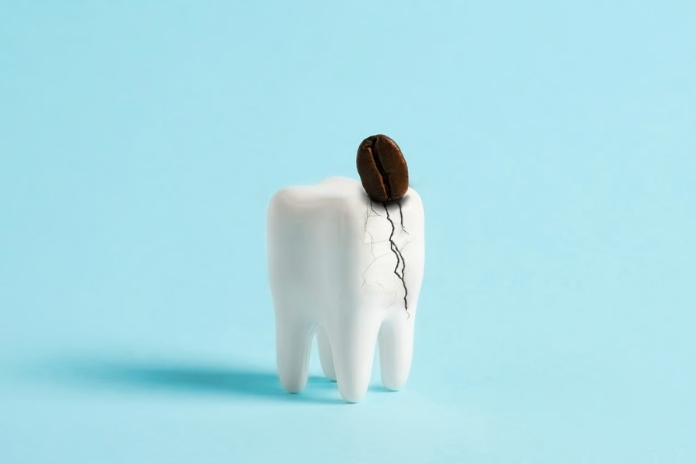
A sudden, sharp pain when you bite down can catch you off guard. It appears for a moment, then disappears completely, leaving you confused. If this feels familiar, it could be cracked tooth syndrome, a condition that often goes unnoticed in its early stages.
These brief and inconsistent signals are classic cracked tooth syndrome symptoms, making it one of the most commonly missed dental diagnoses. Although it may seem minor at first, the problem can worsen over time.
In this guide, we will look into the symptoms, causes, diagnosis, and prevention, along with the most effective cracked tooth syndrome treatment options to protect your tooth and avoid further complications.
Symptoms: Cracked Tooth Syndrome causes sharp, short pain when biting or releasing pressure and may also trigger cold sensitivity. The pain often comes and goes, making it difficult to identify on routine X-rays.
Causes and Diagnosis Challenges: It commonly affects molars and premolars, especially teeth with large fillings, previous root canal treatment, or excessive bite stress from grinding or clenching. Diagnosis is challenging because cracks are often not visible on X-rays and require clinical tests like bite evaluation, transillumination, magnification, or CBCT scans.
Treatment and Prevention: Treatment depends on severity and ranges from bonding for minor cracks to crowns for structural support, and root canal treatment with a crown when the pulp is affected. Prevention includes using night guards, reducing clenching habits, avoiding hard foods, and protecting high-risk teeth.
What Is Cracked Tooth Syndrome?
Cracked tooth syndrome (CTS), first described by Cameron in 1964, refers to an incomplete fracture that begins on the chewing surface and extends toward the pulp without splitting the tooth into separate pieces. It is one of five recognized types of longitudinal tooth fracture, alongside craze lines, fractured cusps, split teeth, and vertical root fractures, each requiring a different treatment approach.
What makes CTS challenging is how easily it hides. The crack is often too fine to detect during routine exams, and symptoms may come and go, making it easy to overlook.
Audits cited in the StatPearls review show that mandibular molars are most commonly affected, followed by maxillary premolars and molars. This is largely due to the mesio-palatal cusp of upper teeth wedging into the central fissures of lower molars, creating repeated stress over time.
Read More: Why Does My Tooth Hurt? Your Guide to Sudden and Persistent Dental Pain
The Five Types of Tooth Fracture
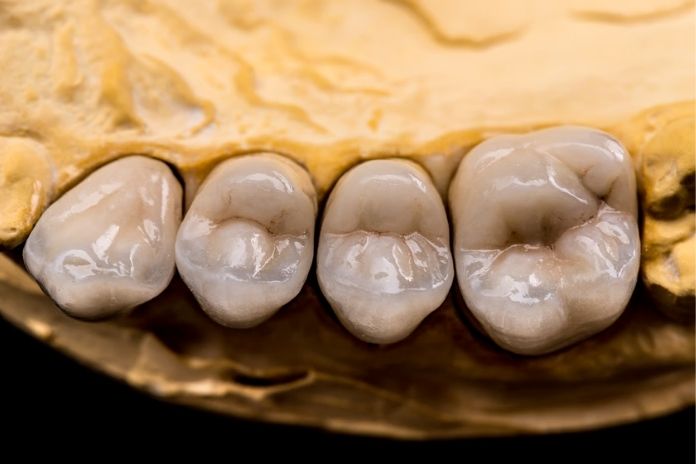
The American Association of Endodontists (AAE) classifies longitudinal tooth fractures into five types, and knowing where a crack falls determines treatment completely.
- Craze lines are surface-level hairline cracks limited to enamel. They are extremely common, cause no symptoms, and require no treatment.
- Fractured cusp begins at a filling or cavity margin and leads to a portion of the tooth breaking off. It is often not very painful since the pulp is usually not involved.
- Cracked tooth (true CTS) is an incomplete crack extending through dentin toward or into the pulp. This is the condition this article focuses on and often presents with characteristic biting pain.
- Split tooth is the progression of an untreated crack, where the tooth separates into two segments and is often unrestorable.
- Vertical root fracture starts in the root, may show minimal symptoms initially, and is usually detected late when bone loss occurs, making it largely unrestorable.
Understanding these distinctions matters clinically. Only the cracked tooth (true CTS) requires the range of treatments described in this article. Craze lines need no treatment at all.
A split tooth or vertical root fracture often means extraction. If your dentist mentions “craze lines,” that is actually reassuring: it indicates the least serious form with the best possible outcome.
Cracked Tooth Syndrome Symptoms

The classic cracked tooth syndrome symptoms include a sharp, brief pain when biting that disappears immediately once pressure is released. In some cases, the pain is more intense on release than during the bite. Cold sensitivity is also common, and a dull ache may develop if the pulp becomes inflamed.
These symptoms follow the hydrodynamic theory of dentinal pain described by Brännström. When you bite, the crack opens slightly, causing fluid movement inside dentinal tubules that stimulates nerve fibers. When you release the bite, the crack closes, and fluid shifts again, often producing sharper pain on release.
Cold temperatures trigger a similar response by causing fluid contraction in the tubules toward the pulp, activating the same nerves. This explains why cold sensitivity so often accompanies bite pain in cracked teeth, and why the combination of both symptoms is a strong indicator that a crack is present rather than some other dental issue.
The “tooth sleuth,” a small device your dentist places on individual cusps for you to bite on, uses this same pressure-release mechanism to help isolate exactly which cusp the crack involves.
This combination of biting pain, release pain, and cold sensitivity is a key indicator and helps in understanding how to tell if a tooth is cracked.
Importantly, not all cases are symptomatic. Some cracked teeth may show no clear signs, making the diagnosis challenging. Roughly a third of cracked teeth produce no pain at all. This is why relying only on pain is not enough, and timely dental evaluation is essential.
Read More: Toothache – Causes, Treatment, and Home Remedies
Causes and Risk Factors
Cracks do not happen randomly. Cracked tooth syndrome usually develops from repeated stress, structural weakness, or sudden force on the tooth. Identifying these risk factors helps in prevention and early intervention.
The most important modifiable factor is bruxism and clenching. Repeated high-force grinding, especially at night, gradually initiates and propagates cracks. A 2021 systematic review and meta-analysis confirmed psychological stress as a cause of bruxism, with stressed individuals showing 97% higher odds compared to non-stressed controls.
Teeth with large restorations, such as amalgam fillings or previous root canal treatment, are more vulnerable due to altered stress distribution. These teeth require closer monitoring as they are structurally weaker.
Hard food habits also play a direct role. Chewing ice, unpopped popcorn kernels, hard sweets, boiled sweets, and biting on olive pits or cherry stones can create enough force to initiate or extend cracks.
Age-related wear further increases risk, especially after 40. Trauma, including sports injuries or biting unexpected hard objects, can also trigger cracks.
Why Diagnosis Is So Difficult

Cracked tooth syndrome is often called dentistry’s “invisible” diagnosis, and for good reason.
Radiographs rarely reveal the problem. X-rays show changes in bone or density, not fine hairline cracks, so early or incomplete fractures remain hidden until advanced damage appears. A normal X-ray can therefore be misleading and does not guarantee the tooth is healthy.
Symptoms add to the confusion. Pain may come and go, range from mild to sharp, and shift unpredictably depending on whether the pulp is healthy, inflamed, or dying. Interestingly, a tooth that suddenly feels better may actually be progressing toward nerve death.
Pain can be deceptive, often spreading to nearby teeth, the jaw, or the sinus area. This is one reason why patients often visit multiple providers before getting a correct diagnosis, and why needing more than one appointment is normal rather than a sign that something has gone wrong.
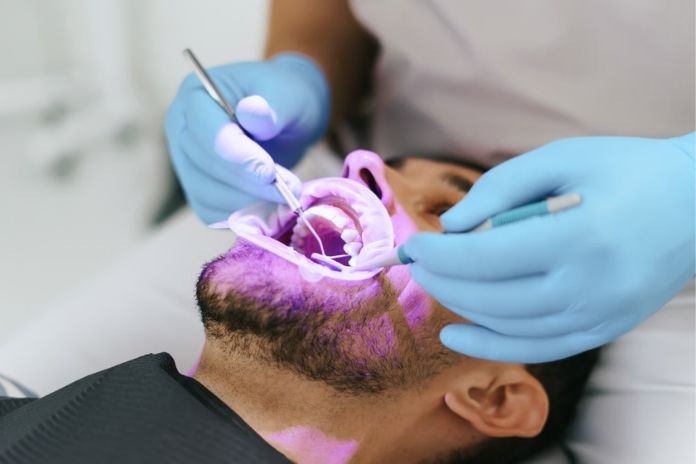
Dentists rely on a structured approach using a bite test with a “tooth sleuth,” fiber-optic transillumination, magnification, and CBCT (cone-beam computed tomography) when needed.
A 2021 literature review reported that CBCT can help show the location and extent of fractures that are missed on conventional X-rays, particularly when early bone changes adjacent to the crack are present. Removal of existing restorations to directly inspect the underlying tooth structure is sometimes necessary to fully map a crack’s extent.
Treatment Options — Matched to Crack Severity
Early Crack Management
When the crack is limited to enamel or superficial dentin and the pulp is healthy, conservative care is preferred. A direct composite restoration acts as an internal splint by bonding the crack walls and reducing flexure during biting. This relieves symptoms and supports tooth structure. Regular follow-up is essential to monitor any progression.
Crown-Based Stabilization
When CTS symptoms are present but the pulp remains vital, or only mildly inflamed, cuspal coverage with a crown or bonded onlay is the main treatment. This prevents flexure and stops crack progression. A temporary orthodontic band may be used to confirm symptom relief before final restoration.
Early treatment at this stage carries the best long-term prognosis. Research reports pulp survival rates of approximately 84% at ten years when a full-coverage crown is placed while the pulp is still healthy. That number drops significantly if treatment is delayed until the pulp becomes irreversibly inflamed or necrotic, which is why acting on CTS symptoms promptly matters.
Root Canal and Crown Therapy
When the crack reaches the pulp and causes irreversible damage, root canal treatment followed by a full-coverage crown is required. A 2019 study of endodontically treated cracked teeth with radicular extensions reported a 100% survival rate at 2 years and 96.6% at 4 years, with about 90.6% success over 2 to 4 years.
The AAE notes that newer studies report survival rates ranging from 82% to 96% and success rates up to 91% for deeply cracked teeth treated with root canal therapy, suggesting favorable outcomes even for advanced cases.
If the crack extends below the gum line or into the root, the tooth is usually not restorable, and extraction is needed.
This is why the timing of treatment matters so much. A tooth with a shallow crack treated with a crown has an excellent long-term outlook. The same crack left untreated for two more years may progress to pulp involvement, and left further still may enter the root and become unrestorable. The crack does not heal on its own.
Preventing Cracked Tooth Syndrome
Prevention of cracked tooth syndrome centers on reducing daily stress on teeth and addressing key risk factors early.
Night Grinding or Clenching Control: If you grind or clench your teeth during sleep, a custom-made occlusal night guard is the most effective protection. Professionally fabricated guards distribute biting forces more evenly than over-the-counter options and fit the contours of your specific bite.
Research links stress-induced bruxism directly to cracked tooth presentations. Managing stress and addressing grinding habits with your dentist is one of the most impactful steps you can take.
Managing Parafunctional Habits: Jaw clenching, worn teeth, morning jaw stiffness, or frequent headaches should be evaluated early and managed with dental guidance.
Avoiding Excessive Bite Force: Refrain from chewing ice, hard candies, unprocessed nuts, olives with pits, or cherries with stones, as these can initiate or worsen cracks.
Protecting Vulnerable Teeth: Teeth with large fillings or previous root canal treatment require regular monitoring and may benefit from preventive cuspal coverage before symptoms develop.
Read More: 10 Best Night Guards for Teeth Grinding You Didn’t Know About
Conclusion
Cracked tooth syndrome is often overlooked because it may not appear on X-rays, yet it commonly presents with cracked tooth syndrome symptoms such as sharp pain on biting and sensitivity to temperature changes. The condition can progress gradually if untreated.
Cracked tooth syndrome treatment varies depending on severity, ranging from bonding and crowns to root canal therapy when the pulp is involved. Early and late-stage outcomes differ significantly based on the extent of the crack.
Preventive care, particularly addressing bruxism and hard food habits, helps reduce risk and slow progression. Always consult with a qualified dental professional for personalized advice and treatment options related to cracked tooth syndrome.
References
- American Association of Endodontists. (n.d.). What is a root canal?
- Cameron, C. E., (n.d.). Cracked tooth syndrome. JCDA (Journal of the Canadian Dental Association), 68(8), 470.
- Fagundes, N. C. F., et al. (2021). Cracked tooth syndrome: A review of clinical aspects and management.
- Liu, P., et al. (2021). Diagnosis and management of cracked tooth syndrome. PMC.
- Rosen, H., et al. (2020). Cracked tooth syndrome: Clinical considerations. PMC.
- Singh, A., et al. (2021). Modern approaches in diagnosis and management of cracked tooth syndrome. PMC.
- Stanley, H. R. (1960). Cracked tooth syndrome. Journal of Dental Research.
- Uthappa, R., et al. (2019). Cracked tooth syndrome: A clinical challenge. PubMed.
- Walker, R. T., et al. (2021). Cracked tooth syndrome: Etiology and management. PMC.
- Wang, M., et al. (2021). Fracture patterns and outcomes in cracked teeth. ScienceDirect.
- Zack, M., et al. (2020). Cracked tooth syndrome and restorative options. PMC.
In this Article