



















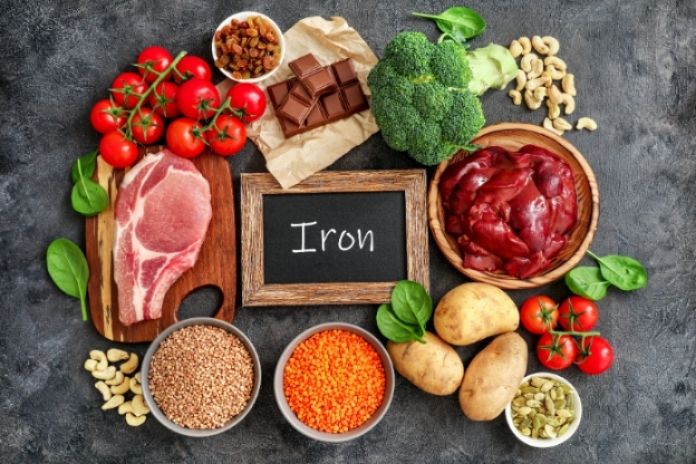
Whether to take iron with or without food is one of the most common questions about iron supplementation, and one where the clinical answer matters, because getting it wrong can meaningfully affect how much iron your body actually absorbs.
Iron absorption with food versus fasting depends on stomach acid levels, the chemical form of iron your gut can process, and what else is in your digestive tract at the same time. Taking iron on an empty stomach, iron and vitamin C together, the timing of ferrous sulfate absorption, and iron supplement side effects and food interactions all feed into the same core question.
The short answer is that an empty stomach produces better absorption, but tolerability is a real clinical consideration that changes the calculus for many people. Here is what the evidence shows on mechanisms, inhibitors, enhancers, and when the food trade-off is the right call.
- Iron absorbs best on an empty stomach, ideally 30 to 60 minutes before a meal or 2 hours after, because undiluted stomach acid converts iron into the form the gut can absorb.
- If nausea or GI upset makes fasted dosing unsustainable, taking iron with a small, low-interference snack is clinically preferable to skipping doses or stopping supplementation entirely.
- Pair iron with vitamin C (100–200 mg or a glass of orange juice) on an empty stomach for the best combination of absorption and tolerability.
Why Taking Iron on an Empty Stomach Improves Absorption?
Iron exists in two oxidation states in food and supplements. Ferric iron (Fe³+, the oxidized form) is the predominant form in most supplements and plant foods, but your gut’s primary iron transporter, DMT1 (divalent metal transporter 1, the protein responsible for moving iron across the intestinal lining), can only absorb ferrous iron (Fe²+, the reduced form).
The conversion from Fe³+ to Fe²+ depends on stomach acid. Specifically, gastric acid creates the acidic environment in which ferric reductase enzymes and reducing agents efficiently convert ferric to ferrous iron.
On an empty stomach, gastric acid is undiluted and in its most concentrated form. That creates the optimal conversion environment. When you eat, food buffers stomach acid and raises gastric pH, reducing the conversion efficiency of Fe³+ to Fe²+ and delivering less absorbable iron to your intestinal cells.
NIH StatPearls clinical guidance recommends taking iron at least 30 minutes before a meal or 2 hours after other medications for best absorption. The practical implication: think of gastric acid as the catalyst in this reaction. Dilute it, and you slow the reaction down. Keep it concentrated, and it does its job efficiently.
Only 14 to 18% of iron in a mixed diet is absorbed on average. Fasted supplemental iron absorbs at a meaningfully higher rate, according to a 2024 review in Haematologica examining iron bioavailability across supplementation conditions.
Foods That Reduce Iron Absorption: What to Avoid and Why?
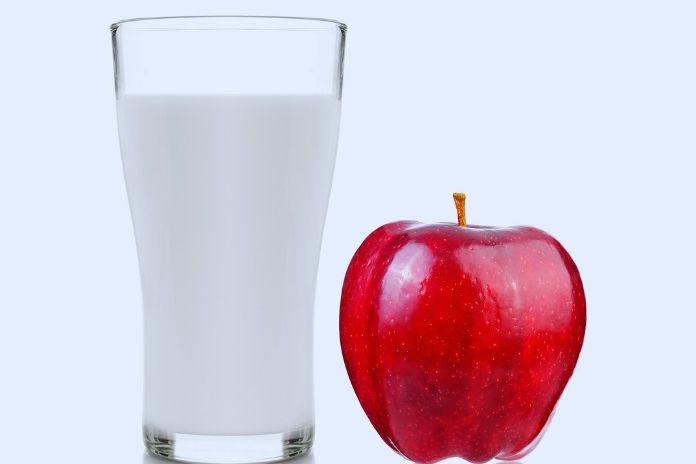
Six specific categories of foods and substances reduce iron absorption through distinct mechanisms. Understanding each one helps you make informed timing decisions rather than following blanket rules.
Coffee and tea contain tannins and polyphenols that form insoluble complexes with iron in the digestive tract, preventing its absorption. Studies show that this combination reduces non-heme iron absorption by 40-90%, depending on concentration and timing. Separate coffee or tea from iron for at least one hour in either direction.
Calcium and dairy products directly compete with iron at the DMT1 transporter. Calcium is the only known single nutrient that inhibits both heme and non-heme iron absorption. Milk, cheese, yogurt, and calcium supplements all interfere with each other. Avoid pairing iron with dairy products or calcium supplements.
Antacids and proton pump inhibitors (PPIs, medications that reduce stomach acid production) directly impair Fe³+ to Fe²+ conversion by raising gastric pH. This is a clinically significant interaction. Anyone taking omeprazole, lansoprazole, or similar PPIs should separate iron by at least two hours and discuss timing with a pharmacist or physician.
High-phytate foods like whole grains, legumes, nuts, and seeds contain phytic acid that binds iron in the gut and prevents its absorption. Eggs contain phosvitin, a protein that chelates (binds and removes) iron with a modest but real inhibitory effect.
Zinc supplements in high doses compete with iron at the same divalent cation transporter. Separate high-dose zinc from iron for at least two hours.
When Taking Iron With Food Is Clinically Correct?
GI side effects are the most common reason people stop iron supplementation entirely, and stopping is a worse outcome than reduced absorption. Nausea, constipation, epigastric pain, and bloating are particularly common with ferrous sulfate, the standard formulation prescribed in most countries.
The clinical trade-off is direct: a somewhat lower iron dose absorbed consistently outperforms a theoretically optimal dose that is abandoned after 2 weeks. If you cannot tolerate fasted iron dosing, taking it with food is the right call.
Not all foods interfere equally. The best option if food is necessary: a small, low-fiber, low-calcium, low-tannin snack. Plain crackers, a small piece of fruit (which also provides vitamin C), or plain rice all represent low-interference choices.
What to avoid pairing with iron, even when using food for tolerability: yogurt, cheese, coffee, tea, or high-fiber cereal. These all reduce absorption substantially and negate the tolerability benefit.
Formulation also matters. Ferrous bisglycinate and iron pyrophosphate are newer iron forms with demonstrably better GI tolerability than ferrous sulfate, with comparable or superior absorption, according to a 2021 systematic review in Nutrients.
If GI side effects are your barrier to consistent dosing, ask your doctor about switching formulations before concluding that iron supplementation doesn’t work for you.
Vitamin C, Orange Juice, and Other Iron-Absorption Enhancers
Vitamin C (ascorbic acid) is the best-evidenced iron absorption enhancer. It works through two mechanisms simultaneously: it acts as a reducing agent, directly converting Fe³+ to Fe²+, and forms a soluble complex with iron that remains absorbable even in less acidic environments. Taking 100-200 mg of vitamin C alongside iron enhances its absorption.
Orange juice is the most practical delivery method; a standard 150-200 ml glass provides approximately 60-70 mg of vitamin C. A separate vitamin C tablet works equally well mechanistically. The combination of an empty stomach plus vitamin C represents the evidence-backed optimal approach to iron supplementation.
The MFP factor (meat, fish, and poultry factor) also enhances non-heme iron absorption through a mechanism not yet fully characterized but well established in dietary iron studies. This is relevant for people who take iron with or near a protein-containing meal. A small portion of lean meat in a low-interference meal modestly offsets some absorption loss.
One caution: very high-dose vitamin C supplements above 500 mg taken simultaneously with iron can worsen nausea in people already prone to GI sensitivity. Stick to 100-200mg for absorption benefits without adding GI risk.
Read More: Craving Ice and Noticing Brittle Nails? What Your Body May Be Trying to Tell
Iron Supplement Timing: A Practical Reference Summary
The following is a clean reference summary for optimal iron supplement timing:
- Best: Fast, 30 to 60 minutes before eating, with a glass of water or 150 to 200ml of orange juice.
- Acceptable: With a small, low-interference snack (plain crackers, a piece of fruit) if GI side effects prevent fasted dosing.
- Avoid at the same time: Coffee, tea, dairy products, calcium supplements, antacids, high-fiber foods, eggs, and high-dose zinc supplements.
- Separate by at least 2 hours: Iron reduces absorption of levothyroxine (thyroid hormone replacement), fluoroquinolone antibiotics (a class of broad-spectrum antibiotics), levodopa (a Parkinson’s disease medication), and several other medications.
- Dosing frequency: Every-other-day dosing is supported by hepcidin (a liver-produced hormone that regulates iron absorption) research, which shows it produces comparable or better total absorption than daily dosing in some populations.
Discuss with your GP whether alternate-day dosing suits your situation.
Read More: Fast Heartbeat and Anemia: When Iron Deficiency Strains Your Heart
When to Consult a Doctor About Iron Supplementation
Several situations warrant a direct conversation with your GP or pharmacist rather than self-adjusting your iron protocol:
- GI side effects severe enough to prevent consistent dosing: Request a formulation switch to ferrous bisglycinate or iron pyrophosphate. These are better tolerated than ferrous sulfate without a meaningful sacrifice in absorption.
- Ferritin or hemoglobin (the oxygen-carrying protein in red blood cells) not improving after 8 to 12 weeks of compliant supplementation: This suggests malabsorption rather than inadequate dosing. Possible causes include celiac disease, H. pylori infection, small intestinal bacterial overgrowth (SIBO), or elevated hepcidin levels due to chronic inflammation.
- Currently taking PPIs, levothyroxine, fluoroquinolone antibiotics, or levodopa: Iron interacts with all of these. Timing coordination with a pharmacist prevents both reduced iron absorption and reduced drug efficacy.
Read More: Fenugreek vs. Iron Supplements: What Works Better for Energy and Digestion
Final Word
Iron supplementation works best when the chemistry is on your side: an empty stomach, vitamin C in the glass, and the right formulation for your digestive system. The clinical guidance here is clear and consistent across the evidence base.
Getting the timing right doesn’t require a complicated protocol. It requires understanding two things: what helps iron absorb, and what blocks it. Now you know both.
- Iron absorbs best on an empty stomach with vitamin C — food, especially dairy, coffee, and tea, reduces absorption by up to 75%.
- GI tolerability is a legitimate clinical factor: consistent dosing with a small snack outperforms abandoned fasted dosing every time.
- Take iron 30 to 60 minutes before a meal with orange juice, separate all other medications by 2 hours, and ask your doctor about ferrous bisglycinate if GI side effects are a barrier.
References
- Tolkien, Z., Stecher, L., Mander, A. P., Pereira, D. I. A., & Powell, J. J. (2015). Ferrous sulfate supplementation causes significant gastrointestinal side-effects in adults: A systematic review and meta-analysis. PLOS ONE, 10(2), e0117383.
- Moretti, D., Goede, J. S., Zeder, C., Jiskra, M., Chatzinakou, V., Tjalsma, H., & Zimmermann, M. B. (2015). Oral iron supplements increase hepcidin and decrease iron absorption from daily or twice-daily doses in iron-depleted young women. Blood, 126(17), 1981–1989.
- Stoffel, N. U., Cercamondi, C. I., Brittenham, G., Zeder, C., Geurts-Moespot, A. J., Swinkels, D. W., & Zimmermann, M. B. (2017). Iron absorption from oral iron supplements given on consecutive versus alternate days and as single morning doses versus twice-daily split dosing in iron-depleted women. The Lancet Haematology, 4(11), e524–e533.
- Hallberg, L., Brune, M., & Rossander, L. (1989). The role of vitamin C in iron absorption. International Journal for Vitamin and Nutrition Research, 30(Suppl), 103–108.
- Hurrell, R., & Egli, I. (2010). Iron bioavailability and dietary reference values. The American Journal of Clinical Nutrition, 91(5), 1461S–1467S.
- Morck, T. A., Lynch, S. R., & Cook, J. D. (1983). Inhibition of food iron absorption by coffee. The American Journal of Clinical Nutrition, 37(3), 416–420.
- Piskin, E., Cianciosi, D., Gulec, S., Tomas, M., & Capanoglu, E. (2022). Iron absorption: Factors, limitations, and improvement methods. ACS Omega, 7(24), 20441–20456.
- Milman, N. T. (2020). Dietary iron intake in women of reproductive age in Europe: A review of 49 studies from 29 countries in the period 1993–2015. Journal of Nutrition and Metabolism, 2020, 7102202.
- National Institutes of Health. (2023). Iron: Fact sheet for health professionals. Office of Dietary Supplements.
- Abbaspour, N., Hurrell, R., & Kelishadi, R. (2014). Review on iron and its importance for human health. Journal of Research in Medical Sciences, 19(2), 164–174.
In this Article