













For individuals who are diagnosed with an iron deficiency and act on the advice of their doctor to purchase iron supplements like ferrous sulfate, the benefits of the supplements are felt within a few days. However, some experience bloating, constipation, nausea, and an increased level of fatigue. This is referred to as “supplement sluggishness.”
The debate surrounding iron supplements and natural sources of iron is becoming increasingly common. This is especially true for those who are adopting a more natural and organic lifestyle. This is where the benefits of fenugreek, also known as methi, come into the picture.
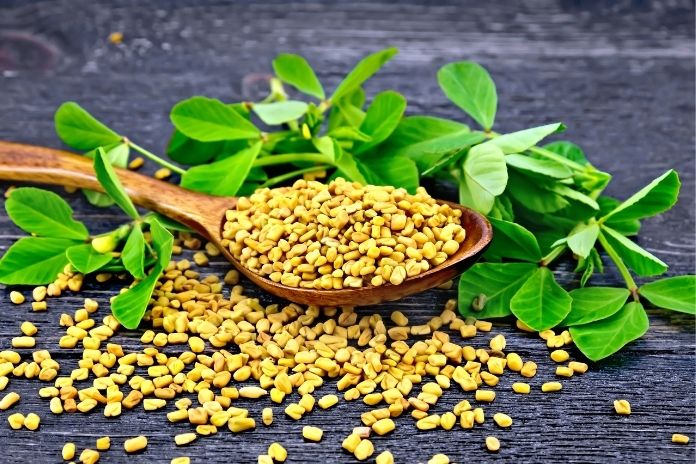
Fenugreek is known to have a high amount of iron, fiber, antioxidants, and plant protein. This makes it an effective source of iron for those who are looking for a natural source of iron.
In this article, we will compare fenugreek for iron with traditional iron supplements to see which works better for energy and digestion. It explains common iron pill side effects, why supplement sluggishness happens, and how food-based tips can help.
You’ll also learn practical, science-backed natural ways to increase iron and hemoglobin naturally without harming gut health.
Why Iron Pills Can Make You Feel Sluggish
Common Side Effects of Iron Supplements
Iron is a key ingredient in creating hemoglobin, a protein in red blood cells used to carry oxygen. Without enough iron, you feel tired, dizzy, look pale, and may experience shortness of breath, especially during activity. When anemia is moderate to severe, iron pills are medically necessary and effective, but your body does not absorb all of these pills.
The iron in ferrous sulfate pills provides a highly concentrated dose of iron. However, a large portion of this iron is not absorbed in the intestines. This is where many of the iron pills’ side effects come from. The unabsorbed iron can upset the intestinal lining, upset the balance of intestinal bacteria, and increase oxidative stress. This upsets the intestinal lining, resulting in side effects such as constipation, cramps, nausea, and dark stools. These common side effects are a major reason people stop taking iron pills.
While iron in the intestines does not mean iron in your blood is toxic, it can still stress your digestive system. When digestion slows or becomes irregular, your appetite slows, and your ability to take in nutrients slows. The result is that your energy level will not improve; you feel sluggish and tired.
How Supplement Fatigue Happens
Despite iron pills sometimes being necessary to fight moderate to severe anemia, your body cannot absorb all the iron from them. The pills can be hard on your stomach, causing side effects such as constipation, cramps, nausea, and dark stools.
The pills can be hard on your digestive system, which can decrease your appetite and the nutrients absorbed by your body. The result is a lack of energy, fatigue, and a sluggish feeling.
The situation worsens when iron pills are taken in the wrong manner. Many people take iron pills with their morning coffee or calcium-containing foods. These are iron inhibitors. Tea, coffee, and calcium are all inhibitors of iron absorption. Tannins in tea and coffee prevent iron from being absorbed.
Calcium also prevents iron from being absorbed. Most iron in foods, apart from meat, is non-heme iron. As a result, it is important to know how non-heme iron is absorbed in the body. Non-heme iron must be taken with vitamin C to be easily absorbed in the body. Without vitamin C, iron passes through the body unused.
Fenugreek — The Plant-Based Alternative to Iron Pills
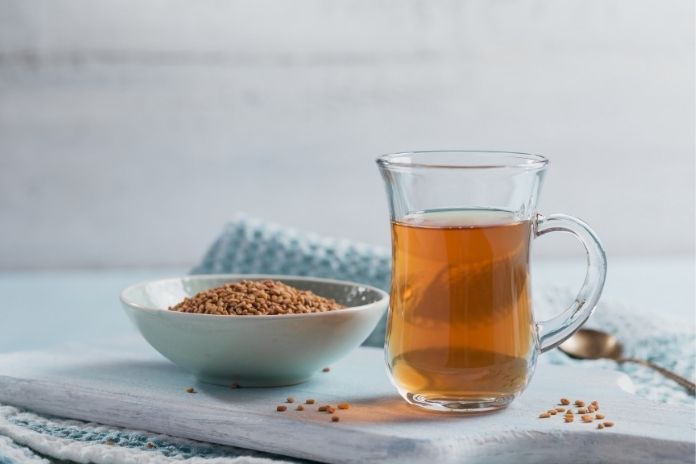
Nutritional Powerhouse of Fenugreek (Methi)
Fenugreek has traditionally been used in Indian, Middle Eastern, and Mediterranean cuisines, not only for flavor but also for strength and recovery. And now, with plant-based eating becoming increasingly popular across North America, fenugreek is being recognized as one of several plant-based sources of iron.
As you research “fenugreek for iron,” you’ll find out that the seeds and leaves of the fenugreek plant are packed with iron, along with fiber, protein, and antioxidants. While the iron in fenugreek is certainly valuable, the benefits of fenugreek extend beyond iron.
The soluble fiber in fenugreek supports the healthy bacteria in the gut, which can have a positive impact on the overall absorption of nutrients. The antioxidants in fenugreek have been shown to cut inflammation in the body, which indirectly benefits the health of red blood cells.
Unlike an iron supplement, which is often highly concentrated and absorbed quickly, the iron in fenugreek is absorbed gradually. This is because the iron in fenugreek is part of a food source. This gradual absorption of iron is often considered to be easier on the body for those who suffer from mild iron deficiencies, have marginal ferritin levels, or prefer to add nutrition to their routine.
Research-Backed Evidence
Emerging nutrition research has also explored combining fenugreek leaf powder with iron therapy. It indicated that when fenugreek is used alongside supplementation, it promotes hemoglobin, as opposed to consuming iron alone.
One proposed explanation is improved digestive efficiency and antioxidant support. In other words, better gut function supports better nutrient utilization.
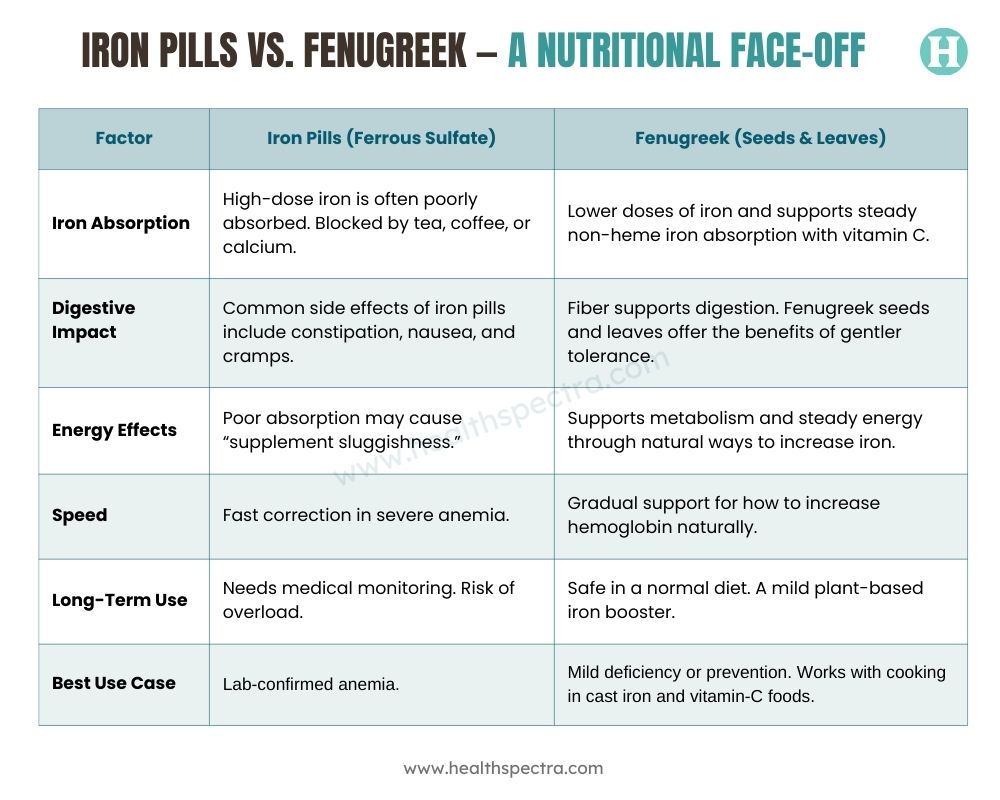
Iron Pills vs. Fenugreek — A Nutritional Face-Off
 How to Beat “Supplement Sluggishness” Naturally
1. Pair Iron with Vitamin C
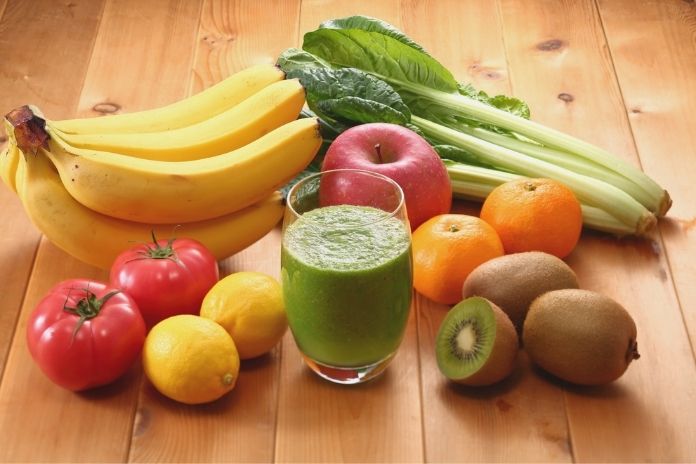
Vitamin C-rich foods like citrus fruits, amla, and tomatoes have the ability to increase the absorption of non-heme iron. This is perhaps the most effective remedy to increase the levels of iron in the body and eliminate the sluggishness that comes with iron deficiency. In addition, it will allow the users of iron pills to achieve better results compared to the use of natural sources of iron.
2. Soak Fenugreek Seeds Overnight
To reduce the levels of anti-nutrients and increase the levels of minerals in the body, it is recommended to soak 1-2 teaspoons of fenugreek seeds overnight for 8-10 hours. This promotes the benefits of fenugreek seeds and leaves, and the herb will be made less harsh.
This remedy will be effective in the use of fenugreek to increase the levels of hemoglobin in the blood naturally.
3. Cook with Cast-iron Pots
To increase the levels of iron in the blood, it is recommended to use a cast-iron pot while cooking. This remedy has been used traditionally to increase the levels of iron in the blood. It will be effective in the use of the over-the-counter iron supplements available. In addition, it will be effective in the use of natural sources of iron.
4. Avoid “Iron Blockers” During Your Meals
Tea, coffee, and dairy products are known to interfere with the absorption of iron. Therefore, it is recommended to avoid the use of tea, coffee, and dairy products during the first two hours of the meal. This will prevent the side effects of ferrous sulfate, which are often associated with the use of the pills.
5. Nurture Your Gut Health
To increase the levels of iron in the blood, it is recommended to maintain a good digestive system. Ginger, yogurt, and kefir are effective in maintaining a good digestive system. In addition, it will allow the users of iron pills to eliminate the side effects of ferrous sulfate, which are often associated with the use of the pills.
Natural Iron-Rich Foods to Pair with Fenugreek
Leafy Greens – Fenugreek leaves, Spinach, Amaranth
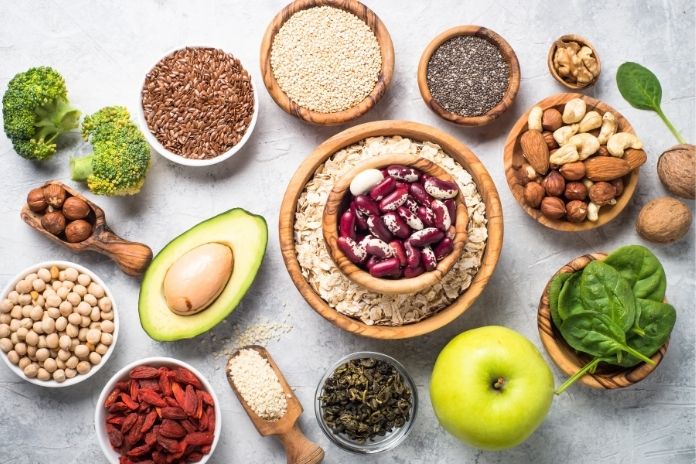
Leafy greens are rich in iron, folate, and antioxidants. When paired with vitamin C-rich foods, leafy greens can increase non-heme iron levels and support the natural increase of hemoglobin levels in the blood.
Seeds & Nuts – Garden Cress, Pumpkin, Sesame, Almonds
Seeds and nuts are compact sources of iron and are rich in protein and good fats. These are good sources of iron and can be paired with fenugreek in a balanced diet to increase iron levels naturally.
Legumes & Millets – Lentils, Kidney Beans, Ragi, Bajra
Legumes and millets are good sources of iron and are easily digested. These are useful in situations where the benefits of iron supplements are weighed against the benefits of natural sources of iron.
Dried Fruits – Soaked Raisins and Figs
Soaked raisins and figs are good sources of iron and are easily digested. These can be paired with fenugreek to increase the levels of iron in the blood and reduce the use of iron supplements, which cause iron pill side effects.
When Supplements Are Essential

However, we must remember that fenugreek should not be considered a replacement for medical treatment in cases of severe anemia. If the problem of fatigue, pale skin, rapid and/or irregular heart rate, dizziness, and shortness of breath persists, you must visit a doctor. When the ferritin level in the body is low, supplementation under medical supervision can be advised
If you intend to take more than one herbal supplement and iron supplements, it’s important to talk to a medical professional. Avoid excessive iron intake; although iron is important, its intake in large quantities can prove to be dangerous.
The Bottom Line: Nourishment Over Quick Fixes
Iron supplements can be helpful, providing instant solutions to deficiencies and being essential for the treatment of moderate to severe anemia. However, they are not always easy on the system and are sometimes not the best solution for the long-term treatment of vitality.
Fenugreek is an alternative way of treating the body rather than just the symptoms. While researching iron supplements for plant-based sources of iron, natural iron supplements, and the side effects of iron supplements, adding fenugreek to your diet could prove to be an aid to your energy levels and digestion.
References
CiplaMed. (n.d.). Do’s and don’ts while taking iron supplements. CiplaMed.
NatureClaim. (n.d.). Fenugreek seed nutrition information. NatureClaim.
NDTV. (2023). 10 benefits of consuming fenugreek (methi) water. NDTV.
National Library of Medicine. (2024). [Article on fenugreek and iron metabolism]. PubMed Central.
American Society of Hematology. (n.d.). Iron-deficiency anemia. American Society of Hematology
In this Article