




















Changing the beliefs buried deep inside – the ones about who we are, how people treat us, or how the world works – isn’t magic. It’s work. Real work. But it’s doable. So, if you’re wondering how to change core beliefs, this article will give you seven evidence-based strategies – drawn from the research of Cognitive Behavioral Therapy (CBT) and related fields – that you can apply with consistency, realistic expectations, and some practice.
Early shifts in awareness of automatic thoughts can occur within the first few sessions, but deeper changes to entrenched core beliefs often take 12-20 therapy sessions, spanning 3-6 months.
Factors like motivation, homework adherence, and belief entrenchment influence speed—some notice meaningful progress sooner, while complex cases (e.g., trauma) extend longer.
For many people, the timeline is somewhere around 3-6 months of regular work (daily or almost daily), although progress will be non-linear.
Using more than one method tends to be beneficial. You’ll basically move through a loop of steps: notice the belief, test it, collect new evidence, reframe it, and behave in line with the new one. That’s the general roadmap. Let’s get into the seven ways to do it.
1. Cognitive Restructuring
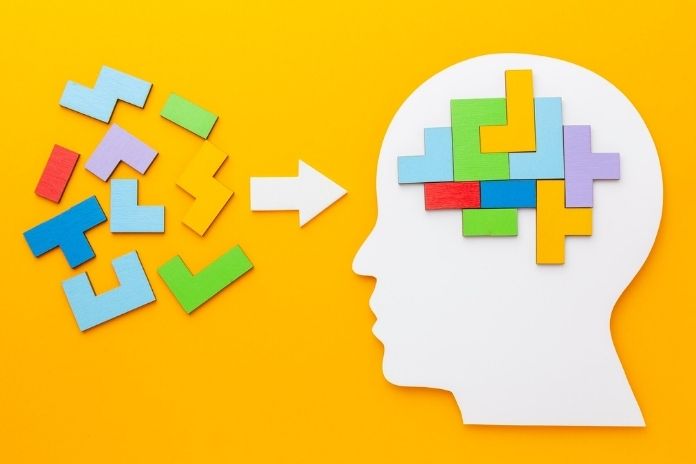
This is probably the most familiar of the bunch and has the strongest evidence base. The goal is to systematically challenge and replace a rigid, changing negative core belief with a more balanced one.
Step-by-step process
- Identify the belief: Write it down and rate how strongly it feels true (0–100).
- List evidence for i:. What experiences or facts seem to back it up?
- List evidence against the belief: What experience contradicts it or fails to support it?
- Develop an alternative balanced belief: Something more realistic, less extreme.
- Rate the new belief’s strength: Again, 0-100. Then repeat this process over several days/weeks and see if the strength changes.
Example with worksheet
- Belief: “I’m worthless.” (Strength 90/100)
- Evidence for: “I once failed at a job interview”/“People ignored me when I tried to speak up.”
- Evidence against: “My friend thanked me for helping them”/“I succeeded once in a project at work.”
- Balanced belief: “Sometimes I feel worthless, but I also have value and competence in many areas.” (Strength initial 30/100)
After revisiting, the strength may rise to 50 or 60 over time.
Common pitfalls
- Discounting evidence against the belief: “Yes, but that doesn’t count.”
- All-or-nothing thinking (“If I failed once, I fail at everything.”).
- Dropping the exercise too early – it needs repetition to work.
Angle
It’s direct, action-based, and research-backed. Basically, you become a detective, testing your own mental story.
Read More: He Said, She Said: Navigating Misunderstandings for a Stronger Bond
2. Behavioral Experiments

Knowing something isn’t enough. You have to experience it. Behavioral experiments involve testing beliefs in the real world and observing the actual outcomes.
How to design them
- Start with a belief: e.g., “If I show my true self, then people will reject me.”
- Make a prediction: I think people will avoid me or even say something bad or mean.
- Design a low-stakes experiment: Share something moderately personal with a friendly acquaintance and observe what happens.
- Record what happens objectively: Did rejection happen? What was the reaction? What did you feel?
- Compare: The prediction vs. the actual outcome.
Example
You believe “I always mess up when I speak in meetings.” Schedule a meeting where you make a small contribution, note what happens, and then reflect: maybe people responded positively or neutrally. That undermines the belief.
Angle
This method is powerful because it uses experience to counter beliefs, rather than relying solely on internal thought work. Change comes through doing. The brain registers real events more deeply than just thinking about something.
Read More: The 7 Types of Rest You Might Be Missing (And How to Get Them)
3. Positive Data Log

This is a simple but surprisingly effective daily habit: record times when your belief is not true, or when you observe evidence that contradicts it.
Key points
- Each day, note one or more events that go against your negative belief.
- Helps fight confirmation bias (our brain loves to notice things for the belief and ignore things against it).
- Recognize subtle contradictory evidence (not only big things).
- Weekly review: see patterns, build up bigger evidence base.
- Appreciate yourself on even a little success: “I am happy that when I raised my hand in class, I got a friendly response.” That counts.
Example log entries
- “My colleague asked me for help, so I am”
- “I volunteered to speak up; no one criticized me loudly; someone nodded.”
- “Screwed something up, but someone still said thanks for trying.”
Angle
It’s just a small daily thing, nothing fancy. Because it’s easy, you might actually keep doing it. Over time, accumulating small bits of ‘positive data’ shifts how you view yourself. A key drawback of the Positive Data Log is that it requires consistent daily effort, which can feel effortful or lead to frustration if users dismiss small positives as insignificant.
Read More: AI in Mental Health: How Technology Is Revolutionizing Diagnosis and Treatment
4. Historical Test of Belief

Your past holds many clues. Often, a belief is formed long ago, from early experiences. This method asks you to explore your history to test whether the belief has always been true or has been false at times.
Key points
- List times when the belief seemed true.
- List times when the belief was proven wrong.
- Look at what you were ignoring before – compliments you dismissed, achievements you forgot.
- Notice if your memories are biased toward failure or pain.
- Rewrite the narrative: instead of “My whole life I failed”, you might see “There were failures, yes, but also many successes.”
Angle
This reminds you that your belief isn’t carved in stone – it has been challenged before, you have data in your life that contradicts it, even if you ignored it. Your past is not unified with the negative belief you currently hold. The main drawback is that revisiting past events may trigger emotional distress without coping strategies like mindfulness.
Read More: 7 Morning Meditation Rituals to Start Your Day with Clarity and Focus
5. Continuum Technique

Rigid beliefs (“I am a failure”, “I can never trust anyone”, “No one likes me”) often harm us because they allow no middle ground. The Continuum Technique invites you to shift to spectrum thinking.
Key points
- If you always think in extremes, such as “it is always like this” or “it will never be like this,” then try to see it on a scale, from 0 to 100 or whatever.
- Rate yourself or others on that continuum. Like: “How much I really did fail in this situation…on a scale of 0-100?”
- Recognize that many people/situations fall somewhere in the middle, rather than always being on the extreme edges.
- Example: Belief “I’m a failure” → new view: “I fail in some things, but I succeed in others. Today I succeeded partially at task A and somewhat struggled with task B.”
- Nuanced thinking weakens rigid beliefs.
Angle
This technique helps you escape the black-white trap and see the shades of grey. Many research sources about core beliefs highlight the ‘global self-evaluation’ theme (e.g., “I am useless”, “I am unlovable”), which is exactly what this addresses.
Read More: What Your Aura Says About Your Health: Science or Spirituality?
6. Compassionate Reframing

You can’t bully yourself into healing. This one’s about dealing with beliefs kindly – understanding why they existed in the first place.
Key points
- Try to see what that belief was actually trying to do – usually it’s just trying to protect you or stop you from getting hurt.
- You can talk to it just like you would talk to a scared kid version of yourself. Like, “hey, really thanks for taking care of me and saving me from discomfort or failure, but I’m okay now, you don’t need to save me this way anymore.”
- Then, plan a more effective way to address the same issue. Like, “that whole ‘I’m worthless’ thing was just trying to keep me from getting rejected. Now I can protect myself by recognising my strengths and asking for help.”
- Self-compassion research shows that being kind to ourselves helps change our beliefs because it reduces internal conflict, shame, and resistance.
Angle
Much of belief-work is emotional work, not just cognitive. When you soften the defence systems, you make change easier.
Read More: Embracing Imperfection: The Beauty of Self-Acceptance and Authenticity
7. Acting As If

Here, you act as if the new belief is already true, even if internally you don’t feel it yet. Behavior informs belief.
Key points
- Choose behaviors that align with your desired belief.
- “Fake it till you make it” isn’t empty; there’s neuroscience supporting how behavior sends signals to the brain and influences your belief systems.
- Start small: If you want to believe “I am competent”, then pick a small task you feel moderate about and perform it as if you believe you’re competent (preparation, tone, posture).
- Over time, acting differently can shift internal belief.
Angle
This method focuses on the interplay between body and behavior influencing the mind, rather than just the mind influencing the body. This flips the usual expectation and gives you another leverage point.
Read More: How to Stop Intrusive Thoughts: 9 Therapist-Backed Techniques That Actually Work
Creating Your Belief-Change Plan
Now you’ve seen seven techniques. So, how do you put all this together without getting lost? Start simple.
- Pick one or two methods. Don’t do all seven at once. (that can be so overwhelming for you).
- Make it work in a practical way: like, “In the first week: I’ll work with cognitive restructuring for my belief X, then rate it daily, along with logging evidence.”
- Then review every week: rate how powerful your belief is – its strength, note which tools you used, whatever helped, and whatever did not.
- Adjust as needed: If positive logging feels natural, keep it. Maybe acting as if makes you anxious – scale down.
- After 4-6 weeks, try and add another method.
- Belief change takes patience. Don’t expect the number to drop from 90 to 10 overnight.
- Expect setbacks: A situation may trigger old beliefs strongly; treat it as data, not failure.
Angle
Having a systematic plan prevents feeling scattered, discouraged, or “stuck” and builds momentum.
Read More: Embracing You: 7 Steps to Practice Body Neutrality Daily
Conclusion
Changing your core beliefs is not about a sudden epiphany – it’s about consistent practice. When you decide to do the work—identify, test, reframe, and act— you begin shifting how your mind interprets everything. Most people notice meaningful change in about 3-6 months of consistent effort. Setbacks are part of the journey, not signs that you’ve failed. The key is to keep going, track your progress, adjust as needed, and treat each day as a step in the process.
The belief change doesn’t mean you’ll never have doubts again – but you’ll notice that the influence of the old belief weakens, you respond differently, you live differently. Keep at it.
Key Takeaways
- Core beliefs are deeply held assumptions about oneself, others/world, and they can be changed, but it takes time and effort.
- Using multiple strategies (cognitive, behavioral, emotional) gives better results than relying on just one.
- Behavior and experience matter: testing beliefs in real life (through behavioral experiments) can shift beliefs more effectively than just thinking about them.
- Self-compassion is a crucial part of belief change; being hard on yourself usually stalls progress.
- History, daily logging, and continuum thinking all help build evidence that your old belief doesn’t hold a monopoly – so you can gradually adopt a more balanced belief.
Frequently Asked Questions
Q1. Which strategy works fastest?
No guarantee of “fast”; behavioral experiments and positive data logs tend to show noticeable shifts sooner because they generate real-world evidence. But “fast” doesn’t always mean “deep” or “sustained.”
Q2. Can I change multiple beliefs at once?
Yes, but carefully. Pick one main belief to focus on first; once you see progress, you can start working on another. Too many at once can cause confusion or burnout.
Q3. What if I don’t believe the new belief?
That’s totally normal. Think of the new belief as a working hypothesis. Rate your belief strength (0-100), and gradually you’ll feel it more. Action and experience help belief catch up.
Q4. Do I need a therapist to do this?
No, you can do these techniques on your own, especially if you’re motivated and consistent. However, working with a trained therapist can accelerate the process, provide guidance, and offer support when things get challenging.
Q5. Will this remove all my old beliefs forever?
No, you may always have shadows of them. The goal isn’t perfect eradication, but weakening their hold and replacing them with more balanced beliefs that guide you better.

References
- https://www.ncbi.nlm.nih.gov/books/NBK556005/
- https://pmc.ncbi.nlm.nih.gov/articles/PMC10440210/
- https://pmc.ncbi.nlm.nih.gov/articles/PMC7611432/
- https://www.cci.health.wa.gov.au/~/media/CCI/Consumer-Modules/Stepping-out-of-Social-Anxiety/Stepping-out-of-Social-Anxiety—Module-8—Challenging-Core-Beliefs.pdf
- https://pubmed.ncbi.nlm.nih.gov/26254620/
- https://pubmed.ncbi.nlm.nih.gov/39183692/
In this Article