














Sleep is not just “rest time.” Inside the body, many active processes take place that we do not feel. One phase of sleep, in particular, quietly helps regulate muscle repair, fat use, and hormone signaling. Many people focus on protein, workouts, and calories but ignore this internal switch. That switch is in deep sleep.
This article is not repeating common ideas. We go deeper into what actually changes inside the body when deep sleep is good and what slowly starts to break down when it is not.
- Deep sleep is where most muscle repair and growth hormone release happens.
- Poor sleep reduces recovery, increases fat storage signals, and disrupts metabolism.
- Consistent, good-quality sleep supports better muscle gain and fat loss over time.
What Is the “Sleep Switch” Linked to Muscle and Fat Metabolism?
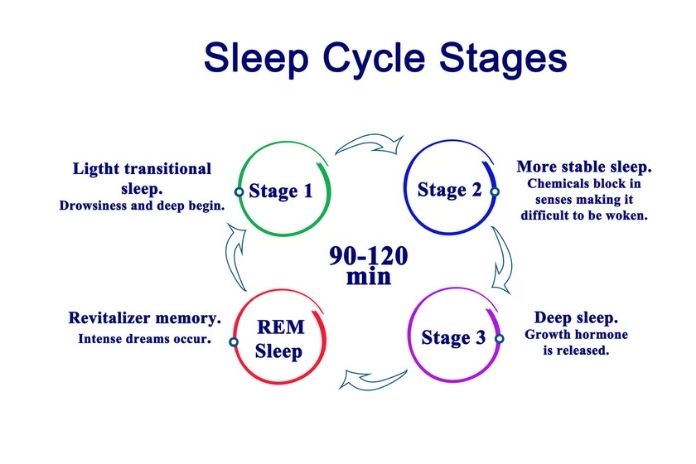
Sleep is not one single block. It moves in cycles. There are light stages, deep sleep, and REM sleep. Out of all, deep sleep (also called slow-wave sleep) is the most physically important stage.
In deep sleep, brain activity slows down, body temperature drops slightly, and heart rate becomes stable. This is the time when the body is not reacting to the outside world. It is repairing itself. Think of it like this: daytime is for spending energy, nighttime during deep sleep the system is being rebuilt. Dr. Avinesh S. Bhar, a sleep medicine doctor, says that deep sleep supports metabolic health.
Most muscle repair, tissue rebuilding, and energy-balancing processes happen most intensely during this stage. They are not spread evenly across the entire night but are concentrated in the first few hours of sleep. This is why sleep timing matters, not just total sleep duration.
How Growth Hormone Is Released During Sleep
Growth hormone does not release equally throughout the whole day. It comes in pulses. The biggest pulse usually happens soon after falling asleep, during early deep sleep. Deep sleep is also when a lot of neurodevelopment takes place and the growth hormone is produced, says Dr. Anne Marie Morse, a neurologist, adding that kids spend more time in deep sleep than adults because they are literally growing and learning while they sleep.
This is an important point many miss: It is not total daily growth hormone that matters most; it is how strong and well-timed that night pulse is. If deep sleep is fragmented or delayed, that pulse becomes weak or delayed.
Even if total sleep hours are normal, the hormone timing gets disturbed. Daytime growth hormone (like from exercise) is helpful, but it is smaller compared to the night pulse. Night release is more stable and coordinated with repair processes.
So when people ask, “Does sleep increase growth hormone?” it is not a simple yes/no. Sleep organizes when and how effectively it is used.
How Deep Sleep Supports Muscle Growth
Muscle growth is not happening during the workout. Workout is the only signal. Growth happens later, mostly during recovery. In deep sleep, growth hormone supports:
- Protein synthesis (building muscle fibers)
- Repair of micro-damage from training
- Strengthening connective tissues
But one more less-talked-about thing: coordination of repair. Without deep sleep, the body still tries to repair, but not efficiently. It becomes like patchwork instead of structured rebuilding. Also, nervous system recovery happens here.
That affects strength performance the next day. If deep sleep is low, even if muscles are okay, strength output drops. So deep sleep is not only a “muscle-size” factor, but it is also a performance stabilizer.
How Sleep Influences Fat Burning
Fat loss is not just a calorie deficit. Hormones decide how the body uses stored energy. When sleep is proper:
- Insulin sensitivity improves (body handles carbs better)
- Fat is used more steadily as energy
- Appetite hormones stay balanced
When sleep is poor:
- The body prefers quick energy (carbs) and less fat burning
- Hunger hormones increase (you feel more hungry)
- Cravings shift toward high-calorie foods
There is also one subtle effect: sleep loss makes the body “defensive.” It tries to conserve energy instead of spending it. That means even if the calories are the same, fat loss becomes slower. So sleep is not burning fat directly. It is setting an internal environment where fat burning becomes easier or harder.
The Role of Sleep in Body Composition
Body composition means the ratio of muscle and fat. Sleep affects both sides. When sleep is good:
- Muscle repair is efficient
- Fat storage signals are controlled
- Metabolism runs smoother
When sleep is poor:
- Muscle breakdown slightly increases
- Fat storage tendency increases
- Energy use becomes inefficient
Even more interesting: Two people eating the same diet and doing the same workout can get different results just because of a sleep quality difference. Sleep decides whether the body prioritizes muscle gain or fat gain.
What Happens When You Don’t Get Enough Deep Sleep?

This is where problems slowly start.
First, the growth hormone pulse becomes weaker. That directly affects recovery.
Second, cortisol (a stress hormone) increases. High cortisol does two things: Breaks down muscle over time and promotes fat storage, especially around the abdomen.
Third, recovery slows down. You feel soreness longer, performance drops, and motivation reduces.
Fourth, hunger signals increase. You eat more without realizing.
This is not an immediate effect. It builds slowly. That’s why many people don’t connect sleep with their stalled progress.
Signs You May Not Be Getting Enough Restorative Sleep
Not everyone tracks deep sleep, but the body gives signals:
- Waking up but still feeling tired
- Workouts feel heavier than usual
- Strength not improving even after training
- Cravings increasing, especially at night
- Fat loss stops even with the same diet
One more subtle sign: mood becomes slightly unstable. Not extreme, but irritation increases. These are not always from sleep, but if multiple signs are present, sleep quality should be checked.
How Much Sleep Supports Hormone Balance?
Most adults need around 7–9 hours. But hours alone are not enough. Quality and timing matter more. Sleeping 7 hours with proper deep sleep is better than 9 hours with broken sleep. Also, consistency matters. Sleeping at different times every day disturbs the circadian rhythm. Then, even if hours are okay, deep sleep may be reduced. So instead of only asking “how many hours,” a better question is:
- Am I sleeping at the same time regularly?
- Am I getting uninterrupted early sleep?
Habits That May Improve Deep Sleep

1. Maintaining a Consistent Sleep Schedule
The body follows the internal clock. If sleep timing changes daily, deep sleep becomes unpredictable. Sleeping and waking at the same time trains the body to enter deep sleep faster.
2. Managing Evening Light Exposure
Bright screens at night delay sleep signals. The brain thinks it is still daytime. Reducing screen brightness or avoiding screens 1 hour before sleep can help. Not a perfect solution, but a small improvement.
3. Optimizing Bedroom Environment
Deep sleep prefers:
- Slightly cool temperature
- Low noise
- Comfortable bedding
Even small discomfort can reduce deep sleep duration without fully waking you.
4. Timing Exercise and Meals
Heavy workouts too late at night can delay sleep in some people. Large meals just before sleep can also disturb deep sleep slightly. Best approach:
- Exercise earlier if possible
- Keep dinner lighter and not too late
Does Exercise Improve Deep Sleep?

Yes, but not always in a simple way. Regular exercise increases sleep pressure. That helps you fall into a deep sleep faster. Strength training especially supports deep sleep because the body needs more repair. But overtraining does the opposite:
- Increases stress hormones
- Disturbs sleep
- Reduces recovery
So balance is important. Exercise helps sleep, but excess training can harm it.
Nutrition Factors That Influence Sleep and Growth Hormone

Protein supports muscle repair, but never directly increases deep sleep. Carbohydrates in the evening may help some people in getting relaxed and falling asleep faster. But heavy intake can disturb sleep in others. Stimulants like caffeine, if taken late in the day, reduce deep sleep quality even if you fall asleep.
One overlooked factor: alcohol. It may make you actually sleepy, but it reduces deep sleep and fragments sleep cycles. So sleep-friendly nutrition is less about a “perfect diet” and more about avoiding disturbances.
Read More: The ‘Neural Gains’ Phase: Why You’re Getting Stronger Without Seeing a Single Muscle
Common Myths About Sleep and Muscle Growth
“You can make up for sleep on weekends”
Partially true for the rest, but not fully for the hormonal rhythm. Growth hormone timing does not reset so easily.
“More sleep always means more muscle”
After a certain point, extra sleep does not add benefits. Quality matters more.
“Supplements can replace sleep”
No supplement can recreate deep sleep processes. Some may help with relaxation, but core repair needs actual sleep.
Read More: How to Build Muscle Without Going to the Gym (Science-Backed Strategies)
When to Consider Medical Advice for Sleep Problems

If sleep issues are regular, not occasional, they should never be ignored. Consider help if:
- You cannot fall asleep most nights
- You wake up many times
- Loud snoring or breathing pauses (possible sleep apnea)
- Constant daytime sleepiness
These conditions can directly affect metabolism and hormone balance. “If you suspect you may have a sleep disorder, then talk to your healthcare provider,” Dr. Michelle Drerup, a sleep disorder specialist, recommends.
Read More: Bench Press Plateau? Strengthen This One Muscle to Prevent Rotator Cuff Injuries
Final Thoughts
Deep sleep is not just a recovery tool. It is a regulator of how the body uses energy, builds tissue, and controls hormones. Many people try to fix body composition from the outside, through diet, workouts, and supplements, but ignore the internal timing system. Sleep is that system.
Without proper deep sleep, effort from diet and exercise gives reduced results. Not zero, but less than expected.
- Deep sleep is strongly linked to growth hormone release
- Poor sleep reduces muscle recovery efficiency
- Fat metabolism becomes less effective with sleep loss
- Hormonal balance shifts toward stress and storage
- Consistent sleep habits support long-term body composition goals
References
- Brandenberger, G., Gronfier, C., Chapotot, F., Simon, C., & Piquard, F. (2000). Effect of sleep deprivation on overall 24 h growth-hormone secretion. The Lancet, 356(9239), 1408.
- Murphy, P. J., & Campbell, S. S. (1997). Nighttime Drop in Body Temperature: A Physiological Trigger for Sleep Onset? Sleep, 20(7), 505–511.
- Obal, F., & Krueger, J. M. (2004). GHRH and sleep. Sleep Medicine Reviews, 8(5), 367–377
In this Article