




















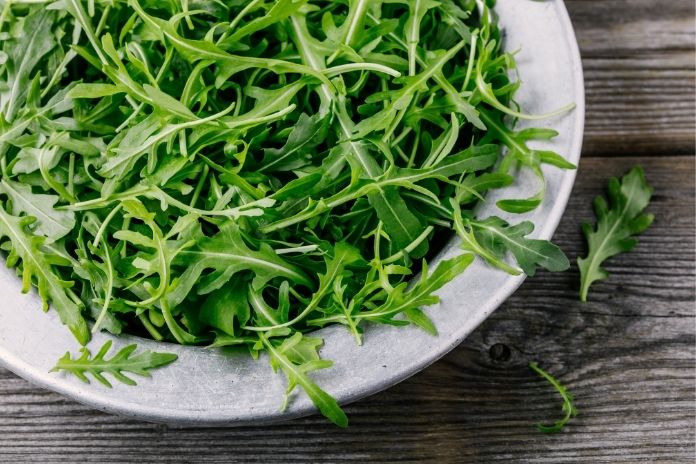
Eating arugula before meals isn’t just a social media trend. There is actual biology behind it.
Arugula (also called rocket, or Eruca sativa) is not just another “leafy green.” It has very high nitrate content, strong bitter compounds, and very low calories. Because of this combination, the timing of eating it also matters.
When eaten before a meal, it can affect blood vessels, digestion signals, appetite, and even how your body handles carbohydrates from that meal. Not everything is proven strongly, but enough mechanisms are there to say it is not an unnecessary habit.
- Eating arugula before meals works through multiple mechanisms: the nitrate–nitric oxide pathway (which may improve blood flow), bitter-triggered digestive priming, and the food-order effect on blood sugar.
- It is a low-calorie habit with real biological logic, but the effects are gradual, not instant.
What Arugula Actually Contains: The Compounds Behind the Claims
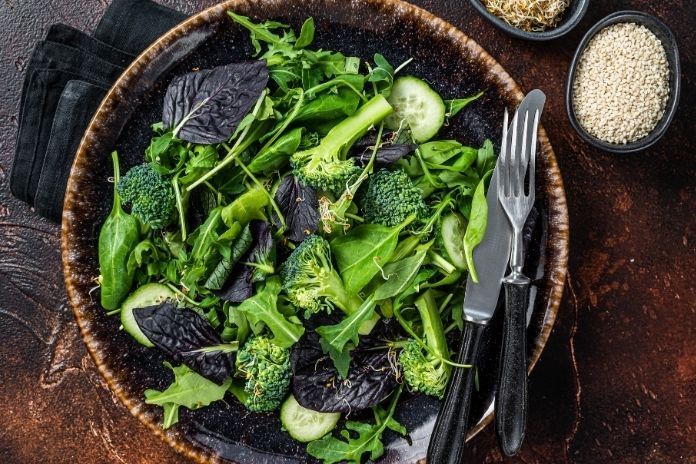
People say “greens are healthy,” but that is vague about the benefits of arugula before meals. Arugula is specific because of certain compounds.
The first is dietary nitrates. Arugula is among the highest-nitrate vegetables. In some testing, levels go above 4,000 mg per kg. That is higher than many other leafy greens. These nitrates are not harmful in this context. In the body, they convert into nitric oxide. That molecule controls blood vessel relaxation and blood flow.
Second is glucosinolates in arugula. These are sulfur compounds also found in broccoli, cabbage, etc. When you chew raw arugula, an enzyme called “myrosinase” converts it into isothiocyanates.
These are biologically active, linked with anti-inflammatory and detox pathways. “Cruciferous vegetables contain glucosinolates, compounds that play a role in protecting against certain cancers,” says Rahaf Al Bochi, a dietician. Important point: cooking reduces this conversion. So raw arugula works differently from cooked.
The third are bitter polyphenols. This is why arugula tastes peppery and slightly sharp. That bitterness is not just a taste; it signals the body in a specific way, especially for digestion. So it is not a random leafy green. It has a mix of compounds that behave differently when eaten before food.
The Nitric Oxide Effect: What’s Happening in Your Blood Vessels
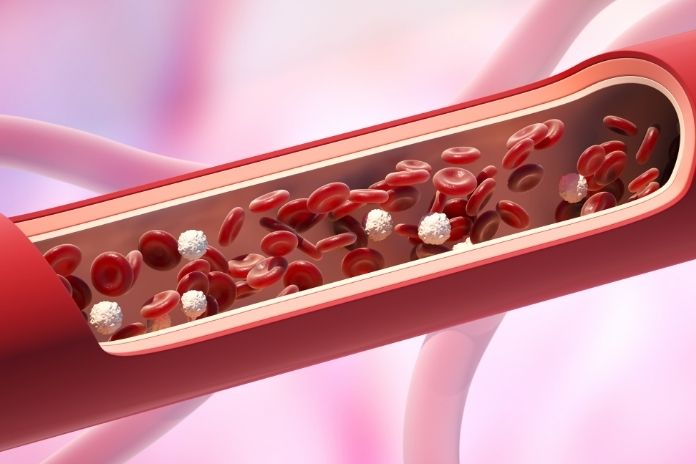
The main scientific reason behind this habit is nitrate → through the nitric oxide pathway. When you chew arugula, bacteria in your mouth start converting nitrates into nitrites. This continues in the stomach and blood, finally forming nitric oxide (NO).
Nitric oxide is a signaling molecule. It tells blood vessels to relax. This process is called vasodilation. When vessels relax:
- Blood flows more easily
- Pressure inside vessels reduces.
- Endothelial function improves
There are studies showing that diets that include nitrate-rich vegetables support normal blood pressure and vascular health.
Nitric oxide production from food nitrates does not happen instantly. It takes around 60–90 minutes to build up. So eating arugula before a meal means that by the time the body is processing the meal, nitric oxide is already active.
After eating, blood flow demand increases (digestion requires circulation). So this timing may support a smoother vascular response. It is not like an instant drop in blood pressure after one bite. It is more like a small effect repeated daily.
The Digestive Priming Effect: Why Bitter Matters

This is one of the less talked-about arugula health benefits, but it is very interesting. Arugula is bitter. And a bitter taste has a function.
How bitter taste receptors prepare your gut for food
When you taste bitterness, receptors on the tongue (called TAS2Rs) get activated. These are not just for taste. They send signals to the digestive system. This triggers what is called the cephalic phase response. This means the body prepares for food even before it reaches the stomach.
What happens in this phase:
- Saliva increases
- Stomach acid secretion begins
- Bile flow starts
- Digestive enzymes get ready
So when the main meal comes, the system is already active. Without this, digestion starts slightly delayed. With this, it is more prepared. This is why in many traditional food systems, bitter foods or drinks are taken before meals. Not a random tradition; there is physiology behind it.
Arugula works the same way. Its bitterness comes from glucosinolates and phenolic compounds. Also important: cooking reduces this bitter effect. Raw arugula gives a stronger signal. So eating it before a meal is not just about nutrients. It is about the timing signal to the digestive system.
Blood Sugar, Appetite, and the Pre-Meal Timing Advantage

Another reason this habit is gaining attention is blood sugar control and appetite. First, food order matters. Research shows that when vegetables are eaten before carbohydrates, the blood sugar spike after a meal is lower. The reason is simple:
- Fibre slows stomach emptying
- Carbohydrates get absorbed slowly
- The glucose rise becomes smoother
Arugula has a small amount of fiber, but more importantly, it adds volume before the main meal.
Now, facts about the appetite-suppression side. A handful of arugula is around 5–8 calories. Almost nothing. But it adds bulk to the stomach. Also, chewing itself triggers satiety signals. So before you even start the main meal:
- The stomach is already partly filled
- The brain is already getting a “food coming” signal
This can reduce how much you eat afterward. There is no direct strong trial only on arugula. But this mechanism is consistent with vegetable-first eating research. So, the effect is not a magical fat loss trick. But a small, consistent effect over time can matter.
Read More: Sirtfoods: Can These Special Foods Turn on Your “Youth Genes”?
Oral Microbiome: Small Detail But Important
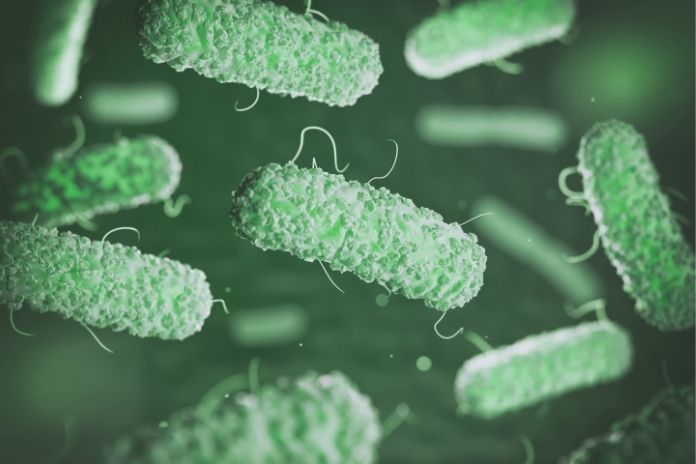
This part is usually missed. Conversion of arugula nitrates to nitric oxide depends on bacteria in the mouth. Without them, the pathway becomes weak. Chewing raw arugula supports these nitrate-reducing bacteria.
But if someone uses strong antibacterial mouthwash regularly, it can reduce these bacteria. Then the nitrate → nitric oxide conversion becomes less efficient. So habit is not only about food. It also depends on the oral environment. This is a small but important detail for understanding why the effect varies between people.
Read More: The Flexitarian Diet: Balancing Plant-Based and Animal-Based Foods
How to Actually Do It and What to Watch For

The habit is simple. But small details matter. Take around 1 to 2 cups of raw arugula (roughly one handful). Eat it 5–15 minutes before a meal. Can eat plain or add:
- A few drops of olive oil
- A little lemon juice
Oil helps absorb fat-soluble vitamins like vitamin K. Lemon makes the taste easier. “Arugula has a peppery taste, so it pairs well with sweet and tangy foods, like watermelon and feta,” says Leslie Fink, a nutritionist. No need to overcomplicate. “Sauteed arugula still has plenty of health benefits, and you can enjoy it on pasta, pizza, or sandwiches,” suggests registered dietitian Julia Zumpano.
Who should be careful
- If taking blood thinners (like warfarin):
Arugula has vitamin K. It affects clotting. Do not suddenly increase intake. Keep it consistent and discuss with the doctor. - If low blood pressure:
Because of the nitric oxide effect, start small. See how the body reacts. - Thyroid concerns:
Cruciferous vegetables like arugula have goitrogens, but only high amounts matter. A normal handful is not an issue.
Also, no need to eat huge amounts. More is not always better.
Read More: Foods That Lose the Most Nutrients When Cooked (and How to Preserve Them)
Final Thoughts
Eating arugula before meals is not just a wellness trend. It has logic. Nitrates support blood vessels. Bitter compounds in arugula prepare the digestive system. The food order effect helps blood sugar.
Each effect alone is not extreme. But combined and repeated daily, it becomes a meaningful habit. Also, the cost is almost zero in calories. That is rare. So it is not a miracle, but it is sensible.
- Arugula’s nitrate content is among the highest in vegetables, but individual response depends on oral bacteria; this variation is rarely discussed.
- The “bitter before meal” concept has a physiological basis (cephalic phase), not just a traditional belief.
- Food order research is strong, but specific studies on arugula alone are limited, still an open research gap.
- Cooking changes the chemical activity of arugula significantly; raw vs. cooked is not the same nutritionally.
- This habit works as low-cost metabolic support, not as a direct weight loss or disease treatment tool.
FAQs
1. Is it better to eat arugula before or with a meal?
Eating arugula before a meal may enhance digestive signaling and support better post-meal blood sugar control due to its bitter compounds. Consuming it with meals is still beneficial, but the pre-meal timing may offer a slight metabolic advantage.
2. How much arugula should I eat before meals?
A small handful of arugula, roughly 20–30 grams, is sufficient before meals to stimulate digestive responses. Larger portions are unnecessary, as even modest amounts provide the bitter compounds and nutrients responsible for its metabolic and digestive benefits.
3. Can arugula lower blood pressure immediately?
Arugula does not lower blood pressure instantly. Its nitrate content supports nitric oxide production, which may help improve vascular function over time. Regular intake contributes to gradual cardiovascular benefits rather than immediate blood pressure reduction after a single serving.
4. Is raw arugula better than cooked?
Raw arugula is generally more effective for digestive and metabolic benefits because it preserves heat-sensitive enzymes and bitter phytochemicals. Cooking may reduce some of these compounds, though lightly cooked arugula still retains valuable nutrients and remains a healthy option.
5. Can I eat arugula daily?
Arugula can be safely consumed daily by most individuals as part of a balanced diet. However, those taking blood-thinning medications should maintain consistent intake, as their vitamin K content may influence clotting and medication effectiveness over time.
References
- Ciriello, M., Izzo, L., Dopazo, A. N., Campana, E., Colla, G., Corrado, G., De Pascale, S., Rouphael, Y., & El-Nakhel, C. (2025). Differential Effects of Non-Microbial Biostimulants on Secondary Metabolites and Nitrate Content in Organic Arugula Leaves. Foods, 14(14), 2489.
- Imai, S., Fukui, M., & Kajiyama, S. (2014). Effect of eating vegetables before carbohydrates on glucose excursions in patients with type 2 diabetes. Journal of Clinical Biochemistry and Nutrition, 54(1), 7–11.
- Olas, B. (2024). The Cardioprotective Role of Nitrate-Rich Vegetables. Foods, 13(5), 691–691.
In this Article