



















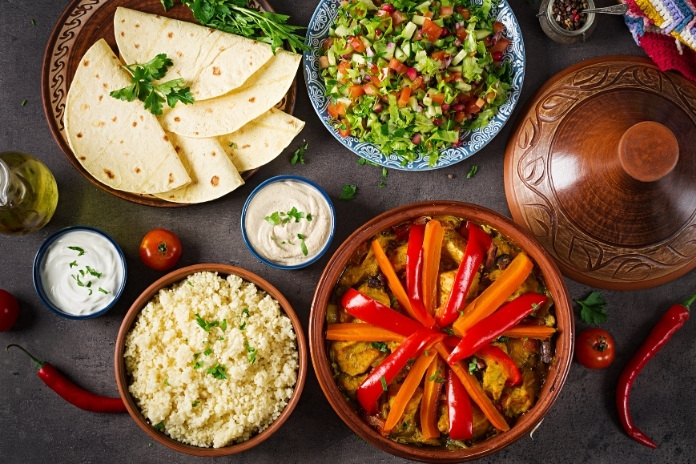
Something subtle happens when a person is told, repeatedly and from many directions, that the food they grew up eating is a problem to be corrected. It is not simply a nutritional message. It is a message about identity, belonging, and worth. Modern diet culture excels at this kind of transmission.
Wellness platforms, nutrition apps, and clean-eating frameworks routinely present standardized versions of “healthy” eating that implicitly or explicitly position traditional cuisines as inferior, excessive, or off-limits. The consequences are not limited to meal planning.
Removing culturally meaningful foods from a person’s diet can affect their mental health, sense of community, and relationship with their own heritage in ways that calorie charts do not capture. This article examines what cultural food erasure is, how it operates, why it matters for psychological well-being and longevity, and what a more balanced approach actually looks like.
- Cultural food erasure happens when diet culture stigmatizes or replaces traditional foods, impacting identity, belonging, and self-worth—not just nutrition.
- Avoiding culturally meaningful foods can harm mental health by increasing stress, food anxiety, and social isolation, especially when it disrupts shared meals and community connection.
- Traditional foods support well-being beyond nutrients—through emotional comfort, social bonding, and physiological benefits like improved digestion in relaxed, familiar eating environments.
Read More: How to Practice Intuitive Eating While Managing Chronic Conditions
What Is Cultural Food Erasure?

Cultural food erasure describes the process by which traditional or heritage foods are marginalized, stigmatized, or replaced, often through the influence of dominant diet trends, wellness messaging, or social pressure. It is rarely a single dramatic event.
It accumulates through repeated exposure to content that frames cultural staples as unhealthy, through the labeling of traditional preparation methods as dangerous, and through the subtle implication that the only path to health runs through a particular kind of eating that does not include rice, lard, beans cooked with pork, fermented vegetables, or spiced oils.
There is an important distinction between mindful adaptation and total replacement. Many food traditions have always evolved, absorbing new ingredients and techniques while retaining their cultural core.
That is different from a person abandoning foods connected to their heritage because an influencer or diet program has classified those foods as incompatible with health. The former is cultural creativity. The latter is erasure.
Dr. Psyche Williams-Forson, PhD, professor of American Studies at the University of Maryland and author of the 2023 James Beard Award-winning book Eating While Black: Food Shaming and Race in America, has documented how nutrition science, mass media, and public policy combine to produce distorted, deficit-focused narratives about what communities of color eat.
In her published work through UNC Press, Williams-Forson argues that condemning the foods people eat because of their association with a particular identity “deprives Black Americans of their identity” and that food shaming is inseparable from broader forms of racial and cultural marginalization.
This framework extends well beyond the Black American experience. Immigrants and diaspora communities across the globe face versions of the same dynamic: the food of home is classified as backward, unhealthy, or incompatible with a new national identity.
The Psychological Role of Cultural Foods
Food is one of the most powerful anchors of cultural identity. A dish is rarely just its ingredients. It carries the accumulated memory of who prepared it, where, under what circumstances, and for whom. The smell of a grandmother’s spices activates something that has nothing to do with macronutrients. The act of preparing a traditional meal transmits skill, story, and belonging across generations.
For people living at a distance from their country of origin, traditional foods often function as one of the most accessible remaining ties to culture. Shared heritage meals create moments of recognition and solidarity that go beyond the table. This is the mechanism by which food functions as identity work, not as sentiment but as an active process of cultural continuity.
When those foods are stigmatized, either by mainstream wellness culture or by internalized messages about what healthy people eat, something is lost that no substitute macronutrient profile can replace. The loss is not nutritional. It is relational and psychological.
Michael W. Twitty, James Beard Award-winning culinary historian and member of the 2022 TIME 100 Next, wrote in a published TIME essay that “food is not only personal. It is communal. Whatever work it does starts with helping us understand our location and purpose.”
In a separate NPR interview about his work, Twitty described cooking traditional foods as “mental health work,” explaining that understanding oneself through inherited foodways is “very healing” and “very corrective” for those who come from communities defined by displacement, poverty, or oppression.
Read More: The Power of Social Connections: Building a Supportive Network for a Vibrant Life
How Restrictive Dieting Can Affect Mental Health
The psychological costs of highly restrictive eating patterns are well established in clinical literature. What is less often acknowledged is the specific cost of restricting foods that carry cultural meaning.
When a culturally significant food is labeled as unhealthy or off-limits, the person receiving that message is not just adjusting a nutrient intake. They are absorbing a judgment about the food traditions of their family and community.
This process can unfold quietly. A person begins avoiding their parents’ cooking at family gatherings because the recipes do not fit their current diet. They decline invitations to communal meals or begin eating separately. They start associating foods that once represented comfort, celebration, or belonging with guilt, health risk, or shame.
Over time, this creates a layered form of stress: anxiety about eating the food, grief about losing access to its social context, and a subtle dissonance between their stated values and their behavior around family.
A 2023 cross-sectional study published in Clinical Nutrition examining Spanish adolescents found that lower frequency of family meals and reduced social eating behavior were independently associated with higher scores for depression, anxiety, and stress.
The same research group has documented associations between communal eating and self-esteem in adolescents, suggesting that the social meal is not simply pleasurable but functionally protective for mental health. When cultural food stigma leads individuals to avoid the table, they lose a mental health resource, not just a meal.
For immigrants and second-generation communities, these dynamics are particularly acute. Navigating two cultural frameworks simultaneously produces its own psychological strain, and the loss of food as a stabilizing cultural anchor amplifies that strain.
The Link Between Social Eating and Emotional Well-Being
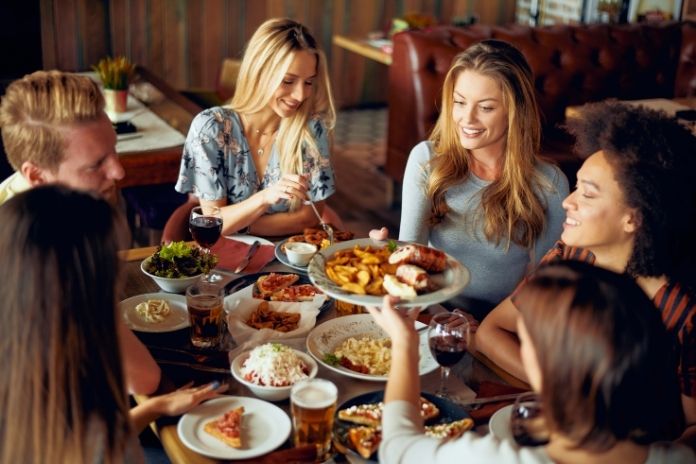
The evidence for shared meals as a predictor of psychological well-being is now global in scale. A 2025 World Happiness Report chapter drawing on Gallup World Poll data from 142 countries collected in 2022 and 2023 found that sharing meals with others is “an exceptionally strong indicator of subjective well-being, on par with income and unemployment.”
People who shared more meals reported higher life satisfaction, more positive affect, and lower negative affect. The pattern held across age, gender, country, and culture.
The same analysis found that Americans are spending increasingly more time dining alone, a trend with measurable consequences for reported well-being. Cultural meals are not simply shared meals in the general sense. They carry additional layers of meaning: celebration, memory, ritual, and collective identity.
A Lunar New Year dinner, an Eid feast, a Diwali gathering, a Sunday soul food spread, and a family tamale-making day are occasions that embed individual experience within something larger. When diet culture disrupts participation in these events, it removes more than calories. It removes the social infrastructure that supports mental resilience.
Prof. William Doherty, PhD, professor at the University of Minnesota, whose research on shared family meals was published in the journal Family, Systems, and Health in 2024, noted in a published press release that shared meals “promote happiness and positive emotions” well beyond simply reducing negative health outcomes, emphasizing that the benefits of communal eating extend to active flourishing, not merely the avoidance of depression.
An evolutionary analysis published in Adaptive Human Behavior and Physiology found through a UK national stratified survey that people who eat socially more often feel happier, are more satisfied with life, trust others more, and have more friends available as support.
The path analysis in that study suggested the causal direction runs from eating together to social bonding, rather than the reverse, a finding that positions communal meals as active social infrastructure.
How Cultural Foods May Support Long-Term Health
Modern nutrition discourse often frames traditional diets through a single lens: macronutrient composition. This misses the physiological role of eating context, emotional state, and social connection in how food is metabolized and how it affects long-term health. The autonomic nervous system plays a central role here.
When a person eats in a state of relaxation, in a familiar environment, with people they feel connected to, consuming food that feels safe and pleasurable, the parasympathetic nervous system, sometimes called the rest-and-digest system, supports optimal digestive function. Gastric motility, enzyme secretion, and nutrient absorption all perform better in this state.
A review published in Integrative Medicine: A Clinician’s Journal documented how mindful eating, a state that shares important features with enjoyable cultural meals, promotes parasympathetic dominance and reduces the stress-associated disruptions to gastrointestinal function that accompany chronic sympathetic activation.
By contrast, a person eating foods they have internalized as forbidden, eating alone because communal food feels unsafe, or skipping cultural meals out of diet-related anxiety is eating in a state of low-grade stress. The food is digested differently. The social and psychological resources that culturally resonant meals normally provide are absent.
Over time, these patterns contribute to chronic stress load, which is independently linked to inflammation, immune dysfunction, and accelerated aging. Traditional diets are also often more nutritionally varied than their critics acknowledge.
Preparation methods dismissed as unhealthy, such as slow cooking, fermentation, and the use of bone broths and lard, frequently support gut health, microbiome diversity, and the bioavailability of fat-soluble vitamins in ways that are now being investigated more carefully in the literature.
The reductive labeling of heritage cooking as uniformly problematic ignores both the sophistication of traditional culinary knowledge and the research that increasingly validates many of its features.
Common Misconceptions About Traditional Foods
The framing of cultural foods as uniformly unhealthy relies on several persistent misconceptions. The first is that the preparation method and portion context are irrelevant. Most traditional cuisines include both everyday preparations and celebratory dishes, everyday foods that are nutritionally dense and festive foods that are rich and indulgent.
Applying the standards of the latter to the former distorts the picture entirely. The second misconception is that the “unhealthy” aspects of any cuisine are intrinsic rather than historical and economic. Soul food developed under conditions of poverty and scarcity that required extracting maximum nutrition from limited ingredients.
The version of that cuisine that emphasizes fats and sugar reflects historical trauma and resource constraints, not the full picture of African American culinary tradition. The same analysis applies to many immigrant and diaspora food cultures worldwide.
Understanding this history is essential for anyone trying to evaluate modern diet trends honestly. The question is never only whether a food contains a particular nutrient. It is also about who gets to define “healthy” and whose food culture gets classified as the problem.
Practical Ways to Reintroduce Cultural Foods Mindfully

The goal of a culturally informed approach to nutrition is not to preserve every traditional food unchanged, regardless of health context. It is to approach adaptation from a position of respect rather than erasure, modifying where genuinely useful while retaining the cultural core that gives the food its meaning.
Practical strategies include gradual recipe adaptation that changes cooking methods or portions without eliminating the dish or its defining ingredients. It means prioritizing communal meals with family and cultural community as a deliberate health practice, not an indulgence to be earned.
It means rejecting all-or-nothing dietary frameworks that classify whole cuisines as off-limits and instead applying nuanced thinking to individual foods within their full dietary and cultural context. For clinicians and dietitians working with patients from immigrant or minority communities, cultural humility is non-negotiable.
A recommendation that effectively removes a patient’s primary cultural food connection may cause psychological harm that outweighs any nutritional benefit.
Who May Be Most Affected by Cultural Food Erasure
The populations most vulnerable to the psychological effects of cultural food erasure share a common feature: their food traditions are already subject to external scrutiny and judgment.
This includes several groups: immigrants and diaspora communities navigating assimilation; racial and ethnic minorities whose foods are often pathologized; individuals recovering from restrictive eating disorders tied to cultural foods; and families balancing traditional cooking with modern nutrition messages absorbed by younger generations.
For all of these groups, food is never simply fuel. It is a site of identity, family continuity, and cultural belonging. Treating it as purely a nutritional variable, subject to optimization like a macronutrient spreadsheet, misses the most important things it does.
When Food Concerns Should Be Discussed With Professionals
People experiencing genuine clinical concern about their eating, including patterns that suggest disordered eating, fear of specific foods, significant anxiety around meals, or difficulty maintaining adequate nutrition, should discuss those concerns with a qualified professional.
Ideally, that professional will have training in culturally affirming approaches to food and eating, rather than applying a single cultural framework to all patients. It is also worth noting that chronic health conditions may require genuine dietary modification and that cultural foods can often be adapted to support those needs without being eliminated.
A registered dietitian with cultural humility can help navigate these situations far more effectively than any generic elimination framework. Persistent digestive symptoms, unexplained weight changes, or significant distress around eating are reasons to seek medical evaluation, not reasons to adopt a more restrictive diet independently.
Read More: 10 Ways To Stop Emotional Eating – Know The Facts!
Key Takeaway: Cultural Foods Nourish More Than the Body
Cultural food erasure’s mental health consequences are real and under-discussed. Traditional foods and mental health are deeply linked through identity, community, and the physiological experience of eating in a state of safety and belonging.
Food culture and longevity are connected through mechanisms that go well beyond nutrient composition, including the quality of social connection that shared cultural meals sustain and the nervous system regulation that pleasurable, familiar eating supports.
This does not mean that no traditional food ever benefits from adaptation or that nutrition is irrelevant. It means that the question of what to eat cannot be answered by macronutrients alone. The dish on the table carries the people who made it.
Erasing it erases more than a meal. A thoughtful approach to well-being takes that seriously, making space for both nutritional care and cultural continuity, because both are part of what keeps people healthy and whole.
References
- Dunbar, R. I. M. (2017). Breaking bread: The functions of social eating. Adaptive Human Behavior and Physiology, 3(3), 198-211.
- Helliwell, J. F., Huang, H., & Wang, S. (2025). Sharing meals with others: How sharing meals supports happiness and social connections. In World Happiness Report 2025 (Chapter 3).
- Cherpak, C. E. (2019). Mindful eating: A review of how the stress-digestion-mindfulness triad may modulate and improve gastrointestinal and digestive function. Integrative Medicine: A Clinician’s Journal, 18(4), 48-53.
- Victoria-Montesinos, D., Jiménez-López, E., Mesas, A. E., López-Bueno, R., Garrido-Miguel, M., Gutiérrez-Espinoza, H., Smith, L., & López-Gil, J. F. (2023). Are family meals and social eating behaviour associated with depression, anxiety, and stress in adolescents? The EHDLA study. Clinical Nutrition, 42(4), 505-510.
- Williams-Forson, P. A. (2022). Eating while Black: Food shaming and race in America. University of North Carolina Press.
- WorldFish. (n.d.). Preserving traditional diets for better health.
- Georgia State University Library. (n.d.). Loss of traditional foods.
- Juniper Publishers. (n.d.). Importance of traditional foods for health and well-being. Nutrition & Food Science International Journal.
- Sustainability Directory. (n.d.). How does the loss of traditional foodways impact Indigenous health?
- Sage Journals. (n.d.). Mediterranean diet and nutrition research.
- National Center for Biotechnology Information. (2022). Traditional diets and health outcomes.
- ResearchGate. (2019). Importance of neglected traditional food to ensure health and well-being.
In this Article