




















- Cubital tunnel syndrome is ulnar nerve compression at the elbow and causes numbness in the ring and little fingers.
- Double crush syndrome means the nerve is compressed in two places. Neck issues like cervical radiculopathy can cause hand numbness.
- Tests like electrodiagnostic testing (EMG/NCS) help find the compression.
When people experience numbness or tingling in the ring and little fingers, the condition is often attributed to cubital tunnel syndrome, a common form of ulnar nerve compression at the elbow. Since the symptoms frequently worsen when the elbow is bent, many patients assume the elbow is the only source of the problem.
However, the ulnar nerve does not begin at the elbow. It originates in the cervical spine, travels through the shoulder and arm, and then passes behind the elbow before reaching the hand. Because the nerve spans such a long pathway, compression can occur at multiple points along its course.
In some cases, the nerve may be affected both at the neck and at the elbow simultaneously. This phenomenon is known as double crush syndrome. This is the reason why some patients still feel the symptoms of the compressed or irritated nerve despite undergoing treatment for cubital tunnel syndrome.
This article explains the reasons why some patients still feel numbness or tingling in the ulnar nerve despite undergoing treatment. In this article, we will discuss cubital tunnel syndrome, ulnar nerve compression, and double crush syndrome.
We will also learn about the key differences between cubital tunnel syndrome and double crush syndrome, and explore the treatment approaches available for them.
Read More: Carpal Tunnel vs Regular Wrist Pain: How to Tell the Difference
What Is Cubital Tunnel Syndrome?

Cubital tunnel syndrome is a condition that results from the squeezing of the ulnar nerve as it goes through a tight space at the back of the elbow. The nerve controls the sensation in the ring and little fingers and is important for controlling many of the small muscles in the hands.
The cubital tunnel is a tight space, and the nerve can be irritated by increased pressure in the tunnel and by repeated bending of the elbow. Cubital tunnel syndrome is one of the most common forms of ulnar neuropathy and is the second most common nerve compression syndrome in the upper limbs.
How the Ulnar Nerve Gets Compressed at the Elbow
The cubital tunnel lies along the inner side of the elbow, where it is surrounded by a layer of bone on one side and soft tissues such as ligaments and fascia on the other. The ulnar nerve passes through this tunnel in its course towards the hand.
The ulnar nerve is located unusually close to the surface of the body in this area, unlike other nerves, which are not easily exposed. This makes it very prone to external pressure, which can be caused by various activities that we engage in on a daily basis.
These activities include repetitive elbow flexion, leaning on the elbow during work or when talking on the phone, and swelling of the elbow joint, which increases pressure inside the cubital tunnel and contributes to ulnar nerve compression.
When we bend our elbow, this tunnel is compressed, stretching the nerve inside it. This stretching of the nerve over time can cause it to be irritated, affecting its ability to function efficiently.
Typical Symptoms of Cubital Tunnel Syndrome
The signs of cubital tunnel syndrome may begin gradually. The signs may come and go before they persist. In the early stages of the medical condition, numbness from the ulnar nerve usually affects the pinky finger and the ring finger.
This early symptom is often described as ulnar nerve numbness in the pinky finger and the adjacent ring finger. The early signs may also include tingling or a “pins and needles” feeling.
As the medical condition progresses further, the signs may include a sense of weakness in the hand. It may occur when the individual is gripping something. The weakness may also result from the inability to perform precise finger movements.
One of the characteristic signs of the medical condition is that the signs may persist when the elbow is bent for a long time. The signs may also persist when the individual is sleeping. The signs may also persist when the individual is holding a phone to the ear. Straightening the elbow may result in relief from the signs.
In the advanced stages of the medical condition, the irritation of the ulnar nerve may result in weakness in the small muscles of the hand. This may result in wasting of the muscles, which is a sign of progressive ulnar neuropathy.
What Is Double Crush Syndrome?

While cubital tunnel syndrome is often the primary cause of ulnar nerve symptoms, it is not always the only factor involved. Some patients experience nerve compression at multiple locations along the same nerve pathway.
This situation is referred to as double crush syndrome. The concept was first proposed to explain why certain individuals develop nerve symptoms even when compression at a single site appears mild. It is one of the mechanisms discussed in complex nerve entrapment syndromes affecting the arm.
The Basic Concept Behind Double Crush
The concept of double crush syndrome is that if a nerve is squished in one place, it makes that nerve less able to deal with squishing in another place. In other words, squishing a nerve in one place makes it weaker overall.
For example, if a nerve is irritated in the neck, this makes the nerve that runs down the arm weaker in its ability to deal with squishing in the elbow area. This means that even a small amount of squishing in this area can cause noticeable problems. This helps explain why some people continue to have problems even after treatment of just that area.
Why the Neck Can Contribute to Elbow Nerve Symptoms
Several hand numbness problems have their roots in the neck. A problem like a cervical disc herniation, wear and tear on the vertebrae, or a bone spur that puts pressure on the nerve roots in the neck is a common source of neck problems, causing hand numbness.
When a nerve root in the neck is being squeezed, it is called cervical radiculopathy. This nerve root compression is often described medically as cervical nerve root compression. This nerve root is part of the nerve that goes down into the arm, so problems here can affect the nerve further down the arm.
Hence, a doctor may consider problems like cubital tunnel vs. cervical radiculopathy if a patient has hand numbness or weakness. In fact, both problems may be present simultaneously.
The Role of Impaired Nerve Transport
Another way to look at the concept of double crush syndrome is to consider the analogy of the body as a transportation system. The transportation system that the body has to transport nutrients and proteins from one end of the nerve to the other is the axoplasmic flow.
When the nerve is pinched, this transport process can be disrupted, leading to axoplasmic flow impairment. This flow is slowed down when the nerve is pinched.
When the pinch is further up the body, such as in the neck region, the weakness will be felt further down the body. This is why a person may experience a mild pinch in the elbow region, but the weakness is severe.
Read More: Why Are My Hand Veins Suddenly Bulging? Common Causes Explained
How Double Crush Syndrome Can Be Mistaken for Cubital Tunnel Syndrome
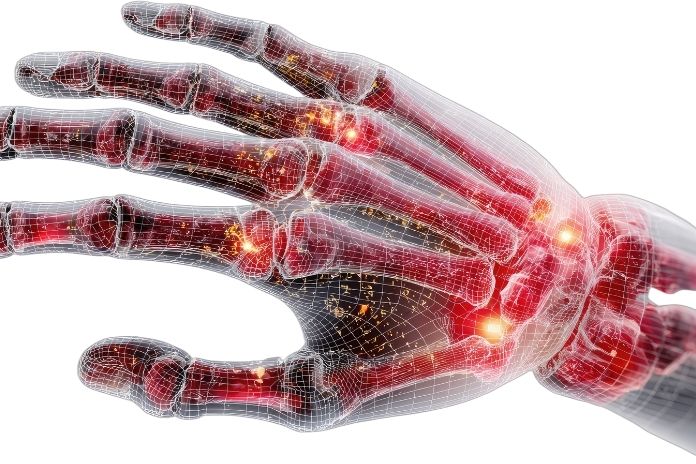
Because both conditions affect the same nerve pathway, the symptoms of double crush syndrome often resemble those of cubital tunnel syndrome. This overlap can make diagnosis challenging.
Overlapping Symptoms That Cause Confusion
Many symptoms of ulnar nerve irritation appear similar regardless of where the compression occurs. Individuals may experience tingling in the fingers, numbness along the hand, weakness in grip strength, or intermittent pain traveling along the arm.
These similarities can make it difficult to determine whether the problem lies primarily in the elbow, the neck, or both. As a result, some cases of ulnar nerve compression may initially be attributed solely to cubital tunnel syndrome.
Signs the Problem May Involve the Neck
There are some indications that the neck might be involved as well. For instance, neck pain or stiffness can sometimes occur at the same time as nerve sensations in the arm. People can feel pain that radiates from the neck down to the shoulder, upper arm, or forearm before numbness in the hand.
Another sign that the neck might be affected is if the symptoms persist even when treatment for the elbow is given. If nothing seems to help, doctors might consider whether there is a problem involving pinched nerve neck symptoms, arms, or hands.
Key Differences Between Cubital Tunnel Syndrome and Double Crush Syndrome
Although the symptoms may overlap, careful evaluation can often reveal patterns that help distinguish between isolated elbow compression and a broader nerve problem.
Symptoms More Typical of Cubital Tunnel Alone
When it is primarily cubital tunnel syndrome that is causing these issues, these are generally related to how the elbow is positioned. A tingling sensation, for example, may appear primarily when the elbow is bent, meaning nights in bed or holding a phone are likely contributors. Straightening this elbow tends to bring some relief, even if it is only temporary.
Some individuals also notice that they have a particular ache that is located right around the inside of the elbow, particularly when this area is pressed. This is generally a sign of compression that is occurring inside the cubital tunnel.
Symptoms Suggesting a Possible Double Crush Pattern
When it is double crush syndrome, it is possible that you could be experiencing some neck or shoulder pain, in addition to some numbness that is occurring in your hand. This is not necessarily contained within your fingers.
There are some instances when you are experiencing these issues even after you have received treatments that are intended only for your elbow. This is why doctors may explore why cubital tunnel surgery fails in certain cases where the underlying compression higher in the nerve pathway has not been addressed.
How Doctors Diagnose the Source of Ulnar Nerve Symptoms

Diagnosing the precise source of nerve compression often requires a comprehensive evaluation that includes the neck, shoulder, elbow, and hand.
Physical Examination and Symptom Patterns
The doctor will generally begin by taking a good medical history and performing a good physical exam. They will also check how your symptoms change when you move your neck and elbow, and where your tingling is worse when you press on it and move it along the nerve pathway.
The specialist will also check your grip strength, hand strength, and finger sensation. This will give them an idea of where your nerve problem is occurring.
Electrodiagnostic Testing (EMG and Nerve Conduction Studies)
When symptoms are unclear or persistent, doctors may order electrodiagnostic testing (EMG/NCS). These tests measure the electrical signals traveling through nerves and muscles.
Nerve conduction studies evaluate how quickly signals move along the nerve. If conduction slows at the elbow, it may indicate cubital tunnel syndrome. Electromyography (EMG) can help identify muscle changes that occur when nerve signals are disrupted.
Together, these tests help confirm ulnar neuropathy and determine whether compression occurs at one or multiple sites.
Imaging Tests That May Be Recommended
Imaging studies may also be used to identify structural causes of nerve compression. Magnetic resonance imaging (MRI) or CT scans can reveal abnormalities in the cervical spine, such as cervical disc herniation or bone spurs, that may lead to cervical nerve root compression.
Ultrasound or MRI of the elbow may also help visualize swelling, anatomical variations, or other structural changes that contribute to ulnar nerve compression.
Treatment Approaches When Both the Neck and Elbow Are Involved

When double crush syndrome is suspected, treatment may need to address both compression sites rather than focusing solely on the elbow.
Conservative Treatments Doctors May Try First
The initial treatment is usually focused on non-surgical methods. This can include changes to activities, avoiding bending of the elbow, and the use of night splints to keep the elbow straight while sleeping. Physical therapy can be an important part of elbow nerve pain treatment, particularly when exercises are designed to increase the movement of the nerves.
Addressing Cervical Spine Issues
If the problems with the cervical spine are part of the underlying causes, then treatments can also be tailored to address the cervical spine. Improving posture, changing the position of the workstation, and specific exercises to strengthen the muscles of the neck and shoulders can all help to ease the burden on the cervical spine.
Physical therapy can also be used to target the neck to relieve pinched nerve neck symptoms, arm, and hand.
When Surgery May Be Considered
Surgery is also an option if the signs are serious, have worsened, or do not improve with non-surgical treatment. In treating cubital tunnel syndrome, the operation aims to alleviate pressure on the ulnar nerve by enlarging the cubital tunnel or by repositioning the nerve to a safer location.
In some instances where double crush syndrome is present, it is also possible to evaluate if both areas of compression need to be addressed. This depends on which area appears to be causing the signs primarily.
When Persistent Elbow Numbness Should Be Re-Evaluated

Even after treatment, some patients continue to experience numbness or weakness in the hand. In these situations, further evaluation may be necessary.
Warning Signs That Warrant Further Assessment
Symptoms that persist for several months, progressive weakness in the hand, or visible muscle loss may indicate ongoing nerve compression. Expanding numbness or pain that spreads beyond the hand into the arm may also suggest a more complex nerve problem.
These signs may prompt clinicians to reconsider the diagnosis and investigate additional causes.
Why a Comprehensive Nerve Evaluation Matters
Since the ulnar nerve travels from the neck all the way down to the hand, there are a number of points along the way where pressure is building. Instead of focusing on a single point that may be contributing to the problem, a full investigation may determine if cervical radiculopathy or compression in the elbow is the culprit.
Read More: Tingling in Hands at Night: Carpal Tunnel or Vitamin Deficiency?
Key Takeaway: Looking Beyond the Elbow
Tingling in the fingers, weak hands, and constant numbness are often related to cubital tunnel syndrome. However, the underlying cause of the problem may not always originate from the elbow. This happens because the ulnar nerve begins in the cervical spine, so the problem can sometimes start in the neck.
If the symptoms are not relieved, the arm as well as the hand are affected, or the symptoms do not improve with treatment, double crush syndrome can be considered. Identifying the cause of the problem from both the neck and the elbow can lead to a more comprehensive treatment plan for the patient and allow the doctor to help them better.
References
- MedlinePlus. (n.d.). Electromyography (EMG) and nerve conduction studies. U.S. National Library of Medicine.
- American Academy of Orthopaedic Surgeons. (n.d.). Ulnar nerve entrapment at the elbow (cubital tunnel syndrome). OrthoInfo.
- Physiopedia. (n.d.). Double crush syndrome.
- Johns Hopkins Medicine. (n.d.). Cubital tunnel syndrome.
- Journal of Hand Surgery Global Online. (2022). Cubital tunnel syndrome: Diagnosis and treatment controversies.
- PubMed Central. (2024). Research article on cubital tunnel syndrome.
In this Article