



















- Up to 90% of people with Marfan syndrome experience chronic pain.
- Dural ectasia, joint instability, and muscle fatigue commonly cause Marfan pain.
- Physical therapy, lifestyle changes, and medical care help manage Marfan pain treatment options.
Marfan syndrome affects connective tissue throughout your body, so it can affect the heart, blood vessels, eyes, and skeleton. Most people know about those issues, but the pain they cause often gets overlooked. The truth is, about 90% of people deal with chronic pain in Marfan syndrome.
Sometimes it’s just a nagging ache, but it can become severe, affecting muscles, joints, nerves, and the spine. Weak connective tissue leaves the body unstable and under constant strain, and that’s where the pain really comes from.
In this article, we will explain the main causes of pain in Marfan syndrome, its impact on daily life, and treatment options for Marfan pain.
Read More: Dry Eye Syndrome vs. Allergic Conjunctivitis: How to Tell the Difference & What to Do
Why Is Pain So Common in Marfan Syndrome?
A genetic illness called Marfan syndrome causes structural abnormalities in the eyes, bones, joints, lungs, heart, and blood vessels by weakening the connective tissues that support the body’s organs.
Most people with Marfan’s syndrome have aortic involvement, or damage to the heart and blood vessels caused by connective tissue. Aortic involvement causes the aorta to dilate (aortic enlargement) and may result in aortic rupture, which is a potentially fatal situation.
Marfan syndrome pain frequently includes multiple overlapping systems:
Musculoskeletal system: Muscle strain and joint instability are associated with the musculoskeletal system.
Ocular System: Cataracts and early glaucoma.
Cardiovascular System: Heart issues, such as bacterial endocarditis, cardiomyopathy, heart murmur, intracranial bleeding/Berry aneurysm, aortic valve regurgitation, aortic dissection, aneurysm or rupture, mitral valve prolapse, and heart failure.
Nervous System: Later in life, dural ectasia may occur.
Respiratory System: Potential for recurring spontaneous pneumothorax, which may result in abrupt discomfort and/or dyspnea.
The causes of pain in Marfan syndrome are often complex and multifaceted due to overlapping processes. Patients with Marfan syndrome don’t always have the same source of discomfort. Understanding the difference helps guide Marfan syndrome pain management.
Structural Pain:
- Throbbing or aching.
- It frequently gets worse when you move.
- Brought on by muscle exhaustion or joint tension.
Pain in the Nerves:
- Burning or a shooting feeling.
- May result in numbness or tingling.
The Main Sources of Chronic Pain in Marfan Syndrome

The condition known as dural ectasia, in which the protective membrane covering the spinal cord becomes stretched and swollen, is one of the most characteristic causes of pain in Marfan syndrome.
Up to 90% of individuals with Marfan syndrome develop dural ectasia, according to studies from the Journal of Genetic Medicine. The “dura,” a strong, dense membrane that completes the protective structure surrounding our spinal cord, can become significantly thinner and more flexible in Marfan syndrome. It can occasionally result in discomfort and dural ectasia.
Any widening of the neural canal along the spinal column is known as dural ectasia. Particularly in the lower lumbosacral area, where cerebrospinal fluid pressure is highest, the dura (envelope) encircling the spinal cord grows.
It might be the initial hint that leads a physician to conduct additional testing and think about making an MFS diagnosis.
Common Signs and Symptoms
Often, there are no symptoms associated with dural ectasia. But if they exist, the symptoms consist of the following:
- Low back ache.
- A headache.
- Leg or buttock radicular discomfort (nerve pain emanating from the back).
- Intermittent loss of feeling above and below the afflicted location.
- Genital and rectal discomfort.
Joint Instability and Overuse
Another significant factor contributing to joint pain in Marfan syndrome is joint instability. When you have hypermobility, your joints stretch past what they’re really meant to. That happens because the ligaments holding everything together are just too loose.
At first, being extra flexible might not seem like a problem. But if your joints keep bending too far, over and over, it starts to wear down the tissues around them. That’s where the pain comes from.
Most Affected Joints
Common sites of joint pain in Marfan syndrome include:
- Knees
- Hips
- Shoulders
- Ankles
Over time, this kind of strain wears down cartilage more quickly, leading to early osteoarthritis. A lot of people with Marfan syndrome pain notice that their pain gets worse when they’re active. Rest, using braces, or getting support from therapy usually helps things feel better.
Read More: At-Home Signs & Self-Checks for Carpal Tunnel Syndrome (CTS) — Before You See a Doctor
Muscular Fatigue and Postural Strain
People often miss muscle fatigue as a real source of ongoing chronic pain in Marfan syndrome. When your joints don’t stay stable, your muscles have to pick up the slack to keep you upright and moving.
After a while, this constant work wears them out. That’s why so many people with Marfan end up dealing with musculoskeletal pain, especially in their upper body and along the spine.
Typical Pain Points
Patients often report:
- Stiffness in the neck
- Tightness in the shoulder
- Soreness in the lower back
Nerve-Related Pain (Neuropathic Pain)
Not all Marfan syndrome pain originates in the muscles or joints. When nerves are inflamed or injured, neuropathic pain can develop in certain patients. Back discomfort, radicular pain in the thighs and buttocks, vaginal and rectal pain, headaches, and even neurological abnormalities are among the neurological symptoms that patients report that may be connected to dural ectasia.
This pain may not respond well to common anti-inflammatory drugs because it arises from the nervous system.
Surgical or Scar-Related Pain
Many people with Marfan syndrome have surgery to address bone or cardiovascular issues. Although these treatments have the potential to save lives, they may also cause ongoing agony. Some people have chronic musculoskeletal pain or nerve irritation close to scar tissue following surgery.
It may be necessary to combine medicine, supportive therapy, and rehabilitation to treat this kind of pain. Continuous pain monitoring should always be a part of post-surgical rehabilitation protocols for patients living with Marfan syndrome pain.
Impact of Chronic Pain on Daily Life

People with Marfan syndrome may have discomfort that affects almost every part of their lives.
Many patients report that chronic pain in Marfan syndrome affects their:
- Ability to exercise
- Productivity at work
- Sleep quality
- Emotional health
A lot of people struggle with sleep problems. When pain keeps you up at night, you wake up feeling even more exhausted, and the next day feels harder. Living with connective tissue disorder pain can wear you down.
Over time, it can make you move less, and it’s easy to start feeling anxious or even depressed. Moreover, it turns into a tough cycle.
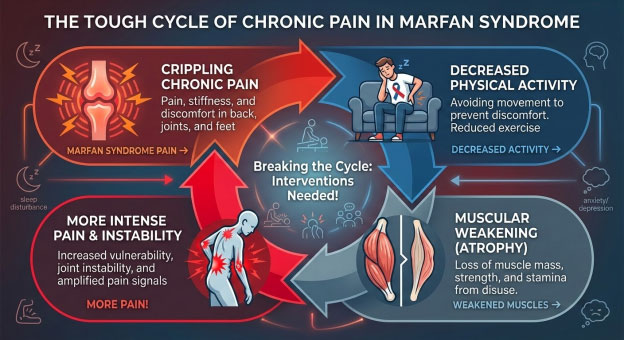 That’s why experts say people living with Marfan syndrome pain need care from a whole team, not just one doctor. This type of support really makes a huge difference.
Read More: Carpal Tunnel Syndrome in Women: Why Are Women More Likely to Get It?
Evidence-Based Strategies for Managing Marfan Pain
Behavioral techniques, medication, lifestyle changes, and physical therapy are typically used in conjunction for effective Marfan syndrome pain management.
Physical and Lifestyle Approaches
Conservative treatments provide substantial relief to many individuals.
Exercises for Stretching and Strengthening: To increase joint stability and muscle tone. To ease the tense muscles caused by connective tissue disorder pain.
Aerobic Exercises: Swimming, cycling, or just taking a walk are great for your heart and won’t stress your aorta.
Exercises for Joint Stability: If you’re worried about joint dislocations, especially if your connective tissue is on the weaker side, exercises that build joint stability really help keep everything in place.
Breathing Exercises: Breathing exercises can do wonders for your voice and help you breathe easier all around.
Other helpful tactics consist of:
- To relax muscles, use heat therapy
- Bracing for support in unstable joints
- Ergonomic workstations and chairs
Medications and Medical Treatments
Marfan syndrome has no known cure; instead, clinicians manage the condition to reduce symptoms and prevent further complications. Depending on the part of the body impacted by the syndrome, treatment options may include medication, various therapies, and surgery.
Doctors may prescribe the following drugs:
- Doctors can prescribe angiotensin receptor blockers or beta blockers to treat heart issues. These drugs help prevent the aorta from growing abnormally.
- Drugs for pain and inflammation.
Surgery may be necessary for some Marfan syndrome sufferers to address any issues or complications that may arise. Among the surgeries are:
- Orthopedic surgeons treat severe sternum and bone issues with surgery.
- Eye surgery can treat issues such as retinal detachment, cataracts, or severe lens dislocation.
- Cardiovascular surgery is used to treat heart or blood vessel issues.
Physicians must carefully consider potential drug interactions because individuals with Marfan syndrome may also be on cardiovascular medicines. This is why doctors must always consider pain medications and Marfan safety before starting treatment.
Supportive and Behavioral Approaches
When it comes to pain, it’s not just about medicine or physical therapy. Managing pain means working on your mindset, too. Techniques like cognitive behavioral therapy (CBT) really make a difference for people who struggle with chronic pain in Marfan syndrome.
Individuals benefit from CBT:
- Recognize what causes pain
- Control your stress reactions
- Lessen your fear of motion
The following are some services that an occupational therapist can offer:
Functional Adaptation: Occupational therapists help people with Marfan syndrome work around physical limitations in their daily lives. They look at day-to-day routines and tweak activities so things feel more manageable. Sometimes, that means making changes at home to boost independence, keep things safe, and make everything more accessible.
Pain Management: Ongoing pain is common in Marfan syndrome, often due to spine issues, weak muscles, or joints that feel unstable. Occupational therapists step in with splints, hands-on therapy, heat or cold packs, and relaxation exercises to help manage pain and make life a bit easier.
Psychosocial Support: Living with Marfan syndrome isn’t easy. People usually struggle with anxiety, depression, and how they feel about their bodies. Occupational therapists step in to help with all of these.
They don’t just offer a listening ear; they teach stress-reduction methods, guide relaxation techniques, and help people find activities which bring purpose and joy. All of this makes daily life feel a little lighter and improves overall well-being.
When to Seek Professional Help

If you notice things such as unexplained chest pain, trouble breathing, a fluttery or irregular heartbeat, vision problems, or sudden changes in how you stand or move, don’t wait; see a doctor right away.
If Marfan syndrome is prevalent in your family, make it a habit to get your heart, eyes, and bones checked regularly. It’s the best way to stay on top of your health.
Read More: Postural Orthostatic Tachycardia Syndrome (POTS): Symptoms, Causes, and How It’s Treated
Conclusion
Pain is a genuine and frequently overlooked aspect of Marfan syndrome. Due to structural alterations in connective tissues, many people with Marfan syndrome suffer from chronic pain. It might result in musculoskeletal discomfort, joint pain, or chronic back pain.
People with Marfan syndrome may find it difficult to do daily tasks due to conditions like dural ectasia and nerve irritation. Effective management of Marfan syndrome pain, however, can be significantly impacted by knowledge of its etiology.
References
- Marfan Trust. (17 May 2024). Friday fact: Pain in Marfan syndrome.
- NHS. Marfan syndrome: Symptoms.
- Mayo Clinic Staff. (2024, March 22). Marfan syndrome: Symptoms and causes.
- ClinMed Journals. Journal of musculoskeletal disorders and treatment.
- Northern Heart Specialists. Marfan’s syndrome.
- Physio-Pedia. Marfan syndrome.
- MedlinePlus Genetics. Marfan syndrome.
- Palms Physiotherapy. Marfan syndrome.
- Umbo. Occupational therapy for Marfan syndrome.
- Marfan Trust. (3 April, 2025). Dural ectasia.
- DrOracle.ai. (2025, December 14).What is the management for a patient with Marfan syndrome presenting with sharp ipsilateral pain and shortness of breath?
In this Article