



















Building muscle without going to the gym is a common goal for people who prefer home workouts or have limited time and equipment. Research shows you can gain strength and muscle with effective bodyweight training, proper nutrition, quality sleep, and consistency.
It’s important to remember that muscle growth is gradual. Social media transformations often show unrealistic timelines. How fast results appear depends on your starting fitness level, workout intensity, diet, recovery, and training consistency.
Most beginners notice strength gains within 2-4 weeks, while visible muscle growth typically appears after 8-12 weeks of consistent resistance training with enough protein and rest.
In this article, we’ll cover science-backed home workout methods, how to apply progressive overload without equipment, the right protein and calorie intake, and recovery tips to maximize muscle growth at home.
Read More: At-Home Strength Exercises Without Equipment: That Actually Work
The 3 Requirements for Building Muscle Anywhere

Muscle building is not about expensive equipment. It is about using the same scientific principles of weight training, regardless of the location. In a home gym or a commercial gym, there are three principles of muscle building: progressive overload, sufficient protein intake, and adequate recovery.
1. Progressive Overload
Progressive overload is just a fancy way of saying that you need to challenge your muscles slightly more with time to keep adapting. At home, you don’t lift iron plates. You just train smarter.
The simplest way is to increase the number of reps. If you can handle 10 push-ups today, aim for 12 next week. Once those reps become easy, increase the difficulty level again. Progress from knee push-ups to full push-ups, or from squats to single-leg squats, to increase the resistance.
Another highly effective method is to increase the tempo. Take your time to lower your body in push-ups or squats to maximize the time under tension, which is ideal for muscle hypertrophy. Pause at the most difficult point of the exercise to keep your muscles under stress for a longer period of time.
You can also increase the resistance gradually. Use resistance bands or a backpack full of books to add resistance to basic exercises and turn them into muscle-building exercises.
These methods are often suggested in fitness journals because they replicate the same principles of progressive overload as in a gym.
2. Adequate Protein Intake
Muscle growth occurs when your protein consumption supports the repair that happens after exercise. A target of 1.2 to 2.0 grams of protein per kilogram of body weight daily is a good target for most adults who want to grow muscle mass. Those who exercise more or are athletes may target the higher end of the scale.
Prefer a food-first approach. Good sources include lean meats, fish, eggs, dairy, beans, lentils, tofu, and nuts. These contain protein that’s of high quality and distributed throughout your day. This will help keep the repair process steady throughout the day.
“Most of us need to begin shifting our diets toward plant-based proteins,” said senior author Frank Hu, Fredrick J. Stare Professor of Nutrition and Epidemiology at Harvard Chan School.
What you eat daily is more important than when you eat it. Even well-timed protein shakes won’t help if you’re not getting enough protein in your daily diet.
3. Recovery and Sleep
Muscle building doesn’t occur during the time you’re working out, but rather during downtime. After a resistance workout, your muscles repair themselves. If you don’t take downtime and work out the same muscle group each day, there’s no actual time for your muscles to repair, and you risk injury.
Sleeping is just as important as the exercise routine itself. The levels of the hormones that stimulate muscle growth, such as growth hormone and testosterone, are regulated by the quality of your sleep. Most adults need seven to nine hours of sleep per night.
Effective recovery exercises can be the difference between a decent home workout and actual muscle growth.
Read More: 10 Exercises to Tone Every Inch of Your Body (No Equipment Needed)
Best Exercises to Build Muscle Without a Gym
The best muscle exercises for at-home workouts involve compound exercises that target multiple muscle groups simultaneously, so you can upgrade your routine over time.
Upper Body Exercises
Push-Ups (Progressions)
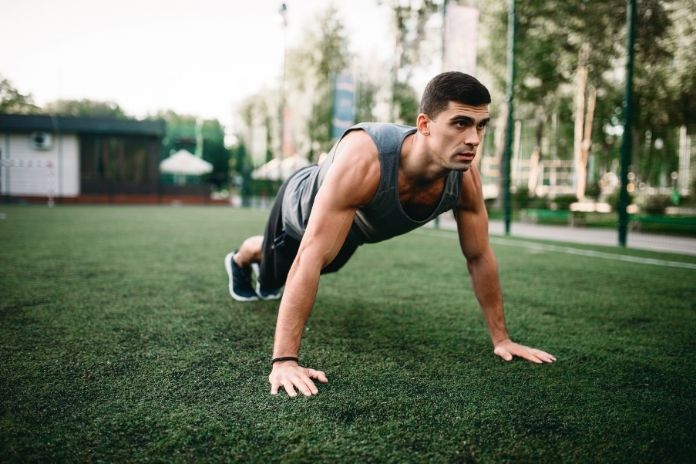
Push-ups exercise your chest, shoulders, and triceps, and your core muscles. Begin with incline push-ups if regular push-ups are too difficult, and progress to decline push-ups, archer push-ups, or single-arm push-ups as your strength improves. Extend the lowering phase to maximize muscle engagement and activation.
Maintain a straight body position with your elbows slightly bent, and don’t rush through the exercise.
Pike Push-Ups
Inverted pike push-ups are a shoulder-intensive exercise that mimics an overhead press. Begin in a push-up position, raise your hips into a piked position, and lower your head towards the ground. Elevated feet increase the difficulty level and prepare you for handstand push-ups. Develop strong shoulders without any weights.
Chair or Bench Dips
Dips are very effective at working the triceps, chest, and shoulders. It is best to use real chairs or a bench for support. Lower your body until your elbows are at a 90-degree angle, then push back up.
To vary the exercise or make it more difficult, raise your legs higher or use a backpack full of weight. If you have trouble moving your shoulders, you do not want to lower yourself very far.
Pull-Ups
Pull-ups are one of the best exercises for building the back and biceps. If you have a pull-up bar, these exercises should be a staple in your workout routine. Beginners can perform these using resistance bands or negative pull-ups, while advanced individuals can use additional weights with a backpack. Pull-ups are great for preventing muscle imbalances.
Lower Body Exercises
Squats (Tempo and Single-Leg Variations)
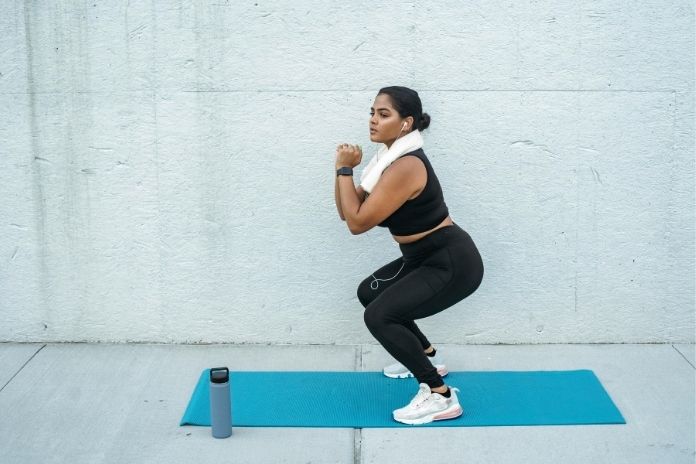
Squats work your quads, glutes, and hamstrings. To increase the difficulty of squats, take longer to lower yourself or hold the position at the bottom. Once squats become easier, move on to pistol squats or Bulgarian split squats. To avoid injury, ensure your knees align with your toes.
Lunges
Lunges improve strength, balance, and coordination. Forward lunges target quads more, while reverse lunges emphasize glutes. Adding a backpack or slowing the tempo increases resistance. Walking lunges increase time under tension.
Bulgarian Split Squats
This single-leg exercise provides high resistance without weights. Place one foot behind you on a chair and lower using the front leg. Because one leg carries most of your bodyweight, muscle stimulation is high. This exercise is excellent for building leg muscle at home.
Glute Bridges and Hip Thrusts
These exercises target the glutes and hamstrings. Push hips upward and pause at the top. Elevating shoulders or adding weight increases intensity. Strong glutes improve posture and athletic performance.
Core Exercises
Planks
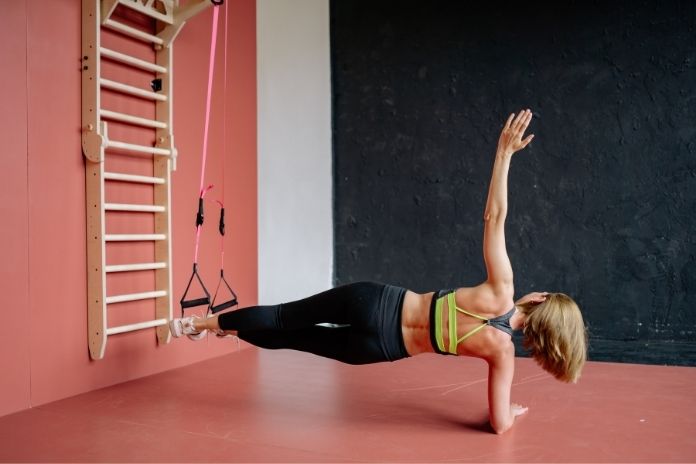
Planks build core stability. Keep your body straight and brace your abs. Extend arms or legs to increase difficulty. Avoid arching your lower back.
Hanging Leg Raises
If a pull-up bar is available, hanging leg raises target the lower abs. Lift legs slowly while keeping your torso stable. Beginners can start with knee raises before progressing.
Crunches become effective when performed slowly. Lift your shoulders slightly off the floor while keeping your lower back pressed down. Pausing at the top increases time under tension. Focus on muscle control rather than speed.
How to Make Bodyweight Exercises Harder
The stronger you become, the more intense your exercise routine should be. Tempo training extends each rep, keeping your muscles under stress. Isometric holds mean your muscles are working for longer. Single-limb training essentially means you’re working twice as hard on each limb.
The greater the range of motion, the more muscle fibers you’re using. Resistance bands and weighted backpacks simulate the effect of external resistance, aiding steady progression without equipment.
Read More: Low Impact Workouts That Burn Calories: 10 Exercises That Torch Fat
Sample Weekly Muscle-Building Plan at Home
A simple routine will usually prove most effective. Going to the gym three to four times a week is a good balance of effort and recovery. Beginners can easily benefit from full-body training because they target each muscle group multiple times a week.
Those with a bit of experience can opt for an upper and lower split routine. To maximize muscle growth, it is best to aim for 8-20 reps per set and go as hard as you can until you are just one or two reps shy of failure. Take about 60-90 seconds of rest between sets.
When a Gym Might Become Necessary
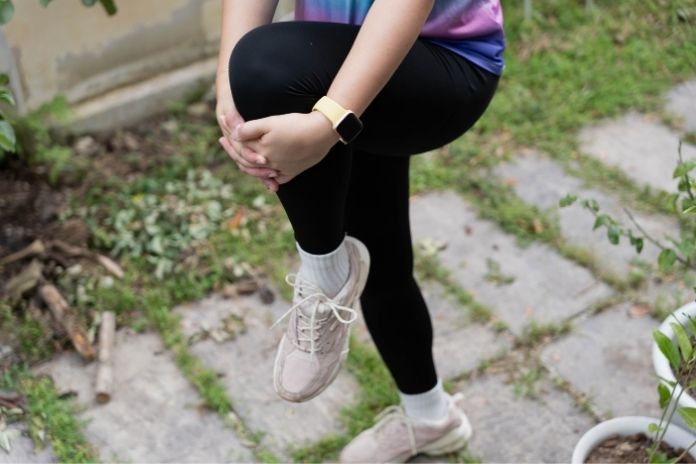
A gym is not necessary for muscle development, but it may come in handy as you become stronger.
For most beginners and intermediates, exercising with only your body weight, resistance bands, and a heavy backpack will offer enough resistance to support a lifetime of muscle growth. However, at some point, the advanced weightlifters will reach a point where it becomes cumbersome to add resistance without adding more weight.
This usually happens with larger muscle groups, such as the legs and the back. It may become inefficient to do hundreds of squats when you can simply lift heavier weights. The same principle applies to pull-ups. At some point, you will need additional resistance to continue challenging your muscles.
A gym may be useful if you are working on a particular physique, such as for bodybuilding. Machines will allow for more precise isolation of muscles, and barbells will make it simpler to manage progressive overload.
However, a gym is a supplement and not a necessity. Many athletes and fitness enthusiasts have developed impressive physiques with home workouts alone, often years before they ever require gym equipment. The decision to go to the gym should be based on your training requirements and not because you feel that muscle growth is impossible without one.
Who Should Avoid Intense Home Muscle Training Without Guidance?
However, weightlifting is a relatively safe and beneficial activity for most people. But some people should consult a professional before embarking on an aggressive bodyweight muscle-building program.
If you have severe joint problems, particularly in your shoulders, knees, or hips, you may require modified exercises that won’t worsen the problem. If you experience chronic back pain, you’ll require professional advice on how to supervise your exercise routine to maintain proper spinal alignment and engage your core muscles.
If you have heart disease, uncontrolled high blood pressure, diabetes-related complications, or have recently undergone surgery, you should consult a healthcare professional before embarking on a structured weightlifting program. Pregnancy and post-pregnancy are also conditions that require programs specifically designed for these purposes.
In such situations, partnering with a qualified personal trainer, physical therapist, or physician can help you create a safe home exercise program that will still propel you forward.
The Bottom Line
You don’t need a gym to bulk up. Three large factors fuel muscle growth: increasing intensity, getting enough protein, and giving your body a chance to heal.
Home workouts can develop serious muscle with bodyweight exercises if you challenge yourself and mix up progressions. Exercises such as push-ups, squats, lunges, pull-ups, and core exercises can develop serious strength and muscle if combined with proper nutrition and adequate sleep.
The gym can wait, but you don’t have to go to develop muscle right away. The secret is consistency: getting to the gym regularly, making incremental progress each week, getting enough protein, and giving your body a chance to heal.
If you follow this weekly routine, you can develop serious muscle at home. This isn’t just my opinion; there is scientific proof to support this, and fitness experts and magazines, including Men’s Health, agree that it’s not where you train that matters. Your living room can be your gym if you train properly. It’s your work, the incremental progress, and patience that matter.
References
- Zing Coach. (2025, December 30). How to build muscle at home: A science-backed guide. Zing Coach.
- Mullen, J. (2023). Muscle size versus strength: What you need to know. Verywell Fit.
- Physio-pedia contributors. (n.d.). Plank exercise. Physio-pedia.
- Sweat. (n.d.). Forward vs. reverse lunges: What’s the difference?
- BarBend. (n.d.). Pull-up guide. BarBend
- B-One Training. (n.d.). How long does it take to see strength gains after starting training at 60? B-One Training.
- Morton, R. W., Murphy, K. T., McKellar, S. R., et al. (2018). A systematic review, meta-analysis and meta-regression of protein supplementation on resistance training–induced gains in muscle mass and strength. British Journal of Sports Medicine, 52(6), 376–384.
In this Article