



















If you spend most of your day hunched over a laptop or phone, the signs are familiar. Shoulders creep forward. The neck tightens by mid-afternoon. The upper back feels stiff and tired, even though you have not done anything physically demanding.
That discomfort is not a flaw in discipline or strength. It is a predictable response to modern work habits. Hours of sitting and screen use keep the body in a rounded position, weakening the muscles that support good posture while overloading the ones that are not meant to carry the strain.
The good news is that posture does not require a full workout to improve. A short, targeted movement can start reversing those imbalances. Resistance band pull-aparts are especially effective because they strengthen the upper-back muscles that pull the shoulders back into alignment.
This article explains why posture breaks down, why resistance bands work so well for posture correction, and how to use a simple two-step resistance band routine that takes less than five minutes and is easy to stick with.
Why Your Posture Suffers, and Why It’s About More Than Looks

Spending long hours at a desk doesn’t just make you feel stiff; it changes the very way your muscles work. The chest muscles, especially the pectoralis major and minor, gradually shorten due to constant forward reaching and hunching.
Meanwhile, the muscles that pull your shoulders back, the rhomboids, middle and lower trapezius, and rear deltoids, get underused. This imbalance quietly builds over time, reshaping the way you carry your upper body.
Clinicians call this muscular pattern “upper crossed syndrome.” Essentially, tight chest and neck muscles cross with weak upper back stabilizers, creating a domino effect of tension and discomfort. Research shows this isn’t just about looking slouched; it’s strongly associated with neck pain, shoulder tension, and reduced stability in the shoulder blades.
You may notice subtle signals before they become painful. Shoulders tend to rest forward even when you try to stand tall, the chest feels tight, and your upper back or neck may stiffen after long periods at a screen. Fatigue can settle between the shoulder blades, making even small tasks feel more effortful.
Why Posture Matters Beyond Appearance? Good posture isn’t just about looking confident; it affects your body’s efficiency. It influences breathing, circulation, and how easily your shoulders move during daily activities. Improving posture can make sitting, standing, and moving feel more natural, reducing strain and making your body work smarter, not harder.
Read More: Avoid These 5 Common Posture Mistakes at Your Desk Job
Why Resistance Bands Are Ideal for Posture Correction
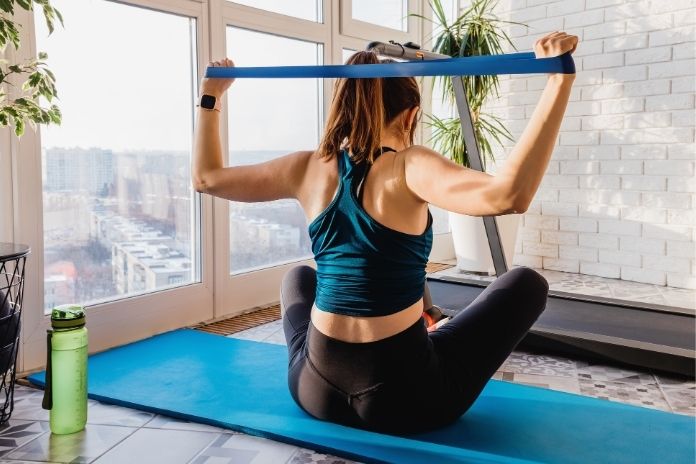
Resistance bands have earned their place as one of the most effective tools for improving posture, and for good reason. They combine safety, versatility, and practicality in a way few other tools can.
- Joint-Friendly Resistance: Unlike heavy weights, resistance bands provide variable resistance that increases the more you stretch them. This makes them gentle on the joints while still effectively challenging the muscles.
For beginners or anyone dealing with neck, shoulder, or upper back discomfort, bands offer a way to strengthen muscles without strain, reducing the risk of injury associated with traditional weight training.
- Targeting the Muscles You Usually Ignore: One of the biggest contributors to poor posture is a muscular imbalance: people often overtrain pushing movements, like chest presses, while undertraining pulling movements. Resistance bands help correct this by activating muscles that often go underused.
The rhomboids, middle trapezius, and posterior deltoids are key players in scapular retraction, the motion that pulls your shoulder blades back and down. Strengthening these muscles helps counteract the forward rounding caused by hours of sitting.
- Retraining Movement Patterns: Posture isn’t just about strength; it’s about coordination and awareness. Using resistance bands forces you to slow down and control your movements, paying attention to how your shoulder blades move.
This heightened awareness translates into everyday activities, helping you sit, stand, and move with better alignment.
- Practical and Portable: Beyond their physical benefits, resistance bands are affordable, lightweight, and easy to keep near your workspace. That convenience matters because consistency beats intensity when it comes to posture correction.
A few minutes of targeted band exercises daily can lead to lasting improvements over time without requiring a full gym setup.
Common Posture Myths Debunked (With Expert Input)
Many people assume that good posture just means “standing tall.” That’s not accurate. Maintaining alignment is more about balanced muscle engagement and movement patterns than rigidly pulling your shoulders back.
Here’s what experts say about common misconceptions. Dr. Poonam Hooda explains, “the notion that we should all maintain a perfectly straight, upright posture is unrealistic for long periods,” and that constant reminders to simply “stand up tall” can promote unnatural tension rather than true alignment. Research shows posture isn’t one static position but a dynamic state the body adjusts through movement.
Muscles weakened by years of sitting won’t automatically engage just because you try to stand straighter. Targeted, controlled movements that activate underused muscles like the rhomboids and rear deltoids are necessary to rebalance strength around the shoulder girdle. Simply lifting heavy weights without technique often reinforces existing imbalances.
Another myth is that stretching alone fixes forward-rolled shoulders. Stretching loosens tight chest muscles, but strengthening the upper back teaches the body to maintain that space. Creating balance between flexibility and strength matters more than any single stretch.
Understanding these myths helps you focus on what actually works: regular, mindful, targeted exercises and frequent changes in position rather than rigid rules about how you should look while standing or sitting.
Read More: 7 Exercises to Fix Hunchback Posture and Straighten Your Spine Naturally
The 2-Step Resistance Band Pull-Apart Routine

This routine is simple but highly effective: just two movements, minimal equipment, and significant benefits when done correctly. The focus is on control and precision; quality always beats speed.
Step 1: Standard Resistance Band Pull-Apart
- Set up and Form: Begin by standing or sitting tall, keeping your spine neutral. Hold the band at chest height with your arms extended straight in front of you, hands slightly wider than shoulder-width apart. Engage your core lightly to avoid arching your lower back.
- The Movement: Pull the band outward while keeping your elbows straight. Focus on squeezing your shoulder blades together, letting the motion come from your upper back rather than your arms. Pause briefly at the end range before returning to the starting position.
- Key Points: Proper technique is crucial. Avoid shrugging your shoulders toward your ears, arching your lower back, or rushing through reps. When done correctly, you should feel your upper back and the area between your shoulder blades working.
Two sets of 10–15 reps with a controlled tempo, about two seconds out and two seconds back, are sufficient to strengthen the muscles that counteract desk-induced slouching.
Step 2: Overhead Resistance Band Pull-Apart
- Setup and Form: Hold the band overhead with arms slightly wider than shoulder-width, elbows mostly straight, ribs down, and neck relaxed.
- The Movement: Pull the band down and back, guiding it just behind your head. Focus on engaging the upper back, particularly the middle and lower trapezius, by pulling your shoulder blades down and back. Return slowly to the starting position.
- Modifications and Tips: If your shoulders feel tight, reduce the starting angle, use a lighter band, or shorten your range of motion. Always prioritize pain-free movement over range. Two sets of 10–12 reps with controlled tempo are ideal.
These two movements together strengthen the muscles that keep your shoulders back, stabilize your upper body, and retrain your movement. Over time, they improve posture awareness, making good alignment feel natural rather than forced.
Done consistently, this simple routine can counteract the effects of long hours at a desk and leave your upper back feeling stronger and more resilient.
Everyday Habits That Reinforce Good Posture
Exercises alone aren’t enough; daily habits can make or break your progress with posture. Small adjustments at work or home can significantly reduce the strain on your upper back and shoulders.
Start by optimizing your workspace. Adjust your chair and monitor so your elbows are at roughly 90 degrees and your screen sits at eye level. During long work sessions, take micro-breaks every 30 to 45 minutes to reset your shoulder position. Even a few moments of consciously drawing your shoulder blades back can reinforce proper alignment.
Mindful breathing also helps maintain thoracic mobility. Inhale deeply, expanding your chest, and exhale while gently engaging your back muscles. Simple movement patterns, like walking or standing for a few minutes each hour, keep blood flowing and prevent the muscles from staying in a shortened, hunched position.
Over time, these habits complement your resistance band routine, helping you maintain good posture throughout the day.
Read More: 9 Practical Ways To Improve Your Posture—and Why It Matters More Than You Think
How Often to Do the Routine, and When You’ll See Results
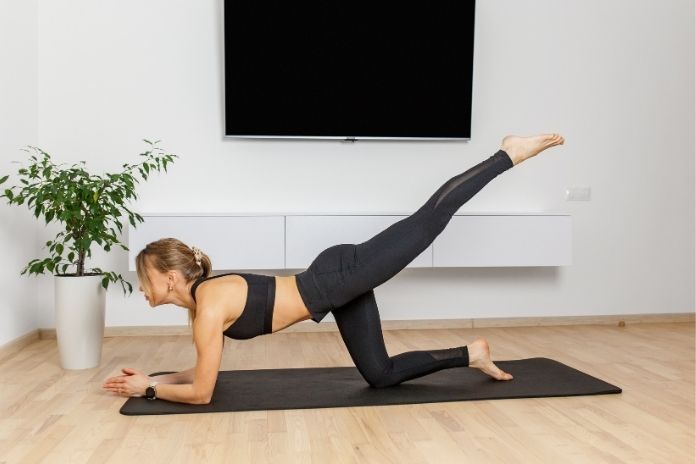
Consistency is the key to improving posture. Doing this routine three to five times a week, or even once daily as a quick posture break, can make a real difference. It fits naturally before a workout, between long work sessions, or after a full day at your desk.
Results appear gradually because good posture is a habit your nervous system has learned over the years. Most people notice increased posture awareness within one to two weeks, reduced upper back fatigue in two to three weeks, and improved shoulder comfort in three to four weeks. These changes take time, but with steady practice, your body will adapt to a stronger, more aligned position that feels natural rather than forced.
Complementary Moves to Boost Results
The 2-step resistance band routine is highly effective on its own, but pairing it with a few supportive movements can accelerate progress and reinforce better posture habits. These exercises target tight or underused areas that often limit improvements in posture.
Chest Doorway Stretch
Tight chest muscles are a major culprit behind rounded shoulders. The doorway stretch gently opens these muscles and counteracts the forward pull. To perform it, place your forearms on either side of a doorway and step forward slowly, feeling a stretch across your chest.
Hold for 20 to 30 seconds while breathing deeply, and repeat as needed. This simple move helps create space for your shoulder blades to move freely.
Scapular Wall Slides
Wall slides improve shoulder blade control and thoracic mobility, which are essential for upright posture. Stand with your back against a wall, ribs down, and core engaged, and slide your arms up and down like a goalpost. Focus on smooth, controlled movements rather than speed.
Over time, this exercise helps your shoulders move more efficiently and strengthens the muscles that keep your upper back stable.
Prone I-T-Y Raises
This exercise targets small stabilizing muscles that are often neglected. Lie face down and lift your arms into the shapes of an I, T, and Y, keeping the movement slow and controlled. Use very light weights or just your body weight; the focus is on precision and quality rather than quantity. Strengthening these muscles supports the gains from your band routine and improves coordination of the shoulders and upper back.
When combined with the resistance band pull-aparts, these complementary moves create a well-rounded approach to posture correction, addressing tightness, weakness, and movement awareness simultaneously.
When to Take a Break or Seek Professional Guidance
Although resistance bands are generally low-risk, listening to your body is crucial. Stop immediately if you experience sharp or worsening pain, numbness, or tingling in the arms, or shoulder instability accompanied by discomfort.
If symptoms persist, it may indicate underlying issues such as nerve involvement, shoulder impingement, or cervical spine problems. In these cases, a physical therapist can assess your posture, movement patterns, and muscle balance, providing guidance that exercises alone cannot. Professional evaluation ensures you strengthen safely and avoid aggravating any existing conditions.
What the Research Says About Posture and Upper Back Strength

Research published in a musculoskeletal rehabilitation journal found that people who performed targeted scapular stabilization exercises showed real improvements in posture and muscle balance compared with those who didn’t.
After four weeks of exercise, the group that trained their scapular stabilizers showed better neck and shoulder alignment and increased strength in key muscles such as the serratus anterior, while also improving measures related to forward head and rounded shoulder posture.
Cleveland Clinic says strengthening upper-back extensor muscles with movements like scapular squeezes and theraband rows can help relieve neck pain and reduce stress on the neck and shoulders caused by poor posture and prolonged sitting.
According to Mayo Clinic guidance, posture exercises that emphasize controlled pulling movements are particularly effective for countering rounded shoulders caused by prolonged sitting.
The takeaway from the research is clear. You do not need complex routines. You need targeted, repeatable movement.
The Takeaway: Simple, Sustainable Posture Fix
Rounded shoulders aren’t a personal flaw; they’re a predictable response to modern life. Long hours at a desk, constant screen use, and repetitive forward-reaching movements all contribute to the forward pull of your shoulders. The good news is that correcting this doesn’t require complicated routines, expensive equipment, or hours at the gym.
A focused resistance band pull-apart routine is a highly efficient solution. In less than five minutes, it targets the muscles that matter most for posture, the middle and lower trapezius, rhomboids, and rear deltoids, strengthening them while retraining the way your shoulder blades move.
With proper control and consistency, this simple routine counteracts hours of sitting, improves upper back stability, and reduces tension in the shoulders and neck.
The key is attention to quality over quantity. Slow, deliberate movements reinforce proper alignment and teach your nervous system a new way to hold your body. No fancy programming, no complicated schedules, just a band, a few minutes, and mindful execution. That’s how posture truly changes, and how small, consistent actions create lasting results.
Frequently Asked Questions (FAQs)
What is a resistance band pull-apart?
A resistance band pull-apart is a simple yet effective exercise that activates the muscles of the upper back and shoulders. You hold a resistance band with your arms straight in front of you and pull it apart, focusing on controlled movement.
This exercise targets the rhomboids, middle trapezius, and rear deltoids, which are often weak from prolonged sitting. It’s widely used to improve posture, shoulder stability, and upper back strength.
Can resistance bands fix rounded shoulders?
Yes, resistance bands can help correct rounded shoulders by strengthening the muscles that pull the shoulders back. Consistent practice retrains the shoulder blades to move properly and supports better alignment throughout the day.
While they don’t magically fix posture overnight, they significantly reduce upper back tension and improve posture awareness. Combined with stretching tight chest muscles, bands provide a complete, low-impact solution for forward-rounded shoulders.
How long does it take to improve posture?
Posture improvement is gradual because it involves retraining your nervous system and strengthening underused muscles. Most people notice better posture awareness within one to two weeks of regular practice.
Reduced upper back fatigue and shoulder tension often follow within three to four weeks. Full, lasting changes come from consistent effort, combining targeted exercises with mindful daily posture habits.
Are these exercises safe for neck and shoulder pain?
Resistance band exercises are generally safe when performed with proper form, light to moderate resistance, and slow, controlled movements. They strengthen weak muscles without placing excessive strain on joints or tissues.
However, if you experience sharp pain, numbness, tingling, or shoulder instability, it’s important to stop and seek professional evaluation. A physical therapist can ensure the exercises are appropriate and safe for your specific condition.
References
- Cleveland Clinic. (n.d.). How often you should work out. Cleveland Clinic Health Essentials.
- Cleveland Clinic. (n.d.). Neck pain.
- CNN. (2025, April 1). How long it really takes to see results from exercise.
- Evolved H2O. (n.d.). How much hydrogen water should you drink daily?
- EzMeltz. (n.d.). 6 tips for creating a morning workout routine you’ll stick to.
- FitResults. (n.d.). Strength training pro tips: What trainers tell clients.
- FlexifyMe. (n.d.). Busting posture myths: Stand tall with truth.
- Healthline Media. (n.d.). Do you need to work out every day to see results? Medium.
- HOH Fitness. (n.d.). How many days a week should you do HIIT for results?
- Just Move Fitness Club. (n.d.). Gym routine to get big.
- Mayo Clinic. (n.d.). Seated row exercise [Video].
- National Institutes of Health, Office of Dietary Supplements. (n.d.). Vitamin D: Fact sheet for health professionals.
- Polar Electro. (n.d.). How long does it take to see results from working out?
- Primary Immune Deficiency Foundation. (n.d.). Exercise and weight loss.
- PubMed. (2021). [Article abstract].
- PubMed. (2024). [Article abstract].
- U.S. News & World Report. (2017, January 13). How often do you need to work out to see results?
In this Article