



















Headaches, a common yet debilitating ailment, impact millions of people worldwide, regardless of age, gender, or lifestyle. Whether it is the bothersome tightness of a tension headache or the piercing pounding of a migraine, these headaches disrupt daily lives. Headaches take away our concentration, productivity, and general quality of life. Given the several types of headaches that present distinct challenges, getting sufficient relief is challenging, but not impossible.
Dr. Vernon Williams, MD, a board member of the American Board of Psychiatry and Neurology and director of the Center for Sports Neurology and Pain Medicine at Cedars-Sinai, explains in a blog post that meditation is an excellent tool for managing stress-related headaches. He says, “Meditation has been proven to reduce headache frequency and severity for many headache sufferers.”
One of the popular solutions for headaches today is using breathing exercises, which provide a natural, non-pharmacological means of managing pain. In this article, we will explore the prevalence of headaches and examine the transformative effects of breathing exercises in mitigating their impact. If you’re someone who constantly suffers from headaches or wishes to know easy breathing exercises, read on.

Expert Choice: Best At-Home Yoga Studio
Experience over 2,400 world-class yoga classes from the comfort of your home. YogaDownload offers expert-led programs and flexible membership options for every fitness level.
*Purchases through this link support our research at no extra cost to you.
The 6 popular breathing exercises to relieve headaches include:
1. Diaphragmatic Breathing
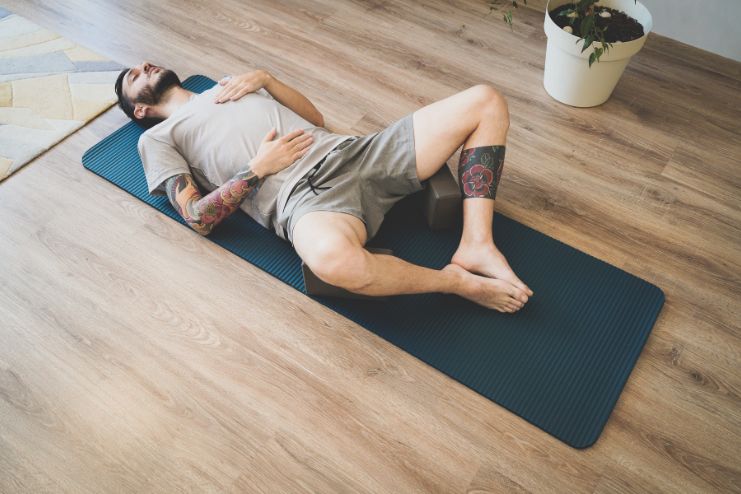
As a robust technique that uses the diaphragm to induce relaxation and decrease stress, diaphragmatic breathing, also known as deep belly or abdominal breathing, helps manage tension headaches. Other names for this technique are abdominal breathing and deep belly breathing. Deep breathing is a technique that allows the diaphragm to fully expand the lungs, resulting in a more efficient exchange of oxygen and carbon dioxide.
Here’s how to do it:
- Sit or lie down in a quiet, comfortable place.
- Place one hand on your chest and the other on your stomach.
- Breathe in slowly through your nose. Let your stomach rise while keeping your chest still.
- Breathe out gently through your mouth. Your stomach should fall as you exhale.
- Continue breathing this way, focusing on the rise and fall of your stomach.
This technique helps calm the mind and body by encouraging deeper, more relaxed breaths. Through stimulating deeper respiration and promoting oxygen flow, it transitions the body out of its habitual shallow chest breathing and stress response.
Simple yet powerful, this calming technique not only relaxes the nervous system but also eases bodily tension, making it particularly beneficial in relieving tension headaches associated with stress and muscle contraction. Adding diaphragmatic breathing to your daily routine can be a helpful aid in managing stress, promoting emotional equilibrium, and preventing headache relapse.
Read More: How to Treat Headaches Behind The Eyes
2. Equal Breathing (Sama Vritti)

If you want a quick means to unwind and ease the severity of headaches, use equal breathing, or Sama Vritti in yoga. It’s a soothing method that synchronizes your breath, equating the duration of your inhales and exhales—to calm body and mind.
Here’s how to do it:
- Sit in a quiet spot and sit comfortably with your back straight.
- Breathe in slowly through your nose for a count of 4.
- Breathe out through your nose for the same count of 4.
- Keep your breathing smooth and relaxed—no straining necessary.
- Do it again for a few minutes, keeping your attention on your breath.
This soothing, rhythmical pattern can calm your nervous system, relax tight muscles, and reduce tension—all of which can eliminate or prevent headaches. Incorporate it into your daily life for a few minutes, and you’ll notice how much you’ll improve.
3. Deep Belly Breathing
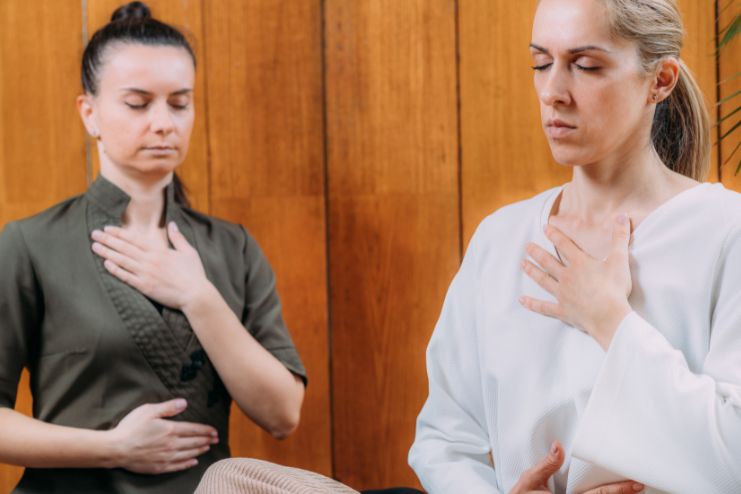
Deep belly breathing is a fundamental technique for promoting relaxation and reducing stress. Deep belly breathing is a simple yet powerful way to relax your body and mind. It helps increase oxygen flow and relieve tension, especially helpful if you’re dealing with stress or headaches.
Here’s how to do it:
- Sit or lie down in a quiet, comfortable place.
- Place one hand on your chest and the other on your stomach.
- Breathe in slowly through your nose, letting your belly rise.
- Breathe out slowly through your mouth, allowing your belly to drop.
- Maintain your concentration on the even, smooth rhythm of your breath.
This type of breathing relaxes the body, oxygenates your brain, and relieves the tension that usually causes headaches. Regular practice can make you better able to cope with stress and improve your overall health.
Read More: Causes and Treatment for Headache at the Base of Skull
Expert Choice: Best At-Home Yoga Studio
Experience over 2,400 world-class yoga classes from the comfort of your home. YogaDownload offers expert-led programs and flexible membership options for every fitness level.
*Purchases through this link support our research at no extra cost to you.
4. Progressive Muscle Relaxation with Breath Awareness

Progressive muscle relaxation, or PMR, is a therapeutic approach that systematically tenses and then releases distinct muscle groups to alleviate physical tension and stress. Progressive Muscle Relaxation (PMR) is a simple and effective way to ease physical tension and calm your mind—hugely helpful if you’re struggling with stress or headache.
Here’s how to do it:
- Sit or lie down in a quiet place.
- Start by clenching one set of muscles—like your shoulders—for several seconds.
- Slowly exhale, releasing all tension.
- Move on to other areas of your body (e.g., your arms, legs, or jaw), one at a time, tightening and relaxing each while keeping your breathing relaxed and steady.
If you pair PMR with slow breathing, it gets even more powerful. This pair is a stress reducer—a primary headache instigator—and also relaxes your entire body. Regular practice can make a huge difference in headache prevention and relief.
5. The 4-7-8 Breathing Technique

Dr. Andrew Weil developed the 4-7-8 breathing technique to induce relaxation, reduce stress levels, and alleviate the intensity of headaches. This approach is both straightforward and effective. It involves a specific rhythm of breathing, holding the breath, and expelling it each time, promoting a serene state of mind and body.
Here’s how to do it:
- Take a deep breath through your nose and hold it for four seconds.
- Please take a deep breath and hold it for 7 seconds.
- Ensure you exhale thoroughly and audibly via your mouth for 8 seconds.
- Repeat the cycle for four breath cycles initially, then gradually increase the number of cycles.
The 4-7-8 breathing technique is well-known for its ability to stimulate the relaxation response in the nervous system, which in turn helps foster a sense of serenity in the individual. As a result, this is useful in reducing headache symptoms, particularly those related to stress and tension.
Individuals who engage in the 4-7-8 approach proactively manage stress, which ultimately leads to an improvement in their overall well-being and a reduction in the frequency and intensity of headaches.
Read More: How to Get Rid of a Headache Fast – Top 11 Home Remedies
6. Alternate Nostril Breathing (Nadi Shodhana)

Alternate Nostril Breathing is a relaxing technique that balances your nervous system, alleviates stress, and soothes headaches by inducing deep relaxation and mental clarity.
Here’s how to do it:
- Sit with a straight spine and relaxed shoulders.
- With your right hand, place your thumb on your right nostril.
- Breathe in slowly and deeply through your left nostril.
- Place your ring finger over your left nostril and let your right nostril open.
- Slowly and completely exhale through your right nostril.
- Slowly inhale through your right nostril.
- Block your right nostril again and exhale through your left nostril.
- Do for 3-5 minutes, switching nostrils with each breath.
This simple practice reduces stress, enhances oxygen flow to your brain, and helps balance your body’s energy. It’s especially effective for reducing headache pain and promoting overall relaxation. Make it a regular part of your routine to feel calmer and more focused throughout the day.
Read More: Yoga Postures to Cure Headaches
Conclusion

All in all, breathing exercises offer a natural and life-changing approach to managing headache symptoms and promoting overall well-being. Whether it is the soothing rhythm of deep belly breathing, the relaxing 4-7-8 method, or the balancing energy of alternate nostril breathing, these exercises offer an easy yet effective way to combat stress, alleviate tension, and restore balance to the nervous system.
The beauty of these techniques lies in their versatility; anyone can practice them at any time, anywhere. By incorporating these mindful breathing exercises into your daily routine, you’re not only managing headaches but also adopting a proactive approach to your health and well-being.
Imagine a life where you’re not weighed down by frequent headaches, where your body and mind are in sync, and stress no longer has the upper hand. These breathing exercises can help you develop resilience, manage stress, and experience greater clarity and calm in your daily life.
The best news? You are in charge of how you feel and can take control of your health with just a few deep breaths. So why not begin today and incorporate breathing into your daily routine, noticing the difference? Peace, power, and headache relief are all yours for the taking—one breath at a time.
References
- https://www.webmd.com/balance/what-to-know-4-7-8-breathing
- https://www.healthline.com/health/progressive-muscle-relaxation
- https://www.prana-sutra.com/post/sama-vritti-pranayama-equal-breathing
- https://www.lung.org/lung-health-diseases/lung-disease-lookup/copd/resource-library/belly-breathing-video
- https://www.physio-pedia.com/Diaphragmatic_Breathing_Exercises
- https://www.webmd.com/migraines-headaches/nontraditional-headache-treatments
- https://my.clevelandclinic.org/health/articles/9445-diaphragmatic-breathing
- https://www.health.harvard.edu/healthbeat/learning-diaphragmatic-breathing
- https://www.medicalnewstoday.com/articles/diaphragmatic-breathing
- https://www.uofmhealth.org/conditions-treatments/digestive-and-liver-health/diaphragmatic-breathing-gi-patients
- https://www.yogabasics.com/practice/sama-vritti-pranayama/
- https://www.antarayoga.nl/sama-vritti-or-equal-breathing
- https://www.ncbi.nlm.nih.gov/pmc/articles/PMC5455070/
- https://www.unh.edu/pacs/belly-breathing
- https://www.va.gov/WHOLEHEALTHLIBRARY/tools/progressive-muscle-relaxation.asp
- https://www.webmd.com/sleep-disorders/muscle-relaxation-for-stress-insomnia
- https://www.utoledo.edu/studentaffairs/counseling/anxietytoolbox/pmr.html
- https://www.medicalnewstoday.com/articles/324417
- https://www.gundersenhealth.org/health-wellness/live-happy/4-7-8-breathing-technique
- https://www.medicalnewstoday.com/articles/alternate-nostril-breathing#definition
- https://www.healthline.com/health/alternate-nostril-breathing
- https://www.webmd.com/balance/what-to-know-about-alternate-nostril-breathing
In this Article