

















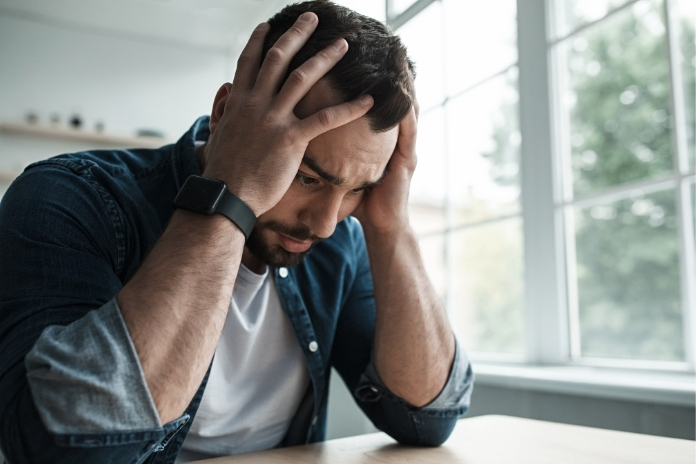
He had no history of erectile problems. Then came one difficult night, a stressful week, and an unfamiliar situation. Nothing happened. And then, the next time, all he could think about was whether it would happen again. It did. The cycle had started.
Performance anxiety and erectile dysfunction form one of the most common yet least openly discussed feedback loops in men’s sexual health. Psychological ED, the kind rooted primarily in anxiety rather than vascular or hormonal problems, accounts for a significant share of erectile difficulties, particularly in younger men. Estimates suggest that psychogenic factors contribute to ED in anywhere from 10 to 40 percent of all cases, with higher rates among men under 40.
What makes this cycle so persistent is that the anxiety and the ED reinforce each other. Each failed erection raises the stakes for the next encounter. Each anxious encounter raises the likelihood of another. Understanding how that loop forms and what it takes to break it is the starting point for recovery.
- Performance anxiety triggers the sympathetic nervous system, which redirects blood flow away from the genitals and actively interferes with erection.
- A single negative sexual experience can create anticipatory anxiety that becomes self-fulfilling, establishing a cycle that perpetuates psychological ED.
- Key signs that ED is primarily psychological include situational occurrence, the presence of morning erections, and variability based on stress levels or partner context.
- Breaking the cycle typically requires a combination of cognitive reframing, communication, stress management, and professional support through CBT or sex therapy.
How Performance Anxiety Can Lead to ED
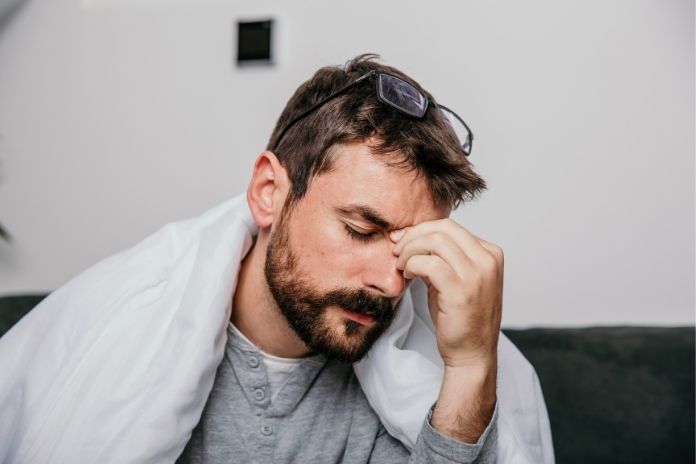
The link between anxiety and erection is not metaphorical. It is physiological. Erection requires the parasympathetic nervous system to be dominant, a state of relaxed, engaged arousal in which blood flows into the erectile tissue of the penis. Anxiety activates the sympathetic nervous system instead, triggering the fight-or-flight response and producing exactly the physiological conditions that prevent erection.
Cortisol and adrenaline flood the bloodstream. Blood is redirected to the muscles and vital organs. Genital blood flow decreases. The same system that helps a person respond to danger has no interest in facilitating sex. The more anxious a man becomes during a sexual encounter, the more firmly the sympathetic nervous system asserts itself, making an erection physiologically harder to achieve.
This is why anxiety-causing erectile dysfunction is not a sign of weakness or lack of attraction. It is a measurable biological response to a mental state. And it can happen to any man, regardless of age, health, or relationship history.
Understanding the Mental Feedback Loop
One failed erection, in isolation, means very little. Most men will experience one at some point. The problem begins when that single experience becomes the reference point for every future encounter.
After a difficult night, anticipatory worry sets in. Before the next sexual encounter, the mind is already running through what might go wrong. That anticipatory anxiety activates the sympathetic nervous system even before anything happens. The erection is difficult or absent. The brain records another failure. The anxiety intensifies. The cycle has now become self-sustaining.
This mental feedback loop is well-documented in sex research. Psychologists describe it as spectatoring: the person mentally steps outside the experience and watches themselves perform, judging in real time instead of being present. Attention that should be on arousal and connection is instead consumed by self-monitoring, and that divided attention is enough to break the physiological chain required for erection.
The loop can tighten over months if left unaddressed. What began as situational performance anxiety becomes a reflexive anticipation of failure, and the ED becomes increasingly consistent even in situations where there is no genuine reason for difficulty.
Signs That ED May Be Psychological
Distinguishing psychological ED from physical causes matters because they respond to different approaches. Several consistent indicators suggest the primary driver is anxiety rather than vascular or hormonal factors.
Situational variability is the clearest signal. If erectile difficulties occur in some contexts but not others, with certain partners but not alone, during high-stress periods but not during vacation, the problem is almost certainly not physical. Physical ED tends to be consistent across contexts.
Morning and spontaneous erections are another important marker. Men with psychogenic ED typically retain normal morning erections and can achieve an erection during masturbation. This indicates that the physiological machinery is intact. The issue is in the mental conditions surrounding partnered sex, not in penile blood flow.
Younger age and sudden onset also point toward psychological causes. Physical ED associated with cardiovascular disease or diabetes tends to develop gradually over the years. Psychological ED often appears suddenly, following a stressful period, a specific negative experience, or a significant life change.
Common Triggers of Performance Anxiety
Performance anxiety does not arise from nothing. Several patterns consistently precede it, and identifying the specific trigger can help direct the right approach.
Fear of not satisfying a partner is among the most common. Men often carry unspoken pressure about sexual performance that has no basis in their partner’s actual expectations. Unrealistic standards drawn from pornography or cultural messaging amplify this fear, creating a gap between what a man believes is expected and what he is capable of in the moment.
Past negative experiences leave a particularly durable mark. One embarrassing or difficult sexual encounter can create an association between sex and failure that becomes difficult to override consciously. The nervous system learns to anticipate a threat in a situation it has previously encoded as threatening.
Relationship stress and communication breakdowns remove the sense of safety that a sexual connection requires. If there is unresolved tension, unspoken resentment, or fear of judgment from a partner, the psychological conditions for arousal are compromised before an encounter even begins.
General anxiety disorders and chronic stress from work, health concerns, or major life events can also spill directly into sexual function. Men who carry high baseline anxiety have a sympathetic nervous system that is already primed, leaving less margin for the relaxed state that an erection requires.
Read More: Why Young Men and Women Are Ignoring the Link Between Blood Pressure and Sexual Health
How to Break the Anxiety-ED Cycle

Reduce Pressure Around Performance
The most counterproductive thing a man can do when dealing with performance anxiety and erectile dysfunction is to treat each sexual encounter as a test. That framing converts an experience of connection into an evaluation, and anxiety thrives in evaluative conditions.
Shifting the goal from performance to presence is a clinically validated strategy, not a cliche. When attention moves to physical sensation, emotional connection, and shared experience rather than whether an erection is occurring, the parasympathetic system has more room to assert itself. Removing the performance standard removes the primary source of the anxiety.
Theresa Callard-Moore, PhD, AASECT-certified sex therapist and Sexual Health Specialist at the Cleveland Clinic, describes this shift directly: “If we’re feeling connected, and we know our partner has good intentions — that they also want pleasure and connection — it becomes easier to find your way together.” That sense of safety and mutual intent is often what is missing when anxiety takes hold.
Gradual Exposure and Confidence Building
Recovery from psychological ED rarely happens in a single encounter. It is a gradual process of accumulating positive experiences that slowly displace the negative associations the brain has built up. This can involve deliberately lowering the stakes: agreeing with a partner to engage in sensual activity without any expectation of intercourse, or exploring intimacy without a specific outcome in mind.
Each positive, low-pressure experience adds a new data point that begins to counterbalance the record of failure the brain has been reinforcing. Over time, anticipatory anxiety loses its grip as sexual encounters are no longer automatically associated with negative outcomes.
Stress Management Techniques
Because the sympathetic nervous system is central to the problem, any intervention that consistently reduces sympathetic activation has a direct benefit. Diaphragmatic breathing, progressive muscle relaxation, and mindfulness meditation all reduce cortisol and shift the body toward parasympathetic dominance.
Daily mindfulness practice, even five to ten minutes, has documented effects on baseline anxiety levels. Some men find that a brief breathing exercise before a sexual encounter helps bridge the transition from the stress of daily life into a more relaxed mental state. These are not workarounds. They address the underlying physiology that is driving the ED.
Improve Communication with Your Partner
Sexual performance anxiety almost always has a relational dimension. When a man is struggling but says nothing, a partner may interpret withdrawal or avoidance as rejection, loss of interest, or the partner’s own failure to attract. That misinterpretation adds relational strain that makes the anxiety worse.
Open communication transforms the dynamic. Naming the anxiety, explaining what is happening without shame or self-blame, and inviting the partner into the solution shifts the encounter from a high-stakes performance into a shared problem being worked through together. Partners who understand what is happening are almost universally more supportive than a man’s fear predicts.
Read More: How to Increase Blood Flow to the Penis Naturally
Role of Therapy in Psychological ED

Cognitive Behavioral Therapy
CBT is the most evidence-backed psychological treatment for performance anxiety and erectile dysfunction. It works by identifying the specific thoughts that drive the anxiety cycle, examining whether those thoughts are accurate, and systematically replacing them with more realistic alternatives.
A man who believes “I will never be able to maintain an erection” or “my partner will leave me if this happens again” is operating on catastrophic predictions that are almost always inaccurate but feel completely real in the moment. CBT gives those thoughts structure and challenges them with evidence, reducing their power over behavior.
A long-term follow-up study published in the Journal of Sexual Medicine found that men who received CBT alongside medication for ED continued to show improvements in erectile function and mental health at fifteen to eighteen months, while men who received medication alone showed no further improvement or even declined. The psychological work compounds over time in ways that medication alone does not.
Sex Therapy
Sex therapy, delivered by a credentialed specialist, addresses the specific patterns and communication dynamics that sustain sexual performance anxiety. It often involves structured exercises done with a partner at home between sessions, gradually rebuilding intimacy and confidence in a deliberate sequence.
A study published in PMC examining cognitive behavioral sex therapy in young men with nonorganic erectile dysfunction found significant improvements in erectile function scores alongside reductions in depression and anxiety associated with the ED. The treatment worked by addressing not just the erection itself but the cognitive patterns, communication deficits, and performance expectations surrounding sex.
Sex therapy is particularly useful when relationship dynamics, partner responses, or past sexual trauma are contributing to the anxiety. A therapist can help both partners understand the problem and redesign the sexual environment in ways that reduce pressure and rebuild connection.
Medical Evaluation: Why It Still Matters
Psychological ED should be a diagnosis of inclusion, not an assumption. Physical causes of erectile dysfunction, including cardiovascular disease, diabetes, low testosterone, and medication side effects, need to be ruled out before attributing the problem primarily to anxiety.
This matters because the two can coexist. A man may have a mild vascular issue that is insufficient to cause ED on its own, but when anxiety is added, the combined effect produces consistent erectile failure. In this case, addressing only the psychological component leaves the physical contributor untreated, and vice versa.
A urologist or primary care physician can evaluate erectile function through clinical assessment, blood tests for hormone levels, and screening for cardiovascular risk factors. If a physical cause is identified, treatment for that cause alongside psychological support typically produces better outcomes than either approach alone.
Medications such as PDE5 inhibitors, which include sildenafil and tadalafil, are sometimes used as a bridge in psychological ED, not because they fix anxiety but because consistent success with pharmacological support can help break the negative association and rebuild confidence. As Callard-Moore has noted, sometimes just knowing the option is available provides enough relief to allow natural arousal to occur.
Lifestyle Factors That Influence Both Anxiety and ED

The lifestyle factors that support mental health are almost identical to those that support erectile function. Sleep deprivation elevates cortisol, suppresses testosterone, and heightens emotional reactivity, all of which worsen both anxiety and ED. Men experiencing performance anxiety who are also sleeping poorly are managing two interacting problems rather than one.
Regular aerobic exercise reduces baseline anxiety, improves cardiovascular health, and supports healthy testosterone levels. Even thirty minutes of moderate exercise most days produces measurable reductions in anxiety over weeks. The same exercise that helps a man feel less anxious generally also improves the vascular function that supports an erection.
Alcohol is frequently misused as a way to reduce performance anxiety, but it backfires. In small amounts, alcohol may temporarily reduce inhibition, but it also directly suppresses erectile function by depressing the central nervous system and impairing the neurological chain needed for erection. Regular heavy drinking compounds the problem substantially.
When to Seek Help
There is no single threshold at which performance anxiety or erectile dysfunction requires professional attention, but several situations make seeking support particularly worthwhile. When the cycle has persisted for more than a few months, when it is affecting relationship quality or generating significant personal distress, or when home-based strategies have not produced improvement, professional evaluation is appropriate.
A primary care doctor or urologist is a reasonable first contact for ruling out physical causes. If the evaluation suggests psychological ED is primary, referral to a therapist specializing in sexual dysfunction, a sex therapist, or a psychologist offering CBT is the most direct path forward.
It takes courage to raise this with a clinician. The stigma around erectile problems, particularly in younger men, often delays help-seeking by months or years. But psychological ED is among the most treatable of all sexual health problems, and addressing it early prevents the anxiety cycle from calcifying into something more entrenched and harder to unwind.
Read More: How Toxic Masculinity Affects Mental Health, and Why It Hurts Men the Most
Key Takeaway
Performance anxiety and erectile dysfunction are real, common, and deeply treatable. The cycle it creates, where anxiety produces ED and ED produces more anxiety, is self-reinforcing but not permanent. Breaking it requires addressing the psychological mechanisms at its core: shifting attention away from performance, reducing baseline anxiety, rebuilding positive sexual associations, and communicating openly with a partner.
Medical evaluation remains important to rule out or address any physical contribution. When professional support is needed, CBT and sex therapy have strong evidence behind them and produce improvements that extend well beyond the end of treatment.
Recovery from psychological ED is not about achieving a single successful night. It is about gradually dismantling the feedback loop until anxiety no longer controls what the body is capable of doing.
References
- Callard-Moore, T. (2024). How to overcome sexual performance anxiety. Cleveland Clinic Health Essentials.
- Khan, S., Amjad, A., & Rowland, D. (2019). Potential for long-term benefit of cognitive behavioral therapy as an adjunct treatment for men with erectile dysfunction. Journal of Sexual Medicine, 16(2), 300-308.
- Muqadas, H., Sadiq, H., Khan, M. T., & Ali, M. (2020). Cognitive behavioral sex therapy: An emerging treatment option for nonorganic erectile dysfunction in young men. Journal of Sexual Medicine, 17(7), 1389-1400.
- Rowland, D., Kolba, T., & Silverstein, R. (2025). A theoretical model for sexual performance anxiety and a clinical approach for its remediation. Sexual Medicine Reviews, 13(2), 184-196.
- Sexual Medicine Society of North America. (2025). What are strategies for overcoming sexual performance anxiety?
- Vasan, S., et al. (2025). Association of sexual health and mental health in erectile dysfunction: Expert opinion from the Indian context. Cureus.
- Cleveland Clinic. (n.d.). Erectile dysfunction (ED).
- Mayo Clinic. (n.d.). Erectile dysfunction: Symptoms and causes.
- DC Urology. (2024, March 20). When you know ED is in your head.
- Ubie Health. (n.d.). Physical ED signs vs partner mental vs heart/body causes.
- Fujisawa, M., et al. (2025). Psychological and physical factors associated with erectile dysfunction.
- Dr Batra’s. (n.d.). 5 psychological causes of erectile dysfunction.
- Hims. (n.d.). Psychological causes of ED.
- Paediatrica Indonesiana. (n.d.). Psychological factors and erectile dysfunction.
- Saini, A. (n.d.). Psychological causes of erectile dysfunction.
In this Article