













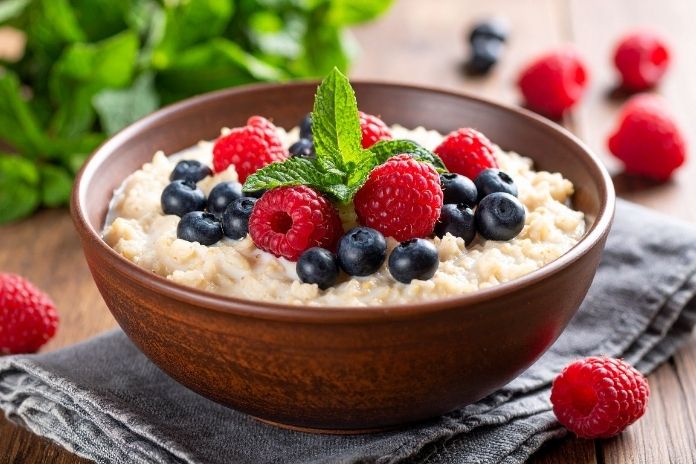
You make a bowl of oatmeal. It checks all the right boxes. Whole grain. High in fiber. Linked to heart health. You feel like you made a smart choice.
And yet by 10:30 a.m., your stomach is growling. Your energy dips. You’re already thinking about snacks.
Here’s why.
Oatmeal is nutritious, but on its own, it’s mostly carbohydrates. A standard half-cup of dry rolled oats provides about 27 grams of carbs and just 5 grams of protein. Without enough protein or fat to slow digestion, that carb-heavy meal burns quickly, and so does your energy.
Most nutrition experts recommend aiming for 20 to 30 grams of protein at breakfast to support satiety, muscle maintenance, and stable blood sugar. Plain oatmeal falls far short of that target.
The result? A breakfast that looks healthy on paper but doesn’t keep you full for long.
The good news is that fixing this is simple. With a few smart additions, oatmeal can shift from fast-burning fuel to a balanced, steady-energy meal that carries you through the morning.
In this guide, you’ll learn practical, evidence-based ways to add protein to oatmeal, without making it rubbery, chalky, or oddly savory.
Read More: Millet vs. Oatmeal for Breakfast: Which Is Healthier for You?
Why Your Oatmeal Needs a Protein Boost
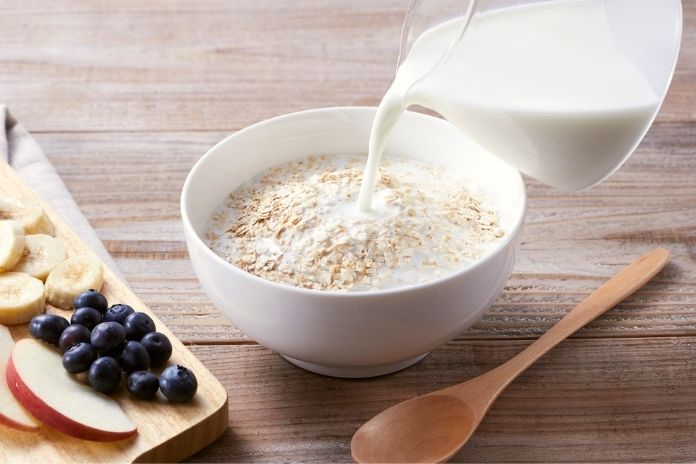
Oatmeal itself isn’t the issue. The imbalance is.
A bowl of oats delivers fiber and complex carbs, but protein is the key nutrient that determines whether you stay satisfied and metabolically steady, or end up chasing energy a few hours later.
The Breakfast “Protein Gap”
Most adults consume the majority of their daily protein at dinner, with far less at breakfast. Research shows that distributing protein evenly across meals supports muscle protein synthesis more effectively than concentrating it at night.
In simple terms, your body responds better to steady protein signals throughout the day.
If breakfast is low in protein, you start the day playing catch-up.
Satiety and Appetite Control
Protein directly influences the hormones that tell your brain you’ve had enough. It increases peptide YY and GLP-1, hormones that reduce hunger and slow digestion.
A randomized study in The American Journal of Clinical Nutrition found that higher-protein breakfasts (≈35 g protein) increased feelings of fullness, improved appetitive and hormonal signals, and reduced evening snacking on high-fat foods compared with a normal-protein breakfast or skipping breakfast altogether in adolescents.
What this really means is that consuming more protein at breakfast not only blunts hunger but also reduces cravings and unhealthy late-night snacking compared with lower-protein or no breakfast conditions.
Oats already bring fiber to the table, which helps with fullness. But fiber alone isn’t enough. When fiber is paired with protein, digestion slows further, stomach emptying is delayed, and that “I need a snack” feeling gets pushed way back.
This is why oatmeal with protein feels grounding, while plain oatmeal often feels like it disappears.
Muscle Maintenance and Long-Term Health
Muscle tissue isn’t just about aesthetics or athletic performance. It’s a metabolically active tissue that supports glucose control, mobility, and long-term health.
Muscle repair and growth require essential amino acids, especially leucine. According to the National Institutes of Health, the minimum protein recommendation for adults is about 0.8 g/kg of body weight per day. Many experts now suggest 1.0 to 1.2 g/kg for older adults to slow age-related muscle loss.
Starting the day with protein helps trigger muscle protein synthesis earlier, supports post-workout recovery, and reduces the gradual muscle breakdown that accelerates with age. A carb-only breakfast simply doesn’t send that signal.
Blood Sugar Stability
Oatmeal has a moderate glycemic index, but when eaten alone, it can raise blood glucose faster than many people expect. That spike is often followed by a drop, which shows up as fatigue, irritability, or cravings.
Protein changes in response. It slows gastric emptying, reduces how quickly glucose enters the bloodstream, and blunts post-meal spikes.
Harvard T.H. Chan School of Public Health notes that pairing carbohydrates with protein and fat lowers glycemic response and improves metabolic stability. In real-world terms, that means steadier energy, better focus, and fewer mid-morning crashes.
Read More: How to Make Oatmeal Diabetes-Friendly: Toppings and Recipes That Work
The “Big Three” High-Protein Stir-Ins For Oatmeal
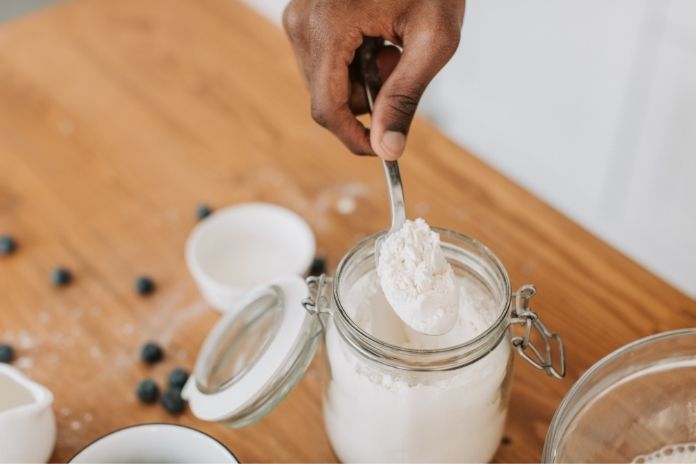
If you want the biggest return with the least effort, start here. Turning oatmeal into a high-protein meal doesn’t require a dozen ingredients or complicated prep. A few strategic add-ins can take a basic bowl from carb-heavy to balanced in minutes.
The key is choosing protein sources that blend smoothly, tolerate heat, and don’t overpower the flavor. These three options are reliable, efficient, and easy to scale based on your protein target.
1. Protein Powder: The Gold Standard
Protein boost: 20–25 grams per scoop
Protein powder is the most predictable way to increase protein without changing volume. One scoop can single-handedly turn oatmeal into a 30-gram breakfast.
Whey protein stands out because it’s rich in leucine, the amino acid most responsible for triggering muscle protein synthesis. That makes it especially effective if you train, walk a lot, or want to preserve lean mass. Plant-based powders work well too, especially blends that combine pea, rice, or soy for a complete amino acid profile.
Expert tip: Never dump protein powder straight into boiling oats. That’s how you get clumps and graininess.
Instead, mix the powder with a small splash of milk or water to create a smooth slurry. Stir it into warm, fully cooked oats after you take them off the heat. The texture stays creamy, not chalky.
Does heat destroy protein powder? No. Heat denatures protein, meaning it changes the shape of the molecules. It does not destroy amino acids or reduce protein content. Nutritional value remains intact.
2. Liquid Egg Whites: The Fluffy Volume Hack
Protein boost: about 13 grams per ½ cup
This is one of the most overlooked oatmeal upgrades, and it works shockingly well.
Egg whites are almost pure protein, mostly albumin, with no fat and minimal flavor. According to USDA data, one cup of liquid egg whites contains roughly 26 grams of protein.
How to use them: Whisk egg whites directly into simmering oats and stir continuously for two to three minutes. They cook gently into the oats instead of scrambling, creating a thicker, custard-like texture.
The payoff is big. More volume, better creaminess, and significantly improved satiety, without tasting like eggs.
3. Greek Yogurt or Skyr
Protein boost: 12–15 grams per ½ cup
Greek yogurt and Icelandic skyr are strained dairy products that concentrate protein and reduce lactose. That makes them easier to digest for many people and more protein-dense than regular yogurt.
They also contain probiotics. Research published in Nutrients suggests probiotic-rich foods may support metabolic and immune health.
One rule that matters: Add yogurt after cooking. High heat can kill live cultures and ruin the texture. Stir it in at the end for a creamy finish and a subtle tang that naturally balances sweetness. If making overnight (cold) oats, add the Greek yogurt when mixing.
Whole-Food & Plant-Based Protein Additions
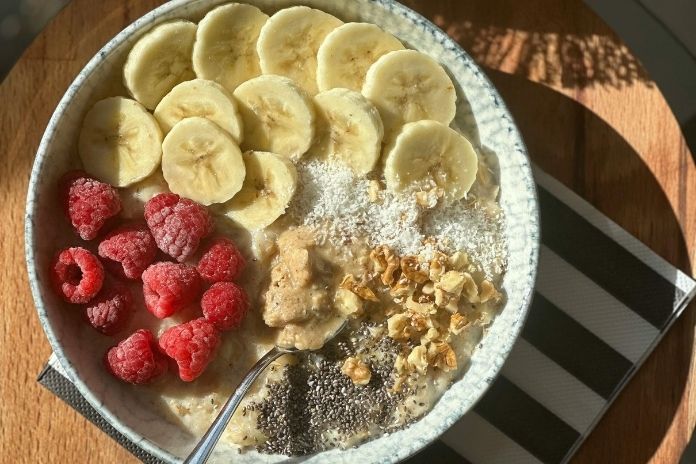
If powders and eggs aren’t your thing, whole foods can still get the job done. These options layer protein while adding texture, fats, and micronutrients.
4. Hemp Hearts & Chia Seeds
Protein boost: Hemp hearts: about 10 grams per 3 tablespoons, Chia seeds: about 5 grams per 2 tablespoons.
Hemp hearts are a complete plant-based protein, meaning they contain all nine essential amino acids. They also provide omega-3 fats and minerals.
Chia seeds contribute less protein but add soluble fiber that forms a gel-like texture and slows digestion. Together, they make oatmeal more filling and metabolically steady.
Stir them in at the end or sprinkle on top.
5. Nut Butters (Peanut, Almond, Walnut)
Protein boost: 6–8 grams per 2 tablespoons
Nut butters add protein, but their real strength is fat. That fat slows digestion and enhances satiety.
Dr. Frank B. Hu of Harvard has linked regular nut consumption with improved cardiometabolic health when eaten in moderation. Use nut butter for flavor and fullness, but pair it with another protein source if you’re aiming for 25 grams or more.
6. Silken Tofu: The Hidden Creamy Hack
Protein boost: about 8 grams per ½ cup
Blend silken tofu until smooth, then stir it into cooked oats. It adds creaminess without a strong taste.
Tofu is made from soybeans, and research supports soy protein for heart health when it replaces saturated fat sources. This is an excellent option for dairy-free, high-protein oatmeal without powder.
7. Cottage Cheese
Protein boost: 12–14 grams per ½ cup
Cottage cheese is rich in casein, a slow-digesting protein that supports longer-lasting fullness. It’s especially helpful if oatmeal is your first meal and lunch is hours away.
If the cheese curds bother you, blend them first. The result is smooth, slightly tangy, and surprisingly good with berries or cinnamon.
Stir the cottage cheese in once your oats are fully cooked and off the heat.
Read More: Chia Seed Pudding vs. Overnight Oats: Which Is Better for Your Health?
The Savory Pivot: Oatmeal for Lunch or Dinner
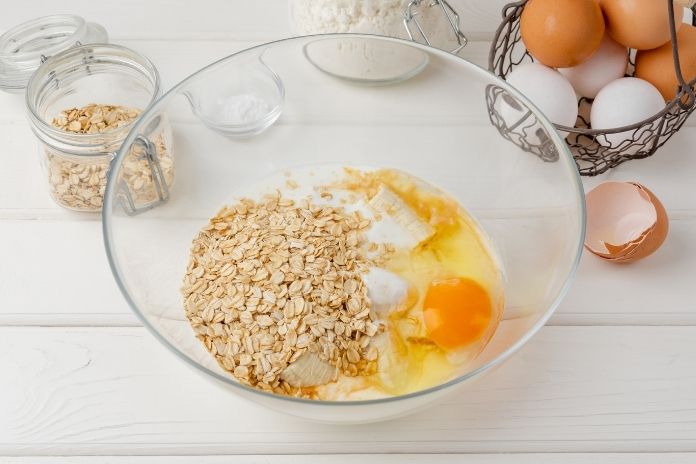
Oatmeal doesn’t have to be sweet. Savory versions make it easier to hit higher protein targets without relying on powders.
8. Bone Broth Base
Protein boost: 9–10 grams per cup
Cook oats in bone broth instead of water. You’ll add collagen peptides and amino acids like glycine.
Cleveland Clinic dietitians note that bone broth contributes protein, but shouldn’t be your only source. Think of it as a protein foundation, not the full structure.
Season with herbs, pepper, and greens.
9. The Egg-on-Top Method
Protein boost: 6–7 grams per egg
Top savory oats with a poached or soft-boiled egg. Eggs provide high-quality protein and leucine, which supports muscle protein synthesis.
Add sautéed spinach, mushrooms, or avocado to round it out.
10. Nutritional Yeast
Protein boost: about 8 grams per 2 tablespoons
Nutritional yeast adds a cheesy, umami flavor and is often fortified with B vitamins. It’s popular in plant-based diets for good reason.
Sprinkle it over savory oats to increase protein while boosting flavor depth.
The Practical Takeaway: You don’t need to overhaul oatmeal to make it work. You just need to build it with intention. Start with one strong protein source. Layer fiber or fat if needed. Once protein is in place, oatmeal stops being a short-lived carb hit and becomes a meal that actually carries you through the day.
High-Protein Overnight Oat Recipe
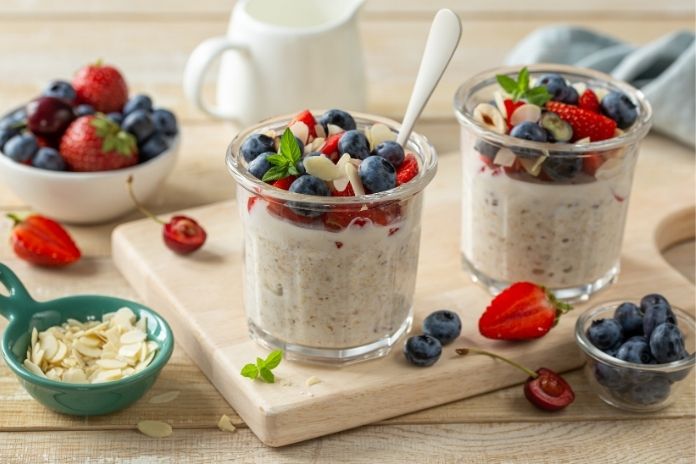
Overnight oats work because they remove friction. No stove. No morning decisions. You prep once, sleep, and wake up to a breakfast that actually keeps you full.
The issue is that most versions are still carb-heavy. Oats, milk, and fruit can look balanced and still fall short on protein. A few smart tweaks fix that fast.
The High-Protein Base
- ½ cup rolled oats for slow-digesting carbs and fiber
- ½ cup milk (dairy or soy for higher protein)
- ½ cup Greek yogurt for 12–15 g protein and creaminess
- 1 tablespoon chia seeds for fiber and omega-3s
- Optional: ½ scoop protein powder to reach 25–30 g protein
Mix, seal, and refrigerate overnight.
Quick Texture & Flavor Tips
- Whisk protein powder into milk before mixing to avoid clumps
- Adjust the thickness with more yogurt or a splash of milk
- Flavor with berries, cinnamon, vanilla, or cocoa
- Skip syrups and heavy sweeteners
Plant-Based Option
Use soy milk and soy-based yogurt, or add silken tofu or plant-based protein powder. Soy stands out because its protein content rivals dairy and provides a complete amino acid profile.
Quick Reference: Protein Comparison at a Glance
Here’s the thing. When you’re building a high-protein bowl of oatmeal, the difference between staying full and feeling hungry an hour later often comes down to one smart add-in. You don’t need complexity. You need clarity.
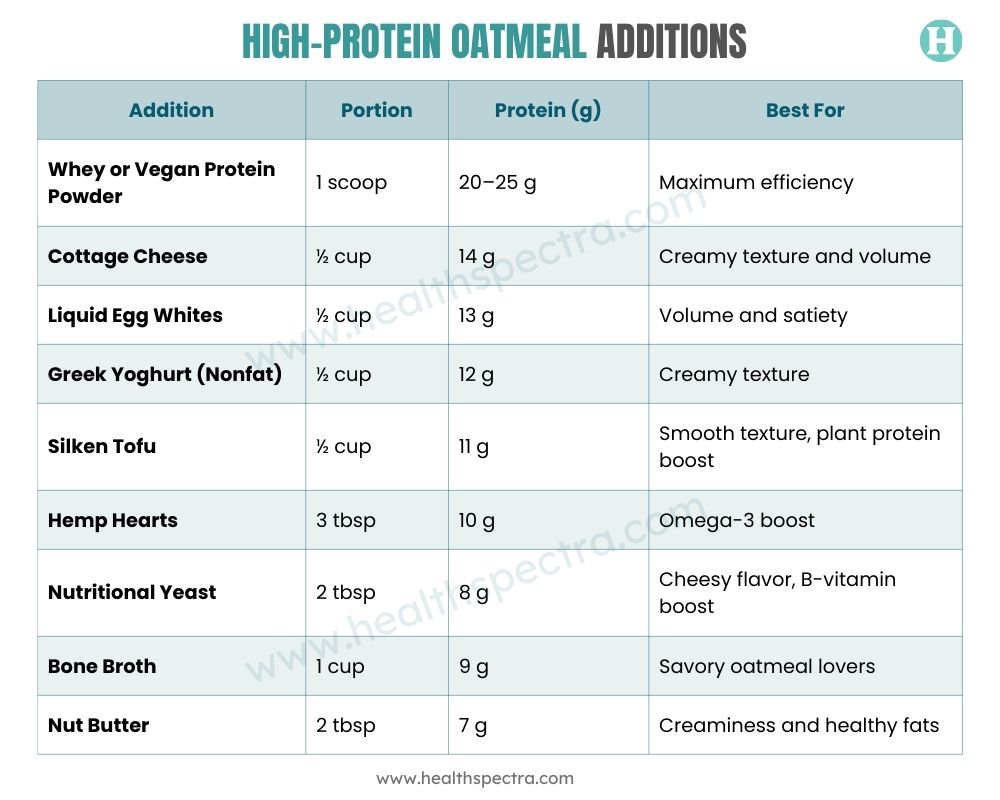 You don’t have to choose just one. The most satisfying bowls usually combine two complementary options, like Greek yogurt plus hemp hearts or protein powder plus chia seeds. Build with intention, and oatmeal stops being a light breakfast and starts acting like a real meal.
Read More: Gut-Friendly Overnight Oats with Berries: A Probiotic Breakfast
Optimization Tips to Get the Texture Right
Most people give up on high-protein oatmeal because of texture, not taste. Gritty, gummy, or oddly eggy bowls usually come down to heat and timing, not the ingredients themselves.
Protein doesn’t lose nutrition with heat, but it does change structure. Manage temperature correctly, and oatmeal stays smooth and creamy.
Temperature Control (Non-Negotiable)
- Protein powder: Add after cooking, when oats are warm, not boiling. High heat causes clumping and chalkiness.
- Liquid egg whites: Stir in while oats simmer and keep stirring. Gentle heat prevents scrambling and creates a custard-like texture.
- Greek yogurt or skyr: Add after oats cool slightly. Direct heat causes curdling and ruins creaminess.
Heat affects texture long before it affects nutrition.
Sweetener Alternatives That Work
Skip brown sugar, honey, and syrups. They spike blood sugar and cancel out protein’s benefits.
Better options:
- Vanilla protein powder for sweetness plus protein
- Cinnamon to boost perceived sweetness
- Mashed banana (half is enough)
- Unsweetened cocoa powder for richness without sugar
These keep the bowl satisfying without a crash.
How Much Protein Do You Need?
For most adults, 20–30 grams of protein at breakfast is the sweet spot. It supports fullness, muscle maintenance, and stable energy. If you train often, move a lot, or are over 40, aim toward the higher end. Muscles need a stronger signal as you age.
“Your body can only use so much protein in one sitting. Research shows that about 20 to 40 grams per meal is what actually stimulates muscle protein synthesis,” says Brad Schoenfeld, PhD, a professor and exercise scientist who has published extensively on protein needs and muscle growth. “This per-meal range helps with satiety, muscle maintenance, and energy without overloading your system.”
What this really means is simple. When breakfast hits that protein range, your body gets the message early. Muscles are supported, hunger stays controlled, and energy levels stay more stable. Get the timing right and hit the protein target, and oatmeal stops being tricky. It becomes reliable.
The Bottom Line
If you’ve been asking how to add protein to oatmeal, the answer really is that simple. You don’t need a long ingredient list or a perfect recipe. You need one or two high-impact protein additions and a basic understanding of how they work.
Oats already do their job well. They provide fiber, beta-glucans, and complex carbohydrates that support digestion and steady energy. What they lack is protein in a meaningful amount. Protein fills that gap by supplying essential amino acids that support muscle repair, reduce hunger, and keep blood sugar from swinging up and down.
When those two come together, the meal behaves differently. Digestion slows. Energy lasts longer. Cravings show up later, or not at all. That mid-morning hunger that feels inevitable suddenly isn’t.
This isn’t about turning oatmeal into a fitness food or forcing it to taste like something it’s not. It’s about building a bowl that works with your physiology instead of against it. A simple bowl of oats can be comfort food, convenience food, and metabolic fuel at the same time. It just needs the right support.
FAQ
Does cooking protein powder ruin its nutrients?
No. Heat denatures protein, meaning it changes structure, but amino acids remain intact. Nutritional value is preserved.
Can I use milk instead of water for extra protein?
Yes.
- Cow’s milk: ~8g protein per cup
- Soy milk: ~7–8g per cup
- Almond milk: ~1g per cup
Soy milk is the closest plant-based equivalent to dairy in protein content.
What is the best way to add protein to oatmeal without protein powder?
Use Greek yogurt, egg whites, cottage cheese, hemp hearts, or soy milk. Combining two sources often reaches 20+ grams easily.
Is savory protein oatmeal healthy?
Yes. Savory versions often reduce added sugars and support better glycemic control, especially when combined with eggs and vegetables.
References
- American Heart Association. (n.d.). Plant-based protein infographic.
- Berryman, C. E., Lieberman, H. R., Fulgoni, V. L., & Pasiakos, S. M. (2022). Protein intake trends and implications for human health. Nutrients, 14(2), 1–18.
- Green Protein. (n.d.). Vegan protein powders: A guide to the best plant-based options.
- Good Monk. (n.d.). Best plant protein sources with high biological value for vegetarians.
- Harvard Health Publishing. (n.d.). High-protein foods: The best protein sources to include in a healthy diet
- Harvard T.H. Chan School of Public Health. (n.d.). Carbohydrates and blood sugar.
- HealthCrunch. (2025). Protein timing: How much protein your body can use per meal.
- Mayo Clinic Health System. (n.d.). Tips for eating more plant proteins.
- McMaster University. (n.d.). Protein distribution and muscle protein synthesis.
- Max Healthcare. (n.d.). Protein-rich foods for vegetarians.
- Nutrition Foundation. (n.d.). Protein.
- Phillips, S. M., & Van Loon, L. J. C. (2011). Dietary protein for athletes: From requirements to metabolic advantage. Journal of Nutrition, 141(3), 1–7.
- Real Simple. (n.d.). Complete protein foods.
- Rutherfurd, S. M., & Moughan, P. J. (2015). Available versus digestible amino acids. Journal of Nutrition, 145(2), 372–379.
- ScienceDirect. (2021). Protein quality, digestibility, and plant-based diets. Current Developments in Nutrition.
- ScienceDirect. (2023). Protein intake, meal distribution, and metabolic health. American Journal of Clinical Nutrition.
- Practice Greenhealth. (n.d.). Whole food plant proteins.
- PharmEasy. (n.d.). Top high-protein vegan foods you should eat.
In this Article