

















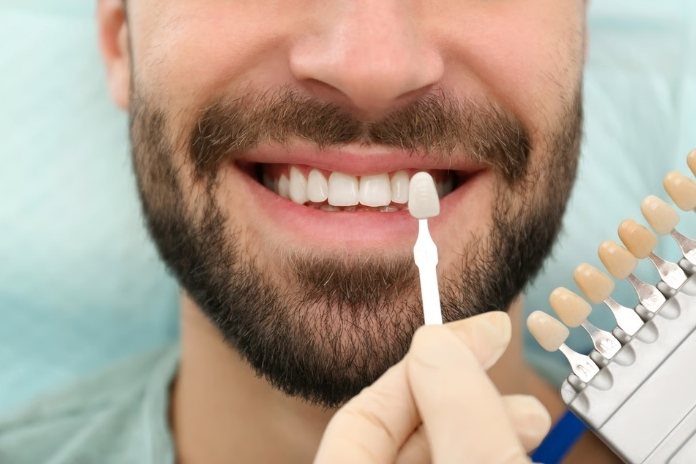
When comparing veneers vs. crowns, the gap goes far deeper than price. These are different restorations for different clinical problems. Dental veneers vs. crowns are split on coverage, tooth reduction, and purpose: veneers are cosmetic dentistry for structurally healthy teeth; crowns are restorative dentistry for structurally compromised ones.
The difference between dental crown vs. veneer costs also matters across a lifetime, not just per tooth. Porcelain veneer lifespan data, crown after root canal treatment requirements, and enamel removal for veneers are all irreversible decisions.
These are also the factors that guide the right decision-making. And research on porcelain veneer survival rate now gives us a far more precise outlook than the generic “10 to 15 years” figure most people quote.
Choosing the wrong restoration isn’t just expensive. A veneer on a tooth that genuinely needs a crown can fracture, debond, and ultimately require more invasive treatment than if you’d started correctly. This article breaks down the clinical difference, the survival data, the cost math, and exactly what to ask your dentist before agreeing to either procedure.
- Veneers cover only the front surface; crowns encase the entire tooth. They treat different clinical problems.
- Ceramic veneers bonded to enamel achieve ~99% survival at 10 years (Journal of Prosthetic Dentistry, 2024 systematic review).
- If your tooth has a root canal, large filling, or crack, a crown is clinically appropriate, instead of a veneer.
The Core Difference Between Dental Veneers and Crowns
A veneer is a thin shell of about 0.5 to 0.7 mm of porcelain, bonded to the front surface of a tooth only. It’s a cosmetic restoration. It changes how a tooth looks without altering its structural role. Veneers go on front teeth almost exclusively, where aesthetics carry the most weight.
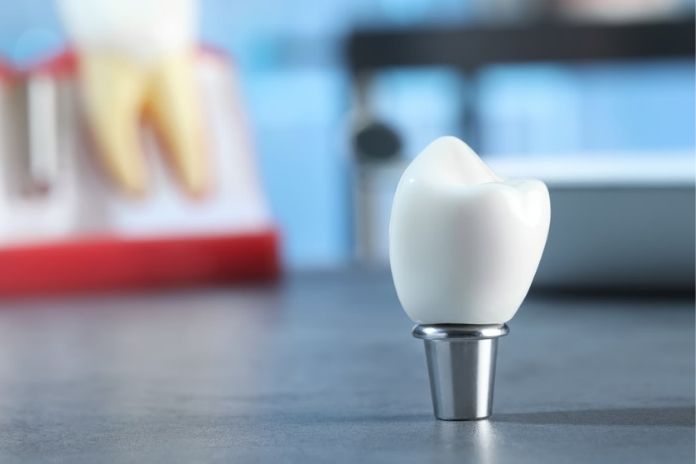
A crown fully encases the tooth above the gumline: all four sides plus the biting surface. It’s a restorative procedure that rebuilds the tooth’s shape, strength, and function when the structure has been compromised. Crowns go on any tooth, front or back, whenever a veneer’s surface-only coverage falls short of what the tooth needs.
Think of a veneer as a tailored fascia panel on the front of your tooth. A crown is the full casing. You use the fascia panel for appearances. You use the full casing when the structure inside actually needs the support.
Tooth Preparation, Enamel Removal, and Why Both Procedures Are Irreversible
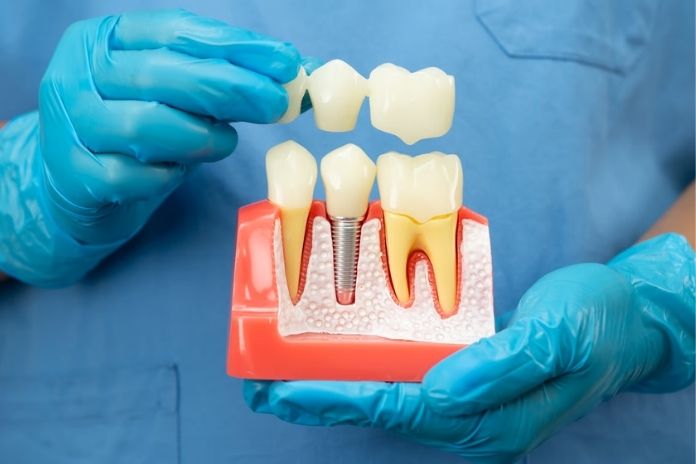
For a veneer, 0.3 to 0.7 mm of enamel (the hard outer tooth layer) is removed from the front surface. For a crown, 1 to 2 mm is removed on all sides and the biting surface. Crown prep is more invasive overall, but that invasiveness is appropriate precisely because the tooth is already weakened and requires full enclosure.
Enamel doesn’t grow back. A 30-year-old who gets porcelain veneers today will likely need them replaced once before age 50. If the underlying tooth becomes further compromised over the following decades, those veneers become crowns. That’s not a reason to avoid veneers when correctly indicated. But younger patients especially deserve to understand this before committing.
No-prep veneers (Lumineers and similar) remove little or no enamel and are partially reversible in some cases. They have limited indications and can appear bulkier on teeth that weren’t prepared to receive them. Discuss whether you’re a suitable candidate before choosing this route.
Veneers vs Crowns: Which One Is Clinically Indicated for Your Tooth
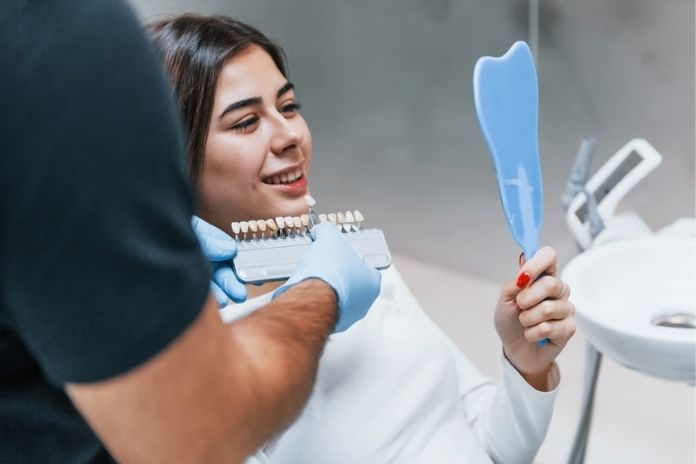
When veneers are the right choice
Veneers suit teeth that are structurally sound but cosmetically compromised. Strong candidates: deep staining unresponsive to whitening (including tetracycline staining and fluorosis); minor chips on front teeth; small gaps or shape irregularities; and teeth that are slightly undersized.
The tooth must retain adequate enamel to provide a solid bonding surface. Veneers are front-tooth restorations; they aren’t built to absorb the heavy loads posterior teeth handle daily.
When a crown is required: the four clinical triggers
A crown is required when a filling exceeds roughly 50% of the tooth’s structure (the remaining walls can’t bear biting forces safely); when a tooth has had root canal treatment (RCT), particularly a molar or premolar, because RCT leaves teeth substantially more brittle; when active decay or a fracture extends into the tooth structure, and when structural damage affects multiple surfaces, not just the front face a veneer could cover.
Read More: 8 Home Remedies to Remove Tartar And Plaque from Teeth
How Long Do Veneers Last? Survival Rates and What the Evidence Shows
The number most people hear is “10 to 15 years.” The clinical reality is both more nuanced and more encouraging for well-selected cases. The decisive variable is what the veneer bonds to.
A 2024 systematic review in the Journal of Prosthetic Dentistry found ceramic veneers bonded exclusively to enamel achieved a survival rate of approximately 99%. Veneers bonded to dentin (the softer layer beneath enamel, exposed when preparation removes too much structure or prior restorations extend into it) showed survival rates of around 91%, with success rates dropping further to 74%.
That enamel-versus-dentin distinction is the most clinically significant factor in veneer longevity, and it’s missing from almost every consumer article on this topic.
Across systematic reviews, porcelain veneers exceed 90% survival at 10 years and approximately 85% at 15 years in well-selected cases. Porcelain crowns last 15 to 25 years; all-metal crowns (gold) outperform all other materials for longevity.
Read More: Professional Whitening vs. At-Home Kits: Which Option Is Right for You?
Dental Crown vs Veneer Cost: Why the Per-Tooth Comparison Misleads
Porcelain veneers cost $900 to $2,500 per tooth. Dental insurance classifies them as cosmetic in almost every plan, meaning a full out-of-pocket cost for you. Eight veneers at $1,200 each equals $9,600 today, with a realistic replacement cycle in 12 to 15 years on top of that.
Crowns cost $800 to $3,000 per tooth but typically receive 50% insurance coverage when medically necessary, after your deductible. At $1,500 with 50% coverage, your out-of-pocket cost is roughly $750 per crown.
Factor in a 15 to 25-year lifespan, and the cost-per-year math frequently favors crowns when the tooth genuinely needs one. “Veneers are cheaper” is often the opposite of true once insurance and replacement cycles are counted.
Read More: Dental Implants vs. Dentures: A Comprehensive Guide to Replacing Missing Teeth
Final Word
Both veneers and crowns can genuinely transform a smile. Both are permanent decisions that affect specific teeth for the rest of your life. The right call depends entirely on what’s happening inside that particular tooth: the enamel remaining, the structural integrity, and the forces it bears.
Your dentist’s recommendation, supported by X-rays and a clinical examination, is the only reliable guide. This article gives you the vocabulary to understand exactly why they recommend what they do.
- Veneers and crowns solve different problems; choosing the wrong one has permanent, costly consequences.
- A veneer on a compromised tooth fails; a crown on a healthy cosmetic case removes structure unnecessarily.
- Get a full exam with X-rays before agreeing to either; the tooth’s internal condition decides the answer.
References
- Morimoto, S., Albanesi, R. B., Sesma, N., Agra, C. M., & Braga, M. M. (2016). Main clinical outcomes of feldspathic porcelain and glass-ceramic laminate veneers: A systematic review and meta-analysis. Journal of Prosthetic Dentistry, 116(3), 347–358.
- Layton, D. M., & Walshaw, C. (2012). Satisfaction with porcelain laminate veneers: A 16-year clinical evaluation. International Journal of Prosthodontics, 25(4), 323–330.
- Edelhoff, D., & Sorensen, J. A. (2002). Tooth structure removal associated with various preparation designs for anterior teeth. Journal of Prosthetic Dentistry, 87(5), 503–509.
- Calamia, J. R., & Calamia, C. S. (2007). Porcelain laminate veneers: Reasons for 25 years of success. Dental Clinics of North America, 51(2), 399–417.
- Valenti, M., & Valenti, A. (2009). Retrospective survival analysis of 261 ceramic veneers over a period of up to 12 years. International Journal of Esthetic Dentistry, 4(2), 128–135.
- Stavridakis, M. M., Krejci, I., & Magne, P. (2005). Immediate dentin sealing of onlay preparations. Operative Dentistry, 30(6), 747–757.
- Federlin, M., Krifka, S., Herpich, M., Hiller, K. A., & Schmalz, G. (2007). Partial ceramic crowns: Influence of ceramic thickness, preparation design, and luting material on fracture resistance. Operative Dentistry, 32(3), 251–260.
- Ng, Y. L., Mann, V., Rahbaran, S., Lewsey, J., & Gulabivala, K. (2008). Outcome of primary root canal treatment. International Endodontic Journal, 41(1), 6–31.
- Magne, P., & Douglas, W. H. (1999). Porcelain veneers: Dentin bonding optimization and biomimetic recovery of the crown. International Journal of Prosthodontics, 12(2),
In this Article