














Thyroid Eye Disease (TED) is an autoimmune inflammatory process affecting the muscles and connective tissues around the eyes. Most commonly associated with Graves’ disease, TED can cause eye discomfort, cosmetic changes, and vision loss not only in those with abnormal thyroid hormone levels but also in people with healthy thyroid function.
Early and correct testing helps avert permanent complications and guides treatment according to individual patient needs.
Why Early Testing for TED Matters
TED can develop at any point in relation to thyroid disorders, with initial symptoms sometimes subtle, such as dryness, mild swelling, or slight bulging. Missing these early signs can lead to permanent changes in the eye and vision problems.
Early screening is essential for people with Graves’, Hashimoto’s, or recent radioiodine therapy. Proactive testing helps prevent optic nerve compression, vision loss, and impacts on appearance and daily function.
Reasons to screen early:
- Prevent loss of vision and optic nerve damage.
- Stop or reverse eye bulging, double vision, and cosmetic changes.
- Catch TED in “silent” thyroid cases, when thyroid hormones appear to be normal.
- Enable targeted therapies before permanent damage occurs.
Read More: What It Means If You’re Always Cold: Hormones, Iron, and Thyroid Explained
Who Should Be Screened and When
Risk Groups:
- Anyone diagnosed with Graves’ disease, Hashimoto’s, or with positive thyroid antibodies.
- Those treated with radioiodine for hyperthyroidism or cancer.
- Patients notice new changes in vision, eye discomfort, or bulging.
Early Symptoms to Look For :
- Bulging eyes (proptosis)
- Swelling and redness around the eyelids
- Double vision or eye movement limitation
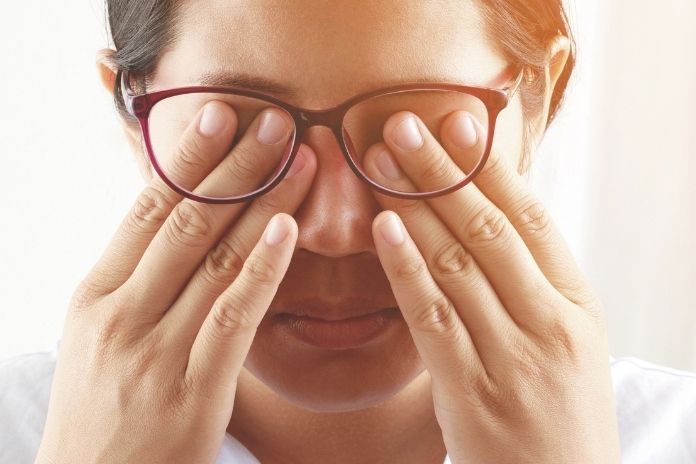
- Dryness, gritty sensation, increased tearing
- Sensitivity to light
- Color vision changes or loss of visual field
Routine TED screening is important for high-risk individuals, even with normal thyroid hormone levels (TSH, T3, T4).
Tests for Thyroid Eye Disease

Diagnosis follows a logical sequence, blending clinical exam with supportive lab and imaging studies.
Step 1: Clinical Eye Examination
Performed by an optometrist or ophthalmologist:
- Inspection for eyelid retraction, redness, swelling, and bulging.
- Measurement of exophthalmos using an exophthalmometer (Hertel).
- Eye movement was checked in all directions for double vision or muscle restriction.
- Assessment of visual acuity, color vision, and visual fields for optic nerve involvement.
This step establishes the TED diagnosis and guides additional tests as necessary.
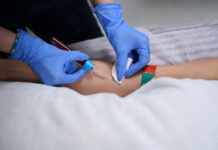
Step 2: Laboratory and Blood Tests
No single lab test confirms TED, but they reveal vital thyroid information.
- Thyroid hormone levels: TSH, free T4, free T3.
- Autoimmune Antibodies: TSH receptor antibodies, thyroid-stimulating immunoglobulins (TSI), anti-TPO, and thyroglobulin antibodies indicate Graves’ or Hashimoto’s.
- Cholesterol and Lipids: Relevant for patients considered for radioiodine therapy or with chronic inflammation.
- Smoking status: Smoking aggravates TED and increases progression risk.
TED may be present even with “normal” lab results. These tests help rule out other diagnoses and direct comprehensive care.
Read More: 8 Period Symptoms That Might Actually Be a Thyroid Issue
Step 3: Imaging and Specialized Tests
Imaging is indicated if bulging (proptosis), vision changes, or severe symptoms develop:
- CT scan of orbits and muscles: Identifies muscle enlargement, orbital fat changes, optic nerve anatomy, and overall severity, also guides surgical planning.
- MRI of the orbits: Distinguishes recent inflammation from chronic changes, detects active disease, and visualizes optic nerve Ideal for tracking inflammatory stages.
- Ultrasound (A-scan/B-scan): Useful for detecting muscle enlargement and orbital tissue changes, especially where CT/MRI is unavailable.
Some centers employ advanced scoring:
- CAS (Clinical Activity Score): Tallies inflammation (pain, redness, swelling) to determine if TED is active or stable.
- VISA/EUGOGO scores: Broader assessments of TED severity, guiding individualized treatment.
Scores and imaging together set the standard for ruling out other causes, grading severity, and treatment planning.
Step 4: Activity and Severity Classification

Thyroid eye disease (TED) focuses on two factors: disease activity and severity of damage.
- Disease activity refers to current inflammation, characterized by redness, swelling, and eye pain in its active phase.
- Disease severity describes the extent of damage, such as the degree of eye bulging or other problems related to vision loss or limited eye movement that can cause double vision.
Activity is usually measured by the Clinical Activity Score, which includes signs such as eye pain, eyelid swelling, redness, and conjunctival irritation. A high CAS suggests the presence of active inflammation, which, in most instances, requires medical treatment, such as steroids or other immune-modifying drugs. A low or zero CAS suggests a stable phase when surgery or rehabilitation is more appropriate.
Knowing both activity and severity helps specialists decide whether to focus first on calming inflammation or on correcting long‑term functional and cosmetic problems.
Step 5: When to Refer
TED is not “all or nothing.” It can be active (inflamed, progressing) or stable (residual changes, minimal inflammation):
- Activity: Pain, redness, swelling; high CAS scores demand medications such as steroids or immunomodulatory drugs.
- Severity: Bulging, loss of vision, muscle restriction; indicates need for surgical or rehabilitative care.
Knowing if TED is active or stable helps clinicians choose anti-inflammatory treatments vs. surgery, and when to shift toward correcting established changes.
Immediately/Urgent Warning Signs
Certain TED findings need urgent specialist evaluation:
- Reduced or rapidly deteriorating eyesight
- New or worsening double vision
- Severe bulging (proptosis)
- Optic nerve compression: color vision changes, field loss, inability to close eyes
These signs warrant prompt referral to an ophthalmologist, oculoplastic surgeon, or neuro-ophthalmology expert, as delays risk permanent visual loss.
Key management priorities: smoking cessation, stable thyroid hormone levels, and close monitoring in high-risk patients.
Read More: Struggling to Conceive? Your Thyroid Could Be the Missing Piece in Your Fertility Puzzle
How to Prepare for TED Testing: What to Expect
Preparation streamlines the diagnostic process:
- Bring your thyroid medical history: Prior diagnoses, treatments, and medications.
- List any eye symptoms: Even subtle bulging, pain, dryness, redness, or sensitivity to light.
- Testing process:
- Clinical eye exam: 30–60 minutes
- Blood tests for thyroid and antibody levels
- Imaging (CT, MRI, ultrasound): 15–60 minutes
Ask your doctor in advance whether you need to fast, hold medications, or avoid certain eye drops. Bring sunglasses if pupil dilation is expected. Post-test light sensitivity is common.
Quick Summary: Thyroid Eye Disease Testing Checklist
- Clinical eye examination plus measurement of bulging (exophthalmometry).
- Thyroid and antibody tests: TSH, T3, T4, TRAb, TSI, anti-TPO, thyroglobulin.
- Imaging: CT, MRI, or ultrasound depending on severity.
- Activity and severity scoring: CAS, VISA, EUGOGO.
- Urgent referral for sudden vision loss, double vision, severe proptosis, or optic nerve symptoms.
Read More: Best Yoga Poses for Thyroid Treatment
Living with TED: What’s Next?
Screening and early diagnosis improve outcomes:
- Mild TED: Conservative therapy (artificial tears, symptomatic care) often suffices; many cases resolve over time.
- Active, moderate, or severe TED: Requires medical therapy (steroids, immunotherapy, radiation, biologic agents). Surgery may be needed for muscle restriction, severe bulging, or inability to close eyelids.
- Stable phase: Surgery or rehabilitation may help with persistent functional or cosmetic issues.
Prognosis is excellent with early intervention, regular follow-up, and personalized adjustment of therapy. Delayed treatment increases the risk of permanent structural changes and vision loss.The Patient’s Role: Self-Advocacy and Education
Patients play a vital part in TED management:
- Track symptoms, even minor bulging, pain, or double vision.
- Keep the care team informed; bring notes, medication lists, and ask about test frequency.
- Follow up imaging, lab results, and activity scores.
- Stop smoking and maintain healthy thyroid hormone levels; seek support as needed.
TED Testing: Avoiding Common Pitfalls
- Don’t rely solely on blood tests; TED can progress with “normal” labs.
- Don’t delay help for new or worsening eye symptoms.
- Request urgent referral for vision changes or pronounced bulging.
- Ensure that endocrinologists and eye specialists communicate to provide coordinated care.
Read More: 16 Effective Cures For Dry Eyes That Work Like Magic
Conclusion
Thyroid eye disease needs attentive screening, rapid referral, and patient-focused management. Early detection is critical for comfort, vision, and the prevention of cosmetic or functional loss.
Using systematic history, clinical exam, labs, imaging, severity scoring, and close follow-up, both patients and care teams can help control TED and preserve quality of life. If unsure, seek specialist evaluation. Eye concerns should never be ignored with thyroid disease. TED can be subtle or sudden. When in doubt, pursue prompt testing and answers.
References
- https://my.clevelandclinic.org/health/diseases/17558-thyroid-eye-disease
- https://eyewiki.org/Thyroid_Eye_Disease
- https://raymonddouglasmd.com/how-to-test-for-thyroid-eye-disease-ted
- https://www.ncbi.nlm.nih.gov/books/NBK582134/
- https://webeye.ophth.uiowa.edu/eyeforum/tutorials/thyroid-eye-disease/3-TED-workup-and-diagnosis.htm
- https://www.nature.com/articles/s41433-024-02967-9
- https://www.frontiersin.org/journals/ophthalmology/articles/10.3389/fopht.2025.1565762/full
- https://www.thyroid.org/management-of-thyroid-eye-disease/
- https://geekymedics.com/thyroid-eye-disease/
- https://www.reviewofoptometry.com/article/thyroid-eye-disease-in-your-exam-lane
- https://www.endocrine.org/patient-engagement/endocrine-library/thyroid-eye-disease
- https://pmc.ncbi.nlm.nih.gov/articles/PMC9727317/
- https://rarediseases.org/rare-diseases/thyroid-eye-disease/
- https://www.aace.com/disease-and-conditions/thyroid/what-thyroid-eye-disease
- https://academic.oup.com/ejendo/article/185/4/G43/6654384
- https://teachmesurgery.com/examinations/endocrine/thyroid-gland/
In this Article