



















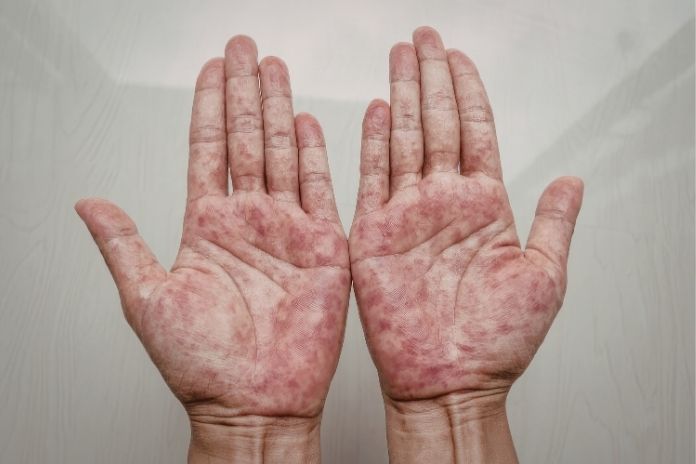
Plaque psoriasis treatment options do not follow a single path. What works for one patient may do nothing for another, and the gap between a corticosteroid cream and a biologic injection is wider than most people realize when they first receive a diagnosis. The right choice depends on how much skin is involved, where the plaques appear, and how significantly the condition is affecting daily life.
This article walks through the full psoriasis treatment ladder, from traditional preparations like coal tar to modern immune-targeted biologics, and explains what each tier offers, when it becomes appropriate, and how severity drives every decision along the way.
- Plaque psoriasis treatment ranges from over-the-counter topicals like coal tar to injectable biologics, and the right starting point depends on how much skin is involved and how severely daily life is affected.
- Severity is measured using tools like PASI score, body surface area, and quality-of-life assessments, all of which guide whether a patient begins with creams or moves directly to systemic therapy.
- Phototherapy bridges the gap between topical and systemic care and can achieve clearance rates comparable to some biologics when patients are consistent with treatment sessions.
- Biologics targeting specific immune pathways, including IL-17, IL-23, and TNF-alpha, represent the most effective options for moderate-to-severe plaque psoriasis treatment that has not responded to earlier approaches.
How Doctors Determine Psoriasis Severity
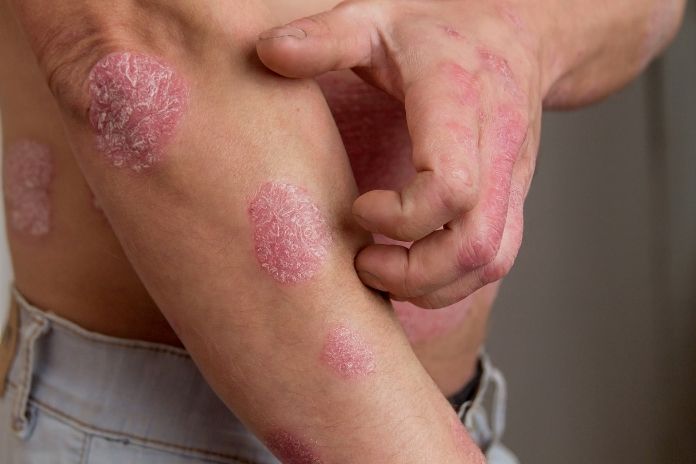
Psoriasis severity is not simply about counting plaques. Dermatologists draw on several overlapping measures to build a complete picture of how much the disease is affecting the body and the person living in it. Body surface area (BSA) is one of the most widely used benchmarks. Mild psoriasis typically involves less than 3% of the body surface, moderate 3 to 10%, and severe more than 10%.
Each palm represents roughly 1% of total BSA. Location carries equal weight: plaques on the face, scalp, hands, feet, and genitals can be functionally disabling even when BSA is technically small. Symptom intensity matters too. Itching that disrupts sleep, cracking that bleeds, and visible inflammation all push the burden calculation beyond what surface measurements alone can capture.
Dermatologists use the PASI score, which ranges from 0 to 72, to combine extent, redness, thickness, and scaling into a single number. Scores above 10 generally indicate moderate to severe disease. Quality-of-life tools like the DLQI add the human dimension, capturing how much psoriasis is interfering with daily activities, relationships, and emotional well-being.
A patient with moderate BSA but significant distress may qualify for a higher tier of treatment than their PASI alone would suggest.
Mild Plaque Psoriasis: First-Line Treatment Options
For patients with limited involvement and minimal functional impact, topical therapy is the appropriate starting point. Topical corticosteroids are the most commonly prescribed first-line treatment for mild plaque psoriasis, available in multiple strengths for most body areas. Higher-potency formulations suit thick plaques on the trunk and limbs; lower-potency versions are used where absorption is higher, such as the face and skin folds.
Dermatologists typically cycle these with steroid-sparing alternatives to avoid skin thinning over time. Vitamin D analogs such as calcipotriene slow keratinocyte proliferation through a distinct mechanism, making them well-suited for combination and alternating use without the same thinning risk.
Coal tar, one of dermatology’s oldest treatments, suppresses skin cell overactivation, reduces inflammation, and decreases scaling. It is available in over-the-counter shampoos and bath additives as well as stronger prescription formulations.
Where Coal Tar Still Fits in Modern Treatment
Coal tar remains useful for patients who cannot tolerate stronger agents, for whom cost is a barrier, or who are pairing it with phototherapy. Its use in scalp psoriasis shampoos is still widespread. The practical drawbacks are real: a distinctive odor, fabric staining, and a hands-on application process that leads some patients to abandon it before seeing results. It is best suited to limited disease or adjunct use alongside light therapy.
Emollients support every tier of topical care. Thick, fragrance-free moisturizers reduce trans-epidermal water loss, soften scaling, and improve UV transmission when applied before phototherapy sessions. Whether topicals alone are sufficient depends on consistency and response. Patients applying creams constantly with diminishing returns have a clear signal worth raising with their dermatologist.
Moderate Psoriasis: When Topicals May Not Be Enough
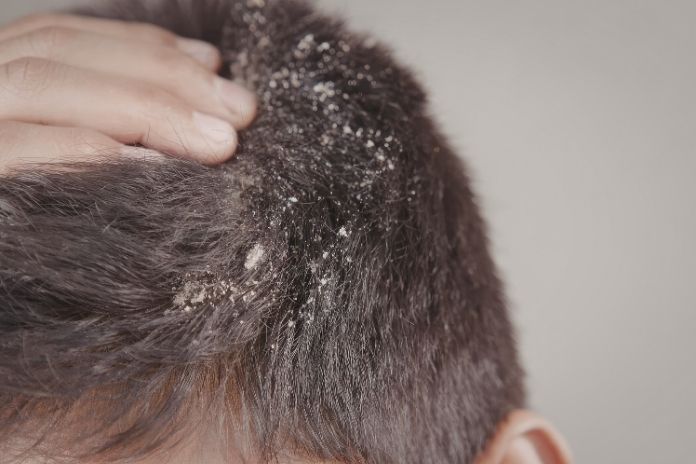
Once plaques cover more than 5 to 10% of the body, applying topical treatment to every affected area becomes impractical. The logistics of coating the entire back, both arms, and portions of the legs once or twice daily make topical monotherapy less viable, and the systemic nature of the inflammatory process calls for a systemic response.
Psoriasis on the scalp, nails, palms, and soles presents a separate challenge, classified as difficult-to-treat regardless of total BSA because these locations resist topical penetration and carry a higher likelihood of joint involvement. Frequent flares despite consistent topical use signal that immune-mediated disease activity has outpaced what surface-level treatment can suppress.
Dr. Steven R. Feldman, MD, PhD, Professor of Dermatology at Wake Forest University School of Medicine, has noted that patients often gradually “stop applying the medication” over time, and that adherence rather than true pharmacological tolerance frequently accounts for apparent treatment failure. A patient who seems to have failed topicals may simply need a different delivery system or a stepped-up regimen before systemic therapy is considered.
Read More: Nail Pitting: Causes, What It Means, and When to See a Doctor
Phototherapy: Bridging the Gap Between Topicals and Systemic Treatment
Phototherapy sits in the middle of the psoriasis treatment ladder, offering meaningful efficacy without the systemic drug exposure associated with biologics or conventional immunosuppressants. For patients with moderate disease who prefer to avoid systemic therapy, light-based treatment is a well-established alternative.
Narrowband UVB Therapy
Narrowband UVB (NB-UVB), delivering ultraviolet B light centered around 311 to 313 nanometers, is the preferred phototherapy form for plaque psoriasis. It suppresses the activated T cells driving plaque formation and slows abnormal keratinocyte turnover.
The joint AAD-NPF phototherapy guidelines reported that across nine randomized controlled trials, approximately 62% of patients achieved PASI 75 with NB-UVB monotherapy, a benchmark that compares favorably with several oral systemic agents.
Treatment Schedule and Expectations
NB-UVB is typically administered two to three times per week, with dose increments guided by skin type and erythema response. Most patients see meaningful improvement within six to eight weeks.
Dr. Joel M. Gelfand, MD, MSCE, Director of the Psoriasis and Phototherapy Treatment Center at the University of Pennsylvania, noted that among patients maintaining twice-weekly adherence, “60% of people got clear or almost clear,” with efficacy comparable to stronger oral medications in difficult real-world cases.
Who May Benefit Most
Strong candidates include patients avoiding systemic medication, those with extensive involvement that topicals cannot reach, and those with comorbidities limiting biologic candidacy. Pregnant patients with few systemic options also benefit from NB-UVB. The LITE trial confirmed that home-based NB-UVB is clinically equivalent to in-office treatment, significantly expanding access for patients in rural or underserved areas.
Cumulative UV dose carries a theoretical long-term skin cancer risk, tracked through total session count and lifetime joule exposure, but for most patients treated within clinical guidelines, this risk is manageable.
When Systemic Treatments Are Considered
Systemic therapy becomes appropriate when psoriasis is moderate to severe and has not responded adequately to topicals and phototherapy, when joint symptoms are present, or when the disease is significantly affecting quality of life despite surface-level management.
Conventional systemic agents, including methotrexate, cyclosporine, and acitretin, have been used for decades and remain relevant options, particularly where cost or biologic access is a barrier. Methotrexate is among the most widely used, suppressing immune cell activity through folate pathway inhibition. Cyclosporine acts quickly and is typically reserved for severe, recalcitrant flares rather than long-term maintenance due to its nephrotoxic potential.
Joint involvement accelerates the timeline toward systemic therapy. Psoriatic arthritis, which develops in a significant proportion of patients with plaque psoriasis, causes progressive joint damage that is not visible on the skin. Waiting for cutaneous criteria alone before initiating systemic treatment can allow joint damage to accumulate.
Read More: Are Bleach Baths Safe for Eczema? Dermatologists Explain the Science
Biologic Medications: Targeted Therapy for Moderate to Severe Psoriasis

Biologics represent the most targeted and generally most effective class of therapy for moderate to severe plaque psoriasis. Unlike conventional systemic agents that broadly suppress immune function, biologics selectively block specific cytokines or receptors driving psoriatic inflammation. They are administered by subcutaneous injection or intravenous infusion on schedules ranging from weekly to quarterly, depending on the agent.
The immune pathways most relevant to plaque psoriasis involve TNF-alpha, IL-17, and IL-23. Biologics are engineered monoclonal antibodies or receptor fusion proteins that neutralize one or more of these targets, interrupting the immune cascade that accelerates skin cell turnover.
TNF-alpha inhibitors such as adalimumab and etanercept were among the first approved and remain in use, with biosimilar availability now reducing cost barriers considerably. IL-17 inhibitors, including secukinumab, ixekizumab, and bimekizumab, act further downstream and have shown higher clearance rates in head-to-head trials.
IL-23 inhibitors such as guselkumab, risankizumab, and tildrakizumab offer durable responses with infrequent dosing, appealing to patients for whom treatment burden is a concern.
A 2024 network meta-analysis evaluating 103 randomized controlled trials found that all included biologics demonstrated meaningfully improved efficacy and quality of life versus placebo at 28 weeks, with no significant elevation in serious adverse events across any biologic class.
Dr. Mark G. Lebwohl, MD, Dean for Clinical Therapeutics at the Icahn School of Medicine at Mount Sinai, has called these drugs “a blessing for our patients“ while noting cost pressures, and more recently described the emergence of oral agents with biologic-like efficacy as “a breakthrough” for patients reluctant to inject.
Expected Benefits and Monitoring
A Cochrane network meta-analysis confirmed that anti-IL-17 and anti-IL-23 agents produce the highest rates of PASI 90 achievement compared to placebo and earlier biologic classes. Response builds over weeks 12 to 28 and can continue improving beyond that window.
Monitoring includes periodic screening for infections, tuberculosis reactivation, and routine labs. Biologics do not cure psoriasis; the disease returns in most cases if treatment is stopped, and management requires ongoing administration rather than a finite course.
Comparing Treatment Options by Severity
For patients with mild plaque psoriasis, topicals and supportive care remain the appropriate first approach. Corticosteroids, vitamin D analogs, coal tar, and consistent moisturizer use can manage limited disease effectively when applied correctly and consistently.
At the moderate level, phototherapy and combination approaches fill the gap that topicals alone cannot bridge. NB-UVB is cost-effective, avoids systemic drug exposure, and achieves clearance rates that compare favorably with oral agents in motivated patients who can maintain a treatment schedule.
For severe disease or for patients who have failed prior therapies, biologic and systemic options provide a level of immune targeting that topicals and phototherapy cannot match. The individualized approach is non-negotiable.
Two patients with the same PASI score may have completely different treatment needs depending on where their plaques appear, whether joint symptoms are present, and what level of treatment burden they can realistically sustain.
Factors That Influence Treatment Choice Beyond Severity

Disease severity is only one piece of the treatment puzzle. Several other factors shape which therapy is most appropriate for a given patient, and a dermatologist who accounts for all of them is far more likely to find a plan that works long-term.
- Joint symptoms: Psoriatic arthritis requires agents that treat both skin and joints simultaneously. TNF-alpha and IL-17 inhibitors have established evidence across both indications.
- Medical history: Recurrent infections, multiple sclerosis, or inflammatory bowel disease may rule out specific biologic classes. Prior tuberculosis exposure requires screening before TNF inhibitor initiation, and hepatic history affects methotrexate candidacy.
- Lifestyle factors: Elevated BMI predicts poorer phototherapy response and can require adjusted biologic dosing. Smoking is associated with more resistant disease regardless of treatment class.
- Insurance and access: Many payers mandate documented failure of conventional therapy before approving biologics. A dermatologist familiar with step-therapy requirements can sequence treatment to meet those criteria without unnecessary delay.
- Treatment preferences: Some patients can commit to three phototherapy sessions per week; others cannot. Some are comfortable with self-injection; others are not.
Honest conversations about lifestyle compatibility, priorities, and practical constraints are not secondary to the clinical decision. They are part of it. Shared decision-making consistently improves adherence, and better adherence consistently improves outcomes. The best treatment plan on paper means little if the patient cannot or will not follow it in practice.
When It May Be Time to Escalate Treatment
Persistent plaques despite consistent therapy are the clearest sign that escalation is warranted. If a patient has used a prescribed topical correctly for eight to twelve weeks without adequate response, that is a treatment failure deserving a clinical response, not a compliance problem.
Frequent flares, particularly those that are increasingly difficult to settle, suggest that underlying immune activity is not being controlled by the current regimen. Understanding what drives repeated inflammatory episodes is relevant here, and patients who notice recurring patterns around stress or infections may benefit from addressing those contributing factors alongside adjusting their medication plan.
Significant itching, pain, or bleeding from cracked plaques that persists despite treatment is a quality-of-life signal that clinicians take seriously. Emotional and functional impact, including disrupted sleep, avoidance of social situations, work interference, or symptoms of depression and anxiety, are legitimate drivers of escalation even when BSA measurements do not technically reach a threshold for severe disease.
Read More: 10 Everyday Triggers of Atopic Dermatitis (Eczema) Flare-Ups and How to Avoid Them
Working With Your Dermatologist to Build a Treatment Plan
Shared decision-making is not a formality in psoriasis management. It is clinically meaningful. Patients who understand why a particular therapy was chosen, what to expect from it, and what the plan is if it falls short are more likely to adhere and more likely to report back accurately when something is not working.
Setting realistic goals from the outset helps both parties. Complete clearance is achievable for some patients, particularly with modern biologics, but a PASI 75 or PASI 90 response may be the more practical target for others. Agreeing on what success looks like before starting therapy gives both the patient and the dermatologist a shared reference point.
Monitoring response over time is part of ongoing management, not just an initial hurdle. Psoriasis is chronic and dynamic. Patients who respond well to one biologic may develop antibodies to it after several years and require a switch. Phototherapy responders may relapse and need a maintenance approach.
Some dermatology experts note that as patients become more informed about their treatment options, a collaborative doctor–patient relationship becomes increasingly important. The psychological dimension of managing chronic skin disease belongs in the conversation, too.
The Takeaway
Plaque psoriasis treatment options span a wide range, from classical preparations like coal tar to highly targeted biologic medications that can produce near-complete skin clearance in patients with severe disease. Where a patient sits on that spectrum is not fixed. Disease evolves, treatment response changes, and the approach should evolve with it.
Severity and quality of life together guide every treatment decision that matters. Body surface area and PASI scores are useful anchors, but they are not the full picture. A patient with technically mild disease who cannot sleep, cannot work comfortably, or is withdrawing from social life because of psoriasis is not a mild case in any meaningful clinical sense.
Escalation is common, appropriate, and not a sign of treatment failure. The psoriasis treatment ladder exists precisely because most patients will need to move through it over time. The goal of each step is to reduce burden, restore function, and give the patient back as much of their life as possible.
With the right match between treatment and severity, that goal is achievable for the vast majority of people living with plaque psoriasis across every tier of the spectrum.
References
- Armstrong, A. W., & Mehta, M. D. (2019). Joint AAD-NPF guidelines of care for the management and treatment of psoriasis with phototherapy. Journal of the American Academy of Dermatology, 81(3), 775–804.
- Feldman, S. R. (2026, March 12). When psoriasis treatments lose their punch: Understanding tachyphylaxis. Medscape.
- Gelfand, J. M. (2024, March 12). Phototherapy utility in psoriasis. HCPLive.
- Lebwohl, M. G. (2017). Mark Lebwohl, MD, reviews efficacy of new biologics for psoriasis. Mount Sinai Newsroom.
- Lebwohl, M. G. (2025, December 9). Highlighting recent findings on icotrokinra and other psoriasis developments. HCPLive.
- Menter, A., Gelfand, J. M., Connor, C., Armstrong, A. W., Cordoro, K. M., Davis, D. M. R., Elewski, B. E., Gordon, K. B., Gottlieb, A. B., Kaplan, D. H., Kavanaugh, A., & Lebwohl, M. (2020). Joint American Academy of Dermatology–National Psoriasis Foundation guidelines of care for the management of psoriasis with systemic nonbiologic therapies. Journal of the American Academy of Dermatology, 82(6), 1445–1486.
- Nogueira, M., Paller, A., & Torres, T. (2025). Biologics for the treatment of moderate-to-severe plaque psoriasis: A systematic review and network meta-analysis. Dermatology and Therapy.
- Sbidian, E., Chaimani, A., Garcia-Doval, I., Doney, L., Dressler, C., Hua, C., Hughes, C., Naldi, L., Afach, S., & Le Cleach, L. (2022). Systemic pharmacological treatments for chronic plaque psoriasis: A network meta-analysis. Cochrane Database of Systematic Reviews, 5, CD011535.
- Mayo Clinic. (n.d.). Psoriasis: Diagnosis and treatment.
- Medscape. (2026). Plaque psoriasis treatment & management.
- Raharja, A., Mahil, S. K., & Barker, J. N. (2021). Psoriasis: A brief overview. Clinical Medicine, 21(3), 170–173.
- American Academy of Dermatology. (n.d.). Psoriasis clinical guidelines.
- Indian Council of Medical Research. (n.d.). Psoriasis: Standard treatment workflow.
- DermNet NZ. (2020). Guidelines for the treatment of psoriasis.
- ADA Dermatology. (n.d.). Plaque psoriasis treatment options: From topicals to biologics.
In this Article