
















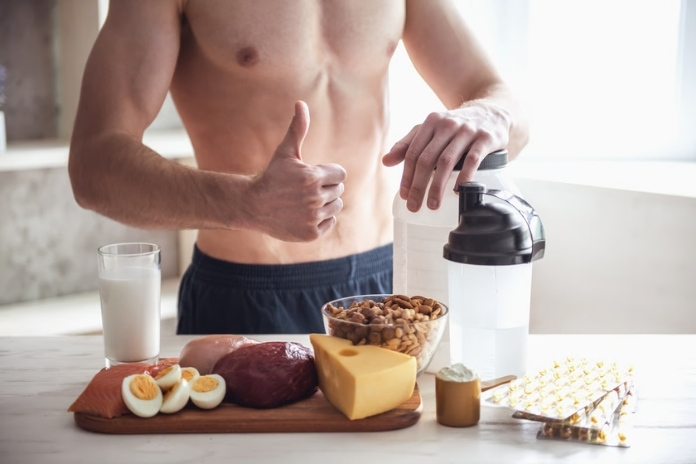
Protein powder has become so embedded in fitness culture that many people treat it as a nutritional requirement. It’s not. If you want to know how to hit your protein goals without protein powder, the answer is straightforward: whole foods do the job better.
Greek yogurt, eggs, chicken breast, canned fish, and lentils are high-protein foods that rival or exceed any supplement, and they bring vitamins, minerals, and fiber that protein powder strips away. Whether you’re building muscle, recovering from training, or simply trying to eat better, whole-food protein sources are almost always the superior choice.
Protein powder is a supplement that can help you hit your daily protein requirements, but you can just as easily get as much protein and more vitamins, minerals, and essential amino acids from your diet. The science on this is consistent.
Here’s how to meet your protein targets without a scoop in sight.
- You can absolutely hit your daily protein goals without protein powder — whole foods are nutritionally superior.
- The ISSN recommends 1.6 – 2.2 g of protein per kg of body weight daily for muscle building is achievable entirely through food.
- Greek yogurt, eggs, chicken breast, canned fish, cottage cheese, lentils, and tempeh all deliver 15–30g of protein per serving. Whole foods also provide vitamins, minerals, and fiber that protein powder does not.
How Much Protein You Actually Need — the Numbers First
Before building a food-based protein strategy, knowing your target is essential. The International Society of Sports Nutrition (ISSN) recommends:
- Sedentary adults: 0.8 g per kg of body weight daily (minimum)
- Active adults: 1.4 – 2.0 g per kg daily
- Those actively building muscle: 1.6–2.2 g per kg daily
- During caloric restriction: up to 2.4–3.0 g per kg to preserve muscle mass
For a 70 kg active adult, that’s approximately 1.4-2 g of protein per kg and 98-140 gm of protein per day. Spread across 3 – 4 meals, with approximately 30–40 g per meal, this optimizes muscle protein synthesis at each eating occasion.
When you see what whole foods deliver per serving, this becomes very achievable.
Why Total Daily Protein Matters More Than Supplements
Your muscles don’t know or care whether protein arrives via a shaker bottle or a plate of eggs. What matters is total daily intake and amino acid completeness.
A 2022 meta-analysis in the British Journal of Sports Medicine found that protein supplementation produced no additional muscle gain in participants who were already meeting total daily protein targets from food.
Whole Food Protein vs. Protein Powder: What You Gain and What You Lose?
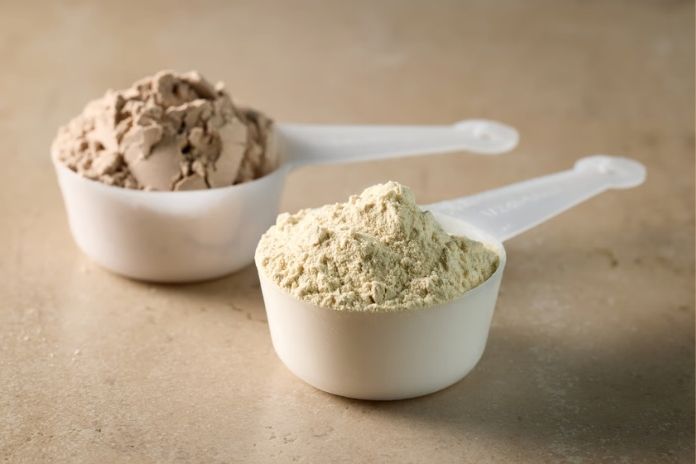
Protein shakes are convenient but highly processed. You’re purifying the protein so you don’t get the same vitamins and minerals as you would from a whole meal.
Whole foods bring complete nutritional packages: omega-3 fatty acids from salmon, calcium and probiotics from Greek yogurt, iron and folate from lentils, choline from eggs. No protein powder replicates this.
The trade-off is preparation time and cost. Powder is faster. But for anyone with a basic meal routine, whole foods are both nutritionally superior and more satiating gram-for-gram.
As Dr. Stuart Phillips, professor of kinesiology at McMaster University, explains: “Whole-food protein sources provide essential amino acids alongside a full matrix of micronutrients that isolated protein supplements simply cannot match.”
The Highest-Protein Whole Foods: What Each Delivers Per Serving?
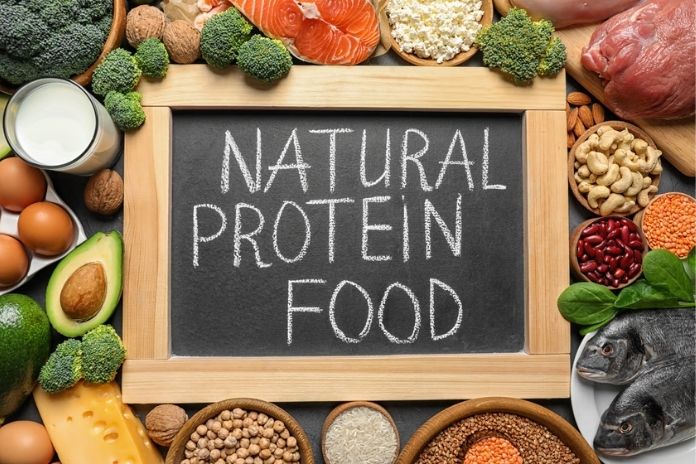
Animal protein sources:
- Chicken breast(100g cooked): ~30g protein, ~165 calories, the benchmark high-protein, low-fat food; one breast covers most of a single meal’s protein target
- Canned tuna (one can, ~145g drained): ~25–30g protein, ~130 calories, cheap, versatile, and rich in selenium and B vitamins
- Salmon (85g cooked): ~23g protein, ~155 calories, rich in both protein and omega-3 fatty acids that protein powders lack
- Eggs(2 large): ~12g protein, ~140 calories, complete protein with all essential amino acids plus vitamins A, D, B12, and choline
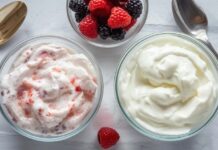
- Greek yogurt(200g): ~16–20g protein, ~130 calories, twice the protein of traditional yogurt, with calcium and probiotics
- Cottage cheese(200g): ~22–25g protein, casein-dominant, slow-digesting; excellent before bed for sustained amino acid release
Plant protein sources:
- Tempeh(100g): ~20g protein, comparable to soy isolate powder, with excellent leucine content for muscle protein synthesis.
- Lentils(180g cooked): ~18g protein, plus fiber, folate, and iron; the most protein-dense legume.
- Edamame(150g): ~18g protein, a complete plant protein with all essential amino acids.
- Chickpeas(100g cooked): ~9g protein, versatile and fibre-rich; pairs well with animal proteins to boost overall meal protein.
- Quinoa(185g cooked): ~8g protein, one of the few plant grains that are complete proteins.
- Tofu (100g):~10–15g protein depending on firmness; a complete soy protein rich in calcium and highly versatile for both savory and sweet dishes.
The Most Protein-Dense Foods Per Calorie
If you’re managing calories alongside protein, efficiency matters. Chicken breast, canned tuna, egg whites, and low-fat cottage cheese top the list, all delivering over 6–8 g of protein per 100 calories.
Greek yogurt and tempeh follow closely. Whole eggs, lentils, and edamame offer strong protein-per-calorie ratios with the added benefit of fiber and micronutrients that keep hunger low between meals.
Do Plant Proteins Work as Well as Animal Protein?
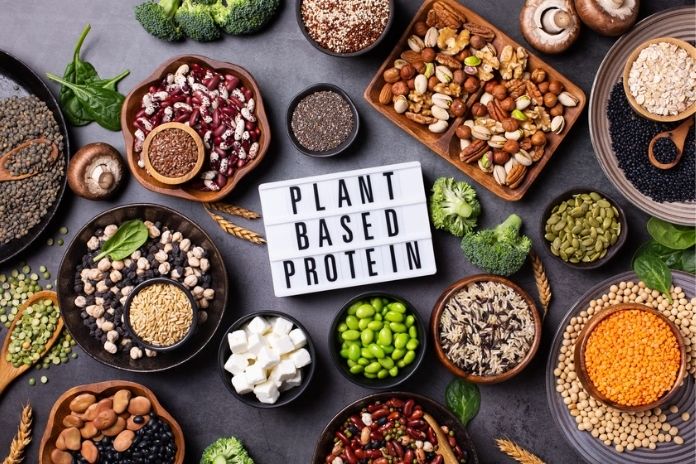
Yes, with one important qualifier: most plant proteins are incomplete (they lack one or more essential amino acids), so variety matters. Combining different plant sources across the day, lentils with quinoa and chickpeas with tempeh, covers the full amino acid profile.
A 2023 systematic review found that well-planned plant-based diets support muscle gain and recovery comparable to omnivorous diets when total protein and leucine intake are adequate.
As Dr. Leigh Breen, senior lecturer in exercise metabolism at the University of Birmingham, notes: “Plant proteins can fully support muscle adaptation when distributed thoughtfully across meals and when leucine-rich sources like soy and tempeh anchor the diet.”
Why Protein Distribution Across Meals Matters
Timing and distribution are almost as important as total intake. Research shows that spreading protein across 3–4 meals maximizes muscle protein synthesis; approximately 30–40 g per meal hits the threshold that fully stimulates the anabolic response (building up of muscle), at each eating occasion.
Consuming all your protein at dinner, or skipping breakfast protein, leaves muscle-building potential on the table.
Your body cannot store excess protein for use later. So, distribute your daily requirement of protein across all meals and snacks as large portions of protein in a single meal don’t help.
What a Full Day of High-Protein Eating Looks Like Without Powder
A 70 kg active adult targeting 140 g of protein daily, entirely from whole foods:
- Breakfast: 3 scrambled eggs + 200g Greek yogurt with berries → 21g + 17g = 29g protein
- Snack: ½ cup of shelled edamame with almonds → 7g + 4g = 11g protein
- Lunch: 150g canned tuna + mixed salad + 2 slices whole grain bread → ~30g + 6g = 36g protein
- Snack: 200g cottage cheese + apple → 22g protein
- Dinner: 150g chicken breast + roasted vegetables → 44g protein
Day total: ~140g protein. No powder, no supplements, plus fiber, micronutrients, omega-3s, calcium, and probiotics that protein powder doesn’t deliver.
Why Whole-Food Protein Is Usually More Filling
Whole foods take longer to digest, and their fiber, fat, and water content activates satiety hormones more powerfully than liquid protein.
A 2021 study in the American Journal of Clinical Nutrition found that solid protein sources produced significantly greater satiety and lower subsequent caloric intake than protein shakes delivering the same protein and calorie load. If managing hunger is part of your goal, whole food wins.
The Practical Case for Powder and When It Actually Makes Sense
Acknowledging the legitimate reasons people use protein powder makes the whole-food case more credible, not less. There are three scenarios where powder earns its place:
- Convenience: a shake takes 90 seconds; cooking chicken doesn’t. For frequent travelers or chaotic schedules, powder is a practical gap-filler.
- Appetite challenges: some people building muscle struggle to eat enough food volume to hit protein targets. Liquid protein is easier to consume than additional solid food.
- Post-workout practicality: carrying cottage cheese to a gym is less practical than a shaker bottle with your protein shake.
The honest position: protein powder is useful for specific circumstances, not necessary for everyone, and not nutritionally superior to whole food. If whole foods feel achievable, they are the better choice.
Practical Strategies to Boost Whole-Food Protein Without Overthinking It
Small systematic changes that increase protein without major meal restructuring:
- Swap regular yogurt for Greek yogurt, doubles protein from ~8g to ~17g per serving at no extra cost or effort
- Add eggs to meals that don’t currently include them, scrambled into grains, hard-boiled as a snack, or alongside any meal
- Replace white rice or pasta as a side dish with lentils, tripling the protein contribution of the side
- Start meals with the protein source first, followed by fruit and vegetables. Finish with the carbs. This simple re-ordering helps reach protein satiety before filling up on lower-protein components
- Batch-cook protein on weekends; poached chicken, boiled eggs, and cooked lentils cover three to four days of protein without daily cooking effort
As Dr. Joy Dubost, registered dietitian and spokesperson for the Academy of Nutrition and Dietetics, explains, “Building protein into every meal from real food sources, not supplements, consistently outperforms supplement-first strategies for both body composition and long-term dietary adherence.”
- Whole-food protein sources are nutritionally superior to protein powder and fully sufficient for muscle gain, recovery, and daily protein targets.
- The real advantage of powder is convenience, not biology. It fills genuine gaps for specific schedules and lifestyles, but it doesn’t outperform a well-built food-first routine.
- Start with Greek yogurt swaps, batch-cooked protein, and lentils as sides. Track your intake for one week. Most people discover they’re closer to their target than they thought.
Final Word
Use of protein powder is convenient for specific situations. Greek yogurt, eggs, cottage cheese, canned fish, chicken, lentils, and tempeh between them cover every protein need across every meal without a scoop of powder.
The vitamins, minerals, fiber, and bioactive compounds in whole foods can’t be replicated by any supplement. If whole-food protein is achievable for you, it’s the better choice. Powder fills the gaps when it’s not. That’s the only time it earns its place.
FAQs About Getting Enough Protein Without Protein Powder
1: Can you build muscle without protein powder?
Yes, completely. You can build muscle without protein powder as long as you meet your daily protein goal from whole food sources and train with sufficient progressive overload. Protein powder is convenient, not biologically necessary for muscle protein synthesis or hypertrophy.
2: What whole foods have the most protein per serving?
The highest-protein whole foods per serving are chicken breast (~30g per 100g), canned tuna (~25–30g per can), cottage cheese (~22g per 200g), tempeh (~20g per 100g), and Greek yogurt (~17g per 200g). Each also delivers vitamins and minerals protein powder lacks.
3: I can’t hit my protein goals no matter what I eat. Do I actually need protein powder?
Not necessarily. Most people underestimate whole-food protein content. Tracking intake for one week with an app like Cronometer often reveals that targets are closer than expected. Powder is a gap-filler, not a requirement. Try the strategies in this article first.
4: Is protein powder better than whole food protein?
No. Whole foods are nutritionally superior because they deliver vitamins, minerals, fiber, and bioactive compounds alongside the protein. Powder is faster and more convenient, but it is a stripped-down product. When whole-food protein is achievable, it is the better choice nutritionally.
References
- Stokes, T., Hector, A. J., Morton, R. W., McGlory, C., & Phillips, S. M. (2018). Recent perspectives regarding the role of dietary protein for the promotion of muscle hypertrophy with resistance exercise training. ‘Nutrients’, 10(2), 180.
- Morton, R. W., Murphy, K. T., McKellar, S. R., Schoenfeld, B. J., Henselmans, M., Helms, E., Aragon, A. A., Devries, M. C., Banfield, L., Krieger, J. W., & Phillips, S. M. (2018). A systematic review, meta-analysis and meta-regression of the effect of protein supplementation on resistance training-induced gains in muscle mass and strength in healthy adults. ‘British Journal of Sports Medicine’, 52(6), 376–384.
- Gorissen, S. H. M., Crombag, J. J. R., Senden, J. M. G., Waterval, W. A. H., Bierau, J., Verdijk, L. B., & van Loon, L. J. C. (2018). Protein content and amino acid composition of commercially available plant-based protein isolates. ‘Amino Acids’, 50(12), 1685–1695.
- Rogerson, D. (2017). Vegan diets: Practical advice for athletes and exercisers. ‘Journal of the International Society of Sports Nutrition’, 14(1), 36.
- Jager, R., Kerksick, C. M., Campbell, B. I., Cribb, P. J., Wells, S. D., Skwiat, T. M., & Antonio, J. (2017). International Society of Sports Nutrition position stand: Protein and exercise. ‘Journal of the International Society of Sports Nutrition’, 14, 20.
- Churchward-Venne, T. A., Burd, N. A., & Phillips, S. M. (2012). Nutritional regulation of muscle protein synthesis with resistance exercise: Strategies to enhance anabolism. ‘Nutrition & Metabolism’, 9(1), 40.
- Dahl, W. J., & Foster, L. M. (2022). Satiety of protein from different food sources: A systematic review. ‘Nutrition Reviews’, 80(3), 482–496.
- Lynch, H., Johnston, C., & Wharton, C. (2018). Plant-based diets: Considerations for environmental impact, protein quality, and exercise performance. ‘Nutrients’, 10(12), 1841.
- Messina, M., Lynch, H., Jackman, S. R., Chan, V., Antonio, J., & Rogerson, D. (2023). No difference between the effects of supplementing with soy protein versus animal protein on gains in muscle mass and strength in response to resistance exercise. ‘Nutrients’, 15(8), 1861.
- Paddon-Jones, D., Westman, E., Mattes, R. D., Wolfe, R. R., Astrup, A., & Westerterp-Plantenga, M. (2022). Protein, weight management, and satiety. ‘American Journal of Clinical Nutrition’, 114(5), 1728–1735.
In this Article